Moving to Texas: The Complete Guide to Taxes, Schools, Voting, and Life in the Lone Star State
Everything a new Texan needs to know — property taxes and the homestead exemption, ISDs and school boards, the ERCOT grid, constitutional carry, and how to register your car, your kids, and your vote.
Editorial disclaimer: Opinions and analysis on Keep TX Red are editorial content — not statements of fact. See our editorial standards.
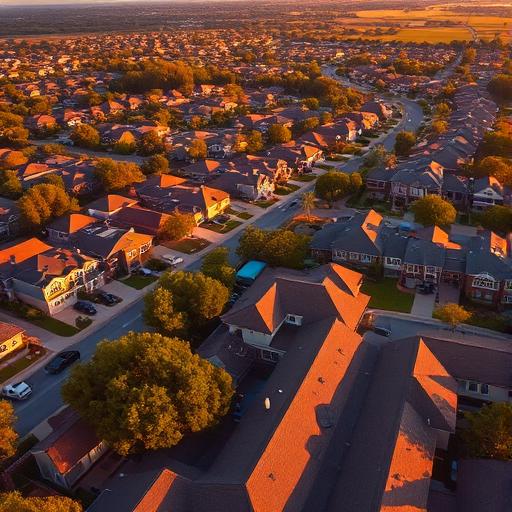
Every year, hundreds of thousands of people pack up and head for Texas — drawn by no state income tax, a lower cost of living than the coasts, a business-friendly regulatory climate, and a political culture built on limited government and individual liberty.
This guide is for anyone packing a moving truck for Texas, or anyone who just arrived and is trying to make sense of property tax bills, ISD ballots, and an electric bill that works nothing like the one back home. We'll walk through taxes, schools, voting, energy, gun laws, and the civic institutions that make Texas run.
Why People Are Moving to Texas
Texas has added more new residents than any other state for over a decade running, driven by job growth in energy, tech, healthcare, and manufacturing, plus corporate relocations to Austin, Dallas-Fort Worth, and Houston.
But the tradeoffs are real: Texas makes up for the lack of an income tax with property and sales tax, government here is unusually decentralized, and a huge amount of what affects your daily life — your kids' schools, your electricity, your water — is decided locally, not in Austin.
Choosing Where in Texas to Land
Texas is closer to four or five different states stitched together under one flag. Houston is the state's largest metro, built on the energy industry and the Port of Houston, with no zoning code and sprawling suburbs. Dallas-Fort Worth is the corporate relocation capital of the country right now, split across dozens of independent suburban cities, each with its own tax rate and school district.
Austin is the state capital and a tech hub, but also the most liberal major city in Texas by a wide margin — the suburbs ringing it (Georgetown, Leander, Round Rock) are considerably more conservative than the city itself. San Antonio is more affordable, anchored by military installations and healthcare, with a political character that leans more purple. The Rio Grande Valley and Hill Country represent opposite ends of the state's geography and politics.
If you're weighing a move to South Texas specifically, our guide to Texas Border Geography 101 covers the region's ports of entry and sector maps.
No State Income Tax — But Read the Fine Print
The single biggest reason people cite for moving to Texas is the tax bill. Texas is one of only nine states with no personal income tax, and voters amended the constitution in 2019 to make one nearly impossible to enact without another statewide vote.
That doesn't mean low taxes overall — it means a different structure. Texas leans on sales and property tax instead. For the full breakdown, see Why Texas Has No State Income Tax.
Property Taxes: The Bill That Surprises Every Newcomer
Texas has some of the highest effective property tax rates in the country, because property tax — not income tax — is the primary funding mechanism for schools, counties, and cities. A $400,000 home in a typical suburb can carry a $8,000-$10,000+ annual bill, split across your ISD, county, city, and often a municipal utility district (MUD).
Your tax rate and your appraised value are two separate numbers. The rate is set by each taxing entity; the appraised value is set independently by your county appraisal district and can rise even in years your local governments don't raise rates at all — which is the number worth protesting every year.
File your homestead exemption immediately if the home will be your primary residence. Texas voters raised this exemption from $100,000 to $140,000 via a 2025 constitutional amendment, with a larger reduction for homeowners 65+. This isn't automatic — you file directly with your county appraisal district. See The Texas Homestead Exemption Explained for eligibility and deadlines.
For a full walkthrough of how the bill is calculated from appraisal to final total, read The Texas Property Tax Guide. To get an actual dollar estimate before you buy, use our own Property Tax Calculator.
Protesting your appraisal every year is routine, expected, and effective in Texas. See How to Protest Your Property Appraisal — and Actually Win for deadlines and the evidence-packet approach that works, and How County Appraisal Districts Work for your statutory rights during that process.
Understanding Local Government: Who Actually Runs Your Life
Counties, cities, ISDs, MUDs, and emergency services districts each have their own elected boards and their own taxing authority. If you buy in a newer suburban development, you may be inside two or three overlapping special districts you'll only discover on your tax bill. See What Local Governments Actually Control in Texas.
Counties carry more weight in Texas than in many states, running the sheriff's department, jails, district courts, and rural roads. See How Texas Counties Actually Spend Your Money for where that money goes.
Registering to Vote and Understanding Texas Elections
Texas requires voter registration at least 30 days before an election, and you'll need to update it any time you move counties. See The Texas Voter Registration Guide for accepted ID and mail-ballot rules.
In much of Texas, the March Republican primary effectively decides who holds the seat — the November general is often a formality. See Primary vs. General for how that works, and The Texas Voting Guide for 2026 for the full calendar. If you're new to open primaries and runoff math, start with A Beginner's Guide to Texas Elections.
Schools: ISDs, School Boards, and School Choice
Public education runs through more than 1,000 independent school districts, each with its own elected board. Not sure which ISD you fall under? Use our Find My School District tool to look it up by address and jump straight to that district's registration page.
School board elections are low-turnout and often decided by a few hundred votes, yet they determine curriculum, budgets, and bond measures. See Local School Board Elections: Why Every Conservative Vote Matters and Texas School Board Powers Explained.
Understand how your ISD is actually funded, especially in a high-property-value district — Texas's 'Robin Hood' recapture system redistributes revenue between districts. See Understanding Texas School Finance.
If school choice factors into your decision, Texas's new Education Savings Account program gives parents access to state funds for private tuition and other expenses. See Education Savings Accounts: A Parent's Guide to Texas School Choice.
Registering Your Vehicle and Getting a Texas License
New residents generally have 30 days to title and register a vehicle and 90 days to get a Texas driver's license — two different agencies, two different deadlines. Registration happens at your county tax assessor-collector's office; the license comes from the Department of Public Safety (DPS).
Use our Find My DMV tool to locate your county tax office and nearest DPS office, with what to bring for each.
Energy and Utilities: Welcome to ERCOT
Most of the state runs its own electric grid, managed by ERCOT, specifically to avoid federal regulation. If you're in Houston, Dallas-Fort Worth, or most of the ERCOT footprint, you'll actually get to shop for your electricity provider and plan. See The Texas Grid Explained.
For the bigger picture on how Texas became the country's energy capital, see The Texas Energy Economy. If you're moving somewhere rural and relying on a well, see Texas Water Rights Explained.
Gun Laws: Constitutional Carry
Since House Bill 1927 took effect, eligible Texans 21 and older can carry a handgun, openly or concealed, without a state-issued permit — though location restrictions and reciprocity rules still apply. See Constitutional Carry in Texas: What the Law Actually Says.
Learning How Texas Government Actually Works
Austin politics runs on its own vocabulary — special sessions, sunset review, points of order. See A Guide to Texas Political Terminology and How a Bill Becomes Texas Law.
Texas has one of the most constitutionally limited governors in the country on paper, paired with significant informal power. See The Powers of the Texas Governor Explained and The Powers of the Texas Attorney General Explained.
Every city council, school board, and commissioners court operates under sunshine laws — see The Texas Open Meetings & Public Information Acts. And Texas has amended its constitution more than 500 times — see A Guide to Texas Constitutional Amendments for how that process works.
A Practical First-90-Days Checklist
1. Register your vehicle within 30 days and get a Texas driver's license within 90 days — use Find My DMV to locate both offices.
2. File your homestead exemption with the county appraisal district after you acquire and occupy the home. The general application deadline is before May 1, and late-filing rules may apply.
3. Register to vote and mark your calendar for the March primary, not just the November general.
4. Shop your electricity plan if you're in ERCOT territory.
5. Look up your county appraisal district and set a reminder for protest season, typically April–May.
6. Find your ISD using Find My School District and check when the next school board election falls.
7. Bookmark your county and city government sites for commissioners court and council meeting agendas.
Frequently Asked Questions
- Do I have to give up my old state's driver's license right away?
- Texas requires new residents to title and register a vehicle within 30 days of establishing residency and to obtain a Texas driver's license within 90 days. Registration is handled at your county tax assessor-collector's office, not a DMV branch, while the driver's license comes from the Department of Public Safety — use our Find My DMV tool to locate both.
- Is it true I can shop for my own electricity provider?
- In most of the ERCOT service area — roughly 90% of the state, including Houston and Dallas-Fort Worth — yes. A handful of cities, including Austin and San Antonio, run municipally owned utilities instead, so you won't get a choice of provider there.
- How different is a Texas primary from what I'm used to?
- Texas has open primaries — you don't register by party. You simply choose which party's primary ballot to request when you vote, and that choice isn't a permanent party registration the way it is in some closed-primary states.
- Will my property tax bill really be that much higher than my old state's?
- It depends on the comparison. Coming from a high-property-tax, high-income-tax state, Texas is close to a pure win. Coming from a low-property-tax state, the property tax bill will likely be the biggest sticker shock — which is why filing your homestead exemption and protesting your appraisal every year matters.
- Do I need to worry about hurricanes or winter storms depending on where I move?
- Coastal and Houston-area residents should budget for hurricane season (June–November) and related insurance costs. Nearly anywhere in the state can also see a severe winter storm capable of straining the ERCOT grid, as happened in February 2021.
Official Sources
- TxDMV: New to Texas ↗
- Texas DPS: Moving to Texas ↗
- Texas Comptroller: Homestead Exemption Form 50-114 ↗
- Texas Comptroller: County Appraisal District Directory ↗
- Texas Comptroller: Property Tax Exemptions ↗
- Texas.gov: Property Tax Transparency ↗
- Texas Education Agency: School District Locator ↗
- Texas Legislature Online ↗
Take the next step
Browse the Newsroom →Read more about Keep Texas Red → Our full guide to what Keep Texas Red means and why Texans support it.
Related Articles
The Texas Property Tax Guide: Appraisals, Caps, and Calculating Your Bill
The Texas Homestead Exemption Explained: What Every Homeowner Should Claim

The Texas Voter Registration Guide: Deadlines, ID Rules, and FAQs
The Texas Grid Explained: ERCOT, Reliability, and Why Independence Still Matters

Texas School Board Powers Explained: Curriculum, Budgets, and Why They Matter

Constitutional Carry in Texas: What the Law Actually Says
Get Texas updates delivered weekly.
Independent Texas reporting on politics, policy, and daily life. One email a week. Unsubscribe anytime.
Civics Desk
Government & process explainers
The Civics Desk writes the evergreen explainers: how a bill becomes Texas law, what an Attorney General actually does, how to read a posted commissioners court agenda. Plain-English government for Texans who want to engage but were never taught the rules.
More from Civics Desk →