Texas Politics & Government
From the Capitol in Austin to statewide offices and local political power, this is Keep TX Red's map of Texas government, political leadership, elections, and the decisions that shape public policy.
Elections
Primaries, runoffs, and the races shaping the next Texas Legislature.
Explore →Republic of Texas Government
The presidency, Congress, 1836 Constitution, capitals, diplomacy, public finance, annexation and transition from independent republic to state government.
Explore →Democratic Dominance, 1876–1952
How one-party Democratic control, primary politics and suffrage restrictions shaped Texas after Reconstruction.
Explore →Populist & Progressive Texas
Farm revolt, railroad regulation, political reform and the contradictions of Progressive-era election change.
Explore →The Ferguson Era
Jim Ferguson's rise and impeachment, Ma Ferguson's governorships, patronage and factional one-party politics.
Explore →Texas White Primary History
The Nixon cases, Grovey, Smith v. Allwright and the constitutional fight over racial exclusion from decisive primaries.
Explore →Texas New Deal Politics
FDR, federal relief, conservative Democratic resistance and the ideological split that preceded partisan realignment.
Explore →Texas Civil Rights Era Politics
Voting-rights expansion, Lyndon Johnson, federal civil-rights laws and the breakdown of the old one-party system.
Explore →Texas Democratic Party History
How the Texas Democratic Party evolved from early statehood through one-party dominance, factional conflict and modern two-party competition.
Explore →Texas Republican Party History
The Texas GOP from its biracial Reconstruction origins through minority status, conservative realignment and statewide control.
Explore →Mexican American Political Organization
LULAC, the American G.I. Forum, voter registration, MAYO, Raza Unida and the growth of Mexican American political representation.
Explore →Women in Texas Politics
Women's suffrage, voting-rights expansion and the long growth of women's political representation in Texas government.
Explore →Texas Political Geography
How regions, counties, population growth and party coalitions built the statewide electoral map.
Explore →Urban, Suburban & Rural Texas
How cities, suburbs, exurbs and rural counties moved onto different partisan tracks.
Explore →South Texas & Rio Grande Valley Politics
Machines, voting rights, Mexican American political organization, Democratic strength and recent Republican gains.
Explore →Texas Metro Realignment
The separate political paths of Dallas-Fort Worth, Houston, Austin and San Antonio and their suburban rings.
Explore →Texas Election History
How Texas moved from one-party primary dominance to two-party competition, Republican statewide control, modern turnout patterns and Election Central.
Explore →Texas Constitutional History
The Republic and state constitutions from 1836 through the Constitution of 1876, the plural executive, amendment system and failed 1974 rewrite.
Explore →Texas Voting Rights History
Poll taxes, white primaries, women's suffrage, the Voting Rights Act, federal litigation and the changing legal framework for Texas voters.
Explore →Texas Redistricting History
Census-driven maps, one-person-one-vote, the Legislative Redistricting Board, Voting Rights Act litigation and the 2003 mid-decade redraw.
Explore →Legislative Districts
Permanent authority pages for all 150 Texas House districts and 31 Texas Senate districts, independent of the current officeholder.
Explore →Policy Trackers
Permanent trackers for taxes, border security, education, energy, elections, crime, water, housing, healthcare, and the state budget.
Explore →Texas Law Library
Plain-English guides to the statutes behind property taxes, gun rights, elections, parental rights, open records, property rights, and agency power.
Explore →Texas Data Center
Official-source maps for taxes, state spending, election results, demographics, energy, water, and public-safety data.
Explore →Political Reference
Races, redistricting, voter trends, policy questions, PACs, and campaign activity — 50 source-backed search guides.
Explore →Political Figures
Evergreen, source-backed profiles connecting major Texas political careers to the state's Republican realignment and governing institutions.
Explore →Republicans During Reconstruction
The 1867 origins of the Texas GOP, Black political leadership, the Davis administration, and the Black-and-Tan versus Lily-White struggle.
Explore →Texas Supreme Court Realignment
How statewide judicial elections, appointments and legal reform transformed Texas's highest civil court beginning in the late 1980s.
Explore →How Texas Became Republican
A sourced timeline of Texas's shift from one-party Democratic rule to Republican statewide and legislative control.
Explore →State Legislature
Bills, special sessions, and the conservative caucus in Austin.
Explore →Governor & Leadership
The Governor, Lt. Governor, AG, and statewide officeholders.
Explore →Voting & Policy
Voter ID, registration, election integrity, and ballot access.
Explore →
The Texas Voting Guide for 2026: Primaries, Runoffs, ID Rules, and the Calendar That Actually Matters
Everything a Texas voter needs for 2026 — registration deadlines, March primary, May runoff, November general, accepted photo ID, mail ballot rules, and how to find your polling place in Houston, Dallas, San Antonio, Austin, and beyond.
Read the full guide →Filter Coverage by Topic
Republic and state formation
How independent Texas built a government and became a state
Follow the Republic of Texas as a functioning national government: its presidency, Congress, 1836 Constitution, changing capitals, foreign diplomacy, debt and currency, annexation and the institutional handoff from President Anson Jones to Governor J. Pinckney Henderson.
Republic of Texas Government: How the Independent Republic Worked
A source-backed guide to how the Republic of Texas government worked from the 1835 provisional government through the 1836 Constitution, presidency, Congress, courts and 1846 transfer to state government.
Read authority guide →Presidents of the Republic of Texas: Burnet, Houston, Lamar and Jones
A source-backed guide to the presidents of the Republic of Texas, their terms, constitutional powers and competing approaches to annexation, finance, diplomacy, defense and national development.
Read authority guide →Congress of the Republic of Texas: Senate, House and National Lawmaking
A source-backed history of the Congress of the Republic of Texas, including its Senate and House, election rules, annual Congresses, impeachment powers, lawmaking and relationship with the presidency.
Read authority guide →Constitution of 1836: The Founding Charter of the Republic of Texas
A source-backed guide to the Constitution of the Republic of Texas adopted in March 1836, including its presidency, bicameral Congress, courts, rights, land provisions and legal legacy.
Read authority guide →Capitals of the Republic of Texas: Columbia, Houston, Austin and Washington-on-the-Brazos
A source-backed political history of the Republic of Texas capitals and seats of government, from Columbia and Houston to Austin, Washington-on-the-Brazos and the Archives War.
Read authority guide →Republic of Texas Diplomacy: Recognition, Treaties and the Annexation Strategy
A source-backed history of Republic of Texas diplomacy, including U.S. recognition, French and British relations, trade treaties, peace efforts with Mexico and the diplomatic strategy behind annexation.
Read authority guide →Texas Annexation and Statehood: How the Republic Joined the United States
A source-backed history of Texas annexation from the 1836 vote through U.S. recognition, failed treaty efforts, the 1845 joint resolution, Texas convention and vote, statehood and the 1846 transfer of government.
Read authority guide →Republic of Texas Debt and Finance: Taxes, Redbacks, Loans and Public Lands
A source-backed history of Republic of Texas public finance, including customs duties, taxes, star money, redbacks, exchequer bills, failed foreign loans, public debt and annexation terms.
Read authority guide →From Republic to State: How Texas Government Changed in 1845–1846
A source-backed guide to the institutional transition from the Republic of Texas to the State of Texas, including the 1845 convention, state constitution, federal admission and February 1846 transfer of offices.
Read authority guide →The Map of Texas Politics
Texas politics runs on a schedule most voters never see. The real decisions happen in March primaries, not November general elections — that's when the conservative caucus in Austin is actually chosen. By the time the general rolls around, most legislative seats have already been decided in a low-turnout primary or runoff.
Statewide, power is split between the Governor, the Lieutenant Governor (who runs the Senate and controls what bills reach the floor), the Attorney General, and the Speaker of the House. Understanding what each office can and can't do explains why some Republican priorities pass in a single session while others stall for years.
KTR's Republic of Texas Government authority cluster goes back to the institutional starting point: the 1836 presidency and Congress, the founding constitution, the capital fight, foreign recognition, national debt, annexation and the 1845–1846 transition from a sovereign republic to a state inside the United States.
The Texas Political Eras sequence fills the long bridge from the 1876 constitutional reset to modern realignment: Democratic dominance, Populist and Progressive insurgencies, Ferguson-era factional politics, the white-primary court fight, New Deal divisions and the civil-rights transformation of the electorate.
The Texas Political Geography cluster shows how that chronology played out on the map: county returns, urban-suburban-rural divergence, South Texas and Rio Grande Valley political development, and the separate realignment paths of Dallas-Fort Worth, Houston, Austin and San Antonio.
KTR's Texas Constitutional History explains why that power is divided in the first place: the sequence from the Republic constitution through the 1845, 1861, 1866, 1869 and 1876 charters, the post-Reconstruction reaction against concentrated authority, the plural executive and the amendment system voters still use today.
The Texas Election History guide supplies the electoral chronology beneath Election Central, from the era when the Democratic primary usually decided statewide office through presidential ticket-splitting, Republican breakthroughs, the 1998 statewide sweep and the 2002 Texas House takeover.
Our Texas Voting Rights History keeps the legal history distinct from present partisan disputes: poll taxes, white-primary litigation, women's suffrage, federal voting-rights law, language access and the post-2013 preclearance framework are sourced and explained as institutional changes.
The Texas Redistricting History guide connects census-driven population change to political geography, the Legislative Redistricting Board, federal voting-rights constraints, the 2003 mid-decade congressional redraw and the map cycles behind today's races.
KTR's Texas Legislative Districts give every state House and Senate seat a permanent identity. Candidate pages can come and go with election cycles and representatives can change, but the district page remains stable and reconnects the seat to the new officeholder, bills, committees, campaign-finance records, election history, and official map sources.
Our Texas Policy Trackers are the permanent layer beneath the news — taxes, border security, education, school choice, energy, water, housing, immigration, gun rights, elections, criminal justice, transportation, life policy, healthcare, and the state budget. Each tracker connects the issue to official sources, laws, legislation, KTR's editorial position, and related search guides.
The Texas Law Library explains the controlling statutes, while the Texas Data Center identifies the authoritative datasets, methodology, and limitations behind KTR's factual claims. Together they give daily stories a permanent legal and evidentiary backbone.
Our Texas Political Reference answers the high-intent questions behind the daily headlines — current races, map changes, voter trends, policy disputes, campaign finance, PACs, and public grassroots events — with dated status and source links.
The Texas Political Figures library supplies the historical people layer: source-backed evergreen profiles of governors, senators, speakers, congressional leaders and other figures who shaped Texas's partisan realignment and governing institutions.
The Texas Republicans During Reconstruction guide reaches further back to the party's 1867 origins, the central role of Black voters and organizers, Edmund J. Davis's administration, and the later fight between Black-and-Tan and Lily-White Republicans. It keeps that nineteenth-century history distinct from the modern conservative coalition while showing the institutional continuity of the party organization.
The Texas Supreme Court Realignment guide explains another part of that transition: how judicial elections and appointments, tort-law politics and statewide partisan change turned the state's highest civil court into a durable Republican institution beginning in the late 1980s. It also separates the politics of selecting judges from the legal reasoning used to decide individual cases.
Our How Texas Became Republican guide connects those individual careers to the larger chronology, from the 1952 Shivercrat split and John Tower's 1961 Senate victory through the 1998 statewide sweep and the Republican takeover of the Texas House after the 2002 election.
Explore this Texas topic
Texas statewide government, officeholders, agencies, political leadership, and the decisions shaping public policy.
Covered here
- Statewide officials
- State agencies
- Government accountability
- Executive actions
- Public policy
All Coverage in this Section

The Powers of the Texas Governor Explained
Texas has one of the most constitutionally limited governors in the country — and one of the most politically powerful. Here's what the office can do with appointments, vetoes, special sessions, and the line-item veto.

The Powers of the Texas Attorney General Explained
From multistate lawsuits and consumer protection to child-support enforcement and open-records opinions — what the elected Attorney General of Texas actually does, and the statutory limits of the office.

How a Bill Becomes Texas Law: A Citizen's Field Guide to the 88th Legislature
From filing in the House clerk's office to the Governor's desk — every committee, calendar, and conference step that shapes the bills you actually live under.
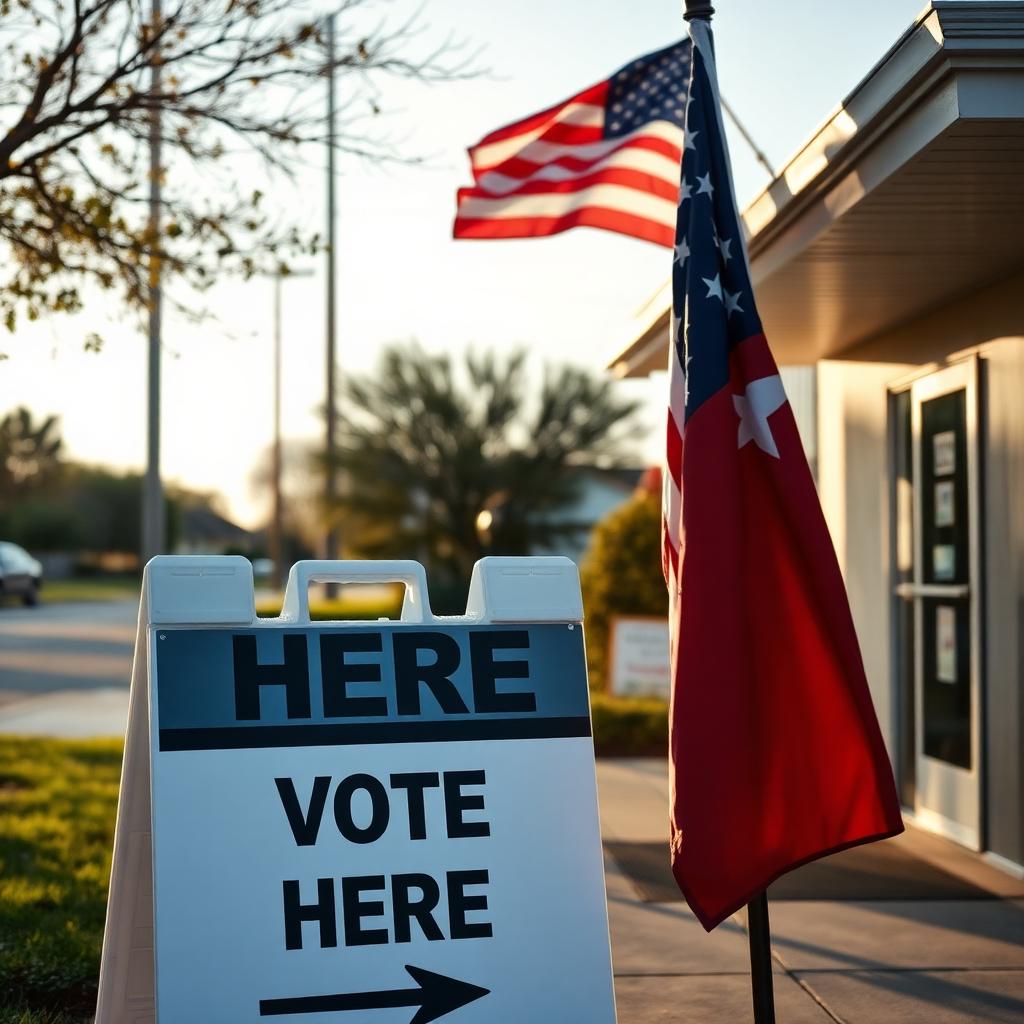
Primary vs. General: Why the March Ballot Decides More Than November Does
In most Texas districts the Republican primary is the real election. We break down open primaries, runoff math, and why low-turnout March races set the next decade of policy.

A Guide to Texas Political Terminology
Special session, sunset review, calendars committee, constitutional amendment, point of order — a plain-English glossary of the terms Austin reporters never define.

The Texas Voter Registration Guide: Deadlines, ID Rules, and FAQs
Who can register, the 30-day deadline before each election, accepted photo ID, and how to update your address when you move counties — everything you need before you vote.

A Beginner's Guide to Texas Elections: Primaries, Runoffs, and General Ballots
How Texas's open-primary system works, when runoffs trigger, how districts are drawn, and the dates every conservative voter should mark on the calendar.