The Texas Energy Economy: A Full Overview of Oil, Gas, ERCOT, and the Grid That Powers America
How Texas became the energy capital of North America — Permian crude, Eagle Ford gas, ERCOT reliability, the Railroad Commission, and what the Houston-led oil and gas industry means for the Texas economy.
Editor's NoteThis is a Keep TX Red pillar guide — updated June 2026 by our Energy Desk. The Texas energy economy moves fast; we refresh production figures, ERCOT reserve margins, and Railroad Commission rulings as they change.
Reporting is based on the sources and public records cited or linked in this article. Opinion and analysis are labeled and follow our editorial standards.
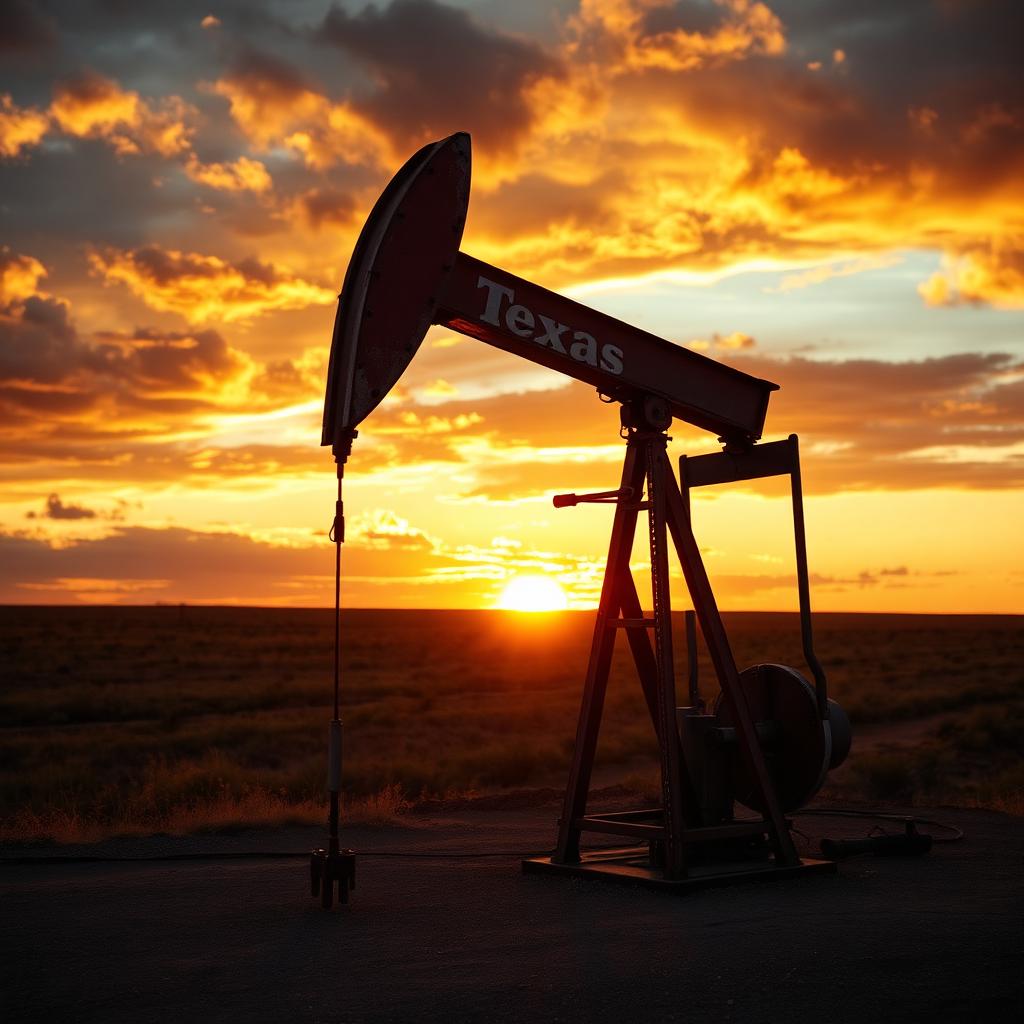
If Texas were its own country, it would be the third-largest oil producer in the world, behind only Saudi Arabia and the rest of the United States. The Permian Basin in West Texas pumps more than 6 million barrels of crude per day — more than the entire output of Iraq. Add the Eagle Ford in South Texas, the Haynesville on the Louisiana line, the Barnett under Fort Worth, and the Anadarko in the Panhandle, and Texas accounts for roughly 43% of all U.S. crude production and 25% of U.S. natural gas.
But the Texas energy economy is bigger than hydrocarbons. Texas is also the largest wind-power state in the country, leads the nation in installed utility-scale solar, runs its own electric grid through ERCOT, and exports liquefied natural gas from Sabine Pass, Corpus Christi, and Freeport to Europe and Asia. This pillar guide is the Keep TX Red overview of how the whole system fits together — and why it matters to every Texan, not just the ones in Midland or Houston.
The Three Pillars: Oil, Gas, Electricity
Texas's energy economy rests on three distinct industries that overlap but operate under different regulators, different markets, and different geographies. Understanding the difference is the first step to understanding any Texas energy story.
- Oil — pumped, refined, exported. Centered in the Permian (Midland and Odessa), refined along the Gulf Coast (Houston, Port Arthur, Corpus Christi).
- Natural gas — produced both as associated gas from oil wells and as the primary product of dry-gas fields like the Haynesville. Liquefied for export at Sabine Pass, Corpus Christi, and Freeport.
- Electricity — generated, transmitted, and sold inside the ERCOT grid. About 90% of Texas load is served by ERCOT; the El Paso area, parts of East Texas, and the Panhandle sit on other grids.
The Permian Basin: Why It Matters
The Permian Basin straddles West Texas and southeastern New Mexico and is the most productive oil play in the world. The Texas side — anchored by Midland and the Delaware sub-basin to the west — produces more than 6 million barrels of crude per day plus enormous volumes of associated natural gas. At current prices and production, the Permian generates over $150 billion in annual gross revenue for the Texas economy.
Permian operators range from supermajors like ExxonMobil and Chevron to independents like Pioneer (now part of Exxon), Diamondback, and EOG, down to hundreds of smaller producers. The Railroad Commission of Texas regulates the wells, well spacing, flaring, and plugging of abandoned wells.
ERCOT and Why Texas Has Its Own Grid
The Electric Reliability Council of Texas, or ERCOT, operates the grid that serves roughly 26 million Texans across 90% of the state's geography. Texas deliberately maintained an intrastate grid — separate from the Eastern and Western Interconnections — so that the federal government, through the Federal Energy Regulatory Commission, has no jurisdiction over Texas wholesale power.
The Public Utility Commission of Texas (PUC) oversees ERCOT, sets the rules of the deregulated retail market, and supervises reliability standards. After Winter Storm Uri in February 2021, the Legislature passed Senate Bill 3, weatherization mandates, and the Texas Energy Fund — a multi-billion-dollar low-interest loan program for new dispatchable generation, principally natural gas.
| Generation Source | Approx. % of ERCOT Capacity |
|---|---|
| Natural gas | ~40% |
| Wind | ~28% |
| Solar | ~18% |
| Coal | ~8% |
| Nuclear (Comanche Peak + South Texas Project) | ~4% |
| Battery storage (utility-scale) | ~2% and growing fast |
LNG Exports: Texas as Energy Diplomat
Three Gulf Coast LNG terminals — Cheniere's Sabine Pass and Corpus Christi facilities, plus Freeport LNG — make Texas one of the top liquefied natural gas exporters in the world. After Russia's 2022 invasion of Ukraine, European utilities signed long-term contracts with Texas LNG suppliers that effectively turned the Permian and Haynesville into Europe's strategic gas reserve.
More export capacity is under construction at Port Arthur, Rio Grande LNG near Brownsville, and additional Cheniere trains. Federal export-permit policy is the single largest variable in how big the Texas LNG industry becomes by the end of the decade.
The Railroad Commission of Texas
Texas's primary oil and gas regulator is the Railroad Commission — three statewide elected commissioners, six-year staggered terms, all currently Republican. The Commission has not regulated railroads since 2005, but the name has stuck since 1891. The Commission regulates drilling permits, well spacing, pipeline safety, surface mining, and the plugging of orphaned wells.
It is, in practical terms, one of the most consequential elected bodies in the United States — and one of the lowest-turnout statewide races on the Texas ballot.
Property Taxes, Severance Taxes, and the Permanent School Fund
The Texas energy economy doesn't just employ Texans — it pays for Texas government. The 4.6% oil severance tax and 7.5% natural gas severance tax flow into the General Revenue Fund and, after thresholds, into the Economic Stabilization Fund (the Rainy Day Fund) and the Permanent School Fund.
The Permanent School Fund — which owns 13 million acres of state lands including major mineral interests across the Permian — is one of the largest sovereign endowments for public education in the world and currently exceeds $55 billion. Every distribution it makes to ISDs is, in effect, a check that the Texas energy economy writes for Texas schoolchildren.
Renewables Are Texan Too
Texas leads the United States in installed wind capacity — over 40 gigawatts, more than the next three states combined — and is now the leader in new utility-scale solar deployment. West Texas wind, Panhandle wind, and South Texas solar all feed into ERCOT.
Conservative energy policy in Texas has generally been 'all of the above with a thumb on dispatchable resources': encourage every form of generation, but make sure firm, dispatchable capacity (natural gas, nuclear, and increasingly batteries) is sized to keep the lights on at peak demand. That is the Texas Energy Fund's core logic.
Bottom Line for Texans
If you drive in Houston, run an HVAC in Dallas in August, work in a school in Austin, or own a ranch in the Permian, your daily life is downstream of the Texas energy economy. It funds your kids' classrooms, fuels your truck, heats your home, and is increasingly Europe's hedge against authoritarian energy suppliers.
Read our companion guides: the Texas grid and ERCOT explained, the Texas energy policy guide, and our running Permian Basin coverage.
Frequently Asked Questions
- How much oil does Texas produce?
- Roughly 5.5 to 6 million barrels per day from the Permian alone, plus material volumes from the Eagle Ford and other plays — about 43% of total U.S. crude production.
- Does Texas really have its own electric grid?
- Yes. ERCOT covers about 90% of Texas load and is deliberately separated from the Eastern and Western Interconnections so federal regulators have no jurisdiction.
- Who regulates oil and gas in Texas?
- The Railroad Commission of Texas — three statewide elected commissioners. It does not regulate railroads.
- Is Texas pro-renewable?
- Texas leads the country in installed wind capacity and is the top state for new utility-scale solar. Conservative policy in Austin favors 'all of the above' generation with firm dispatchable backup.
- How does energy fund Texas schools?
- Severance taxes and the Permanent School Fund — which holds mineral interests across the Permian — generate billions annually for K-12 education and the Rainy Day Fund.
Sources
Take the next step
Browse Energy Coverage →Related Articles
Get Texas updates delivered weekly.
Independent Texas reporting on politics, policy, and daily life. One email a week. Unsubscribe anytime.