Micromobility Status Check: Are Scooters and Bikes Available in Downtown Houston?
Recent inquiries highlight the ongoing questions regarding shared scooter and bike rental availability in Houston’s central business district.
Editorial disclaimer: Opinions and analysis on Keep TX Red are editorial content — not statements of fact. See our editorial standards.
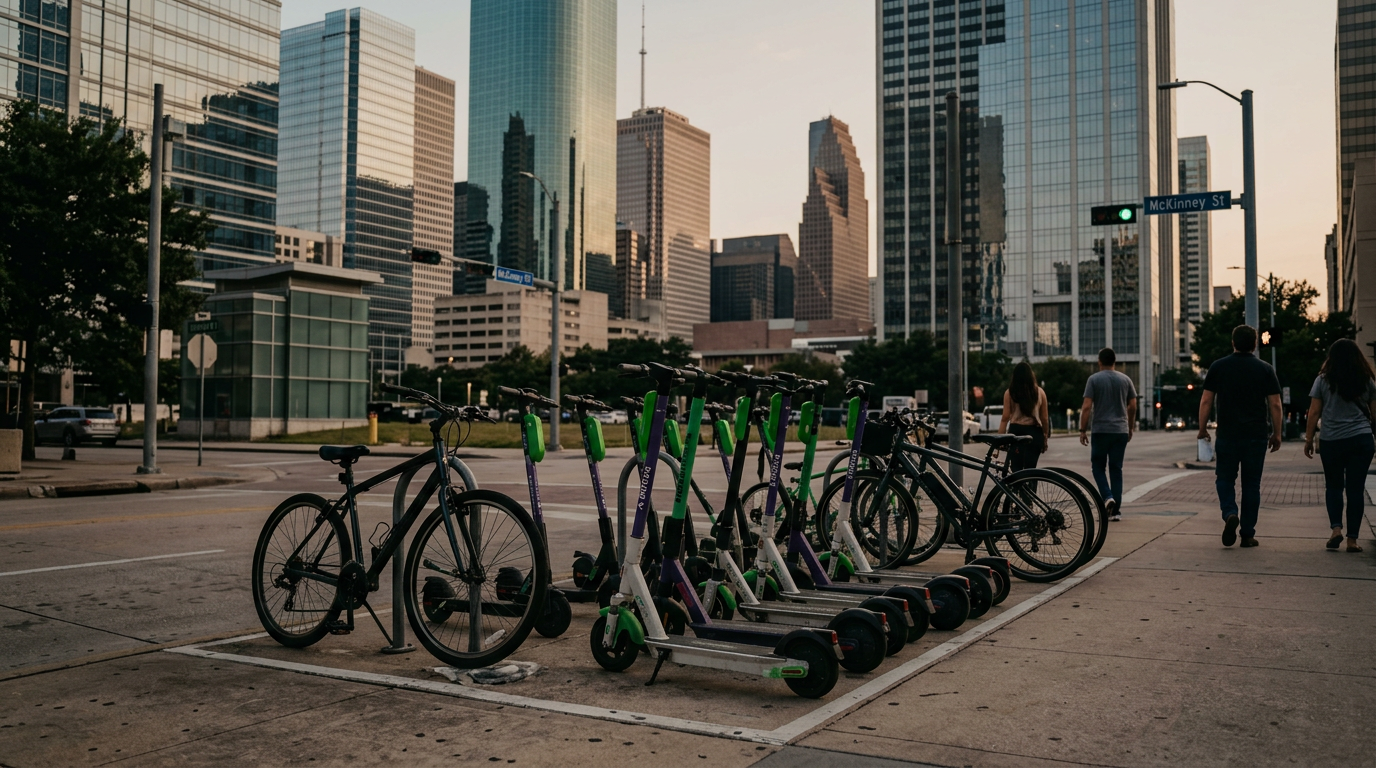
Recent inquiries on July 21, 2026, from residents and visitors like /u/blade829 have brought renewed attention to the availability of shared mobility services in Downtown Houston. The central question involves whether major national brands such as Lime and Bird currently operate scooter or bike rentals within the city’s primary business core. Historically, the City of Houston has maintained a complex relationship with these services, balancing the need for last-mile transportation against concerns regarding pedestrian safety and sidewalk clutter. This dialogue reflects a broader trend across major Texas metropolitan areas as they navigate the evolving landscape of urban transit and private-sector partnerships. Before the modern era of smart-apps, Houston relied heavily on traditional public transit, but the rapid influx of venture-backed mobility tech in the late 2010s forced a significant shift in how city hall views the right-of-way. While many residents express a desire for more options, the reality of operating a fleet in a city of this scale presents unique logistical challenges.
Texas relevance
As the most populous city in Texas, Houston serves as a primary indicator for how the state manages urban density and transportation innovation. The availability of transit options in Downtown Houston affects thousands of daily commuters and tourists who visit iconic locations like the Theater District and Minute Maid Park. Unlike other Texas cities that moved quickly to adopt widespread scooter fleets, Houston’s regulatory approach has been more measured, making the status of these rentals a constant point of interest for those navigating the Harris County hub. The precedent set by early adopters in the state has often served as a cautionary tale for Houston officials who seek to avoid the 'clutter' issues seen in peer cities.
The Evolution of Shared Mobility in Houston
Houston’s journey with shared mobility began years ago with the introduction of various bike-share initiatives. The goal was to provide a flexible alternative to traditional bus routes and personal car ownership, particularly for short trips within the downtown grid. Over time, the city saw the rise and fall of different vendors as market conditions and local ordinances shifted, moving from fixed docking stations to more flexible dockless models that allow users more freedom in their arrival points.
The introduction of electric scooters added a new layer of complexity to the local transit scene. While these devices offered a high level of convenience for traversing the flat terrain of Downtown Houston, they also necessitated new rules regarding speed limits and prohibited riding zones. This history of fluctuating presence is why many residents still feel the need to verify availability before planning their local travels. The struggle to integrate these devices into a car-centric infrastructure remains one of the largest hurdles for the city's urban planners.
Infrastructure improvements, such as protected bike lanes on key corridors like Austin Street, have been designed to make these micromobility options safer. However, without a consistent fleet of vehicles available for rent, these improvements go underutilized by the casual visitor. The city continues to evaluate how these lanes can be best integrated with third-party vendors who may wish to re-enter the market under more stable regulatory conditions.
Comparative Transit Models Across Texas
When looking at how Houston manages these services, it is helpful to compare it to other major Texas cities. Austin, for instance, became an early testing ground for thousands of scooters, leading to significant changes in their city code to manage the volume and ensure that sidewalks remained accessible for those with disabilities. Dallas has similarly adjusted its permits for various vendors multiple times, occasionally banning the devices entirely before reintroducing them under stricter guidelines to find a balance that serves the public without obstructing walkways.
Houston has often taken a more conservative path, frequently leaning on non-profit bike programs or specific vendor contracts rather than a wide-open permit system. This means that while a resident might find a scooter in one Texas city with ease, they may find the experience in Houston to be highly localized or subject to different app requirements depending on which company holds a current permit. This fractured approach across the state can be frustrating for the frequent Texas traveler who expects a seamless experience from city to city.
The state legislature has also toyed with the idea of statewide regulations for micromobility, though much of the power remains at the municipal level. This allows Houston to tailor its approach to the specific needs of its sprawl and climate. For example, the extreme summer heat in Houston impacts battery life and vehicle maintenance in ways that differ from the more temperate regions of the state, necessitating a more robust operational plan from any vendor looking to maintain a large-scale presence.
User Experiences and Local Navigation
For those visiting the downtown area, navigation often involves a mix of the METRORail and walking. The addition of scooters or rental bikes is seen as a way to bridge the gaps between light rail stations and final destinations. For individuals like the local resident inquiring on social media, the absence of a clear, permanent fleet of Lime or Bird scooters can change how they plan their commute or leisure activities. It can be the difference between attending an event at the George R. Brown Convention Center or choosing to stay in the suburbs.
Local feedback often centers on the usability of apps and the reliability of finding a charged vehicle. In a sprawling city like Houston, the core downtown area represents one of the few places where dockless mobility is truly viable, making the presence—or absence—of these companies a major factor in the neighborhood's overall accessibility. Users often report that even when the apps show availability, the physical location of the device may be inaccurate, leading to a frustrating search process.
The demographic of Houston's downtown is changing, with more residential units coming online every year. This new class of urban dwellers views micromobility not as a novelty, but as an essential part of their lifestyle. As these residents become a larger political force, the pressure on city council to provide reliable, year-round access to these services will likely mount, forcing a re-evaluation of current restrictive policies.
Regulatory and Safety Considerations
Safety remains a top priority for Texas city officials when dealing with micromobility. In the past, Houston has addressed concerns regarding riders on sidewalks and the proper disposal of broken equipment. These safety mandates often dictate which companies are allowed to operate and how many devices they can deploy at any given time. City leaders are particularly wary of potential lawsuits arising from pedestrians tripping over abandoned devices, which has been a major point of contention in legal battles nationwide.
The city’s Public Works and Administration departments are responsible for overseeing these permits. Their decisions are usually based on a company’s ability to prevent blocked ramps and ensure that their vehicles do not become a nuisance to businesses in the central district. This regulatory oversight is why the availability of Bird or Lime is not always guaranteed. Companies must prove they have the staff locally to retrieve misplaced units within a strict timeframe, usually within a few hours of a report.
Data sharing is another critical component of the regulatory framework. The city often requires vendors to share real-time location and usage data to help inform future infrastructure projects. However, private companies are sometimes hesitant to share proprietary information, leading to a stalemate in negotiations. Finding a middle ground on data privacy and public benefit is essential for the long-term viability of these programs within the city limits.
Economic Impact of Micromobility Vendors
The presence of rental scooters and bikes is more than just a convenience; it represents a significant economic driver for downtown businesses. Studies in other metropolitan areas suggest that people using micromobility are more likely to make spontaneous stops at local cafes and shops compared to those driving cars. By making the downtown core more navigable, Houston could see higher 'stay times' for tourists and locals alike, boosting sales tax revenue.
However, the cost of operation for companies like Bird and Lime is high. They must account for the 'gig economy' workers who charge the units, as well as the high rate of theft and vandalism that plagues dockless systems. If the city's fee structure is too high, these companies simply move their capital to more profitable markets like San Diego or Miami. Houston must remain competitive if it wants to attract top-tier global mobility providers.
Furthermore, the transition to green energy in Texas makes electric scooters an attractive narrative for the city's image. Promoting zero-emissions transport fits into the broader goal of diversifying Houston's energy reputation. Yet, the economic reality is that these services must be self-sustaining. The city has shown little interest in providing direct subsidies to private scooter companies, meaning the market will ultimately decide who survives in the Houston heat.
The Future of Last-Mile Tech in Houston
Looking forward, the demand for varied transit options in Texas remains high. As Houston continues to develop its downtown residential population, the need for efficient, non-car transportation will only increase. This could lead to more stable, long-term agreements between the city and private scooter entities. We may see a shift away from the 'pilot program' phase into a more institutionalized part of the city’s transportation plan.
Future developments may include designated parking zones or 'corrals' for scooters, similar to what has been implemented in other tech-forward cities. This would solve the issue of sidewalk clutter while still providing the convenience that users crave. Such corrals could be integrated into existing parking garages or repurpose underutilized street parking spots, creating a more organized urban landscape.
For now, the status of rentals in Downtown Houston remains a topic of active discussion among those who live and work in the heart of the city. As technology improves—with better battery life and sturdier frames—the friction between the city and the vendors may decrease. Until then, commuters are advised to stay flexible and keep their preferred transit apps updated for any sudden changes in fleet availability.
Analysis
The persistent confusion regarding scooter availability in Houston stems from the city's unique regulatory environment compared to other Texas cities like Austin or Dallas. While some Texas municipalities embraced a 'wild west' approach to dockless vehicles, Houston city leadership has prioritized managed programs. This distinction often surprises visitors who expect uniform transit options across the Lone Star State. The lack of immediately visible fleets from major brands like Lime or Bird in specific zones suggests a continued emphasis on pilot programs or strict geo-fencing, which may limit where these vehicles can be parked or activated. Furthermore, the economic viability of these operations depends heavily on the density of the central business district, which is still recovering its pre-service usage levels.
Source attribution
This story was reported using a public release from the r/houston. Keep TX Red rewrote the coverage independently and links to the official statement for verification.
Frequently Asked Questions
- Are Lime and Bird scooters currently available in Downtown Houston?
- The availability of specific brands like Lime and Bird fluctuates based on current City of Houston permits and active pilot programs. Users are encouraged to check the respective mobile apps for real-time locations of available vehicles, as the city often updates its vendor list.
- Why does Houston have different scooter rules than Austin or Dallas?
- Each Texas city has individual authority over its right-of-way. Houston has historically preferred a managed framework and slower rollout to ensure sidewalk safety and prevent the over-saturation of devices in high-traffic areas like the central business district.
- What are the alternatives to scooters in Downtown Houston?
- Common alternatives include the METRORail light rail system, the Houston BCycle bike-share program (though its availability has also seen shifts), and various bus routes that service the downtown tunnel and street-level areas.
- Is it legal to ride scooters on Houston sidewalks?
- City ordinances generally prohibit riding electric scooters on sidewalks in the central business district to protect pedestrians. Riders are expected to use designated bike lanes or the right-most lane of the street.
Official Sources
Take the next step
Browse the Newsroom →Read more about Keep Texas Red → Our full guide to what Keep Texas Red means and why Texans support it.
Related Articles


Get Texas updates delivered weekly.
Independent Texas reporting on politics, policy, and daily life. One email a week. Unsubscribe anytime.
Keep TX Red Newsroom
The Keep Texas Red Editorial Staff produces nonpartisan explainers, policy breakdowns, and educational resources to help Texans understand how their government works. All content is reviewed for accuracy and updated regularly.
About Keep TX Red →