Uncovering the Record: How Hot Has Texas Actually Been?
Texas weather experts confirm the all-time record high of 120 degrees, set twice in state history in Seymour and Monahans.
Editorial disclaimer: Opinions and analysis on Keep TX Red are editorial content — not statements of fact. See our editorial standards.
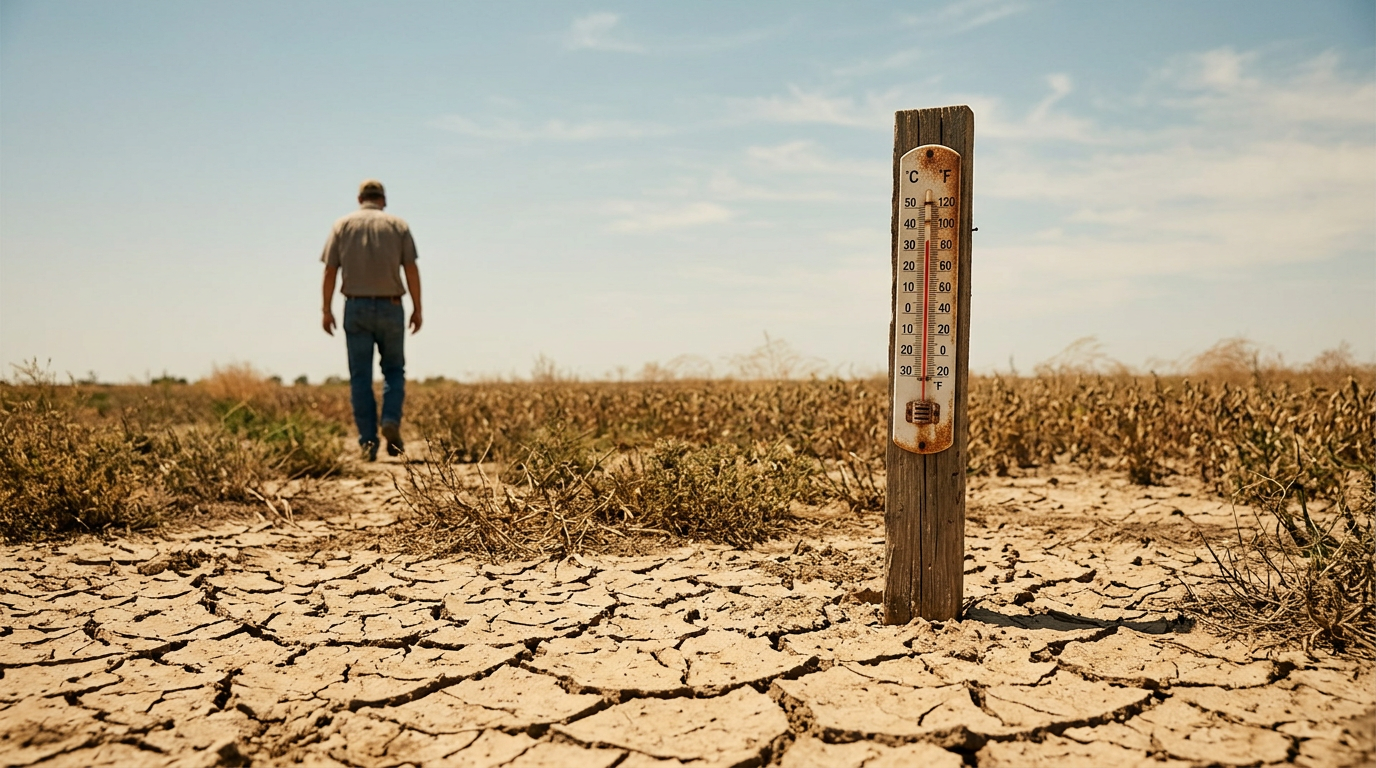
As Texas residents prepare for another sweltering summer season, NBC 5 Dallas-Fort Worth recently revisited the data to confirm the state's absolute maximum temperature. The official record for the hottest temperature ever documented in the Lone Star State stands at 120 degrees Fahrenheit. This extreme milestone was not reached just once, but twice, occurring several decades apart in two distinct regions of the state. The confirmation of these figures serves as a reminder of the volatile and intense heat index capacity that Texas geography supports during peak solar months. Understanding these historical markers helps meteorologists and emergency management teams calibrate their expectations for modern heatwaves and public safety warnings. Historically, Texas has always been a land of climatic extremes, where the transition from winter 'Blue Northers' to summer heat domes can happen with startling speed. The 120-degree ceiling represents a rare atmospheric alignment where dry air, clear skies, and absolute solar intensity converge over a stationary landscape. While modern Texans are used to regular triple-digit streaks, the jump from 105 or 110 degrees to 120 degrees involves a significant escalation in physical stress on both humans and the natural environment. These records are verified by the National Weather Service through rigorous sensor calibration, ensuring that localized anomalies are filtered out in favor of standardized statewide data.
Texas relevance
Texas is uniquely positioned at the intersection of Gulf moisture and high-pressure systems from the Southwest, making heat records a critical part of the state's infrastructure planning. For residents in cities like Dallas, Houston, and San Antonio, these historical figures are not just trivia; they dictate how the state manages the ERCOT power grid and water conservation efforts during the summer. The specific locations of Seymour and Monahans highlight that extreme heat is a statewide phenomenon, affecting both the rolling plains and the Permian Basin areas. In a state where outdoor work in the oil, gas, and agricultural sectors is a driver of the economy, the 120-degree record serves as a benchmark for labor safety and operational shutdowns.
The 1936 Record in Seymour
The first time Texas officially reached the 120-degree mark was on August 12, 1936. This record was established in Seymour, the county seat of Baylor County. At the time, the United States was grappling with the wider implications of the Dust Bowl era, which saw unprecedented drought and thermal stress across the Great Plains. The Seymour measurement became a benchmark for atmospheric intensity in the region and illustrated the power of prolonged drought cycles.
The meteorological conditions in 1936 were characterized by a massive high-pressure ridge that remained stationary over the central United States for an extended period. This blocked cooler air from the north and trapped surface heat, leading to a several-week period where triple-digit temperatures became the norm rather than the exception. The Seymour record stood unchallenged for nearly sixty years, serving as the definitive peak for Texas weather extremes during an era before widespread air conditioning and modern cooling technology.
Monahans Joins the Record Books
On June 28, 1994, the extreme temperature barrier was reached again, this time in Monahans, located in Ward County. This West Texas town matched the 120-degree record during a particularly brutal early-summer heatwave. The Monahans record demonstrated that the capacity for extreme heat was not limited to the unique conditions of the 1930s but remained a persistent threat under more modern atmospheric patterns.
The terrain around Monahans, known for its expansive sand dunes and arid environment, contributes to rapid land heating due to the low albedo of the surrounding soil. In 1994, a combination of clear skies and almost zero percent humidity allowed the ambient temperature to climb to the record-tying figure. This event solidified 120 degrees as the glass ceiling for Texas temperatures, a number that has not been surpassed in the decades since, despite many close calls during more recent droughts and heat domes.
The Role of the National Weather Service
Verification is key when discussing all-time records. The National Weather Service (NWS) employs specific protocols to ensure that a reading of 120 degrees is accurate and not the result of a malfunctioning sensor or a fire nearby. When Monahans hit the mark in 1994, the equipment used was part of a standardized network designed to provide consistent readings regardless of location. This ensures that a record in West Texas is comparable to one set in North Texas or the Hill Country.
The NWS often reviews these records years later as technology improves. In many cases, old records from the early 20th century are scrutinized to see if the thermometers were properly shielded from direct sunlight or if the ground cover influenced the result. Both the Seymour and Monahans records have survived this scrutiny, remaining the gold standard for Texas heat. This data is essential for climatologists who track long-term trends and variability across the Southern United States.
Impact on the Texas Power Grid and Energy
The temperature records of the past have a direct impact on how ERCOT and Texas energy providers prepare for the future. Every time the temperature approaches the 110-degree mark in major population centers, the demand for air conditioning places massive stress on the electrical grid. While 120 degrees hasn't been hit in a major metro area recently, the possibility forces engineers to build in significant margins of safety.
Industrial operations in West Texas, particularly in the Permian Basin near Monahans, are also affected. When temperatures reach these heights, heavy machinery can overheat, and the risk of lightning from 'dry thunderstorms' increases. The 120-degree milestone acts as a theoretical limit that informs the heat-load testing for everything from residential transformers to the materials used in the blades of wind turbines. Ensuring that the state's energy infrastructure can handle these extremes is a matter of both economic stability and public safety.
Public Safety and Heat Preparedness
When temperatures approach historical records, the risk of heat-related illnesses increases exponentially. The Texas Department of State Health Services often issues warnings when indices climb, reminding citizens that the body’s ability to cool itself through perspiration is compromised at such extreme levels. The 120-degree marker serves as a worst-case scenario for emergency responders and hospital systems.
Preparation involves not only personal hydration but also community-wide cooling centers and early warning systems. In the years since the 1994 record, Texas cities have become more sophisticated in their response to heatwaves, utilizing automated alert systems and energy-saving protocols to ensure that the power grid remains stable even when the thermometer hits triple digits across the entire state. The historical data provides the foundation for these modern safety protocols.
Agricultural and Ecological Stress
Texas crops and livestock are uniquely adapted to high heat, but 120 degrees pushes even the most resilient species to their limits. During the record-setting year of 1936, the lack of moisture coupled with intense heat decimated corn and cotton yields across Baylor County. These events serve as a warning to the state's multi-billion dollar agricultural industry about the importance of irrigation management and soil conservation.
Wildlife also faces challenges when records are broken. High temperatures can dry up vital watering holes and reduce the availability of forage for deer and other native species. Observing how the landscape recovered after the 1936 and 1994 events offers insights into the natural resilience of the Texas ecosystem. Conservationists use this historical context to manage prairie lands and forests, ensuring they can withstand the inevitable return of record-breaking heat cycles.
Comparing Regional Heat Profiles
While Seymour and Monahans hold the crown, temperature profiles vary wildly across Texas. Houston may rarely see 110 degrees, but its high humidity can make a 100-degree day feel significantly more dangerous than a 115-degree day in the dry air of El Paso. The 120-degree records are a testament to the intense 'dry heat' potential found in the interior planes and desert-adjacent regions of the state.
Meteorologists highlight that as one moves from the humid East toward the arid West, the 'dry bulb' temperature tends to rise even as the 'wet bulb' temperature—a measure of heat plus humidity—might decrease. The records in Seymour and Monahans reflect the absolute physical capacity for air to hold heat in the absence of moisture. Understanding these differences helps Texans in different regions prepare for the specific type of heat unique to their part of the state.
Source attribution
This story was reported using a public release from the Texas Storm Video (Google News). Keep TX Red rewrote the coverage independently and links to the official statement for verification.
Frequently Asked Questions
- What city holds the record for the hottest temperature in Texas?
- The record is shared by two cities: Seymour, which first hit 120 degrees on August 12, 1936, and Monahans, which matched that temperature on June 28, 1994.
- Has Texas ever exceeded 120 degrees?
- No, 120 degrees remains the highest officially verified temperature recorded by the National Weather Service in the state of Texas.
- What caused the record high in 1936?
- The 1936 record occurred during the Dust Bowl era, fueled by a severe drought and a persistent atmospheric high-pressure system that trapped heat across the central United States.
- When was the most recent time Texas tied its record high?
- The most recent instance of the record being tied was in June 1994 in Monahans. While many days since then have reached the 110-117 degree range, the 120-degree threshold has held firm.
Official Sources
Take the next step
Browse the Newsroom →Read more about Keep Texas Red → Our full guide to what Keep Texas Red means and why Texans support it.
Related Articles


Get Texas updates delivered weekly.
Independent Texas reporting on politics, policy, and daily life. One email a week. Unsubscribe anytime.
Keep TX Red Newsroom
The Keep Texas Red Editorial Staff produces nonpartisan explainers, policy breakdowns, and educational resources to help Texans understand how their government works. All content is reviewed for accuracy and updated regularly.
About Keep TX Red →