Texas Solar Car Challenge: High School Students Race Sun-Powered Vehicles Across the State
High school teams from North Texas compete in a grueling cross-country race using custom-built solar vehicles to promote STEM and renewable energy.
Editorial disclaimer: Opinions and analysis on Keep TX Red are editorial content — not statements of fact. See our editorial standards.
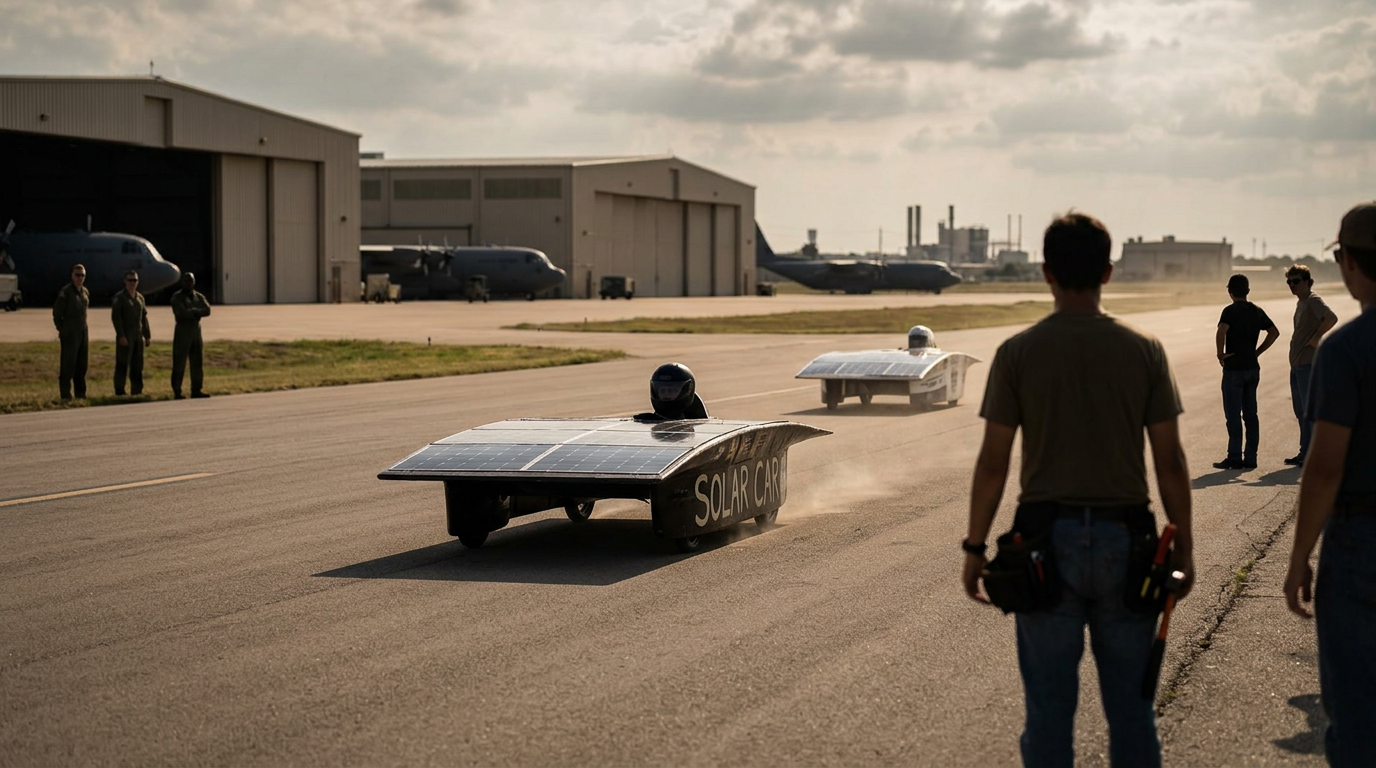
Engineering students from across North Texas have recently taken to the asphalt in a unique demonstration of technical skill and endurance, participating in a high-stakes solar car race. This competition represents the culmination of months, and often years, of design, fabrication, and testing. It serves as a practical laboratory for young innovators who are tasked with building street-legal vehicles powered entirely by the sun. The initiative seeks to bridge the gap between classroom theory and real-world application, pushing students to master complex systems in electrical engineering, aerodynamics, and project management. Historically, Texas has been a central hub for this specific type of competitive engineering, with local districts providing significant resources to ensure their teams can compete on a national stage. These projects often receive support from local industry partners, illustrating a collaborative effort to foster the next generation of the Lone Star State's technical workforce.
Texas relevance
Texas is the geographic and administrative heart of the Solar Car Challenge, an event that frequently utilizes the Texas Motor Speedway in Fort Worth as its base of operations. The state's vast highway infrastructure and high solar irradiance make it an ideal testing ground for renewable transport technologies. North Texas, in particular, has emerged as a powerhouse in this field, with schools from the Dallas-Fort Worth metroplex consistently fielding top-tier teams that compete against peers from across the United States. This engagement highlights the region's increasing focus on diversifying the energy sector and preparing students for the high-tech careers expanding in the Silicon Prairie.
The Engineering Behind the Sun-Powered Fleet
Building a solar car is not as simple as attaching panels to a go-kart. These high school teams must account for various physics-based challenges, including the weight-to-power ratio and the efficiency of the photovoltaic cells. The vehicles are typically constructed from lightweight materials such as carbon fiber or aluminum to ensure that the limited energy harvested from the sun can propel the car at significant speeds for long durations.
Students must also design custom battery management systems. Since the intensity of the sun fluctuates depending on cloud cover and the time of day, the car must have an efficient way to store excess energy for use when the conditions are less than ideal. This requirement introduces students to the complexities of lithium-ion technology and power distribution, which are critical components in modern automotive manufacturing.
Aerodynamics plays a pivotal role in the design phase. Many teams utilize computer-aided design (CAD) software to simulate airflow over their vehicle bodies. By minimizing drag, they can ensure that every watt of electricity generated by the solar array is used as effectively as possible, allowing them to maintain higher average speeds during the cross-country legs of the competition.
The Rigorous Testing Phase in North Texas
Before these vehicles ever touch a public highway, they undergo rigorous safety inspections and performance trials. In North Texas, these sessions often occur at local tracks or large vacant parking lots where students can troubleshoot mechanical failures in a controlled environment. The 'scrutineering' process is particularly intense, as officials check for braking efficiency, structural integrity, and driver visibility.
During these trials, student drivers learn the nuances of operating a vehicle that lacks the weight and power of a traditional internal combustion engine car. Steering is often manual and highly sensitive, requiring a delicate touch. The teams also practice emergency egress drills, ensuring that a driver can exit the vehicle in a matter of seconds should a battery fire or structural failure occur.
Data collection is a primary focus during the testing weeks. Students use telemetry systems to monitor battery heat and motor performance in real-time. This data allows the 'chase team' to communicate with the driver, providing instructions on when to accelerate and when to coast to preserve the car's limited energy reserves for the final stretch of the race.
Navigating the Logistics of the Texas Roads
The actual race involves navigating a pre-planned route that can span hundreds of miles across the state. This requires a massive logistical effort involving police escorts, lead vehicles, and follow cars. The students are responsible for everything from route navigation to managing the mechanical health of the car under the scorching Texas sun, which can often lead to overheating components.
Road conditions present a constant challenge for the teams. Unlike the smooth surfaces of a professional racetrack, Texas highways can be bumpy and unpredictable. The low-profile tires used on many solar cars are susceptible to damage from debris, necessitating quick-response pit crews that can change a tire or repair a suspension component on the shoulder of a busy road.
Communication is the lifeline of the racing team. Using radio frequencies, the scout vehicle ahead identifies upcoming hazards like construction or potholes, while the trailing trailer carries mobile repair shops. This operational structure mirrors professional racing teams, giving students a taste of high-pressure environment management that few other high school activities can provide.
STEM Education and Future Workforce Impact
The Solar Car Challenge is widely recognized by Texas educators as a premier STEM (Science, Technology, Engineering, and Math) initiative. By working on these projects, students often find themselves ahead of their peers when they enter university engineering programs. The hands-on nature of the work helps to demystify complex concepts taught in textbooks, making them tangible and exciting for young learners.
Furthermore, the collaborative nature of the project encourages soft skills such as leadership and teamwork. A solar car team functions like a small corporation, with departments dedicated to fundraising, public relations, and technical documentation. This multidisciplinary approach ensures that students with varying interests can contribute to the team’s success while learning how different roles interact.
Many former participants from North Texas teams have gone on to work for major engineering firms in the region, including Lockheed Martin, Raytheon, and Tesla. The experience of managing a project from conception to a finished, road-ready vehicle is highly attractive to recruiters who are looking for candidates capable of solving practical problems with innovative solutions.
Overcoming Financial and Resource Hurdles
Participating in a solar car race is an expensive endeavor. High-quality solar cells and specialized motors can cost tens of thousands of dollars. To overcome these financial barriers, North Texas students must become adept at fundraising and local networking. They often pitch their projects to local business owners and community organizations to secure the necessary capital to build their machines.
In addition to monetary donations, many teams rely on 'in-kind' support. Local machine shops might donate their time to help mill a specific part, or a welding company might provide training for the students. This community involvement strengthens the bond between local schools and the industrial sector, creating a support network that extends beyond the race season.
Grant writing has also become a critical skill for these teams. By applying for state and federal educational grants, schools can help level the playing field for students who may not have access to wealthy private donors. This ensures that the opportunity to participate in cutting-edge engineering projects is available to a diverse range of students throughout the Texas public school system.
The Future of Solar Mobility in the Lone Star State
As Texas continues to lead the nation in energy production, the lessons learned from solar car competitions are becoming increasingly relevant. While solar-powered passenger cars for the general public are still in the early stages of development, the advancements in battery density and motor efficiency driven by these competitions contribute to the broader knowledge base of the automotive industry.
The state’s commitment to expanding EV charging infrastructure also aligns with the goals of the Solar Car Challenge. As the technology matures, we may see more integration of solar tech into hybrid systems. For the students in North Texas, the race is not just about crossing a finish line; it is about proving that Texas-grown talent can lead the way in the global shift toward more efficient transportation.
Looking forward, the organizers of the Texas-based events hope to expand the reach of the competition to more rural districts. By providing kits and mentorship to underserved areas, the program aims to ensure that every student in Texas has the chance to participate in the renewable energy revolution, regardless of their zip code.
Analysis
Opinion: While some may view these races as mere school projects, they represent a strategic investment in Texas’s long-term economic competitiveness. By hands-on engagement with power electronics and sustainable design, these students are gaining skills directly applicable to the aerospace, defense, and energy industries that drive the Texas economy. Supporting these programs is not just about environmental awareness; it is about ensuring Texas remains at the forefront of mechanical and electrical innovation during a period of global energy transition.
Source attribution
This story was reported using a public release from the r/texas. Keep TX Red rewrote the coverage independently and links to the official statement for verification.
Frequently Asked Questions
- How fast can these student-built solar cars travel?
- While top speeds vary by design, many solar cars can reach speeds of 40 to 60 miles per hour. During races, however, teams focus on 'cruising speed' to optimize battery life and ensure they can travel the maximum distance without running out of power.
- Are the cars allowed to drive on regular Texas highways?
- Yes, but they must meet specific safety requirements to be considered street-legal for the competition. During the race, they are typically accompanied by a lead and follow vehicle to ensure safety and alert other drivers to the presence of the slow-moving experimental vehicle.
- Who funds these high school solar car teams?
- Funding is primarily a mix of school district budgets, corporate sponsorships, and community donations. Students are often responsible for pitching their ideas to local businesses to secure the materials and components needed for construction.
Official Sources
Take the next step
Browse the Newsroom →Read more about Keep Texas Red → Our full guide to what Keep Texas Red means and why Texans support it.
Related Articles


Get Texas updates delivered weekly.
Independent Texas reporting on politics, policy, and daily life. One email a week. Unsubscribe anytime.
Keep TX Red Newsroom
The Keep Texas Red Editorial Staff produces nonpartisan explainers, policy breakdowns, and educational resources to help Texans understand how their government works. All content is reviewed for accuracy and updated regularly.
About Keep TX Red →