San Marcos Professor Contributes Local Expertise to Latest Texas Travel Guide
Texas State Professor Dale Blasingame brings deep knowledge of the Lone Star State to the prestigious Lonely Planet travel series.
Editorial disclaimer: Opinions and analysis on Keep TX Red are editorial content — not statements of fact. See our editorial standards.
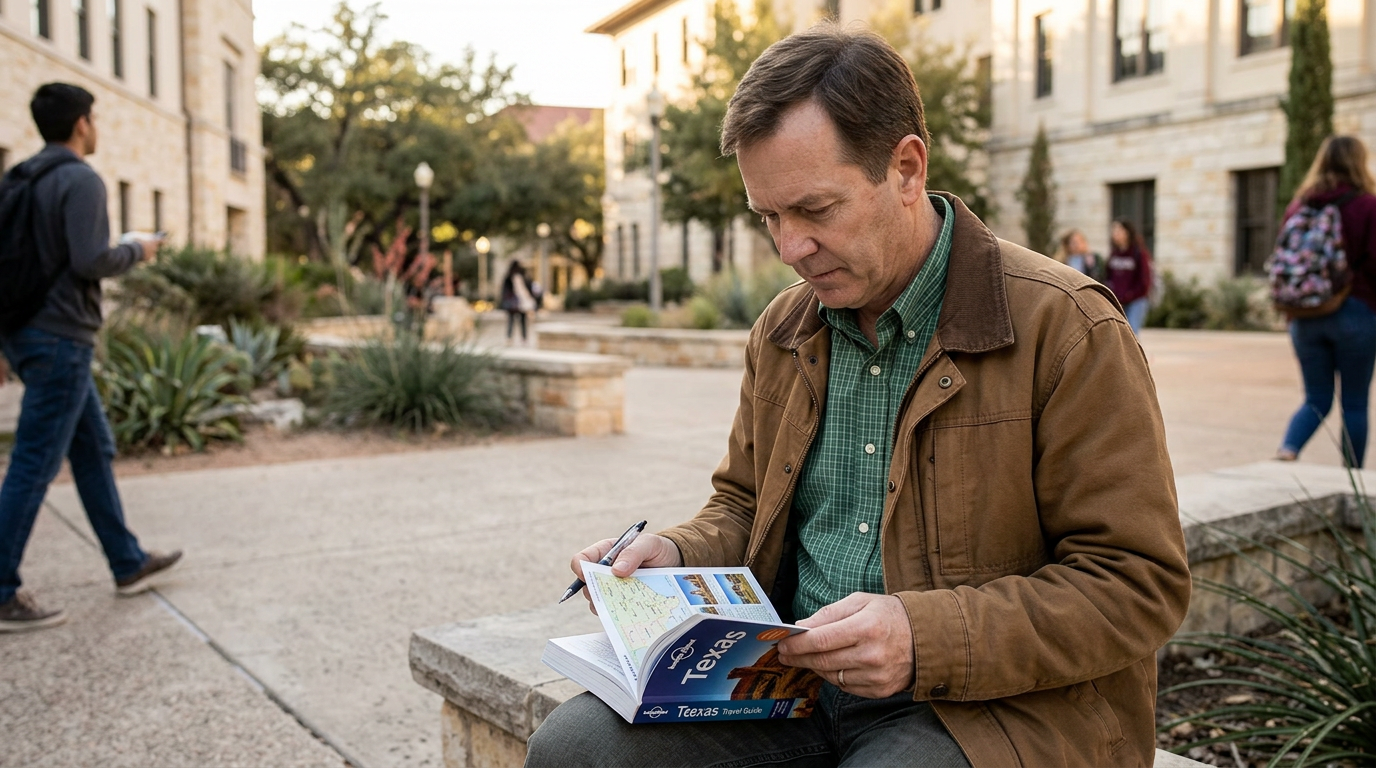
Dale Blasingame, a Professor of Instruction at Texas State University, has recently collaborated with the global travel authority Lonely Planet to enhance its coverage of the Lone Star State. Based in San Marcos, Blasingame serves as a faculty member within the School of Journalism and Mass Communication, where he focuses on digital media and storytelling. This partnership marks a significant professional milestone, as Blasingame transitioned his deep-rooted interest in Texas geography and outdoor recreation into a formal role for one of the world's most recognized travel brands. The project involved synthesizing large amounts of local data, site visits, and regional insights to provide travelers with an authentic perspective on what the state has to offer. Historically, Texas travel writing was dominated by authors from outside the state who prioritized well-known landmarks over local secrets. Blasingame’s work represents a shift toward local-led narratives that highlight the complexity of Texas beyond the standard tropes. His academic background provided a structured methodology for researching the evolving landscapes of the state, ensuring that the guide remains grounded in factual accuracy while embracing the spirit of Texas exploration.
Texas relevance
This development is highly relevant to Texas as it showcases how local academic experts are influencing the global perception of Texas tourism. By having a San Marcos-based educator directly influence the content of a major international guidebook, the specific nuances of Central Texas and the broader state are represented by someone with firsthand experience in the region. Historically, Texas has leaned heavily on its diverse ecosystems—from the piney woods of the east to the desert mountains of the west—to drive its multi-billion dollar tourism industry. Blasingame’s involvement ensures that these locations are described by a resident rather than an outside observer, maintaining the integrity of the Texas travel brand. This project underscores the importance of the San Marcos area as a cultural and academic heart of the I-35 corridor, proving that Texas experts are the best voices to tell the story of their own home to the rest of the world.
From the Classroom to the Open Road
Blasingame’s role at Texas State University involves teaching the next generation of journalists and digital storytellers how to navigate a shifting media landscape. His work on the Texas guide serves as a practical extension of these lessons, demonstrating how field research and digital documentation can result in a tangible, globally distributed product. By using his own experiences as a case study, he provides students with a roadmap for how specialized interests—such as a love for the outdoors—can be monetized and professionalized in the modern creative economy.
Beyond his instructional duties, Blasingame has long been known for his personal commitment to exploring the state. His journey often involves visiting every state park in Texas, a feat that provided the groundwork for the expertise required by a publisher like Lonely Planet. This dedication to local travel has become part of his professional identity in San Marcos, where he often shares his findings through various digital platforms. This grassroots involvement is what separates a local contributor from a remote researcher, as it relies on years of physical presence within the varied environments of the state.
The Evolution of Lonely Planet’s Texas Coverage
Lonely Planet has updated its Texas content periodically to reflect the state's rapid growth and changing cultural landscape. By bringing in a local specialist, the publication aims to keep its recommendations current in an era where digital reviews and social media can make print information obsolete quickly. Blasingame’s task was to vet previous entries and identify what no longer fits the modern Texas experience, removing outdated listings and replacing them with high-value recommendations that reflect where the state is heading in the late 2020s.
The project required a deep dive into the specific regions of Texas, ensuring that the guide covers not just the major metropolitan areas like Dallas and Houston, but also the rural stretches and small towns that define the state's character. Blasingame’s contribution ensures these areas are treated with a level of detail only a resident could provide. This includes understanding the seasonal shifts in the Hill Country or the best times to navigate the vast distances of West Texas, logistical details that are often overlooked by national editors.
Impact on Central Texas and San Marcos
The involvement of a faculty member from the School of Journalism and Mass Communication at TXST brings positive attention to the university’s vocational connections. It highlights the strength of the San Marcos community as a hub for media production and travel expertise within the I-35 corridor. As San Marcos continues to grow as a destination itself, having its professors recognized on a global stage helps solidify its reputation as a center for creative and academic excellence that is not overshadowed by nearby Austin.
For students at Texas State, seeing a professor engage in high-level contract work for an international brand provides a clear example of professional success in the creative arts. It underscores the value of specializing in regional knowledge as a way to stand out in a competitive global market. The partnership illustrates that being an expert on one's own backyard can be just as valuable as covering international conflicts or national politics, particularly in the realm of lifestyle and travel journalism.
Texas Tourism and the Drive for Authenticity
As Texas continues to see an influx of new residents and international visitors, the need for 'authentic' travel advice has grown. Modern tourists are frequently looking for experiences that differ from the standard commercial offerings, seeking instead the 'hidden versions' of Texas that locals cherish. Blasingame’s deep familiarity with the Texas State Parks system allows the guide to steer travelers toward conservation-minded tourism, highlighting the natural beauty of the state alongside its urban developments.
Blasingame’s background in digital media and social media storytelling allowed him to identify these trends and incorporate them into the guide. This approach helps the travel guide remain a relevant tool for modern travelers who value unique, local-first experiences over generic itineraries. By focusing on the intersection of technology and travel, Blasingame ensures that the guide speaks the language of the modern adventurer who uses both paper maps and smartphone apps to find their way across the state.
The Research and Writing Process
Contributing to a guide of this magnitude is a labor-intensive process that involves verifying hours of operation, assessing the quality of attractions, and providing clear logistical advice for travelers. Blasingame utilized his research skills to ensure every entry was accurate and useful for a diverse audience. This involved thousands of miles of driving and hundreds of interviews with business owners, park rangers, and fellow travelers to gather a consensus on the best the state has to offer.
The process also involved balancing the traditional image of Texas with its modern, tech-forward reality. By merging these two aspects of the state, the new guide aims to be a comprehensive resource that appeals to both outdoor enthusiasts and urban explorers alike. This dual focus is essential for a state like Texas, which is currently undergoing a massive demographic and economic transformation while attempting to preserve its historical and ecological identity.
Stakeholders and the Future of Texas Travel
The primary stakeholders in this project extend beyond the publisher and the author to include the local businesses and state entities that will be featured in the guide. Recognition in a Lonely Planet publication can significantly boost foot traffic for small-town businesses and increase awareness for lesser-known state parks. Blasingame’s role as a gatekeeper of this information carries a responsibility to represent the state fairly and accurately, ensuring that the economic benefits of tourism are shared across various regions.
Looking forward, this collaboration sets a precedent for how other Texas universities might engage with international media. By leveraging the specific passions of their faculty—whether in history, ecology, or communication—Texas institutions can become the primary sources for global publications. This move toward 'expert-sourced' content helps combat the rise of AI-generated travel advice, which often lacks the personal touch and verified accuracy that a local professor like Blasingame provides.
Analysis
The inclusion of a Texas State University professor in a project of this scale suggests a growing demand for hyper-local expertise in the publishing industry. While travel guides were once written by generalists who moved from country to country, brands like Lonely Planet are increasingly tapping into individuals like Blasingame who have institutional knowledge of a specific area. This shift potentially offers a more nuanced look at Texas, focusing on sustainable tourism and local businesses rather than just the most prominent tourist traps. Furthermore, it validates the research and exploratory efforts Blasingame has pursued regarding the state’s park systems and hidden gems, bridging the gap between academic instruction and real-world application. For Texas, this means tourism dollars are more likely to be directed toward authentic local operators who contribute to the state's economy rather than international conglomerates.
Source attribution
This story was reported using a public release from the Texas Travel Stories (Google News). Keep TX Red rewrote the coverage independently and links to the official statement for verification.
Frequently Asked Questions
- Who is Dale Blasingame?
- Dale Blasingame is a Professor of Instruction at Texas State University within the School of Journalism and Mass Communication in San Marcos. He is known for his work in digital storytelling and his extensive travels throughout the Texas state park system, which provided the expertise needed for the Lonely Planet guide.
- What is Lonely Planet?
- Lonely Planet is a major global travel media company and guidebook publisher. They produce guides for nearly every destination in the world, including specific volumes dedicated to individual states like Texas. They are known for providing independent, credible travel advice.
- How does this benefit Texas State University?
- It showcases the real-world application of the expertise held by university faculty. By having professors involved in high-profile industry projects, the university demonstrates the value of its journalism and communication programs to prospective students and the local community, while bringing international prestige to the San Marcos campus.
- Why is local expertise important in travel guides?
- Local experts provide nuances that outsiders might miss, such as the best times to visit specific parks, the true quality of local eateries, and the cultural context of regional events. This ensures that the travel guide offers an authentic experience rather than a superficial overview of a state as large and diverse as Texas.
Official Sources
Take the next step
Browse the Newsroom →Read more about Keep Texas Red → Our full guide to what Keep Texas Red means and why Texans support it.
Related Articles

Get Texas updates delivered weekly.
Independent Texas reporting on politics, policy, and daily life. One email a week. Unsubscribe anytime.
Keep TX Red Newsroom
The Keep Texas Red Editorial Staff produces nonpartisan explainers, policy breakdowns, and educational resources to help Texans understand how their government works. All content is reviewed for accuracy and updated regularly.
About Keep TX Red →