Northeast Austin Police Activity: Investigation Underway After Reports of Gunfire
Law enforcement deployed drones and helicopters in Northeast Austin following reports of shotgun fire near Fergusson Road.
Editorial disclaimer: Opinions and analysis on Keep TX Red are editorial content — not statements of fact. See our editorial standards.
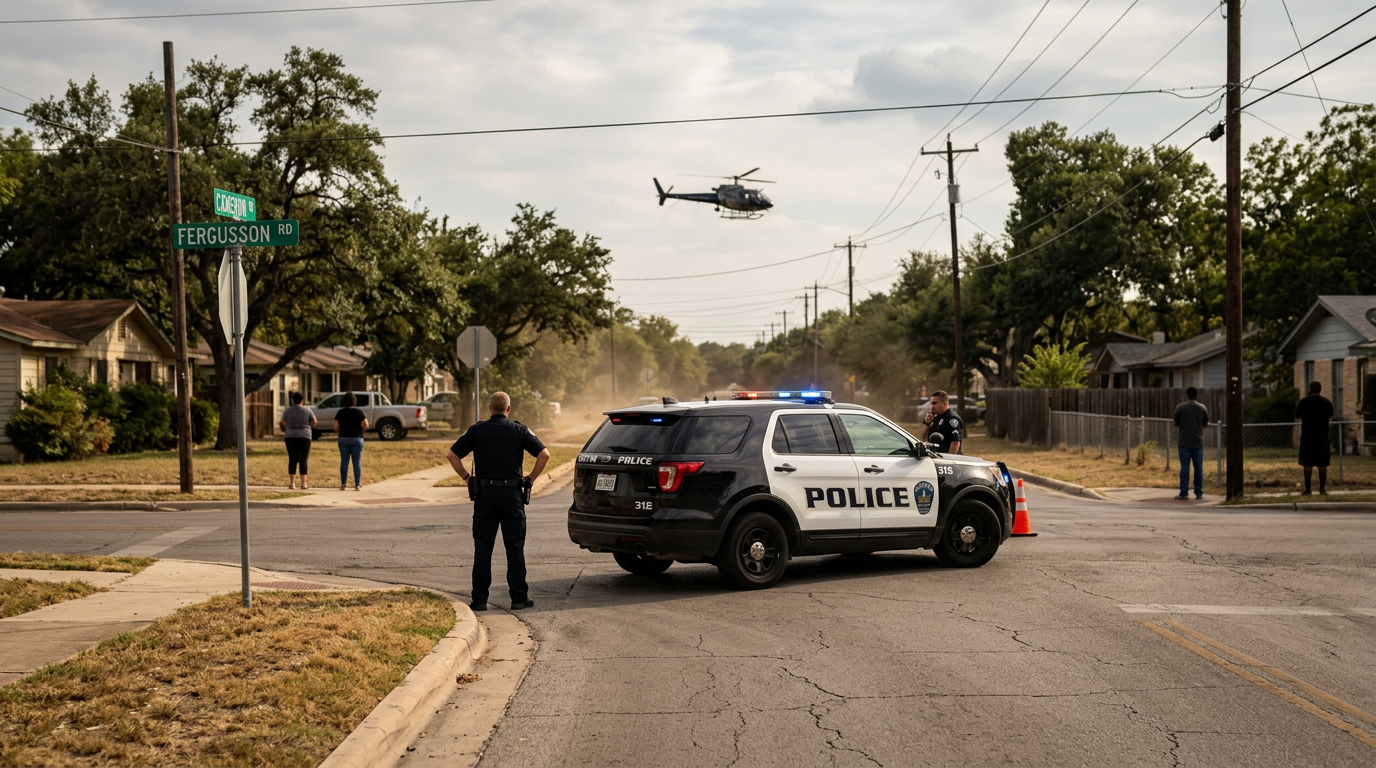
Residents in the Northeast Austin vicinity were alerted to a high-intensity law enforcement operation on July 20, 2026, sparked by reports of atmospheric gunfire in the residential corridor. Initial accounts from neighbors near Fergusson Road, situated just east of Cameron Road, documented the sound of at least two shotgun blasts followed by an immediate escalation of aerial surveillance. This specific region of Travis County has seen fluctuating response times in recent years, making the rapid deployment of multiple units a significant occurrence for the local community. Law enforcement utilized both traditional rotary-wing aircraft and modern unmanned aerial vehicles (UAVs) to establish a perimeter and scan for potential suspects or victims. Historically, the intersection of Cameron Road and the surrounding residential streets has served as a focal point for increased patrol activity due to its density and proximity to major transit arteries. In previous months, the Austin Police Department (APD) has prioritized technology-driven responses to shots-fired calls, leveraging drone programs to mitigate risks to ground officers while providing real-time situational awareness. This incident reflects an ongoing trend in Texas urban centers where aerial monitoring is the first line of defense in suburban-urban transition zones. The investigation remained active throughout the afternoon as officers worked to pinpoint the exact origin of the discharge and ensure neighborhood safety.
Texas relevance
This incident directly impacts the safety and security of Northeast Austin residents, a community that has become increasingly vocal about police visibility and response strategies. Texas cities, particularly Austin, are currently at the center of a statewide debate regarding the balance between high-tech surveillance and traditional community policing. The use of drones in this specific neighborhood underscores the shifting tactics of Texas law enforcement in managing public disturbances in highly populated Travis County districts. Furthermore, the deployment demonstrates the logistical capabilities of Austin's emergency units to respond to firearm-related reports in real-time within the Capital City's limits.
The Initial Disturbance Near Fergusson Road
The event began in the mid-afternoon hours when the audible discharge of a firearm, described by multiple witnesses as a shotgun, echoed through the Fergusson Road neighborhood. This area is characterized by a mix of established residential lots and proximity to commercial zones, making any reports of gunfire an immediate priority for dispatchers. Residents reported that the sounds were distinct and closely timed, suggesting a deliberate action rather than an accidental discharge.
Almost immediately following the reports, the quiet of the suburban neighborhood was replaced by the low-altitude hum of police surveillance. For many Texans living in the high-growth areas of Austin, these sudden escalations in police activity have become a point of concern regarding the overall stability of public safety. The immediate area was effectively cordoned off as authorities sought to determine if the shots were a result of a criminal altercation or a different type of disturbance.
Aerial Surveillance and Technological Response
The deployment of a police helicopter alongside several drones marks a sophisticated tactical response to what might have once been a routine patrol call. This 'eye in the sky' approach allows law enforcement to track individuals across backyard fences and densely wooded areas that are common in this part of Northeast Austin. The drones, specifically, provide a quiet and agile alternative to helicopters, allowing for high-definition thermal imaging and close-range observation without the logistical footprint of a full flight crew.
In Texas, the use of drones by police departments has seen a sharp increase as state laws have evolved to define the boundaries of surveillance and privacy. In this instance, the technology served as a force multiplier, giving the Austin Police Department the ability to sweep a multi-block radius in a fraction of the time it would take officers on foot. This capability is increasingly vital as the city grapples with the geographic spread of its population and the need for rapid assessment of potential threats.
Community Impact and Safety Concerns
Local residents took to social media and neighborhood watch groups to share information as the situation unfolded, highlighting a growing reliance on real-time community reporting. The presence of heavy law enforcement machinery often causes temporary panic in residential zones, leading to questions about the specific nature of the threat. For families living near Cameron Road, the visibility of the APD Air Unit is both a sign of protection and a reminder of the rising frequency of reported gun violence in the area.
The sociological impact of such incidents cannot be ignored. When a neighborhood becomes the site of a tactical operation, property values and the general sense of community well-being are frequently analyzed by local advocacy groups. In Austin, where growth is constant, maintaining the safety of established neighborhoods like Fergusson Road is essential for the city’s long-term health. The event on July 20 serves as a case study in how modern police tactics interface with everyday suburban life in Texas.
Logistics of the Austin Police Air Unit
The Austin Police Air Unit is one of the most active in the state of Texas, providing support for everything from high-speed chases to search-and-rescue operations. Operating out of local airfields, these units can reach Northeast Austin in minutes, providing a critical perspective that ground units lack. The coordination between the pilot, the drone operators, and the officers on the ground requires a seamless communication network that has been a point of pride for Austin’s technological infrastructure.
During this specific operation, the helicopter likely served as the primary observation platform while drones were used to investigate specific localized 'blind spots' between structures. This layered approach is becoming a standard operating procedure for Texas law enforcement agencies when dealing with firearm reports in areas where suspects could easily hide. The cost of such operations is high, but the potential to prevent a mass-casualty event or apprehend a dangerous suspect often justifies the expenditure in the eyes of city officials.
The Search for Suspects and Evidence
As the helicopters circled, ground units conducted a systematic search of the Fergusson Road area. Finding physical evidence of gunfire, such as shell casings or damage to property, is the first step in building a criminal case. In many instances of atmospheric gunfire, the perpetrator has already fled the scene by the time police arrive, making the aerial footage gathered by the drones essential for identifying vehicles or individuals leaving the area at the time of the shots.
Texas law is particularly stringent regarding the illegal discharge of firearms within city limits, categorized under various statutes ranging from disorderly conduct to deadly conduct depending on the intent and the environment. Investigators in this case are likely reviewing any available doorbell camera footage to supplement the evidence gathered by the police department's own technology. The goal remains to hold the responsible parties accountable and to deter future incidents of reckless behavior.
Looking Ahead: Public Safety in Northeast Austin
The outcome of this investigation will likely influence how patrol resources are allocated in Northeast Austin in the coming months. If the area continues to see a spike in firearm-related reports, residents may see an increase in static patrols or the implementation of ‘ShotSpotter’ technology, which is used in other Texas cities to detect and locate gunfire automatically. The tension between surveillance and resident privacy will remain a key topic at future Austin City Council meetings.
As the city moves into the latter half of 2026, the integration of law enforcement and community feedback will be vital. For now, the residents of Fergusson and Cameron Road are left to process the afternoon's events, hoping for a return to the quiet that typically defines their neighborhood. The incident serves as a stark reminder that in a rapidly changing city like Austin, the tools of public safety are evolving just as quickly as the challenges they are designed to meet.
Analysis
The rapid deployment of drones and helicopters in response to a 'shots fired' report signifies a clear strategic shift toward high-utilization of tech in Austin's policing model. While some residents view the heavy aerial presence as a necessary security measure to deter violent crime, others within the Texas political landscape argue it highlights the strain on ground-level staffing. If APD remains under-resourced in terms of patrol officers, we can expect to see an even greater reliance on drone units (UAVs) to clear scenes before physical intervention occurs. This event serves as a reminder that localized security issues in Austin quickly become part of a larger conversation regarding municipal budget priorities and the efficacy of non-traditional law enforcement tools.
Source attribution
This story was reported using a public release from the r/austin. Keep TX Red rewrote the coverage independently and links to the official statement for verification.
Frequently Asked Questions
- Was anyone injured during the shooting in Northeast Austin?
- As of the initial reports, there have been no confirmed injuries related to the discharge of the shotgun near Fergusson Road. Police are primarily investigating the source of the noise and looking for evidence of property damage or potential suspects.
- Why were both drones and a helicopter used by the police?
- Law enforcement agencies in Texas, including the Austin Police Department, use a combination of helicopters for wide-area surveillance and drones for close-range monitoring. This dual-layered approach helps officers see into areas that are difficult to reach on foot or by vehicle.
- Is it illegal to fire a shotgun within Austin city limits?
- Yes, discharging a firearm within the city limits of most Texas municipalities, including Austin, is generally illegal under 'Deadly Conduct' or municipal discharge ordinances, except in very specific circumstances like self-defense or at an authorized shooting range.
- What should residents do if they hear gunfire in their neighborhood?
- Residents are encouraged to stay inside, away from windows, and immediately call 911. Providing specific details such as the number of shots, the time of day, and any suspicious vehicles can be highly beneficial for responding officers.
Official Sources
Take the next step
Browse the Newsroom →Read more about Keep Texas Red → Our full guide to what Keep Texas Red means and why Texans support it.
Related Articles
Get Texas updates delivered weekly.
Independent Texas reporting on politics, policy, and daily life. One email a week. Unsubscribe anytime.
Keep TX Red Newsroom
The Keep Texas Red Editorial Staff produces nonpartisan explainers, policy breakdowns, and educational resources to help Texans understand how their government works. All content is reviewed for accuracy and updated regularly.
About Keep TX Red →