Moving to Dallas: Expert Tips for Transplants Navigating the Local Social Scene
A new arrival to Dallas sparks a wider discussion on the challenges and strategies for building a community in the fourth-largest metro area in the U.S.
Editorial disclaimer: Opinions and analysis on Keep TX Red are editorial content — not statements of fact. See our editorial standards.
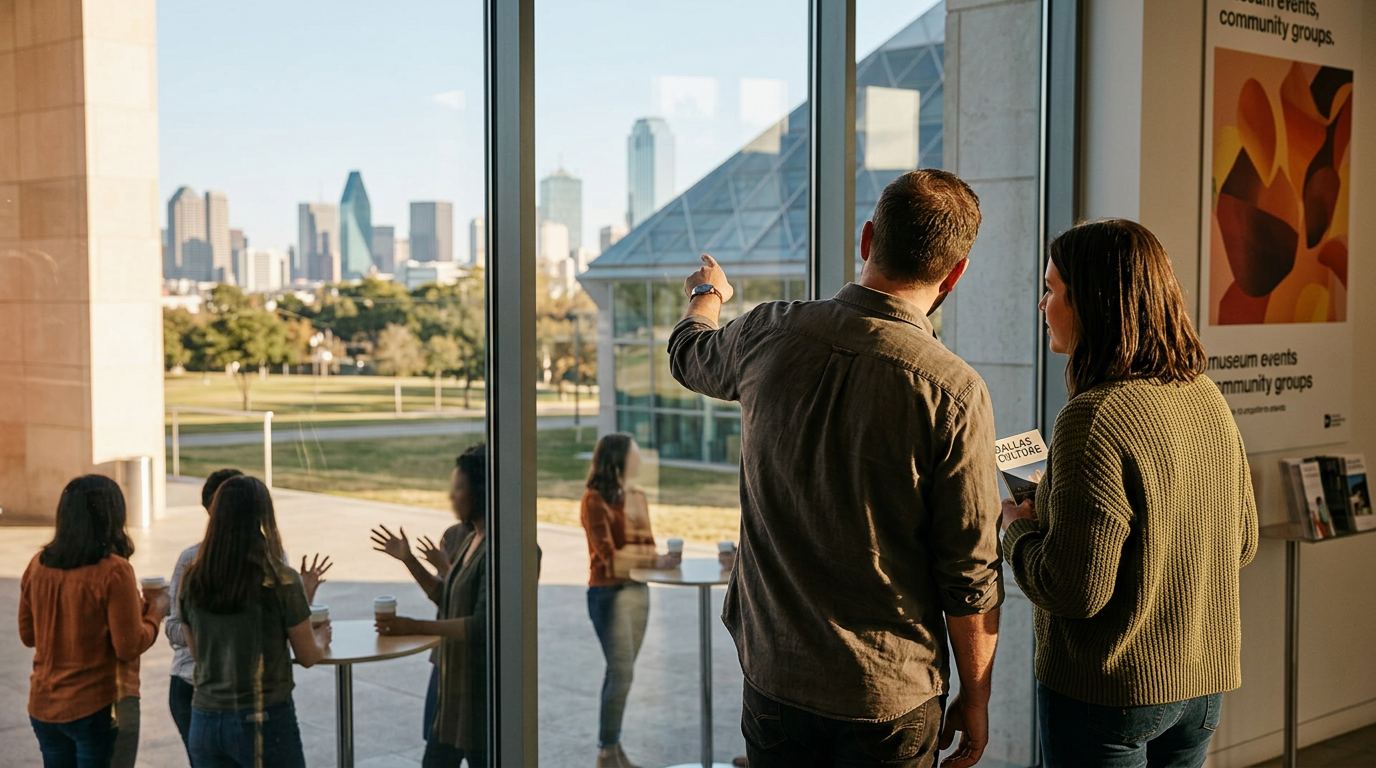
A recent arrival to the Dallas area has ignited a digital conversation regarding the social integration of new residents in one of the nation's fastest-growing regions. The individual, a 34-year-old father of two, shared his quest for a community that aligns with interests in intellectual pursuits, fine arts, and travel. This outreach highlights a common phenomenon in the Dallas-Fort Worth (DFW) metroplex, where thousands of new residents arrive annually, often leaving behind lifelong social networks for professional or lifestyle opportunities. Historically, Dallas has been a city built on networking and civic clubs, but as the digital age matures, the methods for 'finding one's tribe' have shifted from church pews and country clubs to online forums and activity-specific interest groups. In this particular instance, the newcomer expressed a desire to find a 'friend group' rather than just individual acquaintances, emphasizing the difficulty of breaking into established social circles as an adult with parental responsibilities. The request underscores the unique social vacuum created when a young professional moves with children, needing to balance personal intellectual interests with the logistical realities of raising primary school-aged kids. This situation is reflective of a broader urban trend in Texas, where the influx of new residents from diverse backgrounds is challenging the traditional, often insular social structures of local neighborhoods. Residents are increasingly turning to crowd-sourced advice to navigate the geography of a massive city where cultural hubs like the Dallas Museum of Art can be miles away from the quiet suburban enclaves where many families reside.
Texas relevance
This story is quintessential to the modern Texas experience, as the state continues to lead the nation in domestic migration. Specifically in North Texas, the challenge of social connectivity is a top-of-mind issue for city planners and community organizers who recognize that social isolation can negatively impact resident retention and local economic involvement. Historically, Texas culture has been defined by 'Western Hospitality,' a sentiment that is being stress-tested as major urban centers like Dallas grow more dense and transient. For a new Texan, the ability to find a supportive community in a metroplex of over 7.5 million people is the difference between thriving and feeling lost in the suburban sprawl.
The Evolution of Texas Hospitality
The concept of a 'friend group adoption' is a modern twist on the traditional Texas welcome. In decades past, a new neighbor in a Dallas suburb would likely be greeted with a welcome basket or an invitation to a local house of worship. As the population has exploded and the demographic makeup of North Texas has diversified, those traditional entry points into the community have become less universal. Newcomers today are often looking for specific cultural or intellectual compatibility that transcends simple geographic proximity.
This shift reflects the changing nature of the Dallas workforce. With a massive influx of tech, finance, and healthcare professionals from coastal states, the local social fabric is becoming more layered. The challenge for these new residents is that while they are surrounded by millions of people, the sheer scale of the DFW area can make it difficult to find a consistent 'group' that shares specific interests like art and travel, especially when coordinating around the busy schedules of children.
Navigating Social Life with Children
One of the most significant hurdles mentioned by the new resident is the role of children in adult social life. In a sprawling city like Dallas, social outings for parents often revolve around youth sports or school functions. However, there is an increasing demand for social spaces where parents can maintain their own identities and intellectual interests without sacrificing time with their children. This 'dual-track' social life is a common struggle for the modern Texas parent who wants to explore the Perot Museum or the Nasher Sculpture Center while also being part of a stable social unit.
Local experts suggest that the successful integration of families into the Dallas social scene often requires a multi-pronged approach. This includes joining local 'Dad groups' or 'Newcomer clubs' which are specifically designed to facilitate these connections. The difficulty remains in the 'adoption' of a new member into an existing circle, as established groups in North Texas often have years of shared history and internal dynamics that can be intimidating for an outsider to penetrate.
The Role of the Dallas Arts and Culture Scene
The mention of the Dallas Museum of Art and intellectual gatherings highlights the importance of the Dallas Arts District in the city's social identity. As the largest contiguous urban arts district in the United States, this area serves as a primary meeting ground for residents looking for more than just suburban entertainment. For many relocating to the area, these cultural institutions are not just places to view art, but are viewed as potential community centers where one might meet like-minded individuals.
However, geography plays a massive role in how these interactions manifest. A resident living in Frisco or Plano may find the commute to the downtown Dallas Arts District a barrier to frequent social engagement. This creates a reliance on digital platforms to foster initial connections before committing to the logistics of a physical meetup in the city center. The digital 'shout-out' for friends is becoming a necessary precursor to physical community involvement.
Strategies for Successful Social Integration
In the broader discussion following the newcomer's request, various strategies for social success in Texas have emerged. Long-time residents suggest that the 'hobby-first' approach is the most effective. By joining specific organizations—such as a local running club, a museum membership group, or a specialized volunteer organization—transplants can bypass the awkwardness of 'friend dating' and interact with people over a shared task or passion. This organic growth is often more sustainable than seeking a pre-made group.
Another effective method cited is the 'neighborhood watch and social' approach. Many North Texas HOAs and neighborhood associations have pivoted to hosting more frequent social mixers, recognizing that a sense of belonging is a key factor in home value and resident satisfaction. For a father of two, getting involved in these hyper-local events can provide a foundation of friendship for the children, which then creates a natural pathway for the adults to bond over shared local concerns and experiences.
The Digital Frontier of Local Friendship
Social media platforms and localized forums are increasingly acting as the 'front porch' of the modern Texas city. While some critics argue that digital interaction can be a poor substitute for in-person connection, in a metroplex as large as DFW, these tools are essential for narrowing down the pool of potential friends. They allow residents to vet compatibility and ensure that their values and interests align before investing the time expected in a 'friend group' dynamic.
For the 34-year-old father in this story, the act of posting his interests publicly is a form of vulnerability that is becoming more common among men in his age bracket. There is a growing recognition that loneliness is a significant issue in booming urban areas, and the direct 'adopt a friend' approach is a proactive way to combat the isolation that often accompanies a major move. This transparency helps skip the small talk and gets directly to the core of community building.
The Future of Urban Community in Texas
As Dallas continues to grow toward the 10-million-resident mark in the coming decades, the city will need to find new ways to help its people connect. Urban design that emphasizes walkable spaces and public gathering points will be crucial. Currently, much of North Texas is designed around the car, which naturally limits spontaneous social interactions. Future developments in neighborhoods like Deep Ellum, the Bishop Arts District, and West Dallas are attempting to create more 'collision points' where residents can meet naturally.
The story of one man looking for friends in a big city is a small-scale representation of a massive societal challenge. If Texas wants to remain a top destination for families and professionals, it must ensure that its cities are not just places to work, but places where people can truly belong. The success of this newcomer’s search will depend on his persistence and the willingness of established Texans to open their circles to those who have recently chosen to call the Lone Star State home.
Source attribution
This story was reported using a public release from the r/dallas. Keep TX Red rewrote the coverage independently and links to the official statement for verification.
Frequently Asked Questions
- Why is it difficult to find friend groups in Dallas?
- The Dallas-Fort Worth area is geographically massive and highly suburbanized, which can make consistent social interaction difficult. Many residents find that established friend groups have years of shared history, making it feel like a 'closed' environment to outsiders. Additionally, the car-centric nature of the city reduces the number of spontaneous meetings that occur in more walkable urban environments.
- What are the best places to meet people in Dallas for those with families?
- Besides school and youth sports events, many people find success at family-oriented cultural hubs like Klyde Warren Park, the Perot Museum of Nature and Science, and the Dallas Arboretum. Joining 'Newcomer' or 'New Neighbors' clubs in specific suburbs like Plano, Richardson, or Frisco is also a highly recommended strategy.
- How can I find intellectual or art-focused groups in North Texas?
- Becoming a member of the Dallas Museum of Art (DMA) or the Nasher Sculpture Center often provides access to member-only events, which are fertile ground for meeting others with similar interests. Additionally, many residents use sites like Meetup or LinkedIn local groups to find book clubs, philosophy forums, and art-discussion circles.
Official Sources
Take the next step
Browse the Newsroom →Read more about Keep Texas Red → Our full guide to what Keep Texas Red means and why Texans support it.
Related Articles
Get Texas updates delivered weekly.
Independent Texas reporting on politics, policy, and daily life. One email a week. Unsubscribe anytime.
Keep TX Red Newsroom
The Keep Texas Red Editorial Staff produces nonpartisan explainers, policy breakdowns, and educational resources to help Texans understand how their government works. All content is reviewed for accuracy and updated regularly.
About Keep TX Red →