Austin Mobile Vets See Demand Surge for High-Stress Pet Care Solutions
Discover how Austin pet owners are turning to mobile vets to reduce feline anxiety and bridge the gap in local animal healthcare services.
Editorial disclaimer: Opinions and analysis on Keep TX Red are editorial content — not statements of fact. See our editorial standards.
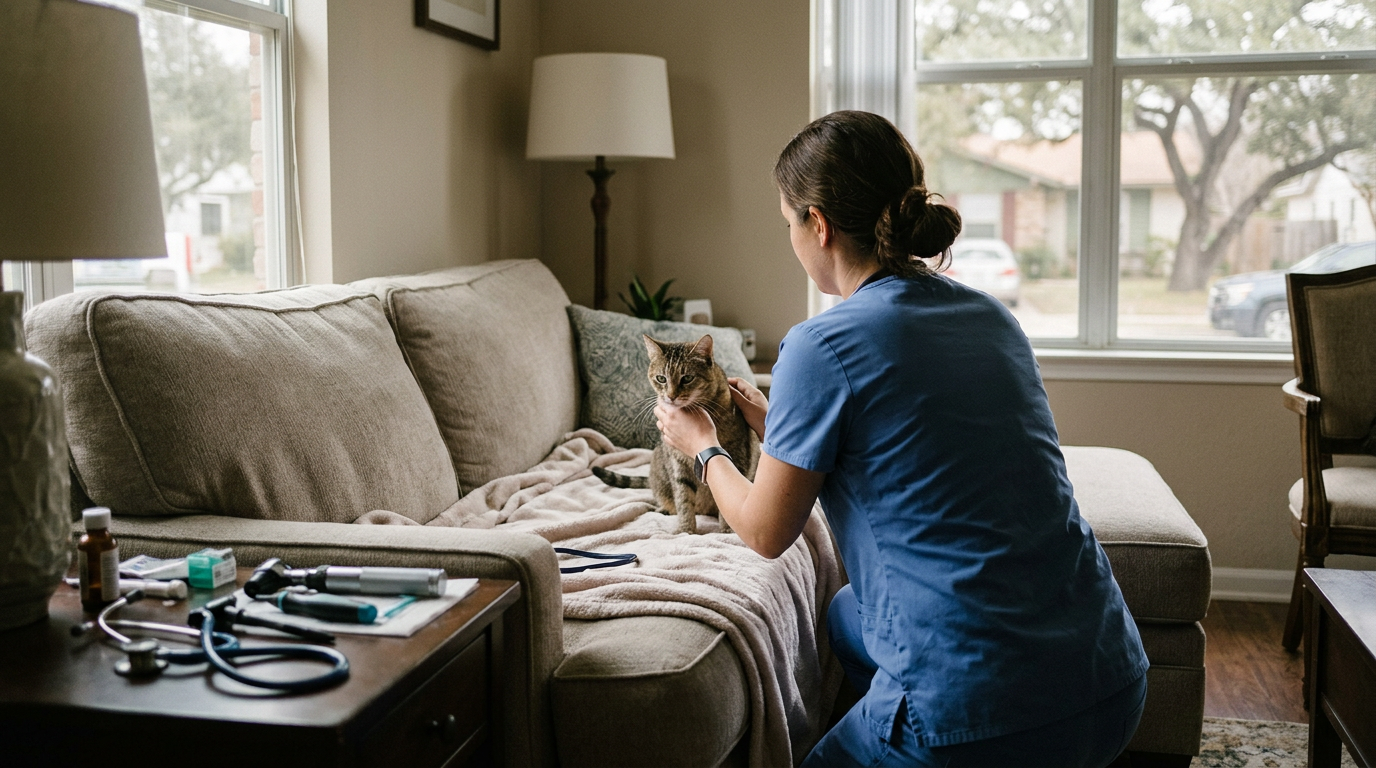
The demand for specialized at-home veterinary care is rising in Austin as pet owners seek alternatives to traditional clinical environments. For many animals, particularly cats, the journey to a brick-and-mortar office can be so traumatic that pharmacological interventions like gabapentin fail to bridge the gap in care. This necessity has birthed a growing niche of mobile practitioners who perform blood work, diagnostic testing, and routine exams within a private residence. By removing the high-stress variables of the car ride and the waiting room smells, these house-call providers ensure that medical data—from heart rates to blood pressure—remains representative of the animal's baseline state rather than an adrenaline-fueled spike. Historically, the shift toward mobile services in Central Texas reflects a broader nationwide trend toward personalized, on-demand medical logistics. Austin, known for its high concentration of pet owners and tech-savvy workforce, has become a primary market for these boutique veterinary models. While mobile clinics were once synonymous with rural large-animal practitioners caring for horses and cattle in the Texas Hill Country, the suburban and urban feline-only or small-animal mobile unit is now a staple of the local economy. These services cater to the specific needs of animals that suffer from severe environmental phobias, ensuring that critical preventative care is not skipped due to the logistical barriers of transportation.
Texas relevance
As a city that consistently ranks as one of the most pet-friendly in the United States, Austin's infrastructure for animal welfare is a critical component of its social fabric. The availability of house-call veterinarians in Travis and Williamson counties directly impacts the health statistics of the local pet population. In Texas, the regulatory environment managed by the Texas Board of Veterinary Medical Examiners ensures that these mobile units adhere to the same stringent standards as stationary hospitals, providing Austinites with a safe and regulated choice for their domestic animals.
The Evolution of Mobile Care in the Silicon Hills
In the early days of Austin's growth, veterinary medicine was largely centralized in a handful of long-standing hospitals. As the city expanded and traffic congestion became a daily obstacle for residents, the logistical nightmare of transporting a terrified pet across the MoPac Expressway or I-35 fundamentally changed the landscape of care. Mobile veterinarians began to fill this void, offering a way to bypass the stressors of urban navigation while providing high-quality medical attention.
Today's mobile vet units in Central Texas are often equipped with advanced technology that allows for on-site lab work and diagnostic imaging. This is a far cry from the rudimentary house calls of the past. For residents in neighborhoods like Mueller, Barton Hills, or the Domain, the convenience of a vet arriving at the front door is becoming a preferred luxury that aligns with the city's general move toward home-delivery services for everything from groceries to human urgent care.
The impact on felines is particularly noteworthy, as cats are notoriously sensitive to environmental changes. In Austin, many cat-specific practitioners have transitioned entirely to mobile models. They argue that seeing a cat in its own territory—near its favorite scratching post or sunspot—allows for a much more accurate assessment of the animal's health and behavior, ultimately leading to better medical outcomes for the pet owner.
Navigating Pharmacological Limitations for Anxious Pets
Commonly prescribed medications such as gabapentin or trazodone are often the first line of defense against pet anxiety during vet visits. However, as many Austin pet owners have discovered, these sedatives are not a universal solution. In cases of extreme phobia, the animal's fight-or-flight response can override the effects of the medication, rendering the vet visit impossible or dangerously stressful. This is where the house-call model becomes an essential medical tool rather than just a convenience.
When a pet remains in its home, its sympathetic nervous system is less likely to enter a state of hyper-arousal. For the veterinarian, this means they can collect blood samples or perform physical exams without the risk of the animal injuring itself or the staff. In the Austin area, practitioners often use the home environment to observe the pet’s gait, breathing, and interactions in a natural state, which provides insights that are often hidden when an animal is 'shutting down' in a cage at a traditional clinic.
The reliance on home visits also reduces the need for heavy sedation, which is a significant concern for owners of senior pets or those with underlying heart conditions. By minimizing the stress of the event, the dose of medication required—if any—is drastically reduced, making the entire procedure safer for the animal. This holistic approach to stress management is a hallmark of the modern Austin veterinary scene.
Economic Implications for Austin Veterinarians
The business model for mobile veterinarians in Travis County is distinct from traditional practices. While a physical clinic requires significant investment in real estate and facility maintenance, a mobile practitioner invests in specialized vehicles and portable diagnostic equipment. This allows for a more flexible schedule and a higher degree of personalized attention per patient, which many Austin residents are willing to pay a premium for.
For the veterinarian, this model also combats the high rates of burnout prevalent in the industry. By seeing fewer patients per day but spending more time with each one, practitioners in the Austin area report higher job satisfaction and improved relationships with their clients. The direct-to-consumer nature of these visits fits perfectly within the 'Keep Austin Weird' ethos of supporting independent, local, and specialized business ventures.
Furthermore, the competitive nature of the Austin market has led to the development of mobile vet 'concierge' services. These businesses often include 24/7 access to records and telehealth consultations as part of their membership packages. This innovation is transforming how pet health is managed, moving it from an intermittent crisis-based interaction to a continuous, supportive relationship between the vet, the owner, and the animal.
Technological Advancements in Portable Diagnostics
The ability to conduct comprehensive lab work inside an Austin living room is a result of rapid technological advancements in miniaturized medical devices. Portable blood analyzers, digital stethoscopes, and even handheld ultrasound machines are now standard equipment for mobile vets operating in the region. This technology ensures that the quality of care is not compromised by the lack of a permanent surgical suite.
In many cases, results from blood chemistry panels can be generated in minutes while the veterinarian is still at the home. This immediate feedback allows for instant adjustments to treatment plans or the immediate prescription of necessary medications. For the busy Austin professional, this efficiency is a primary driver in the selection of a mobile provider over a stationary hospital.
Additionally, the use of cloud-based record keeping ensures that if a pet does eventually need specialized surgery or emergency care at a 24-hour facility like Central Texas Veterinary Specialty & Emergency, the records from their home visits can be shared instantly. This interconnectedness is a crucial safety net for the local pet community, ensuring continuity of care across different medical environments.
Future Outlook for Austin's Pet Care Industry
As Austin continues to see a population influx from states like California and New York, the demand for high-end, mobile pet services is expected to climb. New residents often look for the same level of service they had in other major metropolitan hubs, and the Austin veterinary community is quickly adapting to meet these expectations. We are likely to see more 'fear-free' certified mobile practices opening across the state.
The future may also hold more collaborative efforts between traditional clinics and mobile practitioners. A traditional clinic might outsource its follow-up care or routine screenings to a mobile partner to free up its surgical suites for more intensive procedures. This synergy would create a more robust healthcare ecosystem for the thousands of dogs and cats residing in the Austin metro area.
Ultimately, the growth of house-call veterinary services reinforces Austin’s reputation as a leader in innovative lifestyle solutions. By prioritizing the mental health of pets and the convenience of their owners, the city is setting a standard for animal care that balances modern technology with the compassionate, individualized attention that defines the best of Texas's veterinary traditions.
Analysis
The emergence of these specialized requests in digital town squares like Reddit indicates a shift in modern Texan consumer expectations. Pet owners are no longer satisfied with 'one-size-fits-all' medical solutions that require their animals to endure extreme distress. This market gap provides a lucrative opportunity for independent Texas veterinarians to launch mobile practices with lower overheard than traditional clinics, while simultaneously addressing a significant animal welfare concern. The transition toward localized, home-based care also alleviates the strain on Austin’s crowded physical clinics, which often face long wait times and staffing shortages.
Source attribution
This story was reported using a public release from the r/austin. Keep TX Red rewrote the coverage independently and links to the official statement for verification.
Frequently Asked Questions
- What services can an Austin mobile vet perform at my house?
- Most mobile veterinarians in Austin can perform routine physical exams, vaccinations, blood draws, and urinalysis. Many also offer specialized geriatric care, hospice services, and minor treatments for ear infections or skin issues. However, major surgeries or advanced imaging like X-rays or CT scans typically still require a visit to a stationary facility.
- Is a house call more expensive than a traditional vet visit?
- Yes, generally there is a 'travel fee' or 'house call fee' associated with mobile visits in addition to the standard exam and treatment costs. In Austin, this reflects the time the veterinarian spends in traffic and the convenience of personalized service. Many owners find the cost worth it to avoid the stress of transporting an anxious pet.
- Are mobile vets in Texas properly licensed?
- Absolutely. All mobile veterinarians operating in the State of Texas must be licensed by the Texas Board of Veterinary Medical Examiners. They are held to the same medical and ethical standards as veterinarians working in brick-and-mortar hospitals, and their mobile units are subject to specific regulatory requirements.
Official Sources
Take the next step
Browse the Newsroom →Read more about Keep Texas Red → Our full guide to what Keep Texas Red means and why Texans support it.
Related Articles

Get Texas updates delivered weekly.
Independent Texas reporting on politics, policy, and daily life. One email a week. Unsubscribe anytime.
Keep TX Red Newsroom
The Keep Texas Red Editorial Staff produces nonpartisan explainers, policy breakdowns, and educational resources to help Texans understand how their government works. All content is reviewed for accuracy and updated regularly.
About Keep TX Red →