Mastering the Kitchen: Exploring Comprehensive Culinary Courses Across Austin
Austin residents are seeking more than one-off classes, driving demand for multi-week culinary programs that teach foundational home cooking techniques.
Editorial disclaimer: Opinions and analysis on Keep TX Red are editorial content — not statements of fact. See our editorial standards.
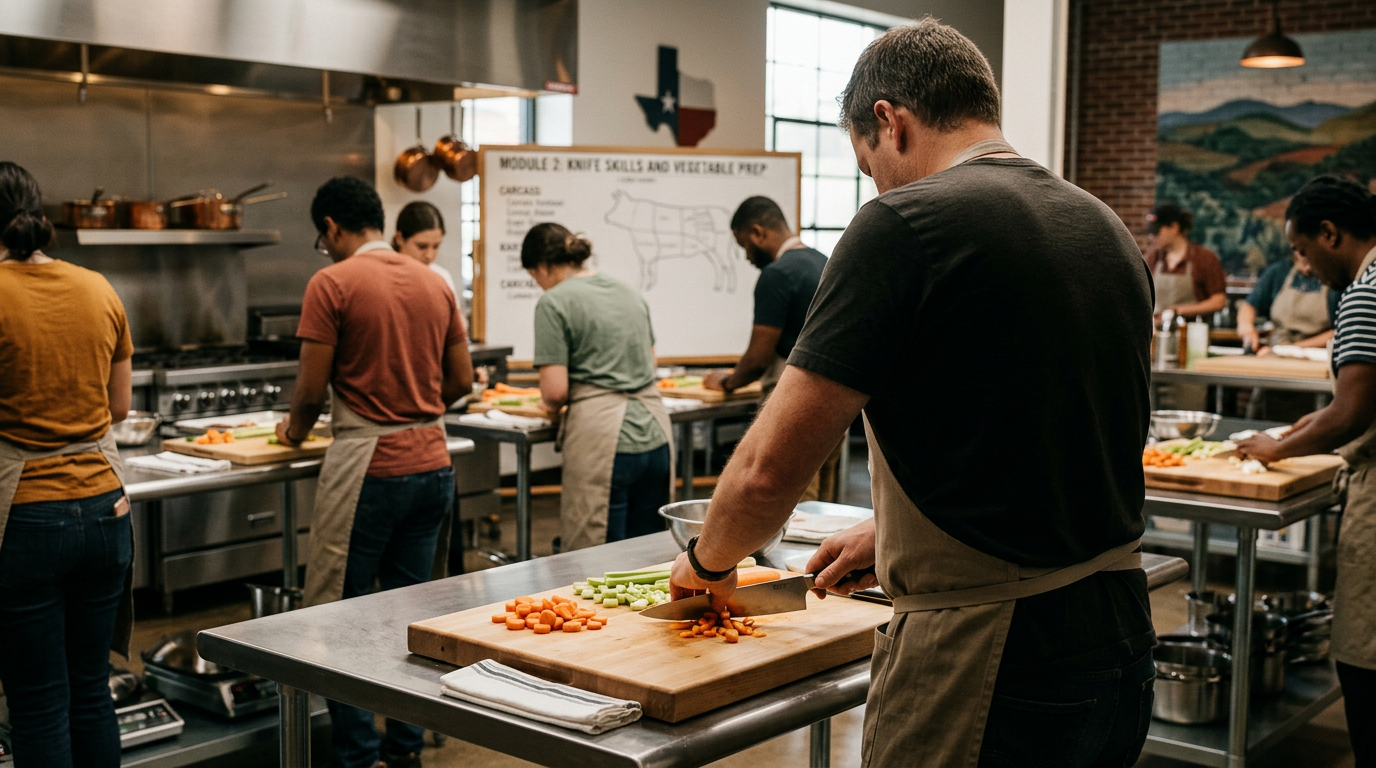
The culinary landscape in Austin is undergoing a shift as residents move beyond the occasional recreational outing toward a deeper desire for foundational food education. While the city has long been known for its vibrant restaurant scene, a growing number of locals are seeking structured, multi-week programs designed to build professional-grade skills for the home kitchen. These aspiring chefs are specifically looking for curriculum-based learning that covers essential topics such as knife safety, complex flavor profiling, and heat management techniques. Historically, Austin has offered a plethora of one-night workshops focused on specific dishes like sushi or pasta, but the current trend highlights a demand for tiered education that allows students to grow their confidence over a series of sessions rather than a single afternoon. Historically, central Texas has maintained a strong connection to food through its barbecue traditions and farmhouse cooking. However, as the urban population in Austin continues to expand, many newer residents find themselves disconnected from these generational skills. The current surge in interest for beginner-led, multi-session courses mirrors broader national trends where the 'DIY' movement has shifted from home renovation to refined culinary arts. By focusing on the mechanics of cooking rather than just following a recipe, these programs aim to turn the average resident into a self-sufficient cook who understands the 'why' behind the ingredients. This foundational approach ensures that the knowledge gained is transferable to any cuisine, allowing locals to experiment with the diverse flavors found throughout the Texas Capital.
Texas relevance
This topic is vital to the Austin community as it reflects the evolving lifestyle needs of one of the fastest-growing metropolitan areas in Texas. As the cost of dining out rises across the state, the ability to prepare high-quality meals at home becomes both a financial asset and a cultural touchstone. For residents of Central Texas, food is often the center of social interaction, and the pursuit of better cooking skills strengthens the local food ecosystem. Furthermore, as Austin positions itself as a global tech and culture hub, the integration of professional-level culinary training for laypeople adds another layer to the city’s educational profile, supporting local businesses that provide these specialized training services.
The Evolution of Austin’s Recreational Cooking Scene
In previous decades, the recreational cooking options in Austin were largely dominated by large retailers or niche boutique shops offering specialized, single-topic classes. These were often viewed as date-night activities rather than serious educational endeavors. However, as the city’s demographics have shifted toward a younger, more health-conscious and hands-on population, the desire for a comprehensive 'culinary boot camp' has intensified.
These multi-week programs differ from standard classes by focusing on the 'building block' method. Instead of learning how to make a single Thai curry, students might spend the first week exclusively on knife work, the second on pan sauces, and the third on heat control. This structured progression is what local enthusiasts are now prioritizing, seeking out institutions that treat home cooking with the same technical respect as professional catering.
The expansion of these programs also reflects a broader desire for community. By attending a class that meets once a week for a month or longer, Austin residents are finding ways to bond with neighbors over shared goals. In an era where digital interactions often trump physical ones, the shared experience of the kitchen provides a rare and valuable social outlet.
From Hobbyist to Home Chef: The Technical Shift
The primary hurdle for many beginner cooks is not a lack of recipes—which are plentiful online—but a lack of confidence in technique. Austin's newest culinary students are asking for instruction on the physics and chemistry of the kitchen. They want to know why certain oils have different smoke points and how to properly hone a carbon steel knife, a tool that is becoming a staple in Texas kitchens.
Focusing on the 'Flavor Profile' is another key component of this educational movement. Rather than just following instructions, students are learning how to taste as they go, adjusting salt, fat, acid, and heat to achieve balance. This allows a cook to walk into an Austin grocery store and buy what is fresh and seasonal, knowing they have the skills to turn those ingredients into a meal without a precise map.
This technical mastery is particularly relevant in the context of Texas's diverse climate. Understanding how humidity affects baking or how high heat interacts with different cuts of meat is essential for anyone living in the Lone Star State. These courses provide the environmental context that national YouTube tutorials often omit.
Navigating the Local Culinary Schools
Several institutions in the Austin area have begun to fill the void for multi-week training. While the legendary Auguste Escoffier School of Culinary Arts remains a gold standard for professionals, they often provide options that can be adapted for the serious home cook. Meanwhile, smaller entities like Central Market's cooking schools frequently rotate their curriculum to include 'series' classes that cater to those wanting more than a one-off experience.
Beyond the big-name schools, independent chefs in the Austin area are increasingly offering private or small-group 'boot camps.' These are often held in professional kitchens during off-hours, providing an authentic look at the tools of the trade. For many residents, the opportunity to learn in a real-time environment is worth the investment, as it demystifies the chaotic reputation of professional cooking.
A major draw for these local programs is the emphasis on Texas-sourced products. Instructors frequently highlight how to utilize local produce, Hill Country wines, and grass-fed beef. This not only teaches a skill but also fosters a deeper appreciation for the local supply chain and the hardworking farmers within the Central Texas region.
The Importance of Knife Skills in Foundational Training
If there is one skill that defines the transition from a novice to an intermediate cook, it is knife work. Many Austin residents have expressed that they feel hampered by slow prep times and a fear of injury. Multi-week courses prioritize this early on, teaching students the 'claw' grip and the proper way to utilize the weight of the chef's knife.
By mastering these skills, home cooks find that the barrier to entry for healthy eating is significantly lowered. Preparing a vegetable-heavy meal becomes a five-minute task rather than a thirty-minute chore. In the fast-paced environment of a city like Austin, time-saving techniques are as valuable as the recipes themselves.
Furthermore, proper maintenance of equipment is a core part of any reputable series. Learning how to use a honing rod and when to take a blade to a professional sharpener ensures that the tools in a Texan's kitchen last a lifetime. This sustainable approach to kitchenware mirrors the broader environmental values held by many in the community.
Cultivating Flavor: The Art of Seasoning
Beyond the physical act of cutting and heating, the intellectual side of cooking involves understanding how flavors interact. Austin's diverse food scene, influenced by Mexican, Asian, and traditional Southern cuisines, provides a unique backdrop for learning these principles. Students are taught how to build layers of flavor, starting with aromatics like onions and garlic and finishing with fresh herbs.
Understanding the 'why' behind seasoning allows a cook to pivot when an ingredient is unavailable. If a local market is out of a specific chili, a trained cook knows which substitute will provide the necessary heat and smoke. This flexibility is a hallmark of an advanced home cook and is a primary goal for those seeking long-term courses.
The use of acidity is often a revelation for beginners. Learning how a squeeze of lime or a splash of Texas-made vinegar can brighten a heavy dish is a common 'lightbulb moment' in these classes. These small, nuanced lessons are what separate a tiered course from a simple recipe demonstration.
Future Outlook for Austin Home Cooks
As the demand for culinary education grows, we can expect to see even more specialized programs popping up throughout Travis and Williamson counties. From sourdough fermentation to fire-based outdoor cooking, the range of multi-week options is likely to expand. This trend is a positive sign for the city's overall health and the vitality of its local food culture.
The shift toward intentional cooking also has long-term implications for the Austin restaurant industry. As patrons become more knowledgeable about techniques and ingredients, their expectations for professional dining rise. This creates a feedback loop where local chefs must continue to innovate to impress their increasingly savvy customers.
Ultimately, the goal for many Austin residents is to turn the kitchen from a place of stress into a place of creativity. By investing in a multi-week course, they are not just learning to cook; they are reclaiming a fundamental part of the human experience and ensuring that the tradition of home-cooked meals remains a vibrant part of Texas culture.
Analysis
The shift toward multi-week culinary training in Austin suggests a maturing market where residents are no longer satisfied with 'entertainment-style' cooking. This trend aligns with the broader Texas value of self-reliance; knowing how to butcher a chicken, sharpen a blade, or balance acidity in a sauce is a form of modern survivalism. While high-end culinary schools cater to those seeking a career change, the gap in the market for 'serious amateur' education provides a significant opportunity for local chefs and boutique schools to thrive. This movement also supports the local agricultural economy, as more skilled home cooks are likely to seek out higher-quality, locally sourced Texas ingredients at farmers' markets rather than relying on pre-packaged goods.
Source attribution
This story was reported using a public release from the r/austin. Keep TX Red rewrote the coverage independently and links to the official statement for verification.
Frequently Asked Questions
- What is the difference between a recreational class and a culinary series?
- A recreational class is typically a one-time event focused on a single dish or theme, such as making tacos. A culinary series lasts several weeks and follows a curriculum that builds on itself, starting with basic skills like knife work and progressing to complex techniques like sauce making and protein fabrication.
- Are there professional culinary schools in Austin that offer classes for amateurs?
- Yes, institutions like the Auguste Escoffier School of Culinary Arts and various community colleges sometimes offer workshops or short-term programs for non-professionals. Additionally, upscale grocers like Central Market offer tiered classes specifically for home cooks.
- Why should I take a class instead of watching videos online?
- While online tutorials are helpful, in-person classes provide immediate feedback from an instructor. This is crucial for physical skills like knife handling and for sensory tasks like tasting, where a teacher can help you identify exactly when a dish is perfectly seasoned.
- Is it expensive to attend a multi-week cooking course in Austin?
- Costs vary depending on the institution and the ingredients used. However, many residents view it as a long-term investment that eventually saves money by reducing the frequency of dining out and improving the efficiency of home grocery usage.
Official Sources
Take the next step
Browse the Newsroom →Read more about Keep Texas Red → Our full guide to what Keep Texas Red means and why Texans support it.
Related Articles



Get Texas updates delivered weekly.
Independent Texas reporting on politics, policy, and daily life. One email a week. Unsubscribe anytime.
Keep TX Red Newsroom
The Keep Texas Red Editorial Staff produces nonpartisan explainers, policy breakdowns, and educational resources to help Texans understand how their government works. All content is reviewed for accuracy and updated regularly.
About Keep TX Red →