Houston Business Marketing Shifts Toward Artificial Intelligence Advertising Trends
Local business owners in Houston are increasingly adopting AI-generated visuals for advertising, sparking debates over authenticity and quality.
Editorial disclaimer: Opinions and analysis on Keep TX Red are editorial content — not statements of fact. See our editorial standards.
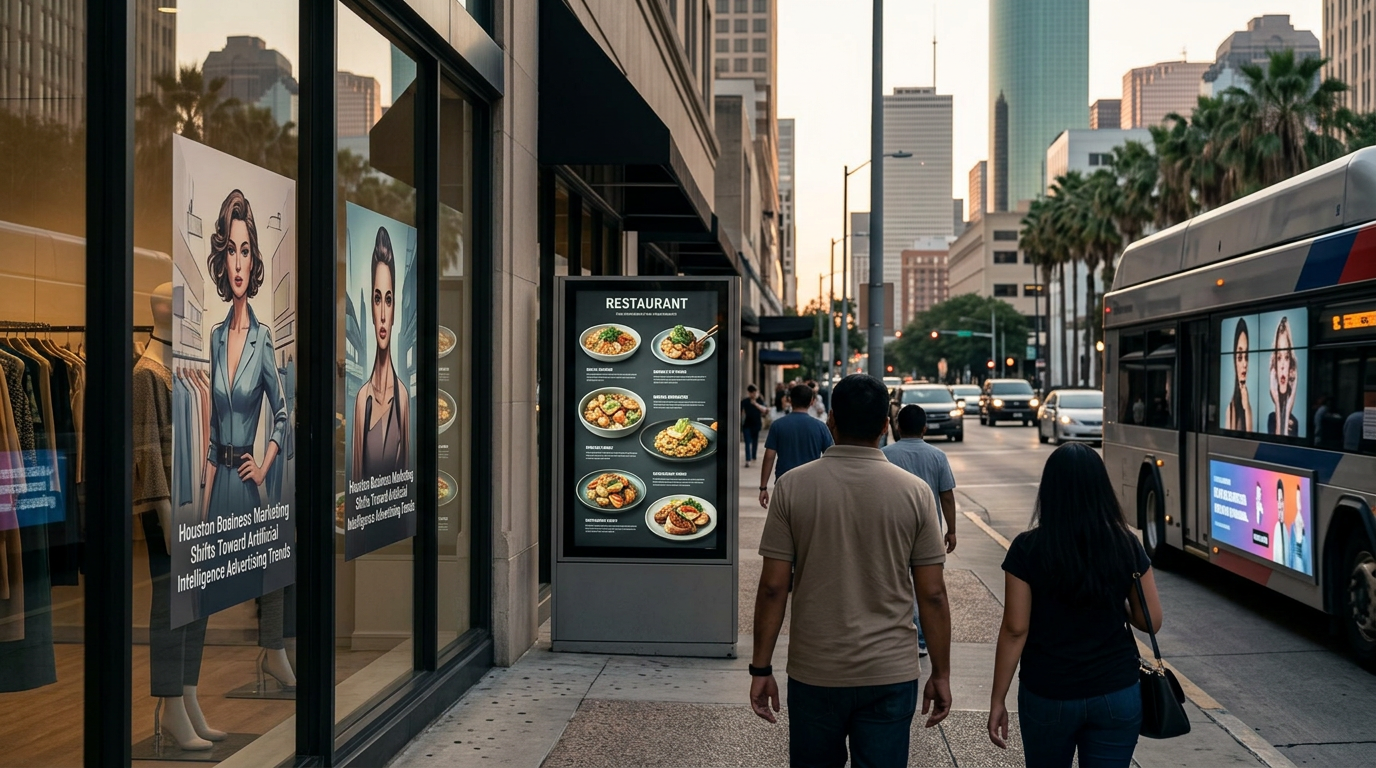
In the sprawling metropolitan hub of Houston, a noticeable shift is occurring within the local commercial landscape as small and medium-sized businesses pivot toward artificial intelligence for their marketing needs. This transition is characterized by the use of AI-generated imagery and text in promotional materials, ranging from restaurant menus to digital storefront advertisements. Traditionally, local businesses relied on professional photography or basic graphic design, but the accessibility of high-powered generative tools has democratized the ability to create complex visual assets at a fraction of the cost. This trend is not isolated to Houston, yet the city's diverse and vast business ecosystem is serving as a major testing ground for how consumers react to machine-generated branding. Historically, advertising in Texas has centered on regional authenticity and community connection. From the iconic 'Don't Mess with Texas' campaign to localized radio spots, the human element has always been the cornerstone of the state's commercial identity. The rise of AI marks a significant technological milestone that mirrors previous shifts, such as the move from print to social media marketing in the early 2010s. As businesses in Harris County navigate the post-pandemic economic environment, many are looking for ways to cut overhead costs while maintaining a constant presence in the digital aesthetic. The use of AI represents the latest effort to reconcile the need for high-volume content with limited marketing budgets, though it brings a new set of challenges regarding consumer trust and visual consistency. While the technology offers efficiency, it has begun to spark a backlash among residents who value transparency in local commerce. The visual 'uncanny valley'—where images look almost real but possess distracting flaws—has become a point of contention in online community discussions. This friction highlights a broader cultural debate regarding the value of human-created art versus algorithmically generated convenience. As the technology continues to evolve, the local Houston market is increasingly divided between those who see AI as a necessary tool for survival in a competitive economy and those who believe it erodes the unique character of the city’s neighborhood establishments.
Texas relevance
As the largest city in Texas and the fourth largest in the United States, Houston serves as a critical barometer for economic and technological trends in the Lone Star State. When businesses in a city of this scale adopt new tools like generative AI, it signals a broader shift across the Texas business landscape. This is relevant to Texans because it impacts the labor market for local photographers, graphic designers, and creative agencies who have long supported the regional economy. Furthermore, the debate over AI advertising touches on the Texas values of authenticity and fair competition, as consumers decide whether they will support businesses that replace human craftsmanship with automated processes.
The Economic Logic of Automated Design
The primary driver behind the surge of AI in Houston's business sector is undeniably financial. Local small business owners often operate on razor-thin margins, especially with the rising costs of rent and supplies in the Houston area. In the past, a professional branding package could cost several thousand dollars, including photo shoots and layout design. AI tools now allow a business owner to generate those same assets for a nominal monthly subscription fee, providing a level of polish that was previously unattainable for a neighborhood shop.
Moreover, the speed at which AI can produce content allows businesses to react to trends in real-time. If a Houston sports team wins a major game, a local retailer can generate a themed advertisement within minutes rather than waiting days for a designer to return a draft. This agility is becoming a requirement in the modern digital marketplace, where the life cycle of content is shorter than ever. While quality remains a variable, the sheer volume of output possible through automation is a powerful incentive for entrepreneurs looking to expand their reach without expanding their payroll.
However, this economic efficiency carries secondary costs that are not immediately visible on a balance sheet. The reduction in demand for entry-level creative work in the city could lead to a 'brain drain' of young talent moving to other markets. Houston has traditionally been a place where creators could find steady work supporting the local oil and gas, medical, and hospitality industries. If those industries fully automate their marketing needs, the cultural fabric that those creators support may start to fray, leading to a more generic urban environment.
Visual Flaws and the Consumer Reaction
The reception from the public has been far from universally positive. Residents frequenting online forums and community boards have noted that AI-generated ads often feature anatomical anomalies, nonsensical text in the background, or lighting that feels unnatural. These 'hallucinations' by the AI model can detract from the product being sold, leading some consumers to question the quality of the business itself. In more extreme cases, customers have reported feeling misled when a dish served at a restaurant looks nothing like the AI-generated masterpiece displayed on the digital menu.
This gap between expectation and reality is particularly sensitive in a city that prides itself on its culinary and cultural diversity. Houstonians are known for their discerning tastes, and many view the use of AI as an 'authenticity tax' that they aren't willing to pay. When a business uses a generated image of a generic person rather than a member of the local community, it can create a sense of detachment. The personal connection that often drives loyalty to independent Texas businesses is at risk of being replaced by a cold, algorithmic perfection that feels disconnected from the streets of Houston.
The feedback loop from consumers is beginning to influence how businesses use these tools. Some owners are realizing that 'pure' AI generation can be off-putting and are instead using a hybrid approach. They might use AI to brainstorm layouts or edit backgrounds while ensuring the central subject—such as the actual food or products—remains a real photograph. This middle ground aims to capture the benefits of technological efficiency without alienating the customer base that values the genuine 'brick and mortar' experience.
The Role of Local Tech Hubs
Houston’s burgeoning tech scene, particularly around the Ion and various innovation districts, is playing a quiet role in this transition. Local developers and startups are creating plugins and platforms specifically designed to help small businesses integrate AI into their workflows. These local innovators argue that by providing better tools, they can help business owners avoid the common pitfalls of 'bad' AI. The goal of many Houston-based tech firms is to make these high-end capabilities accessible to the average person, empowering those who may not have a background in traditional arts.
As these tools become more localized, we may see AI models specifically trained on 'Texas' aesthetic data. Imagine an AI that understands the specific nuances of Gulf Coast architecture or the unique palette of a Texas sunset. This would reduce the generic nature of current AI-generated content and help keep the visuals grounded in the local environment. The tech community in Houston is increasingly focused on 'responsible AI,' which includes guidelines on how to use synthetic media without deceiving the public about the nature of the products or services offered.
However, the rapid pace of development often outstrips the ability of the community to establish norms. While tech leaders promote the benefits, the average business owner is often just trying to keep up with the competition. This leads to a trial-and-error period where the city's digital spaces are filled with experimental marketing. The tension between the Silicon Bayou's push for innovation and the traditional values of the city's older residential districts will likely define the next decade of Houston’s commercial evolution.
Legal and Ethical Implications in Texas
The use of AI in advertising also raises significant legal questions that Texas legislators and courts may soon have to address. Issues regarding copyright, the right of publicity, and deceptive trade practices are at the forefront of this technological shift. If a Houston business uses an AI-generated image that too closely resembles a real local figure or uses a style that is clearly stolen from a specific local artist, it could lead to litigation. Texas has strong protections for individual likenesses, and the intersection of these laws with generative technology remains a gray area.
Ethically, there is also the question of disclosure. Should a business be required to label an image as 'AI-generated' if it appears to be a real photo? Some consumer advocacy groups in Texas are beginning to push for transparency standards, arguing that customers have a right to know if what they are looking at is a representation of reality or a machine-made composite. This is especially true for industries like real estate or high-end dining, where visual fidelity is a primary selling point. Transparency could become a competitive advantage for those who stick to traditional methods.
Furthermore, the ethical debate extends to the environmental and social impact of the AI models themselves. Large-scale computing requires immense amounts of power and water for cooling data centers—resources that are of significant concern to Texans, particularly regarding the stability of the ERCOT power grid. As businesses shift their marketing to the cloud, the cumulative energy footprint of 'everyday' AI use becomes a factor in the state’s broader energy and infrastructure discussions. The preference for AI is not just a marketing choice; it is an infrastructure choice that ties back to the state's resources.
The Future of Professional Services
The professional creative class in Houston is currently in a state of adaptation. Rather than fighting the technology, many local photographers and ad agencies are incorporating AI into their service offerings. They are positioning themselves as professional 'prompters' and curators who can ensure that AI-generated assets meet a certain standard of quality and brand alignment. This shift suggests that while the tasks of a marketer are changing, the need for human oversight and strategic thinking remains as high as ever.
We are seeing a bifurcated market emerge: high-end luxury brands in the Galleria area and River Oaks continue to invest in bespoke, human-led creative campaigns to maintain an air of exclusivity. Meanwhile, 'street-level' businesses in areas like Montrose or the Heights are using AI to maintain a constant stream of social media activity. This division could define the 'look' of Houston in the future, where human-made artistry becomes a luxury good, while AI-generated content becomes the default for everyday consumption.
Ultimately, the long-term viability of AI in Houston's advertising will depend on its ability to transcend the 'gimmick' phase. Once the novelty wears off, businesses will have to decide if these tools truly help them connect with their customers or if they create a barrier to genuine engagement. The Resilience of Houston’s community spirit suggests that if AI starts to feel too artificial, the city will find a way to pivot back to more personal, human-centric forms of communication. For now, the experiment continues on every billboard and phone screen across the metroplex.
Analysis
From a market perspective, the adoption of AI is an inevitable response to the increasing pressure of the attention economy. In a city as fast-paced as Houston, businesses feel compelled to churn out fresh content daily to stay relevant in social media algorithms. The move toward AI is less about a rejection of human creativity and more about the brutal reality of inflation and scaling costs. However, there is a risk that this trend could homogenize the vibrant, diverse visual culture of Houston's local districts. If every taco truck and boutique uses the same generic AI prompts, the distinct 'Texan' feel of our local shops may give way to a sterile, globalized digital aesthetic. The success of this transition will likely depend on whether businesses use AI to supplement human creativity or to replace it entirely.
Source attribution
This story was reported using a public release from the r/houston. Keep TX Red rewrote the coverage independently and links to the official statement for verification.
Frequently Asked Questions
- Why are Houston businesses switching to AI for advertising?
- The primary reasons are cost-efficiency and speed. AI tools allow businesses to create professional-looking images and marketing copy for a small fraction of the cost of hiring human photographers or designers. This is especially attractive for small businesses dealing with inflation and high operating costs.
- Is AI-generated advertising legal in Texas?
- Currently, it is legal, but it exists in a regulatory gray area. Issues such as copyright ownership of AI images and potential deceptive trade practices are subject to ongoing legal review. Texas has strong laws regarding personal likeness and truth in advertising that may eventually limit how AI can be used.
- How can consumers tell if an ad is AI-generated?
- Common signs include 'uncanny' features such as distorted hands or faces, blurry or nonsensical text in the background, and lighting that doesn't match the environment. Additionally, AI-generated foods often look 'too perfect' or have textures that don't match reality.
- Does this trend affect the local Houston job market?
- Yes. There is a decreased demand for entry-level graphic design and photography work as businesses handle these tasks in-house with AI. However, there is a rising demand for specialists who can manage and refine AI tools to ensure they meet brand standards.
Official Sources
Take the next step
Browse the Newsroom →Read more about Keep Texas Red → Our full guide to what Keep Texas Red means and why Texans support it.
Related Articles

Get Texas updates delivered weekly.
Independent Texas reporting on politics, policy, and daily life. One email a week. Unsubscribe anytime.
Keep TX Red Newsroom
The Keep Texas Red Editorial Staff produces nonpartisan explainers, policy breakdowns, and educational resources to help Texans understand how their government works. All content is reviewed for accuracy and updated regularly.
About Keep TX Red →