Houston Air Quality Shows Historic Improvements in 2026 Report
Recent data reveals Houston's air is cleaner than perceived, though long-term goals for the Texas coast still require significant technological shifts.
Editorial disclaimer: Opinions and analysis on Keep TX Red are editorial content — not statements of fact. See our editorial standards.
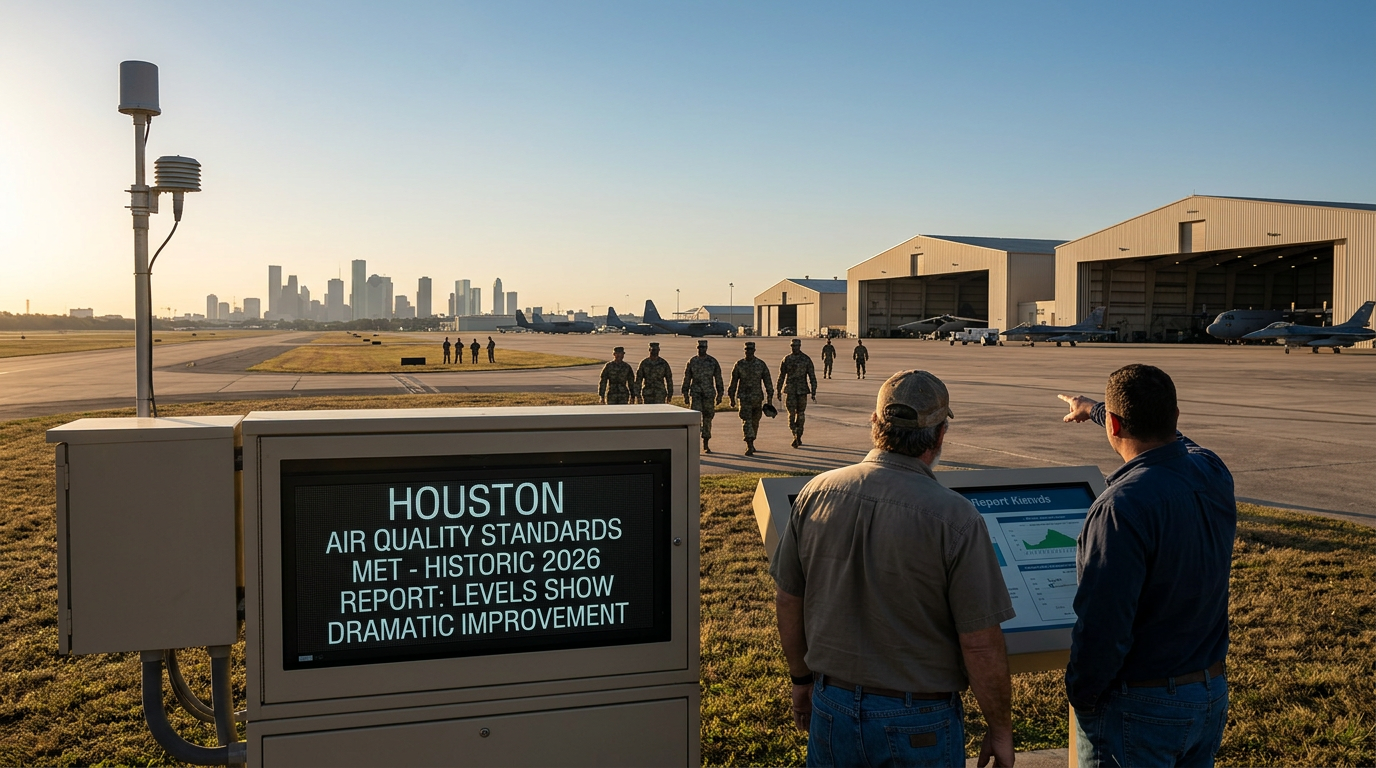
Recent environmental assessments regarding the Houston metropolitan area indicate a surprising trend: the city's air quality has reached its highest standards in decades. Despite the city's long-standing reputation as a hub for heavy industry and petrochemical manufacturing, empirical data suggests that levels of common pollutants, such as sulfur dioxide and particulate matter, have plummeted since the turn of the century. Historically, Houston has struggled to balance its status as the world's energy capital with the health requirements of its rapidly growing population. Since the implementation of stricter state and federal oversight in the 1990s, the region has transitioned from a constant violator of air standards to a city that frequently meets or exceeds EPA benchmarks for several key pollutants. This improvement represents a significant triumph for Texas regulatory frameworks and the technological innovations adopted by private sector leaders within the local energy corridor. However, the narrative of success is tempered by the looming challenges of ground-level ozone and the intensifying density of the city's traffic. While industrial emissions have been significantly curtailed through the use of scrubbers, more efficient cooling towers, and closed-loop systems, the sheer volume of internal combustion engines on Houston's sprawling highway network remains a primary hurdle. Environmental experts note that while the 'visible' smog of previous generations has largely vanished, the chemical complexities of the Texas heat reacting with nitrogen oxides still produce days where the air remains a concern for sensitive groups. The current trajectory suggests that while the easy victories in pollution reduction have been won, the next phase will require a fundamental shift in how the nation's fourth-largest city moves its people and fuels its sprawling industrial base.
Texas relevance
As the most populous city in Texas and the heart of the state’s industrial economy, air quality in Houston is a critical issue for everyone from the Piney Woods to the Gulf Coast. In the past, Texas has frequently found itself at odds with federal regulators over how to manage the unique environmental demands of the Texas Ship Channel. This latest data proves that the Texas-led approach to flexible but firm regulation has yielded tangible results for residents of Harris, Montgomery, and Fort Bend counties. The health of the Houston workforce and the viability of its shipping ports are directly tied to the state's ability to maintain these environmental standards without stifling the economic engine that funds much of the Texas state budget. Furthermore, this progress sets a precedent for other Texas industrial centers, such as Beaumont and Corpus Christi, proving that economic growth and cleaner air are not mutually exclusive goals under Texas leadership.
The Evolution of the Houston Ship Channel
The Houston Ship Channel has long served as the economic backbone of the Texas Gulf Coast, but it was once the primary source of the region's environmental woes. Decades ago, the corridor was synonymous with heavy plumes and chemical odors that defined the local atmosphere. Through localized efforts and billions of dollars in private corporate investment, the facilities lining the channel have modernized their operations. This transformation was driven by both state mandates and the recognition that efficiency in production often leads to lower waste and fewer emissions.
Today, the facilities are monitored with high-tech sensors that provide real-time data to state regulators. These advancements have allowed for the identification of 'hot spots' before they become regional health crises. The reduction in volatile organic compounds (VOCs) along the channel has been particularly notable, contributing significantly to the overall decline in regional haze. This shift marks a new era for Texas industry, where environmental stewardship is increasingly integrated into the bottom line of major energy producers.
The Impact of Transit and Urban Sprawl
While industrial emissions have seen a sharp decline, the impact of Houston’s geography cannot be ignored. The city’s vast footprint necessitates a heavy reliance on personal vehicles, which contributes to the formation of nitrogen oxides. On hot, stagnant Texas days, these gases react with sunlight to create ozone. State planners are now focusing more on the 'mobile' aspect of pollution, recognizing that tailpipe emissions are the next frontier in the battle for cleaner air.
Texas has responded by investing in smarter highway management and supporting the transition to more fuel-efficient fleets. However, because the population of the Houston area continues to explode, the increase in total miles driven often offsets the gains made by cleaner-burning engines. This presents a unique Texas problem: how to maintain the freedom of mobility and the culture of car ownership while ensuring that the air remains safe for the millions of people who move to the region every year.
Technological Breakthroughs in Emission Control
Much of the credit for Houston’s improved air belongs to the engineering feats developed right here in the Lone Star State. Innovations in carbon capture, leak detection, and infrared monitoring have allowed refineries to operate cleaner than ever before. Texas-based firms have pioneered 'optical gas imaging' cameras that can detect leaks invisible to the human eye, allowing for immediate repairs that prevent significant atmospheric release.
These technologies have been shared across the global energy sector, but their first and most impactful applications have been in the fields of East Texas and the plants of the Gulf Coast. By fostering an environment where innovation is rewarded rather than punished with excessive red tape, Texas has become a laboratory for environmental technology. This pro-business approach has facilitated a faster rollout of clean technology than would have been possible under a purely adversarial regulatory model.
Health Outcomes and Public Perception
The improvement in air quality has had a direct, positive correlation with public health markers in the Houston area. Cases of asthma and respiratory distress linked to environmental factors have seen a downward trend in several key demographic sectors. Despite this, public perception often lags behind current data. Many residents still view Houston's air through the lens of the 1980s, unaware that the city often ranks better for certain pollutants than peer cities like Los Angeles or even parts of the northeast.
Changing this narrative is essential for attracting new talent and investment to the region. When people realize that Houston offers a high quality of life alongside its economic opportunities, the state’s position as a national leader is strengthened. The challenge is communicating these successes effectively while remaining transparent about the work that still needs to be done to address localized concerns in fence-line communities.
The Role of the Texas Commission on Environmental Quality
The TCEQ plays a pivotal role in maintaining the balance between Houston’s industrial output and its air quality standards. By utilizing a network of hundreds of air monitors across the state, the agency provides one of the most comprehensive datasets in the country. This data allows for a nuanced understanding of how weather patterns, such as the famous Texas sea breeze, affect the movement of air over the metropolitan area.
Critics often argue for more stringent penalties, but the Texas model emphasizes compliance and technological transition. This philosophy has led to a collaborative atmosphere where companies are encouraged to exceed minimum requirements. As the state moves forward, the TCEQ will need to remain vigilant against federal attempts to impose blanket regulations that do not account for the unique meteorological conditions of the Texas coast.
Future Outlook and Global Standards
Looking ahead to 2030 and beyond, Houston is positioned to become a global model for industrial environmentalism. The city is already experimenting with hydrogen fuel cells and expanded electric infrastructure that could further reduce the nitrogen oxide footprint. If these initiatives are successful, Houston could see even its most stubborn ozone levels fall within the strictest international guidelines.
The 'hard part' mentioned by experts involves the final percentages of reduction, which are always the most expensive and difficult to achieve. However, given the history of Texas ingenuity, there is every reason to believe that the region will continue to lead. The goal is clear: a Houston that remains the energy capital of the world while boasting some of the cleanest air of any major industrial city on the planet.
Analysis
The data confirms what many Houston residents have felt but perhaps didn't believe: the 'smokestack' era of the 1970s is a relic of the past. From a policy perspective, this is a major win for the Texas Commission on Environmental Quality (TCEQ), which has often been criticized by national activists for being too industry-friendly. The results suggest that by working with industry rather than against it, Texas has achieved better air quality outcomes than some states with much more restrictive, top-down mandates. The challenge moving forward will be political. As national standards continue to tighten, there is a risk that the goalposts will be moved so far that even a significantly cleaner Houston would be labeled a 'non-attainment' zone. This could trigger federal interventions that would harm the Texas economy. Thus, it is in the state's best interest to continue this trend of proactive, self-managed improvement to keep federal overreach at bay.
Source attribution
This story was reported using a public release from the r/houston. Keep TX Red rewrote the coverage independently and links to the official statement for verification.
Frequently Asked Questions
- Is it true that Houston's air is cleaner than other major US cities?
- Yes, in several categories. While Houston still faces challenges with ozone due to heat and traffic, its levels of sulfur dioxide and lead are lower than many other urban industrial centers. The city often meets federal standards that it used to fail regularly twenty years ago.
- What is the biggest source of pollution in Houston today?
- Currently, 'mobile sources'—meaning cars, trucks, and buses—are the primary contributors to air quality issues. While the Ship Channel is often blamed, industrial facilities have significantly reduced their output, leaving vehicle exhaust as the main hurdle for further improvement.
- How does the Texas heat affect air quality in the city?
- Heat and sunlight act as catalysts for a chemical reaction between nitrogen oxides and volatile organic compounds. This reaction creates ground-level ozone. Because Houston is one of the hottest and sunniest major cities in the US, it has a higher natural predisposition for ozone formation regardless of the level of emissions.
Official Sources
Take the next step
Browse the Newsroom →Read more about Keep Texas Red → Our full guide to what Keep Texas Red means and why Texans support it.
Related Articles

Get Texas updates delivered weekly.
Independent Texas reporting on politics, policy, and daily life. One email a week. Unsubscribe anytime.
Keep TX Red Newsroom
The Keep Texas Red Editorial Staff produces nonpartisan explainers, policy breakdowns, and educational resources to help Texans understand how their government works. All content is reviewed for accuracy and updated regularly.
About Keep TX Red →