Fort Worth Urban Development: City Proposes Major Zoning Shift for Historical Districts
New zoning proposals in Fort Worth aim to balance rapid population growth with the preservation of historic neighborhood character.
Editorial disclaimer: Opinions and analysis on Keep TX Red are editorial content — not statements of fact. See our editorial standards.
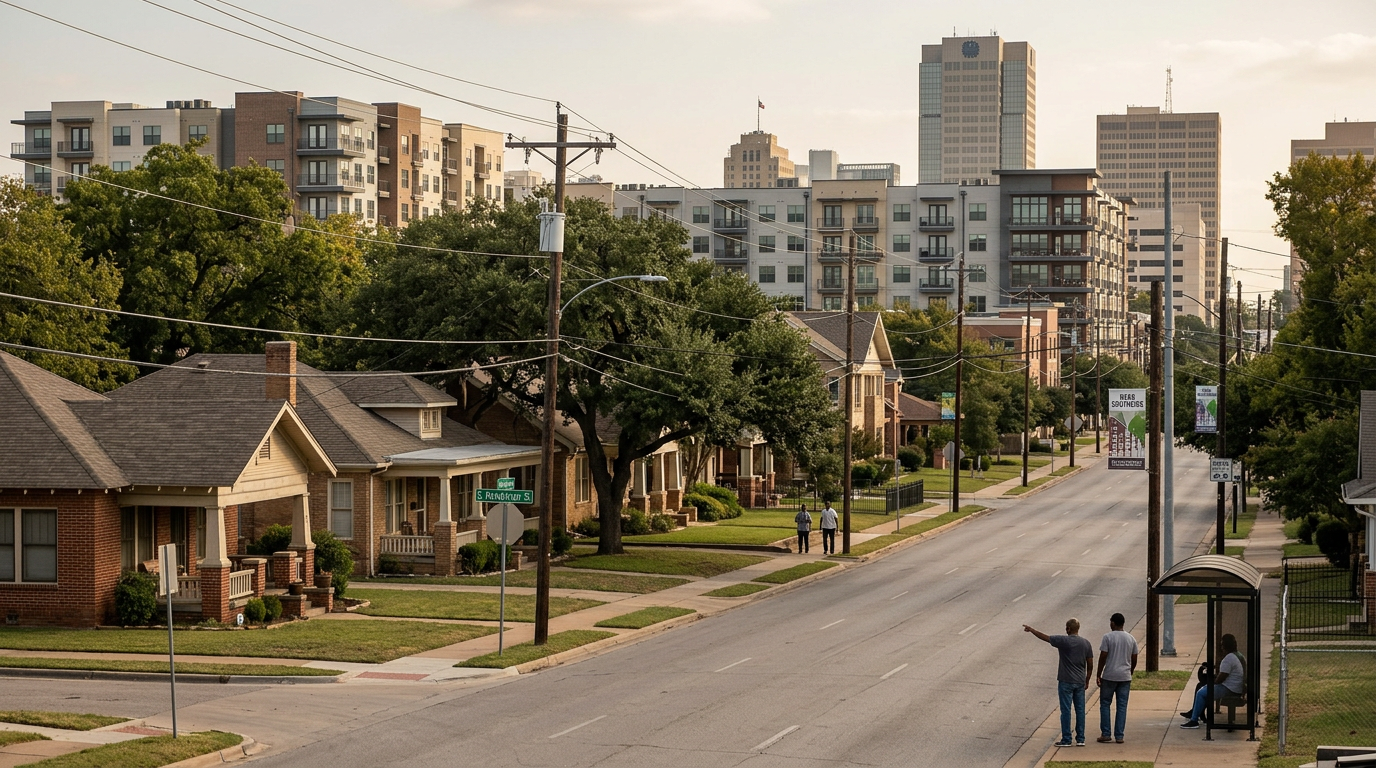
The City of Fort Worth is currently navigating a significant crossroads in its urban development strategy, as municipal leaders weigh new zoning adjustments intended to increase residential density within formerly low-density areas. This shift follows decades of traditional suburban expansion that has defined the North Texas landscape. Historically, Fort Worth has prioritized single-family residential character, particularly in areas surrounding the Near Southside and the Cultural District. However, the unprecedented influx of new residents into the Metroplex has forced a reevaluation of how the city utilizes its finite land resources. The current proposal seeks to introduce more 'missing middle' housing—such as duplexes and townhomes—into areas that have traditionally been reserved for standalone houses. This move mirrors prior actions taken by other major Texas hubs like Austin and Houston, where zoning reform has become a primary tool for addressing housing affordability and supply shortages. In those cities, similar transitions sparked intense debate between developers seeking efficiency and longtime residents aiming to protect the aesthetic and cultural heritage of their neighborhoods. By looking at these precedents, Fort Worth officials are attempting to draft a framework that allows for modernization without erasing the 'Cowtown' charm that attracts residents in the first place. The timing of this proposal is critical, as city planners project that Tarrant County will continue to lead the state in net population gains over the next decade.
Texas relevance
As the fastest-growing large city in the United States according to several recent census metrics, Fort Worth serves as the epicenter for the Texas housing debate. The local stake is incredibly high for Tarrant County homeowners, as these zoning changes could directly impact property valuations, traffic patterns, and the demand for local services like water and power. Residents in neighborhoods such as Fairmount, Mistletoe Heights, and Ryan Place are particularly sensitive to these shifts, as their historic designations often come with strict aesthetic requirements that may clash with high-density modern architecture. The outcome of these policy decisions will set the tone for how the DFW metro area handles the next phase of the Texas 'miracle'—ensuring there is enough room for the workforce while maintaining the quality of life that defined the region’s original appeal.
The Evolution of Fort Worth Neighborhoods
Fort Worth has long been defined by its distinct 'village' feel, even as it grew into a major metropolitan center. Unlike the sprawling high-rises often associated with Dallas, Fort Worth’s identity is rooted in its historic neighborhoods and wide-open spaces. For the better part of the 20th century, the city expanded outward, consuming ranch land to create vast suburban tracts. This model served the city well during a period of moderate growth, but the current pace of migration into Texas has made the outward-only expansion model increasingly difficult to sustain without creating extreme commute times and infrastructure strain.
The shift toward infill development represents a departure from this traditional model. Infill involves building on unused or underutilized land within existing city limits, rather than pushing the borders further into the countryside. Proponents argue that this is the most fiscally responsible way to grow, as it utilizes existing roads, sewers, and emergency services. Critics, however, fear that 'squeezing' more people into existing neighborhoods will lead to a loss of the very greenery and space that made Fort Worth a desirable alternative to more crowded urban centers.
Housing Affordability and the 'Missing Middle'
At the heart of the current proposal is the concept of 'missing middle' housing. In the world of urban planning, this refers to a range of multi-family or clustered housing types that are compatible in scale with single-family homes. This includes walk-up apartments, bungalow courts, and townhouses. Currently, much of Fort Worth is zoned in a way that makes these types of buildings illegal to construct in most residential blocks. This creates a 'barbell' effect where the market offers mostly expensive single-family houses or large, high-density apartment complexes, with nothing in between.
By adjusting zoning to allow for these middle-tier options, the city hopes to provide more affordable entry points for young professionals and families. As interest rates and land prices remain elevated throughout Texas, the dream of a traditional backyard is becoming less attainable for many. Providing a diverse array of housing options is seen by some as a necessary economic move to ensure that Fort Worth remains competitive in the regional labor market, allowing people who work in the city's hospitals and schools to actually afford to live within city limits.
Infrastructure and Public Service Challenges
One of the primary concerns voiced by local residents involves the capacity of Fort Worth's aging infrastructure to handle increased density. Many of the neighborhoods targeted for these zoning changes were built with 1940s-era water and sewage lines. Increasing the number of residents on a single street could lead to significant pressure on these systems, potentially resulting in higher maintenance costs for the city and more frequent service disruptions for homeowners.
Beyond utilities, the impact on local traffic and parking is a major point of contention. In Texas, the car remains the dominant mode of transportation. Adding several units to a lot that previously held one house could potentially double or triple the number of vehicles parked on the street. Residents in historic districts already struggle with narrow roadways and limited driveway space. Opponents of the rezoning suggest that the city must first prove it has a comprehensive plan for public transit and infrastructure upgrades before it mandates higher density in settled areas.
The Role of Historic Preservation Committees
Fort Worth is home to some of the most active historic preservation groups in the state. These organizations have worked for decades to ensure that the architectural integrity of places like the Stockyards and the Southside remains intact. The new development proposals have put these groups on high alert. There is a fear that 'cookie-cutter' modern designs will be dropped into blocks with 100-year-old Craftsman and Victorian homes, permanently altering the visual footprint of the city.
To mitigate this, the city is considering design standards that would require any new multi-family units to adhere to the existing aesthetic of the neighborhood. This might include requirements for porch designs, building materials, and height limits. However, developers often argue that these additional regulations drive up the cost of construction to the point where the new units are no longer 'affordable.' Balancing the cost of construction with the desire for aesthetic continuity is one of the most difficult tasks facing the City Council.
Economic Implications for Tarrant County
The economic stakes extend beyond just the housing market. Stable property taxes are a hallmark of the Texas fiscal model, and any change in zoning can lead to a shift in how properties are appraised. If a single-family lot is re-zoned to allow for a four-plex, the market value of that land may increase significantly, which in turn could lead to higher property taxes for the surrounding neighbors. This 'gentrification by zoning' is a major concern for long-term residents, particularly seniors on fixed incomes who wish to age in place.
On the flip side, a more dense urban core can lead to increased sales tax revenue for the city. When more people live within walking distance of local businesses—like those on Magnolia Avenue or West 7th—those businesses thrive. This creates a more vibrant local economy and can provide the city with the funds needed to improve parks and public safety. The debate in Fort Worth is not just about where people sleep, but about the economic engine that will drive the city through the middle of the 21st century.
Comparing Fort Worth to Other Texas Cities
Fort Worth is not alone in these struggles. San Antonio and Dallas are currently undergoing similar reviews of their comprehensive plans. However, Fort Worth has the advantage of observing the mistakes and successes of its neighbors. In Austin, rapid rezoning led to massive displacement in certain historically minority neighborhoods, a scenario Fort Worth is keen to avoid. By engaging in public forums and soliciting feedback early in the process, Fort Worth is attempting a more collaborative approach.
The 'Texas Model' has traditionally been one of low regulation and high growth. As the state matures, the model is being tested. Many observers view the Fort Worth zoning debate as a bellwether for how other 'red' cities in Texas will handle the transition from mid-sized cities to major metropolises. If Fort Worth can find a way to increase density without sacrificing its unique identity, it could provide a blueprint for the rest of the state to follow as the population continues to surge.
Analysis
From a conservative development perspective, the tension in Fort Worth represents a classic struggle between property rights and community preservation. On one hand, allowing property owners more freedom to develop their land as they see fit—including building multi-unit residences—is a win for free-market principles and can theoretically lower the barrier to entry for first-time Texas homebuyers. On the other hand, established residents argue that they purchased their homes with the expectation of a specific neighborhood density, and that government-led rezoning constitutes a breach of that social contract. The Keep TX Red perspective localizes this as a need for local control; rather than top-down mandates from the state level, these decisions are best handled at the municipal level where Fort Worth citizens can hold their council members directly accountable for the changing face of their streets.
Source attribution
This story was reported using a public release from the r/fortworth. Keep TX Red rewrote the coverage independently and links to the official statement for verification.
Frequently Asked Questions
- What is 'missing middle' housing?
- It refers to housing types that fall between single-family homes and large apartment buildings, such as townhomes or courtyard apartments, designed to fit into existing residential streetscapes.
- How will this affect my property taxes in Fort Worth?
- While individual impacts vary, rezoning can increase land value if the property's potential for development increases, which often leads to higher tax appraisals for the surrounding neighborhood.
- Is the city taking public feedback on these changes?
- Yes, Fort Worth typically holds community meetings and planning commission hearings where residents can voice their opinions on proposed zoning ordinance updates.
- Why is this happening now?
- The rapid population growth in Tarrant County has caused a surge in housing prices, prompting city leaders to look for ways to increase the supply of homes within city limits.
Official Sources
Take the next step
Browse the Newsroom →Read more about Keep Texas Red → Our full guide to what Keep Texas Red means and why Texans support it.
Related Articles

Get Texas updates delivered weekly.
Independent Texas reporting on politics, policy, and daily life. One email a week. Unsubscribe anytime.
Keep TX Red Newsroom
The Keep Texas Red Editorial Staff produces nonpartisan explainers, policy breakdowns, and educational resources to help Texans understand how their government works. All content is reviewed for accuracy and updated regularly.
About Keep TX Red →