Exploring Fort Worth Public Soccer Resources and Municipal Field Maintenance Standards
Discover where to find quality public soccer fields in South Fort Worth and how the city manages recreational sports infrastructure for local residents.
Editorial disclaimer: Opinions and analysis on Keep TX Red are editorial content — not statements of fact. See our editorial standards.
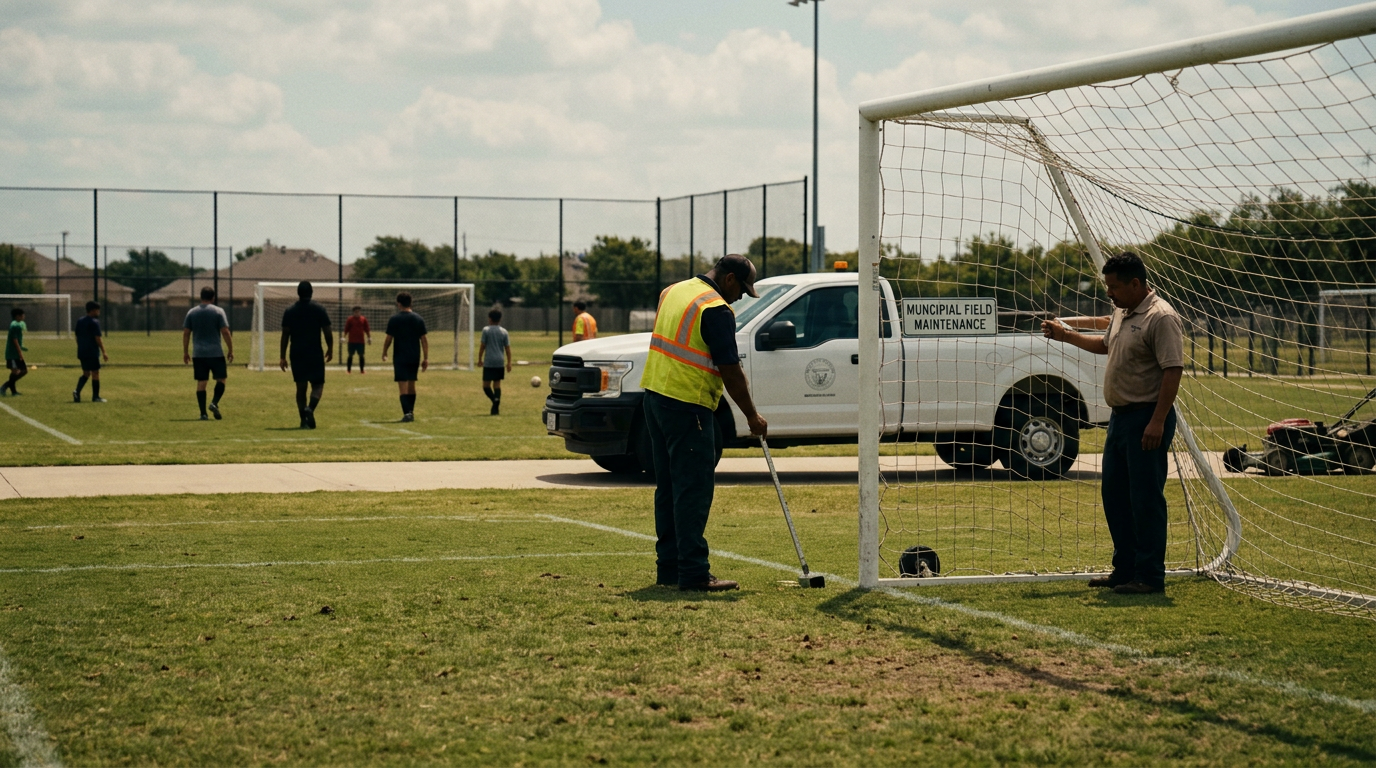
The demand for high-quality, accessible athletic facilities in Fort Worth continues to rise as the city's population expands and interest in soccer reaches new heights across North Texas. For local athletes and hobbyists, finding public spaces that provide professional-grade amenities—such as intact netting, mowed turf, and perimeter fencing—can be a logistical challenge. While the city offers a vast network of parks, many residents report a disparity between the availability of open green space and the specific requirements needed for formal skill training or organized matches. This ongoing dialogue emphasizes a vital need for transparent information regarding which municipal locations are currently unlocked and suitable for public use. Historically, Texas cities have balanced the maintenance of public parks with the rising costs of irrigation and facility upkeep. In Fort Worth, the Parks and Recreation Department oversees thousands of acres, but the specific upkeep of soccer goals and fences is often tied to seasonal budget cycles or partnerships with local youth sports associations. When these associations are not in season, fields may be locked to prevent turf degradation, or maintenance schedules may pivot toward other high-traffic areas, leaving individual residents searching for reliable alternatives. Understanding the landscape of South Fort Worth’s public infrastructure is essential for any player looking to improve their game without the high cost of private club memberships.
Texas relevance
As a central hub in the DFW metroplex, Fort Worth serves as a critical case study for how Texas municipalities handle the explosion of interest in grassroots soccer. The issue is particularly acute in South Fort Worth and the surrounding Tarrant County neighborhoods, where rapid residential development often outpaces the construction of specialized sports complexes. For Texans, outdoor sports are more than just a pastime; they are a cornerstone of community health and social engagement, making the quality of local park equipment a direct reflection of city investment and quality of life.
The Search for South Fort Worth Quality Turf
Geographically, the southern portion of Fort Worth presents a unique mix of older established parks and newer developments. Residents in this area frequently seek out locations that offer more than just a patch of grass; the presence of a 'tall fence' is often a top priority to prevent balls from entering busy North Texas roadways or private properties. This safety and convenience factor significantly narrows the list of viable training spots for solo players or small groups.
Maintenance quality in these parks is frequently managed on a rotation. While some parks like Gateway or Sycamore are known for their scale, they may not always have the specific soccer technical equipment available for public use 24/7. The challenge for a local player is identifying the 'sweet spot' between a park that is high-quality enough to train on and one that is not so exclusive that it remains behind a padlocked gate for private league use only.
Public Infrastructure versus Private League Access
In many Texas cities, the local government enters into agreements with youth soccer associations. These groups often pay for the privilege of exclusive use during peak seasons, and in return, they may assist with the costs of nets and fertilizers. This partnership model is common throughout North Texas but often leaves the independent athlete in the lurch. When a resident encounters a locked field with high-quality nets, they are seeing the results of private funding on public land.
To find free access, residents must often look for 'neighborhood' or 'community' parks rather than 'regional' sports complexes. Neighborhood parks are less likely to be reserved for leagues, though they are also less likely to feature the professional-grade nets and perimeter fencing that serious trainers desire. This creates a secondary market for residents who must travel outside their immediate neighborhoods to find the right balance of accessibility and quality infrastructure.
The Evolution of Fort Worth Parks and Recreation
Fort Worth has recently made strides in updating its master plan for parks and open spaces. As part of this vision, there has been an increased focus on diversifying the types of sports accommodated. While football and baseball have traditionally dominated the Texas landscape, the surge in soccer's popularity—fueled by professional teams like FC Dallas and the upcoming global interest in the sport—has forced a recalibration of how city funds are allocated to soccer-specific amenities.
For a resident in the South Fort Worth area, the nearest high-quality public fields may be found at multi-use parks where soccer goals are permanently installed. However, the condition of these nets is often the first thing to deteriorate. The city relies heavily on reports from the community to identify when equipment has been vandalized or worn down by the harsh Texas sun. Engaging with the city's 311 system is often the most effective way for a soccer enthusiast to see improvements in their local training ground.
Logistics of Solo Training in North Texas
For a player looking to train individually, the requirements are different than those of a full team. A solo player needs a 'backstop' or a fence to minimize the time spent chasing balls, which is why facilities with enclosed perimeters are highly sought after. In the South Fort Worth corridor, players often utilize public middle school or high school fields when they are not in use by school athletics, though this remains a legal gray area depending on the specific school district's policy regarding trespassing.
The heat in North Texas also necessitates that these fields have nearby shaded areas or functioning water fountains, which are not always guaranteed in public parks. This adds another layer of complexity to the search for the 'perfect' field. Local experts suggest that visiting parks during off-peak hours—such as weekday mornings—is the best way to secure space on the best-maintained pitches before the evening rush of youth practices begins.
Impact of Climate on Local Field Conditions
The climate of North Texas plays a massive role in the playability of local soccer fields. During the hot, dry summer months, non-irrigated public fields can become as hard as concrete, increasing the risk of injury for players. Conversely, after heavy seasonal rains, these same fields can become muddy swamps. Without expensive drainage systems, many free public fields in Fort Worth suffer from uneven surfaces that make technical training difficult.
Better-maintained fields typically utilize Bermuda grass, which is resilient to the Texas heat but requires consistent mowing and aeration. When a resident complains of 'poorly maintained grass,' they are often seeing the effects of a maintenance crew that is stretched thin across hundreds of different park sites. This underscores the value of the few 'hidden gems' in the city where irrigation and maintenance have been prioritized due to high community engagement or historical significance.
Community Recommendation and Crowdsourced Data
Because city websites often fail to provide real-time updates on the condition of goals and nets, digital communities and social media have become the primary source of intelligence for local athletes. Soccer players in the 817 area code frequently share 'real-time' reports on which gates are open and which nets have been recently replaced. This grassroots information exchange is vital for maintaining an active sports culture in a city as large and spread out as Fort Worth.
Looking forward, there is a push for more public-private partnerships that could bring 'mini-pitches' or futsal courts to Fort Worth. These smaller, concrete or synthetic surfaces require less maintenance than grass and are often fenced in, solving the 'off-target ball' problem. Until these are more widely available, the hunt for the perfect grass field in South Fort Worth remains a ritual for the city's dedicated soccer community.
Analysis
The struggle to find 'free' but 'well-maintained' fields highlights a common tension in Texas local government: the balance between open public access and the protection of taxpayer-funded assets. When fields are left open and unmonitored, they often suffer from 'over-play,' where the grass cannot recover, leading to the mud pits and ripped nets often cited by local residents. Conversely, locking these facilities to preserve them for paying leagues excludes the casual tax-paying resident. A transition toward more synthetic turf options or better-funded 'community use' hours could be the key to resolving these frustrations in the growing North Texas region.
Source attribution
This story was reported using a public release from the r/fortworth. Keep TX Red rewrote the coverage independently and links to the official statement for verification.
Frequently Asked Questions
- Why are some public soccer fields in Fort Worth locked?
- Many high-quality fields are restricted to prevent 'over-play' which ruins the turf. Often, these fields are managed through agreements with local sports associations that pay for maintenance, meaning the city keeps them locked during non-sanctioned hours to protect the investment.
- Where can I report a ripped soccer net in a Fort Worth park?
- The most efficient way to request repairs for park equipment is through the City of Fort Worth's official MyFW app or by calling the 311 North Texas service line. This alerts the Parks and Recreation Department to specific maintenance needs.
- Are school soccer fields in South Fort Worth open to the public?
- This varies by school district (such as Fort Worth ISD or Crowley ISD). While some schools allow community use outside of school hours, others consider the fields private property. It is always best to check for posted signage regarding public access.
Official Sources
Take the next step
Browse the Newsroom →Read more about Keep Texas Red → Our full guide to what Keep Texas Red means and why Texans support it.
Related Articles

Get Texas updates delivered weekly.
Independent Texas reporting on politics, policy, and daily life. One email a week. Unsubscribe anytime.
Keep TX Red Newsroom
The Keep Texas Red Editorial Staff produces nonpartisan explainers, policy breakdowns, and educational resources to help Texans understand how their government works. All content is reviewed for accuracy and updated regularly.
About Keep TX Red →