Emergency Units Respond to Serious Kitchen Fire in Downtown Dallas Business District
Dallas Fire-Rescue responded to a commercial kitchen blaze that damaged a downtown eatery on July 20, causing a temporary shutdown for repairs.
Editorial disclaimer: Opinions and analysis on Keep TX Red are editorial content — not statements of fact. See our editorial standards.
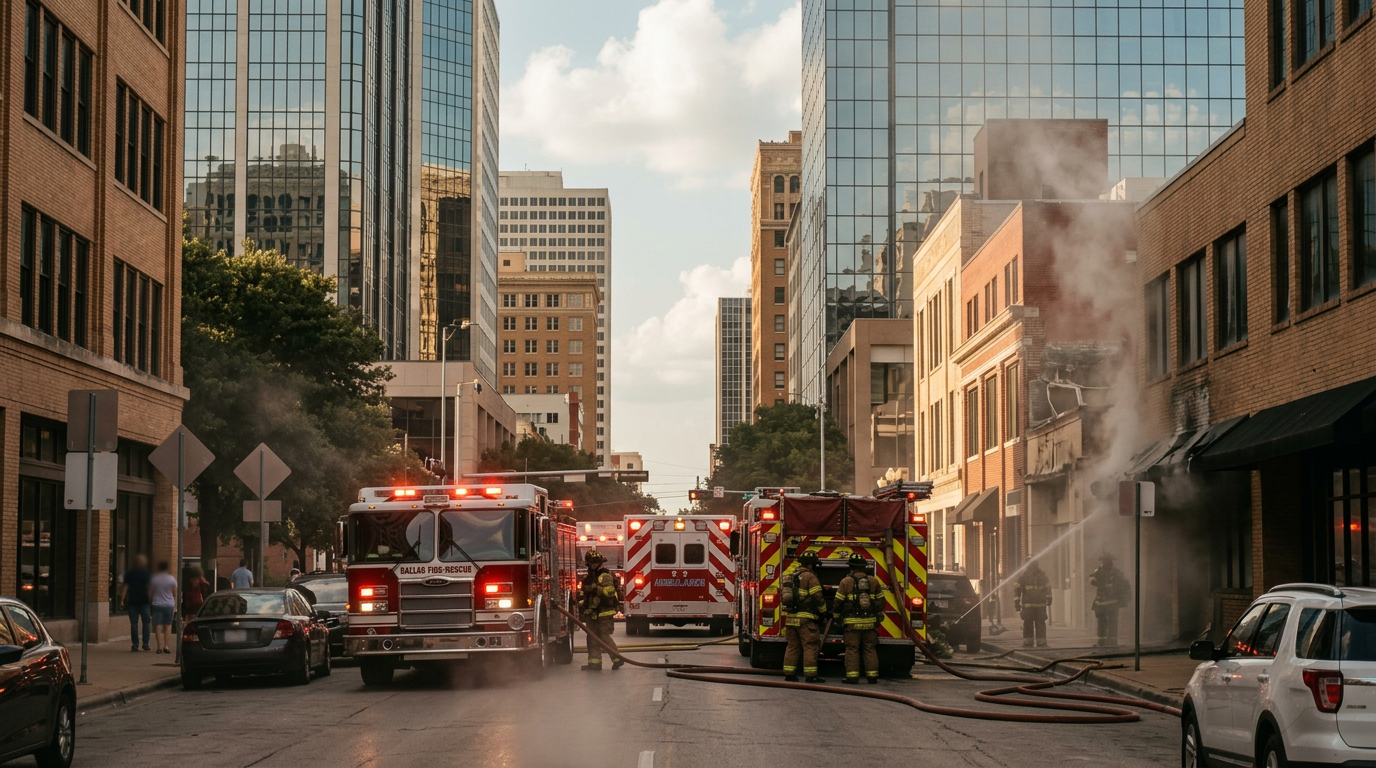
Emergency response teams from Dallas Fire-Rescue were dispatched to a commercial property in the heart of downtown Dallas on July 20, 2026, following reports of a kitchen fire. According to local officials, the blaze broke out during operational hours, causing visible damage to the interior of the establishment. The rapid intervention of firefighting crews prevented the flames from spreading to adjacent structures in the densely populated urban corridor. This event highlights the ongoing challenges of maintaining safety in historic and high-traffic metropolitan dining areas. The history of metropolitan firefighting in North Texas is one of constant evolution, moving from the volunteer-led buckets of the 19th century to the highly specialized, high-tech rapid response teams active today. Dallas, in particular, has developed some of the most stringent commercial building codes in the state to mitigate the risks inherent in dense urban centers. These standards and the training of the responders are often the only things standing between a minor kitchen mishap and a city-wide catastrophe.
Texas relevance
This incident serves as a critical safety reminder for the North Texas hospitality sector, particularly in Dallas, where several hundred restaurants operate in high-rise or converted historic buildings. The downtown area serves as a primary economic engine for the city, and disruptions like these affect local employment and municipal tax revenue through temporary business closures. As downtown Dallas continues its revitalization by turning older office spaces into residential lofts, the proximity between high-heat commercial kitchens and residential housing makes every fire a matter of public concern for the entire urban core.
Fire Suppression Efforts and Immediate Response
Dallas Fire-Rescue units arrived on the scene shortly after the initial alarm was triggered. Upon arrival, crews identified the source of the smoke and heat coming from the kitchen area. Firefighters worked efficiently to neutralize the threat, utilizing specialized equipment designed for grease and commercial cooking fires which differ from standard residential blazes.
The operation focused on ensuring that the ventilation systems of the building did not allow the fire to migrate to upper floors. In major urban centers like Dallas, the interconnected nature of building infrastructure means even a small kitchen mishap can lead to widespread smoke damage across multiple properties. Officials stayed on site for several hours to conduct salvage and overhaul operations.
The coordination between dispatch and the responding units was seamless, highlighting the rigors of Dallas's incident command system. By isolating the utility lines early in the process, the responders mitigated the risk of gas-fed flares or electrical shorts that could have prolonged the battle against the flames. The presence of multiple ladder trucks was a precautionary measure typical for any call involving a downtown footprint.
Assessment of Property Damage
While the exterior of the building remained largely intact, the interior kitchen area sustained significant heat and smoke damage. Commercial cooking equipment, which often costs tens of thousands of dollars, will likely require specialized inspection or replacement. The restaurant's dining area also faced potential issues from smoke infiltration, necessitating a thorough professional cleaning before it can reopen to the public.
Assessors from the local fire marshal's office are expected to conduct a routine walkthrough to determine the exact origin of the fire. This is a standard procedure in Texas for commercial incidents to ensure that the building's fire suppression and extinguisher systems functioned as intended by state and local safety codes. The physical damage represents not just a loss of property, but a significant pause in revenue.
Beyond the primary point of ignition, fire departments look for structural integrity issues. In Dallas, heat from a localized fire can sometimes compromise older masonry or load-bearing beams if the temperature reaches high enough levels. Preliminary looks suggest the structure is sound, but the cosmetic and functional damage within the kitchen suite is extensive.
Impact on the Local Business Environment
The temporary closure of any downtown Dallas establishment creates a ripple effect throughout the local economy. Staff members at the restaurant face a period of uncertainty regarding their shifts and income while the repairs are underway. For the downtown community, which relies on a diverse array of lunch and dinner spots to attract residents and office workers, the loss of one venue impacts the overall vibrancy of the district.
Neighborhood businesses often see a shift in foot traffic following emergency responses in their immediate vicinity. In the following days, the restaurant will likely work with insurance adjusters to map out a recovery timeline. Texas business owners in high-density areas are encouraged to maintain updated fire safety plans to mitigate these types of operational risks.
The loss of foot traffic during peak hours can have a secondary effect on nearby retail and parking authorities. With one of the downtown anchors temporarily out of commission, the usual lunchtime flow of workers from nearby towers may shift blocks away, demonstrating how interconnected the urban ecosystem truly is. Local advocacy groups for the downtown area often assist businesses in communicating their reopening status to the public.
Historical Context of Dallas Fire Safety
Dallas has a long history of evolving its fire safety ordinances to keep pace with its rapid urban development. In decades past, large-scale fires in downtown areas led to the implementation of strict requirements for commercial-grade hood systems and automatic suppression technology. These regulations are designed to contain a kitchen fire at its source, as seen in this most recent incident.
Comparing this to previous incidents in the North Texas region, the success of the containment highlights the importance of well-funded and well-trained municipal fire services. The response time of Dallas Fire-Rescue remains a pivotal factor in preventing localized kitchen accidents from turning into multi-building catastrophes that could paralyze city blocks.
In the early 20th century, Dallas faced several conflagrations that reshaped the way the city approached building materials. Brick and steel became the standard for the downtown corridor, and fire hydrants were strategically placed to ensure maximum coverage. This legacy was clearly visible during the July 20 response, as modern firefighters utilized these decades of infrastructure planning to perform their jobs effectively.
Building Integrity and Future Prevention
Modern Texas building codes are among the most robust in the nation, specifically regarding commercial kitchen ventilation. These systems, known as Type I hoods, are designed to capture grease-laden vapors and prevent them from accumulating in ductwork where they could fuel a fast-moving fire. Officials will be looking closely at whether the existing systems were maintained according to schedule.
Pre-incident planning is another hallmark of the Dallas Fire-Rescue approach. Many businesses in the business district provide digital floor plans to emergency services, allowing incident commanders to visualize the layout before they even step through the front door. This technology-forward approach in Texas is a key reason why major urban fires are increasingly contained within their room of origin.
Moving forward, the city may use this incident as a case study for other restaurant owners. Educational outreach programs often follow significant commercial fires to remind managers of the importance of cleaning grease traps and testing emergency lighting. These small preventative steps are the foundation of a safe urban environment.
Steps Toward Restoration and Reopening
The process of reopening a restaurant after a fire in Texas involves several bureaucratic and safety hurdles. Beyond physical repairs, the establishment must pass a health department inspection to ensure no contaminants from smoke or fire-fighting foam remain in food preparation areas. This ensures that when the public returns, the environment is safe for food service.
Community support often plays a large role in the recovery of local Dallas eateries following such setbacks. It is common for local residents and neighboring businesses to rally around affected staff. The resilience of the Dallas dining scene has been tested before, and the path to restoration usually involves a collaborative effort between the business owner, the building management, and city inspectors.
The timeline for these repairs can vary from a few weeks to several months depending on the availability of replacement commercial-grade appliances. In the current economic climate, lead times for industrial stoves and ventilation fans can be substantial. The patience of the local customer base will be vital as the restaurant works through the logistics of returning to full scale operations.
Analysis
While this was a localized fire, it underscores the persistent operational risks faced by small business owners in the Texas dining industry. The vulnerability of the restaurant sector to mechanical or accidental interruptions is a constant concern for local economic development boards. From a policy perspective, the efficiency of Dallas Fire-Rescue justifies the city's investment in advanced fire suppression technology. It also highlights the necessity for business owners to maintain comprehensive insurance policies that include business interruption coverage, as even a small fire can lead to weeks or months of lost revenue during the reconstruction phase.
Source attribution
This story was reported using a public release from the Texas Food Stories (Google News). Keep TX Red rewrote the coverage independently and links to the official statement for verification.
Frequently Asked Questions
- Was anyone injured in the Dallas restaurant fire?
- Based on the reports from Dallas fire officials, there were no mentions of injuries to either the staff or the responding firefighters at the scene. Everyone on site was evacuated safely as emergency procedures were initiated.
- What caused the kitchen fire to start?
- The specific cause is currently under investigation by fire marshals. Standard kitchen fires often relate to cooking equipment, electrical malfunctions, or grease accumulation, but an official determination has not yet been publicly released.
- When will the restaurant reopen for business?
- An exact reopening date is unknown. The business must first complete physical repairs, pass comprehensive health inspections, and receive clearance from the fire department to resume operations. The timeline often depends on insurance processing and contractor availability.
- How did Dallas Fire-Rescue manage the fire in a dense downtown area?
- Responders used a combination of rapid-entry tactics and localized suppression tools designed for commercial grease fires. By focusing on the ventilation system and isolating utilities, they were able to keep the fire from spreading through the building's vertical shafts.
Official Sources
Take the next step
Browse the Newsroom →Read more about Keep Texas Red → Our full guide to what Keep Texas Red means and why Texans support it.
Related Articles

Get Texas updates delivered weekly.
Independent Texas reporting on politics, policy, and daily life. One email a week. Unsubscribe anytime.
Keep TX Red Newsroom
The Keep Texas Red Editorial Staff produces nonpartisan explainers, policy breakdowns, and educational resources to help Texans understand how their government works. All content is reviewed for accuracy and updated regularly.
About Keep TX Red →