East Austin Neighborhood Witnesses New Fitness Development Near Cherrywood Coffeehouse
A new independent gym prepares for its full opening in the Cherrywood area of Austin, signaling continued growth for small businesses in the district.
Editorial disclaimer: Opinions and analysis on Keep TX Red are editorial content — not statements of fact. See our editorial standards.
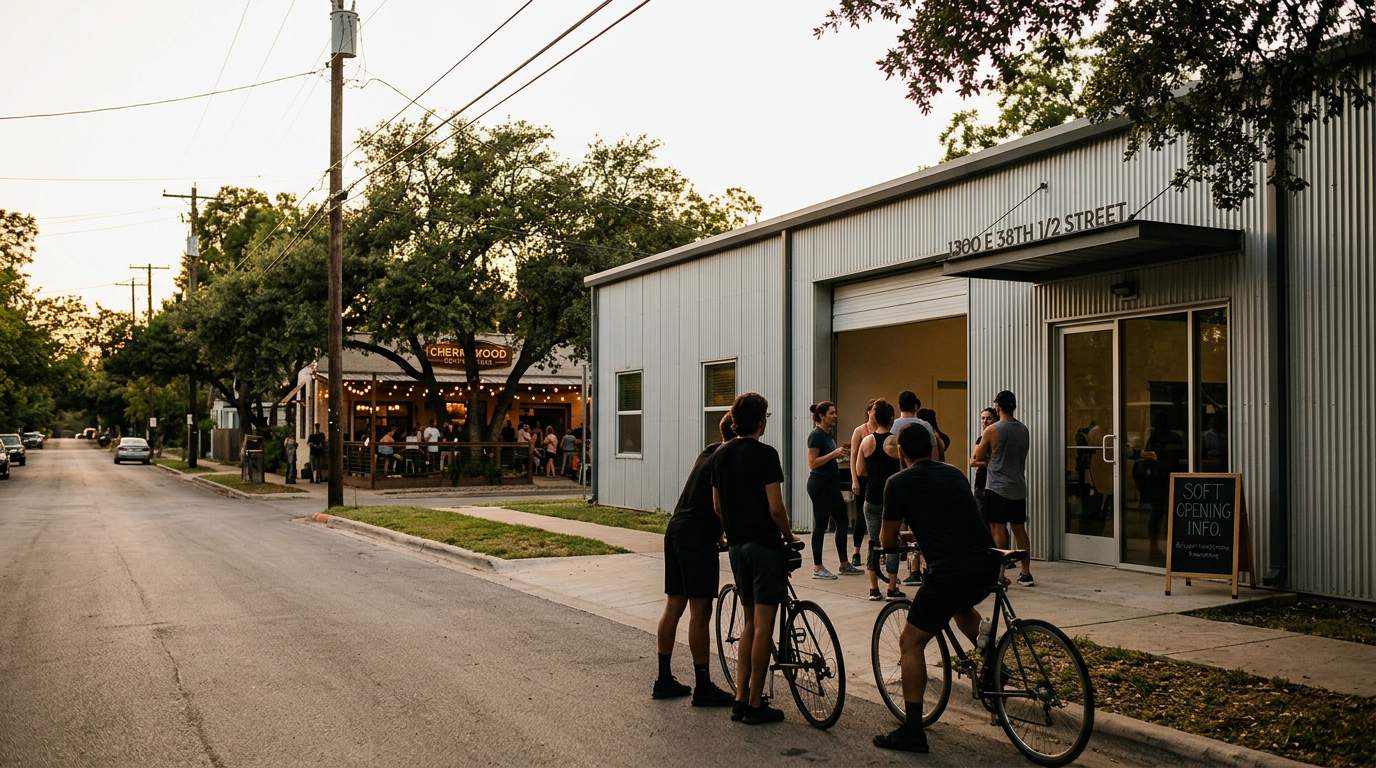
Recent activity in the Cherrywood neighborhood of East Austin has confirmed the arrival of a new fitness facility located at 1300 E 38th 1/2 Street. Situated in a warehouse space directly adjacent to the popular Cherrywood Coffeehouse, the venture has recently undergone a soft launch phase despite the absence of external signage. This development follows a historical trend in Austin where industrial warehouse spaces, particularly those on the east side, are being repurposed for recreational and retail use as the city's density increases. Unlike the larger national fitness chains, this location appears to be leveraging the eclectic, community-oriented atmosphere of the 78722 zip code. Residents first noticed the transformation of the warehouse space into a workout facility during the early summer weeks of 2026. The shift from a storage or light-industrial usage to a high-traffic wellness center reflects the broader transformation of the area. This corridor has long served as a bridge between the University of Texas at Austin campus and the residential heart of East Austin, making it a prime target for service-oriented businesses aiming for high foot traffic and local loyalty.
Texas relevance
As the state of Texas continues to see a massive influx of new residents, Austin remains a primary hub for economic experimentation and urban renewal. For local Texans in the Travis County area, the development at 1300 E 38th 1/2 Street is more than just a place to exercise; it represents the persistent demand for hyper-local commercial options in neighborhoods that are rapidly gentrifying. The repurposing of older Austin warehouse infrastructure is a specific hallmark of the city's current architectural and business evolution, preventing these spaces from falling into disrepair by turning them into community assets. For residents of Central and East Austin, this addition signifies a shift toward walkable amenities that reduce the need for commuting to larger, corporate retail hubs on the outskirts of the city.
The Evolution of Cherrywood Commercial Real Estate
The Cherrywood neighborhood, bordering the Upper Boggy Creek area, has seen a significant shift in property values and usage over the last decade. Historically, this pocket of Austin contained a mix of mid-century single-family homes and industrial warehouses that supported local services and logistical needs. As the city grew, the demand for recreational space began to outpace the need for traditional storage facilities.
The warehouse at 1300 E 38th 1/2 Street is a prime example of this transition. By converting a structure originally designed for utility into a modern gym, developers are tapping into the high-density residential population nearby. This allows the neighborhood to retain its structural character while updating its economic function to serve the current demographic of young professionals and families moving into the region.
Texas real estate trends often highlight 'adaptive reuse' projects like this one. Instead of tearing down existing buildings, which can be costly and disruptive, entrepreneurs are choosing to renovate the interiors of older structures. This practice often avoids some of the more stringent zoning hurdles associated with new construction in Austin, allowing businesses to open their doors faster through soft launches and incremental improvements.
Contextualizing the Soft Launch Strategy
A soft launch is a strategic period where a business opens with limited hours or services to test operational efficiency. In the case of the new Cherrywood gym, this phase allows the owners to calibrate equipment layout and flow without the pressure of a massive opening crowd. For many Texas small businesses, this is an essential step in ensuring that the customer experience meets the high standards expected by Austin’s discerning fitness community.
The absence of a permanent sign during this phase is often a deliberate choice or a result of the city's permitting timeline for exterior signage. However, in the modern era, a physical sign is often secondary to a digital presence. Local athletes and fitness enthusiasts frequently use social media and neighborhood forums to identify these hidden gems long before a logo is ever painted on the brickwork.
This approach also helps in building a core group of 'founding' members who feel they have discovered the spot before it becomes mainstream. In a city where fitness is a major component of the culture, being 'in the know' about a new facility can drive significant early-stage enrollment. It remains to be seen how the facility will brand itself transitionally as it moves toward a grand opening.
Impact on the Local Economy and Small Business Synergy
Local businesses in Texas often thrive when they are clustered together in a way that creates a destination hub. The proximity of the new gym to Cherrywood Coffeehouse creates a powerful economic pairing. One business provides a social and nutritional service, while the other provides a physical and health-focused service. This synergy increases the 'stickiness' of the location, encouraging visitors to spend more time—and money—in one specific block.
For the city of Austin, these small-scale developments are vital for maintaining the tax base without the requirement for massive city-funded infrastructure expansions. Small gyms typically have a lower environmental impact and smaller traffic footprint compared to large commercial shopping centers, making them more palatable to existing neighborhood associations and long-term residents.
Furthermore, these businesses provide employment opportunities for local fitness professionals, trainers, and administrative staff. As the Austin labor market continues to fluctuate, the growth of the service and wellness sector provides a level of stability for those who specialize in personalized, face-to-face community services.
The Competitive Landscape of Austin Fitness
Austin is frequently ranked as one of the healthiest cities in the United States, which creates a highly competitive environment for gym owners. From high-end boutique studios to 'hardcore' strength and conditioning warehouses, the options available to Texas residents are vast. To succeed, a new facility must offer something distinct, whether that is specialized equipment, a unique community atmosphere, or an unbeatable location.
The Cherrywood area specifically has seen a rise in fitness interest due to its proximity to the University of Texas and the Mueller development. While Mueller offers several corporate gym options, the Cherrywood side of IH-35 tends to favor more independent, eclectic ventures. This new warehouse gym is likely tapping into that specific cultural preference, offering an alternative to the polished, corporate feel of national franchises.
Market analysts in Texas suggest that the 'boutique' gym model, which focuses on community and specialized training, is more resilient to economic downturns than larger, general-purpose clubs. By focusing on a specific neighborhood like Cherrywood, the owners can foster a loyal local following that is less likely to churn as new options emerge elsewhere in the city.
Future Outlook for the 1300 E 38th 1/2 Street Site
Looking ahead, the success of this facility will likely depend on its ability to integrate with the surrounding residential fabric. If the facility manages to offer classes or memberships that cater to the diverse age groups in Cherrywood—ranging from students to retirees—it could become a foundational part of the neighborhood. The next few months of the soft launch will provide critical data on peak usage times and the specific needs of the local clientele.
Observers are also watching to see how the facility handles the logistical challenges of a warehouse space, such as temperature control during the intense Texas summers and parking for members who do not live within walking distance. Successful warehouse gyms in Austin often utilize large roll-up doors for airflow and cultivate a 'garage' aesthetic that leans into the industrial nature of the building.
As the signage eventually goes up and the brand is officially revealed, this project will serve as another data point in the ongoing story of Austin's redevelopment. It highlights how private investment continues to transform underutilized spaces into active, productive parts of the Texas economy.
Analysis
The quiet launch of this gym without traditional signage suggests a 'grassroots' marketing strategy increasingly common in competitive Texas markets like Austin. By relying on neighborhood visibility and word-of-mouth rather than aggressive billboard campaigns, independent business owners in Texas are successfully carving out niches against larger corporations. This strategy often fosters a stronger sense of ownership among local patrons, which is critical for long-term viability in the fitness sector. Furthermore, the selection of a location next to an established community staple like Cherrywood Coffeehouse shows a tactical understanding of local synergy, where consumers can move seamlessly between distinct third-place environments in a single outing.
Source attribution
This story was reported using a public release from the r/austin. Keep TX Red rewrote the coverage independently and links to the official statement for verification.
Frequently Asked Questions
- Where is the new gym located in Austin?
- The facility is located at 1300 E 38th 1/2 Street, Austin, TX 78722, in a warehouse right next to the Cherrywood Coffeehouse.
- Is the new gym officially open for business?
- The gym is currently in a 'soft launch' phase. This means it is operational but may not have full signage, final branding, or established standard hours of operation yet.
- What kind of gym is it?
- While the specific name and brand have not been publicly finalized on the building, the warehouse setting suggests an independent fitness or strength and conditioning facility rather than a large national chain.
- Why is the location significant?
- The location is significant because it sits in the heart of Cherrywood, a highly desirable and walkable East Austin neighborhood that is seeing a surge in small business development and property values.
Official Sources
Take the next step
Browse the Newsroom →Read more about Keep Texas Red → Our full guide to what Keep Texas Red means and why Texans support it.
Related Articles


Get Texas updates delivered weekly.
Independent Texas reporting on politics, policy, and daily life. One email a week. Unsubscribe anytime.
Keep TX Red Newsroom
The Keep Texas Red Editorial Staff produces nonpartisan explainers, policy breakdowns, and educational resources to help Texans understand how their government works. All content is reviewed for accuracy and updated regularly.
About Keep TX Red →