Batesville Flood Disaster Tests Resilience of Zavala County Community
Historic flooding in Batesville and the Uvalde area has damaged schools and homes, forcing a community already mourning to unite once again.
Editorial disclaimer: Opinions and analysis on Keep TX Red are editorial content — not statements of fact. See our editorial standards.
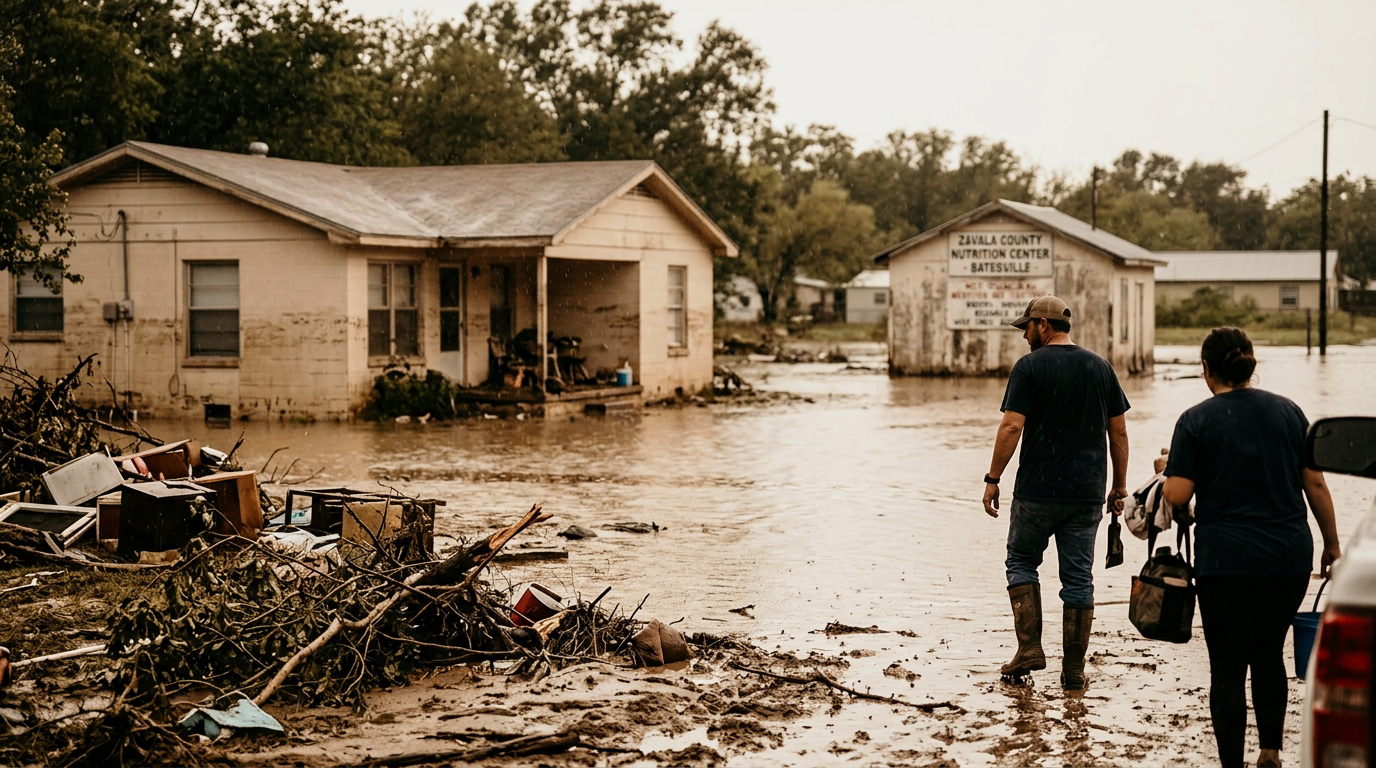
The South Texas landscape, often characterized by its arid climate and ranching heritage, recently faced an unprecedented environmental crisis as historic floodwaters tore through Zavala and Uvalde counties. The small town of Batesville, located roughly 20 miles south of Uvalde, bore the brunt of the atmospheric onslaught, resulting in widespread structural damage and the displacement of numerous families. This weather event has placed an immense burden on a region that is arguably among the most emotionally taxed in the state of Texas. For many residents, the sight of rising waters and damaged property served as a visceral reminder of previous hardships, though the community has once again pivots toward a collective recovery effort. Contextually, this region of the Brush Country has a long history of volatile weather patterns, ranging from extreme droughts that desiccate the soil to flash floods that turn dry creek beds into raging torrents. However, local leaders have noted that the sheer volume and speed of this particular inundation exceeded historical norms for the area. In the wake of the deluge, the Zavala County Nutrition Center has emerged as a central hub for logistics and support. Volunteers from across the region have converged here to provide essential supplies, including clothing, non-perishable food items, and water, to those whose residences were saturated or destroyed by the flooding. Leading many of these local efforts is Jesse Rizo, a figure who has become synonymous with local leadership and advocacy. Now serving as the president of the Uvalde school board, Rizo’s personal connection to the town of Batesville has made this crisis particularly poignant. Having experienced monumental personal loss during the 2022 tragedy at Robb Elementary, Rizo has transitioned his focus toward physical reconstruction and social stability for his neighbors. His presence at the distribution centers underscores the intertwined nature of South Texas municipalities, where the struggles of one small town are felt deeply by its neighbors.
Texas relevance
This disaster is critically relevant to the state of Texas as it highlights the vulnerabilities of rural infrastructure in the face of increasingly severe weather events. Batesville and the surrounding Zavala County area are representative of the resilient agricultural communities that form the backbone of the Texas Brush Country. The damage to local schools in this region is especially significant for Texans, as it disrupts the educational progress and safety of students in a community that has already suffered immense trauma. Furthermore, the state's response to these localized floods serves as a litmus test for how Texas manages disaster recovery in underserved rural pockets compared to major metropolitan hubs like Houston or San Antonio.
Measuring the Scale of the Inundation
The flooding that occurred in the Uvalde and Zavala County corridor was characterized by its rapid onset and the failure of traditional drainage systems to manage the volume of runoff. In Batesville, the water moved with enough force to compromise the foundations of several residential structures, many of which had stood for decades without significant incident. The local school, which serves as a vital community anchor, suffered water intrusion that has forced administrators to assess the viability of classrooms for the upcoming academic terms.
This specific event highlights a broader concern for South Texas: the maintenance of rural dams and levies. While the state has invested heavily in coastal flood mitigation, inland rural counties often find themselves working with outdated maps and aging infrastructure. Residents reported that the water rose so quickly that they had only minutes to salvage essential documents and belongings, emphasizing the need for improved early warning systems in the less populated sectors of the Texas interior.
The Role of the Zavala County Nutrition Center
In the immediate aftermath of the storm, the Zavala County Nutrition Center moved from its standard role to becoming a frontline disaster relief station. Organizing hundreds of donated items, the center has functioned as the primary intake point for families who lost everything. The logistical challenge of sorting and distributing these goods in a town the size of Batesville is immense, requiring a level of coordination between local government and grassroots volunteers.
The center also acts as a psychological buffer for the community. In rural Texas, the act of 'coming to town' to receive aid is as much about social connection and checking on neighbors as it is about receiving supplies. The presence of high-profile local leaders at the center has provided a sense of stability, signaling to the population that despite the loss of property, the social fabric of the community remains intact. Storage containers and temporary mobile units have been deployed to handle the overflow of donations coming from as far away as San Antonio and Del Rio.
Educational Disruption and School Board Leadership
As the president of the Uvalde school board, Jesse Rizo faces the dual challenge of managing the continuing recovery of the Uvalde district while providing support for the separate but closely linked educational environment in Batesville. The damage to the Batesville school infrastructure is more than just a budgetary concern; it is a hurdle to the restoration of normalcy for children who rely on the school for structure, meals, and social interaction. Every day the school remains closed represents a delay in the community's overall healing process.
The restoration effort involves deep cleaning to prevent mold growth—a common and expensive hazard in the humid Texas aftermath—and the replacement of ruined technology and textbooks. Rizo has emphasized that while the physical buildings can be repaired, the priority remains the mental well-being of the students. The intersection of past trauma and current physical displacement creates a complex environment for educators who are trying to prepare for the school year while their own homes may be in disrepair.
A History of Enduring Hardship
To understand the significance of the Batesville flooding, one must consider the historical context of the region. The Uvalde area has spent the last several years under a global microscope, grappling with the long-term effects of the 2022 mass shooting. The community had barely begun to find a new equilibrium when the weather turned. This 'compounded trauma' is a major factor in how local residents are processing the loss of their homes and belongings. For many, the flood is not just a weather event, but another test of their endurance.
The socio-economic makeup of Zavala County also plays a role in the recovery. With a population that leans heavily on agriculture and seasonal work, the loss of a vehicle or a damaged home can be a catastrophic financial blow. Unlike wealthier suburban areas where insurance might cover the bulk of the damage, many residents in this part of Texas rely on low-interest loans or local charity to rebuild. The resilience often cited by leaders like Rizo is born of necessity as much as it is of character.
Logistical Challenges in Rural Disaster Recovery
Recovery in rural South Texas presents unique hurdles that urban centers rarely face. The distance between suppliers and the affected areas can slow the delivery of construction materials and specialized equipment needed for water extraction. Furthermore, the limited number of local contractors means that residents often have to wait weeks or months for professional repairs to begin. This lag time increases the risk of further degradation of the structures due to the intense Texas sun and humidity following the rain.
State agencies like the Texas Division of Emergency Management (TDEM) often have to coordinate with small-town mayors and county judges who may not have the same administrative resources as their counterparts in larger cities. The success of the Batesville recovery will depend largely on how well these different levels of government can synchronize their efforts. Currently, the focus remains on the immediate 'muck out' phase, where volunteers assist homeowners in removing saturated drywall and flooring to prevent total losses.
The Psychology of Public Strength
A key theme emerging from the Batesville crisis is the burden placed on local leaders to appear unaffected by the chaos. Jesse Rizo’s comments regarding the need to 'show a certain image' and not 'break' in front of the community reflect a common cultural expectation in Texas leadership. There is a perceived necessity to remain a pillar of strength so that others do not lose hope. This stoic approach is a hallmark of the region, but it also underscores the immense pressure placed on individuals who are themselves victims of the disaster.
This philosophy of leading by example is what drives the volunteer spirit in Zavala County. When citizens see their school board president or their neighbors working in the mud alongside them, it fosters a sense of unity that external aid cannot replicate. While the emotional toll of the flooding is high, the visible presence of local figures at the Zavala County Nutrition Center serves as a constant reminder that the community is navigating the crisis together, rather than as isolated individuals.
Analysis
The situation in Batesville serves as a profound case study in the 'Texas Spirit'—the cultural phenomenon where local citizens bypass bureaucratic delays to provide immediate mutual aid. From a policy perspective, the damage to the Batesville school system raises urgent questions for the Texas Legislature regarding school safety and infrastructure hardening, not just against human threats, but against the elements of nature. The financial strain on Zavala County, one of the state's more economically challenged areas, will likely necessitate a significant infusion of state-level emergency funding to ensure that the recovery is sustained rather than a temporary fix. Observing how leaders like Jesse Rizo manage the public image of strength while navigating personal and collective grief offers a glimpse into the uniquely heavy mantle of leadership in modern South Texas.
Source attribution
This story was reported using a public release from the r/texas. Keep TX Red rewrote the coverage independently and links to the official statement for verification.
Frequently Asked Questions
- Where exactly did the most severe flooding occur?
- The flooding was most concentrated in Batesville, a small town in Zavala County located about 20 miles south of the city of Uvalde.
- What school district was impacted by the water damage?
- The local school in Batesville sustained damage, which is particularly concerning for the region given the ongoing administrative efforts to stabilize the area's educational infrastructure following previous years of hardship.
- How can people help the victims of the Batesville flood?
- Support is currently being channeled through the Zavala County Nutrition Center, where volunteers are collecting essential items like clothing, food, and cleaning supplies for displaced residents.
- Who is leading the local recovery efforts?
- Multiple local officials and volunteers are involved, notably Uvalde school board president Jesse Rizo, who has been active in organizing distributions and offering community support.
Official Sources
Take the next step
Browse the Newsroom →Read more about Keep Texas Red → Our full guide to what Keep Texas Red means and why Texans support it.
Related Articles
Get Texas updates delivered weekly.
Independent Texas reporting on politics, policy, and daily life. One email a week. Unsubscribe anytime.
Keep TX Red Newsroom
The Keep Texas Red Editorial Staff produces nonpartisan explainers, policy breakdowns, and educational resources to help Texans understand how their government works. All content is reviewed for accuracy and updated regularly.
About Keep TX Red →