Aviation Grinds to Halt in Texas as Thousands of Flights Face Cancellations and Delays
Massive aviation disruptions hit Texas hubs on July 20, with 384 flights cancelled and over 4,200 delayed nationwide.
Editorial disclaimer: Opinions and analysis on Keep TX Red are editorial content — not statements of fact. See our editorial standards.
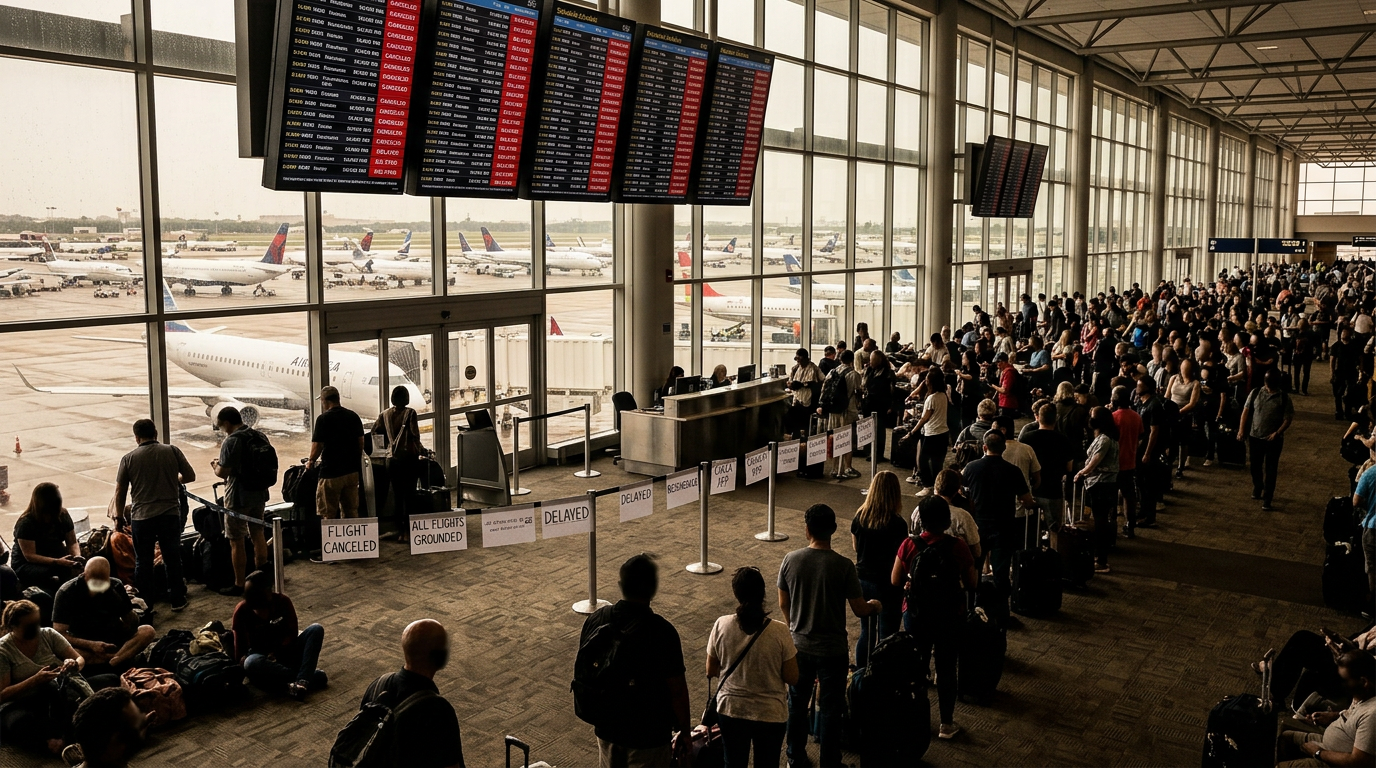
Thousands of travelers across the state of Texas faced significant disruptions on July 20, 2026, as a wave of flight cancellations and delays swept through major domestic aviation hubs. Reports indicate that over 384 flights were completely removed from schedules, while an additional 4,265 flights suffered significant delays. This logistical bottleneck has primarily impacted major carriers including Delta Air Lines and JetBlue, alongside regional partners like Endeavor Air. Historically, Texas serves as a critical junction for transcontinental flight paths, meaning that localized disruptions in the Lone Star State frequently trigger a domino effect across the national airspace system. Historically, the Texas aviation network has faced similar stress tests during peak summer travel windows and periods of tech-driven infrastructure outages. The state’s major hubs, particularly Dallas-Fort Worth, have frequently served as the litmus test for airline resilience. In past years, legislative scrutiny has often followed such mass grounding events, as state leaders push for more robust protections for consumers and better transparency from carriers operating within the state’s borders. This recent event follows a pattern of heightened volatility that has plagued the industry since the post-pandemic travel surge.
Texas relevance
Texas is at the epicenter of this travel crisis due to its status as home to some of the world's busiest airports, including Dallas-Fort Worth International (DFW), Houston’s George Bush Intercontinental (IAH), and Austin-Bergstrom International (AUS). When massive cancellations of this magnitude occur, the Texas economy suffers through lost productivity and increased strain on local hospitality services. Furthermore, Texas residents traveling for business or leisure found themselves stranded in terminals as the 4,265 delays nationwide rippled through the regional schedule. The state's reliance on air travel for interstate commerce makes these operational failures particularly damaging to the Texas regional trade network. With major corporate headquarters in Dallas, Austin, and Houston constantly shuffling personnel across the globe, a single day of system-wide failures can lead to millions of dollars in lost corporate productivity for Texas-based firms. The geographic centrality of Texas means that an aircraft grounded in Atlanta or New York almost certainly results in a missing arrival at a Texas gate just hours later.
The Scale of the July 20 Disruptions
The sheer volume of affected flights on July 20 highlights a systemic vulnerability in current aviation operations. With 384 cancellations occurring in a single window, the capacity of airlines to rebook passengers was immediately overwhelmed. In Texas, where heat and summer storm patterns often complicate flight paths, these numbers represent a substantial deviation from standard operational percentages and suggest a complete breakdown in contingency planning.
The delay count of 4,265 flights suggests that even those aircraft that managed to stay on the schedule were unable to maintain their designated time slots. For many Texas passengers, this translated into multi-hour waits in crowded terminals and missed connections for international departures. The backlog created by these delays often takes several days to fully resolve, as crews and aircraft are displaced from their planned rotations and legal crew rest requirements began to freeze the recovery process.
Carriers Hit Hardest by the Groundings
Delta Air Lines emerged as one of the primary carriers struggling with the logistical breakdown. As a major player in the Texas market with significant gates in Austin and Dallas, Delta's operational struggles have a direct impact on the state’s connectivity to East Coast and international hubs. The grounding of flights was not limited to mainline jets but extended deeply into regional operations that serve as the backbone of intra-state connectivity.
Endeavor Air, which operates as a regional subsidiary, also saw significant portions of its schedule impacted. Because regional carriers often handle the 'feeder' routes into major Texas cities from places like Lubbock, Midland, and El Paso, the failure of these smaller lines effectively cut off smaller Texas municipalities from the larger national grid. JetBlue also reported high numbers of disrupted flights, complicating travel for those moving between Texas and the Northeast, a critical corridor for both finance and tech sectors.
Impact on Major Texas Aviation Hubs
Dallas-Fort Worth and Houston serve as the primary gateways for the Southern United States. When 4,265 flights are delayed nationwide, these specific hubs become bottlenecks where transit passengers are frequently stranded overnight. The infrastructure at these airports is designed for high-volume flow, and any interruption results in immediate overcrowding and a strain on airport resources, including gate availability and terminal concessions.
In Austin, the rapidly growing tech sector relies heavily on reliable flight schedules to maintain national business ties. Recurring delays of this scale threaten the perceived reliability of Texas as a regional business capital. The financial implications for Texas-based businesses include lost man-hours and the added expense of emergency lodging for stranded employees who are unable to secure return flights within a 48-hour window.
Regional Fallout Across the Southern U.S.
While Texas was a major focal point, the disruption extended across a corridor including Florida and Georgia. These states share similar weather patterns and air traffic control sectors with Texas, often leading to combined regional outages. When Georgia's hubs—namely Atlanta—face issues, the direct flight paths into Texas are among the first to be throttled to manage the flow of traffic across the Gulf Coast region.
This interconnectedness means that Texas travelers are often at the mercy of operational conditions thousands of miles away. The July 20 event showcased how a failure in one region quickly migrates into the Texas market, leaving local travelers with few alternatives as rental car inventories and hotel rooms reach capacity near major airports like DFW and IAH.
Operational Realities for Stranded Passengers
For the individuals behind the statistics, the 384 cancellations represent significant personal and financial loss. Under current federal guidelines, passengers are entitled to certain protections such as refunds for canceled trips, but the logistical reality of finding alternative transport during a mass-delay event remains a daunting challenge for many Texans trapped far from their homes.
Airlines have struggled to provide timely communication during these surges in delays. As the number of impacted flights climbed past 4,000, customer service lines and digital apps often saw extended wait times or technical errors. This lack of real-time information exacerbates the frustration for families and business travelers who are unable to plan their next steps while grounded in Texas terminals.
The Path to Recovery for Air Traffic
Recovering from a day with over 4,000 delays is not an instantaneous process. Flight crews are subject to strict federal 'duty time' regulations, meaning that once a delay pushes a pilot or flight attendant past their legal working hours, the flight must be cancelled even if the aircraft is ready. This often leads to a secondary wave of cancellations the following morning, preventing a clean start for the next travel day.
For Texas terminals, the recovery process involves repositioning aircraft that were diverted to alternate airports and clearing the backlog of standby passengers. Until the number of active delays drops significantly below the July 20 peak, the Texas aviation system will likely continue to experience 'residual' effects, including late-day cancellations and overbooked flights as the industry plays catch-up.
Long-Term Economic and Legislative Stakeholders
Major stakeholders in this crisis include the Texas Department of Transportation’s aviation division and the numerous Chamber of Commerce organizations that rely on fluid air travel. When Texas hubs are paralyzed, the ripple effect is felt in every sector from tourism to international manufacturing. Legislative bodies in Austin often monitor these events to determine if additional investments in regional airport infrastructure could mitigate some of the pressure on the state's largest hubs.
Furthermore, labor unions representing pilots and flight attendants frequently point to these mass-delay events as evidence of poor scheduling software and lack of reserve staff. As Texas continues to grow as a corporate headquarters for major airlines like American and Southwest, the state’s internal political and economic climate is inextricably linked to the operational success of these carriers. Ensuring that Texas remains a reliable place for aviation is a top priority for state economic planners.
Analysis
The intersection of aging air traffic control technology and the aggressive scheduling tactics of major airlines has created a precarious environment for the Texas traveler. While airlines often cite weather or 'acts of God' to mitigate liability, the sheer volume of delayed flights—exceeding 4,000 in a single day—suggests a capacity issue at the heart of the national aviation infrastructure. For Texans, who often have no choice but to fly due to the massive distances between urban centers, the current lack of a reliable high-speed rail or alternate transit makes these aviation failures even more impactful. The recurring nature of these 'meltdowns' may eventually lead to a renewed push in the Texas Legislature for state-level consumer protections, similar to those seen in the European Union, to ensure that airlines are held financially accountable for procedural failures that strand thousands in Lone Star State terminals.
Source attribution
This story was reported using a public release from the Texas Travel Stories (Google News). Keep TX Red rewrote the coverage independently and links to the official statement for verification.
Frequently Asked Questions
- Which airlines were most affected by the cancellations on July 20?
- Delta Air Lines, JetBlue, and Endeavor Air were among the primary carriers facing grounding issues and significant schedule delays, impacting several Texas-based routes.
- How many flights were actually cancelled according to the reports?
- A total of 384 flights were cancelled across the United States, including those departing from and arriving to major Texas hubs like DFW and IAH.
- Why is Texas particularly affected by these national flight delays?
- Texas houses some of the nation's busiest airports like DFW and IAH. Because these serve as major connecting points for east-west and north-south travel, any national disruption of over 4,000 flights inevitably causes a massive backlog of passengers and aircraft within the state.
- Are passengers entitled to compensation for these delays?
- Per Department of Transportation rules, passengers are entitled to a full refund if their flight is cancelled and they choose not to travel. For delays, the rules vary by airline, making it vital for Texas passengers to check individual carrier policies during mass-disruption events.
Official Sources
Take the next step
Browse the Newsroom →Read more about Keep Texas Red → Our full guide to what Keep Texas Red means and why Texans support it.
Related Articles

Get Texas updates delivered weekly.
Independent Texas reporting on politics, policy, and daily life. One email a week. Unsubscribe anytime.
Keep TX Red Newsroom
The Keep Texas Red Editorial Staff produces nonpartisan explainers, policy breakdowns, and educational resources to help Texans understand how their government works. All content is reviewed for accuracy and updated regularly.
About Keep TX Red →