Austin Pilates Market Trends: Residential Growth Drives Demand for Downtown Fitness Memberships
As new residents move to downtown Austin, the demand for affordable fitness and Pilates studios in the city center is reaching a new peak.
Editorial disclaimer: Opinions and analysis on Keep TX Red are editorial content — not statements of fact. See our editorial standards.
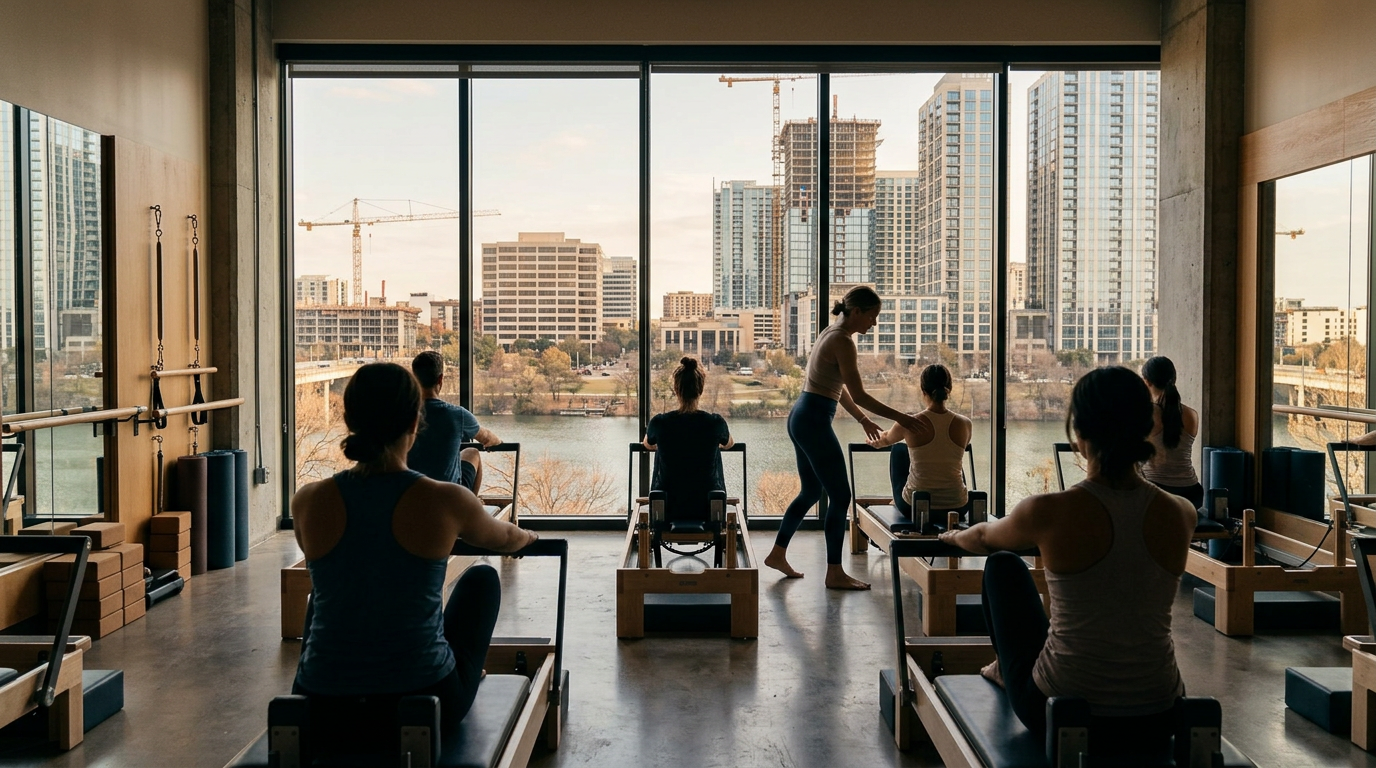
The rapid residential expansion of downtown Austin has triggered a significant surge in demand for specialized fitness services, particularly reformer-based Pilates. As hundreds of new residents relocate to the central business district every month, the local market for boutique wellness is adjusting to cater to a demographic seeking premium services within a specific price bracket. This trend is highlighted by new residents transitioning from other metropolitan areas who are now scouting for memberships that align with their previous cost expectations, typically around the $250 per month range for unlimited access. Historically, Austin’s fitness scene was dominated by outdoor activities and traditional gyms, but the last decade has seen a vertical shift toward high-intensity, specialized studio environments that serve the dense high-rise populations. This shift in consumer behavior reflects a broader change in the Austin urban landscape. Central Austin, once primarily a hub for government and commerce, is now a 24-hour residential community. This transition requires a diverse ecosystem of lifestyle amenities, from grocery stores to high-end wellness centers. Market analysts note that the 'unlimited access' model has become the gold standard for these studios, providing a predictable revenue stream for business owners while offering flexibility for the remote-work and flexible-schedule professionals who now call the downtown area home. The current competitive landscape includes national franchises as well as locally-owned boutiques, each vying for a share of the growing executive and tech-sector client base.
Texas relevance
Texas wellness trends often start in urban hotspots like downtown Austin before spreading to other metropolitan areas like Dallas and Houston. The influx of new residents into Central Texas is not just a housing story; it is a significant economic driver for the service industry. In Austin specifically, the cost of commercial real estate in the 78701 zip code directly influences the pricing structures of fitness memberships. Those relocating to Texas for high-paying roles in the technology or legal sectors expect a specific tier of amenity, and the ability of Austin businesses to meet these needs at competitive prices—compared to larger coastal hubs—remains a key component of the city's overall attractiveness for human capital.
The Evolution of Austin's Wellness Landscape
In the early 2000s, Austin's fitness culture was largely defined by Zilker Park, Lady Bird Lake, and a handful of independent gyms. However, the tech boom and subsequent population explosion have transformed the city into a premiere destination for specialized boutique fitness. Pilates, specifically utilizing the reformer machine, has seen a meteoric rise in popularity as a low-impact, high-intensity workout favored by the city's active urbanites.
The current market saturation in the downtown core means that consumers no longer have to travel to suburban neighborhoods to find specialized equipment. Instead, studios are being integrated directly into the hulls of mixed-use developments. This integration allows residents to walk to their workouts, reinforcing the '15-minute city' concept that Austin urban planners have long advocated for. As a result, the value of a membership is now measured not just in price, but in proximity and convenience.
Understanding the Standard Pricing Model
For a new resident entering the Austin market, the benchmark for an unlimited boutique fitness membership often fluctuates between $200 and $300 per month. This price point typically includes a suite of amenities such as online booking priorities, locker room access, and occasionally, towels or water services. For Pilates studios, which require expensive reformer machines and small class sizes, these rates are necessary to cover the high overhead associated with downtown lease agreements.
When compared to other major Texas cities, Austin’s downtown rates are roughly comparable to those in the Dallas Uptown area or Houston’s River Oaks. However, the density of studios in Austin’s core is uniquely high for a city of its size. This competition keeps studios focused on maintaining high standards of instruction and facility cleanliness to prevent member churn, which is a constant challenge in a city with such a transient newcomer population.
Impact of Commercial Real Estate on Studio Costs
One cannot discuss the price of a Pilates membership in Austin without acknowledging the impact of commercial property taxes and rent. As the downtown area has seen property values skyrocket, the small business owners who run these studios face significant pressure. These costs are inevitably passed down to the consumer, explaining why a $250 'unlimited' membership is often the starting point rather than a premium outlier.
Some studios have attempted to mitigate these costs by offering 'off-peak' memberships or class-pack models, which appeal to those who do not require daily access. However, the dedicated Pilates enthusiast moving into the downtown area generally seeks the unlimited model to maintain a consistent routine without the friction of per-class payments. This creates a stable environment for studios but requires a significant financial commitment from the resident.
Technological Integration in Austin Studios
Austin's reputation as a tech hub extends into its fitness studios. Many Pilates centers in the downtown area utilize advanced scheduling apps that integrate with wearable fitness trackers and health platforms. This connectivity is a major draw for the local workforce, who appreciate the ability to quantify their progress and seamlessly integrate their health data.
Beyond scheduling, some studios are incorporating virtual reality or digital biofeedback systems into their reformer sessions. While these high-tech additions can drive up the membership cost, they differentiate the studio in a crowded market. For the newcomer, finding a studio that balances these technological perks with traditional, high-quality instruction is often the primary goal.
Community and Social Capital in Urban Fitness
For many moving to Austin, a Pilates studio serves as more than just a place to exercise; it is a vital social hub. In a city where networking is a near-constant activity, these studios provide a space for residents to meet their neighbors and build community in a new environment. This 'social capital' factor added to a membership helps justify the $250-plus price tag for many individuals.
Studio owners often lean into this by hosting social hours, workshops, and retail events. By creating an environment where members feel like part of an exclusive club, studios can maintain high retention rates even when new competitors open nearby. For the downtown inhabitant, the fitness studio is often the 'third place' between home and work, making the selection of the right studio a pivotal part of their relocation process.
Future Outlook for Austin's Fitness Industry
Looking ahead, the fitness industry in Austin is expected to continue its diversification. While reformer Pilates remains a staple, we are beginning to see the emergence of hybrid studios that combine Pilates with cold plunges, infrared saunas, and other recovery modalities. These 'total wellness' centers may push membership fees even higher, potentially reaching the $400 or $500 mark for comprehensive access.
However, as the market matures, there is also potential for a 'budget boutique' sector to arise. These would be studios that offer the essentials—quality reformers and trainers—without the luxury locker rooms or prime street-front locations. This would allow a broader range of Austin residents to access specialized fitness, ensuring that the health benefits of the Pilates method are not restricted solely to the highest earners in the downtown high-rises.
Comparing Downtown and Suburban Options
Residents moving to the city center often compare downtown prices with those in outlying areas like Round Rock or West Lake Hills. While suburban studios might offer slightly lower monthly rates or larger facilities, the cost of commuting and the time lost in Austin traffic often make the downtown membership more economical in the long run. The convenience of a five-minute walk versus a forty-minute drive is a significant factor in the decision-making process.
Moreover, downtown studios often curate their class times to fit the 'work-hard, play-hard' lifestyle of the central district, with more early-morning and late-evening sessions than their suburban counterparts. For a busy professional moving to the heart of the city, these scheduling advantages frequently outweigh the few dollars saved by looking for memberships outside the city core.
Analysis
OPINION: The rising costs of boutique fitness in Austin are a dual-edged sword. While they signify a robust and growing local economy with high disposable income, they also highlight the increasing barriers to entry for long-term residents who may be priced out of their own neighborhoods. A $250 monthly budget for a single type of exercise is a luxury that reflects the 'new Austin' economy. As the city continues to densify, we can expect to see a market correction where smaller, perhaps less technology-focused studios emerge to offer more competitive rates, or conversely, a consolidation where only the largest luxury chains survive the soaring commercial property taxes unique to Travis County.
Source attribution
This story was reported using a public release from the r/austin. Keep TX Red rewrote the coverage independently and links to the official statement for verification.
Frequently Asked Questions
- What is the average cost for a Pilates membership in downtown Austin?
- For a reformer-based studio with unlimited monthly access, prices generally range from $220 to $280. Prices vary based on the studio's amenity level and the specific location within the downtown core.
- Are there more affordable Pilates options in Austin outside of downtown?
- Yes, studios in neighborhoods further from the city center, such as North Lamar or South Congress, may offer memberships that are 10-15% cheaper. Additionally, many studios offer introductory packages for new residents to test the facilities.
- Why is reformer Pilates more expensive than a standard gym membership?
- Reformer Pilates involves specialized equipment that is costly to purchase and maintain. Furthermore, classes are usually limited to small groups (8-12 people) to ensure safety and individual instruction, which requires higher per-person pricing to sustain the business.
Official Sources
Take the next step
Browse the Newsroom →Read more about Keep Texas Red → Our full guide to what Keep Texas Red means and why Texans support it.
Related Articles



Get Texas updates delivered weekly.
Independent Texas reporting on politics, policy, and daily life. One email a week. Unsubscribe anytime.
Keep TX Red Newsroom
The Keep Texas Red Editorial Staff produces nonpartisan explainers, policy breakdowns, and educational resources to help Texans understand how their government works. All content is reviewed for accuracy and updated regularly.
About Keep TX Red →