Austin Movie Theaters: Comparing Bullock IMAX vs. Tech Ridge Dolby Vision
A direct comparison of Austin's premier movie screens reveals how the Bullock IMAX and AMC Tech Ridge Dolby Cinema stack up for enthusiasts.
Editorial disclaimer: Opinions and analysis on Keep TX Red are editorial content — not statements of fact. See our editorial standards.
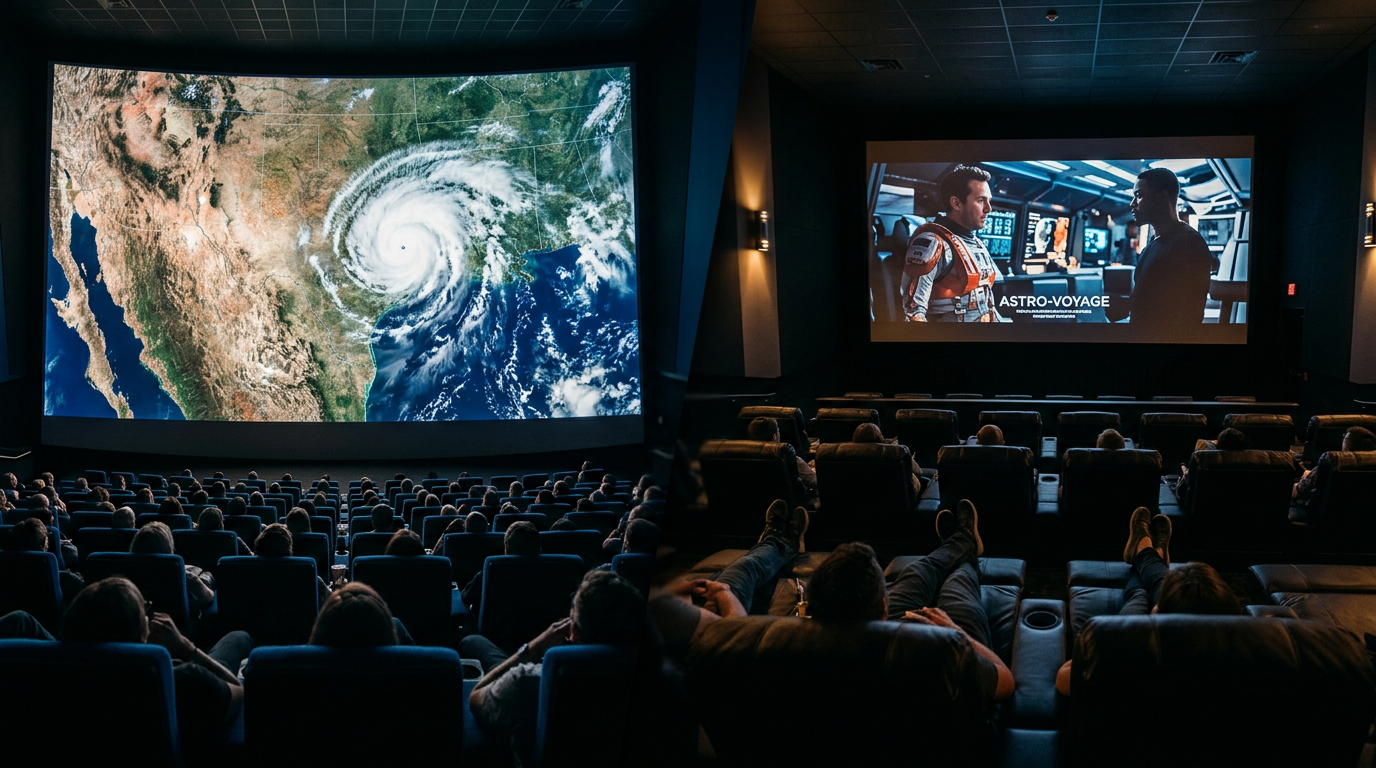
The cinematic landscape in Austin offers premium viewing options that cater to tech-savvy audiences and film enthusiasts. Recently, a local comparison emerged regarding two of the most popular high-end formats in the city: the Bob Bullock Texas State History Museum’s IMAX theater and the Dolby Cinema at AMC Tech Ridge. This comparison highlights a significant trend in the Texas entertainment sector where audiences are increasingly willing to pay a premium for technical superiority in sound and visual fidelity. Historically, the Bullock IMAX has been the gold standard in Central Texas due to its massive screen size and unique status as a museum-housed theater. However, the rise of Dolby Cinema installations in commercial multiplexes like Tech Ridge has introduced a competing standard based on high-contrast visuals and immersive audio tracking. The debate centers on whether the sheer scale of the IMAX screen outweighs the precision and comfort of the Dolby environment, specifically when viewing modern epics like 'The Odyssey'. This scrutiny of local venues reflects a broader shift where theater-goers act as amateur critics of hardware as much as the films themselves. Austin’s position as a hub for both technology and film production makes it the ideal battleground for these format wars, as residents often possess high-end home theater systems and demand commercial experiences that can surpass their personal setups.
Texas relevance
Austin, Texas, has a deep-rooted history with the film industry, serving as the home to major festivals like SXSW and the Austin Film Festival. The Bob Bullock Texas State History Museum, located in the heart of the state capital, represents a unique fusion of Texas heritage and modern entertainment technology through its IMAX theater. Because the Texas State Preservation Board oversees the museum, the facility is a point of civic pride and a significant taxpayer-supported asset. Residents from surrounding areas like Round Rock, Pflugerville, and Cedar Park often travel into the Austin core specifically for the Bullock experience. Meanwhile, the AMC Tech Ridge location serves the rapidly growing tech corridor in North Austin, where many professionals in the semiconductor and software industries reside. For Texans, the choice between these venues isn't just about the movie; it is about supporting local landmarks versus utilizing the convenience of modern retail developments. This competition ensures that Austin remains one of the most competitive markets for theatrical exhibition in the Southern United States, providing locals with access to the highest available standards in projection technology.
The Scale of the Bob Bullock IMAX
The Bob Bullock IMAX is widely regarded as one of the most impressive screens in the state of Texas. Unlike many 'Lie-MAX' screens found in suburban malls, the Bullock facility offers a genuine 1.43:1 aspect ratio capability that satisfies the requirements for true oversized film projection. This makes it a preferred destination for directors who shoot on high-resolution film stock, as it captures the intended scope of grand cinematic narratives.
Beyond the screen, the atmosphere of the Bullock is inherently tied to the history of Texas. Visitors walk through exhibits of state treasures before entering the theater, creating a sense of occasion that commercial theaters often lack. The seating is tiered significantly to ensure that even with the massive screen height, viewers have a clear line of sight. This verticality is the theater's greatest strength, providing an encompassing experience that makes the audience feel centered within the action of the film.
However, being a museum facility, the concessions and seating may differ from the luxury loungers found in modern commercial chains. For many Austin natives, the trade-off is worth it for the sheer visual impact of the largest screen in the city. The technical management of the projector at this site is held to a high standard, frequently calibrated to meet the rigorous demands of museum-quality educational documentaries and blockbuster releases alike.
Technical Precision at AMC Tech Ridge
The Dolby Cinema at AMC Tech Ridge represents the peak of commercial multiplex technology. It utilizes Dolby Vision, a proprietary high-dynamic-range (HDR) technology that offers a contrast ratio far exceeding that of traditional digital projectors. In scenes with deep shadows or vibrant highlights, the Dolby system provides a level of detail that even the best IMAX screens can struggle to match, as it achieves 'true black' by shutting off light entirely in dark areas of the frame.
Sound is the other major component of the Dolby experience. The Atmos system at Tech Ridge features a massive array of speakers, including those overhead, to create a three-dimensional soundstage. For a film with a complex score or intense sound design, this allows the viewer to track individual sounds as they move across the room. This level of acoustic precision is often cited as the primary reason for repeat viewings at this specific location.
Comfort also plays a pivotal role in the Tech Ridge experience. The theater feature power-reclining seats that include haptic feedback, vibrating in sync with deep bass frequencies on screen. For many moviegoers, the ability to relax in a luxury chair for a three-hour epic like 'The Odyssey' is a decisive factor that can outweigh the larger screen size offered by the Bullock IMAX downtown.
Comparative Visuals and Aspect Ratios
One of the primary differences noted by Austin filmgoers is the way each theater handles the frame of the movie. IMAX screens are famously tall, often cutting off less of the image if the movie was shot specifically for that format. For 'The Odyssey,' this means the Bullock screen provides more 'image' at the top and bottom, which can make sequences feel more gargantuan and overwhelming. This is particularly effective for landscapes and large-scale battle scenes.
On the other hand, Dolby Cinema screens are typically wider and utilize a 2.39:1 aspect ratio. While this might feel smaller in terms of height, it fits the traditional 'cinemascope' look that many film purists prefer for dramatic storytelling. The image at Tech Ridge is perceived by some as sharper and more colorful, despite the smaller physical footprints of the screen compared to the Bullock’s massive wall of light.
The debate often centers on 'screen real estate' versus 'pixel quality.' While the IMAX provides more sheer square footage of image, the Dolby dual-laser system provides a higher perceived resolution and better color accuracy. In a city like Austin, where the population includes many tech professionals who understand these specifications, the choice between these two formats is often a topic of intense discussion in local social circles.
Acoustics and Soundstage Evaluation
The audio environment at the Bob Bullock IMAX is known for its sheer volume and physical force. Using a custom-tuned integrated sound system, the theater is designed to fill a massive three-dimensional space with sound that can be felt in the chest of every audience member. It excels at low-frequency effects, making explosions and deep musical notes feel incredibly powerful. This 'wall of sound' approach is iconic, but it can sometimes lack the surgical precision of modern object-based setups.
Dolby Atmos at AMC Tech Ridge takes a different approach by treating every sound as an independent object that can be moved through a 3D space. If a character in 'The Odyssey' whispers from the back left, the sound comes exactly from that coordinate. This creates a sense of intimacy and spatial awareness that can be more immersive for dialogue-heavy scenes or atmospheric soundtracks. The integration of transducers in the seats also adds a physical dimension to the sound that is unique to the Dolby format.
For the audiophile community in Austin, the Tech Ridge location is often the preferred choice because of this clarity. However, for those who want the classic, thunderous roar of the cinema, the Bullock remains the undisputed champion. The choice frequently depends on the specific sound design of the film being screened, with different movies benefiting from the unique strengths of each audio philosophy.
The Evolution of Austin Movie Culture
The ongoing comparison between these theaters reflects the evolution of movie-going culture in Central Texas. Austin was once dominated by quirky independent houses and the early days of the Alamo Drafthouse. While those institutions remain vital, there is a growing segment of the population that views movie-going as an exercise in high-end technology. This 'prosumer' audience treats a trip to the theater with the same level of scrutiny that they apply to their own home electronics.
As Austin continues to grow, the demand for these premium formats has led to more investment in theater infrastructure. The fact that a resident can see the same film twice in one day at two different world-class facilities and have a fundamentally different experience speaks to the richness of the local entertainment market. It also highlights a shift where the venue itself becomes a co-star to the film, influencing the audience's emotional response through technical excellence.
This competition is healthy for the Texas film scene. It pushes the Bullock to maintain its status as a premier destination through technical upkeep and special events, while forcing commercial theaters like AMC to offer the latest in luxury and projection tech to lure viewers away from their living rooms. For the consumer, it means that Austin provides some of the best ways to watch a film anywhere in the United States.
Analysis
The preference between IMAX and Dolby Cinema often boils down to a trade-off between immersion through size and immersion through clarity. The IMAX experience at the Bullock is distinct because of its verticality; it fills the entire field of vision in a way that standard wide screens cannot replicate. However, the Dolby Cinema at Tech Ridge offers a superior black level and color gamut because of its dual-laser projection system. For a film as visually complex as 'The Odyssey,' the choice reflects the viewer's personal priority. Those who value the historical prestige of the state museum and the 'wow factor' of the massive screen will likely continue to favor the Bullock. Conversely, audiophiles may lean toward the Dolby Atmos sound system, which allows for precise object-based audio placement that sometimes feels more refined than the raw power of the IMAX audio array. This local discourse proves that despite the rise of streaming, the demand for high-quality, physical theater locations in Texas remains robust.
Source attribution
This story was reported using a public release from the r/austin. Keep TX Red rewrote the coverage independently and links to the official statement for verification.
Frequently Asked Questions
- Which theater has the largest screen in Austin?
- The Bob Bullock Texas State History Museum IMAX features the largest screen in Austin. It is a true IMAX screen designed to accommodate both educational films and major Hollywood blockbusters in a vertically expanded format.
- What makes Dolby Cinema at Tech Ridge different from a standard theater?
- Dolby Cinema at the AMC Tech Ridge location uses dual-laser projectors for higher contrast and brighter colors (Dolby Vision) along with a spatial audio system (Dolby Atmos) that moves sound around the audience in a three-dimensional field.
- Is the Bullock IMAX theater part of a commercial chain?
- No, the Bullock IMAX is located within the Texas State History Museum and is managed by the state. While it shows commercial films, it also screens educational documentaries related to Texas history and science.
- What should I look for when choosing between IMAX and Dolby?
- Choose IMAX if you want a massive, towering screen and a sense of scale. Choose Dolby if you want the most accurate colors, deeper blacks, and the comfort of luxury reclining seats with physical vibration effects.
Official Sources
Take the next step
Browse the Newsroom →Read more about Keep Texas Red → Our full guide to what Keep Texas Red means and why Texans support it.
Related Articles



Get Texas updates delivered weekly.
Independent Texas reporting on politics, policy, and daily life. One email a week. Unsubscribe anytime.
Keep TX Red Newsroom
The Keep Texas Red Editorial Staff produces nonpartisan explainers, policy breakdowns, and educational resources to help Texans understand how their government works. All content is reviewed for accuracy and updated regularly.
About Keep TX Red →