Austin Brewery to Launch World's First Beer Brewed With Yeast That Has Flown in Space
Starbase Brewing in Austin, Texas, is utilizing SpaceX technology to ferment the world's first beer featuring yeast that has actually orbited Earth.
Editorial disclaimer: Opinions and analysis on Keep TX Red are editorial content — not statements of fact. See our editorial standards.
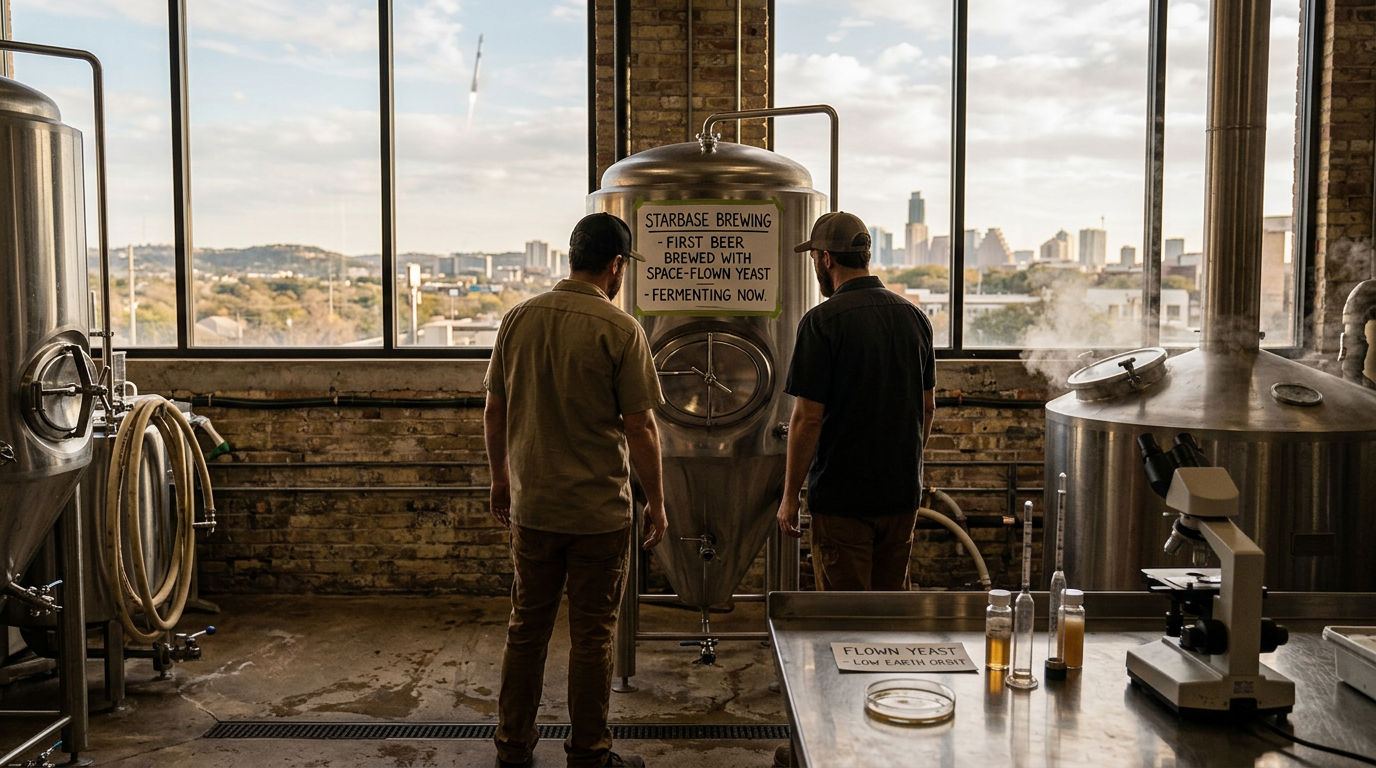
The intersection of the flourishing Texas aerospace industry and the state's robust craft brewing scene has reached a new milestone. Austin-based Starbase Brewing has announced a pioneering project to produce and sell what is being marketed as the world's first 'space beer.' This unique beverage is fermented using yeast that was sent into low Earth orbit aboard a SpaceX capsule before being returned to Central Texas for production. Historically, Texas has been a hub for space exploration since the mid-20th century, with NASA’s Johnson Space Center in Houston serving as a cornerstone. However, the recent shift toward private aerospace ventures like SpaceX has transformed the state into a premier launch and testing ground, providing local businesses with unprecedented access to orbital logistics for commercial experimentation. This project represents a literal fusion of Texas's frontier spirit and its modern status as a leader in both tech innovation and hospitality. Following the successful return of the biological payload, the brewery’s team began the process of reviving the yeast to observe how the conditions of space travel—specifically microgravity and increased radiation—might have altered its fermentation properties. While typical brewing relies on stable, well-characterized yeast strains, the exposure to the harsh environment of space introduces a variable that fascinates both scientists and aficionados. The resulting product is not just a novelty item but a case study in how orbital logistics can be leveraged for terrestrial consumer goods, marking a significant first in the global beverage industry right in the heart of the Lone Star State.
Texas relevance
This development is deeply rooted in the Texas economy and its evolving identity as a leader in the new space race. Austin and South Texas have become focal points for Elon Musk’s SpaceX operations, which directly enabled this collaboration. By utilizing infrastructure located within the state, Starbase Brewing is highlighting a unique supply chain that exists only in a handful of places worldwide. Furthermore, the Texas craft beer industry contributes billions to the state’s GDP annually; innovations like these help maintain the state's competitive edge in a crowded national market. The project also serves as a proof-of-concept for other Texas-based enterprises looking to utilize low Earth orbit for research and development, solidifying the state’s role as the primary ecosystem for commercial space integration.
The Science Behind Orbital Fermentation
The process began with the selection of specific yeast strains known for their resilience and flavor profiles. Yeast is a living fungus, and like all biological entities, it remains susceptible to the stressors of the space environment. When these microorganisms leave the Earth’s atmosphere, they are exposed to high-energy cosmic rays and the absence of gravity, both of which can induce genetic mutations or physiological changes. Brewers are curious to see if these changes result in different ester production or flocculation patterns compared to their Earth-bound counterparts.
Upon reentry and recovery, the yeast was transported back to the Austin facility under strictly controlled conditions. The primary challenge for the brewing team was to ensure that the yeast remained viable for large-scale fermentation. Microbiologists and brewers worked together to 'awaken' the samples, creating a starter culture that would eventually populate the fermentation tanks. This bridge between laboratory science and commercial production is a hallmark of the modern craft movement in Texas, which prides itself on technical precision.
Preliminary observations suggest that the space-flown yeast may exhibit unique characteristics, though the brewery is maintaining a level of secrecy regarding the specific flavor notes until the official release. The goal is to provide a sensory experience that reflects the extraordinary journey the ingredients have taken. By documenting the scientific data alongside the brewing process, Starbase Brewing is setting a precedent for how bio-manufacturing might look as commercial spaceflight becomes more routine.
SpaceX and the Texas Corridor
The success of this project is inextricably linked to the localized infrastructure of SpaceX within Texas. Over the last few years, the presence of the Starbase facility in Cameron County and the testing grounds in McGregor have created a logistical ecosystem that allows Texas businesses to think outside the literal atmosphere. Because SpaceX operates its own launch and recovery systems, the barriers to entry for commercial payload space are slowly lowering, allowing smaller entities to buy into cargo slots.
This specific mission utilized a recent SpaceX capsule flight, demonstrating the frequency with which Texas-based launches are now occurring. The proximity of the launch sites to the brewing facilities in Austin minimizes the time biological samples spend in transit on the ground, ensuring maximum viability. This 'Texas Corridor'—running from the Gulf Coast to the Central Texas tech hubs—is becoming the most vital economic artery in the southern United States.
For the local Austin economy, the presence of themed businesses like Starbase Brewing provides a bridge between the city's artistic 'Keep Austin Weird' roots and its new reality as a global tech powerhouse. The brewery serves as a community hub where engineers from the nearby Tesla and SpaceX facilities can interact with local residents, further integrating the aerospace industry into the social fabric of the city.
Historical Context of Space Consumables
The concept of 'space food' has evolved significantly since the days of tubes and cubes used during the Mercury and Gemini missions. In the early days of NASA, the focus was purely on nutrition and safety in microgravity, with little regard for taste. It wasn't until the Shuttle era and the establishment of the International Space Station (ISS) that researchers began looking at how to improve the quality of life for astronauts through better food and even experimental gardening. However, these efforts remained largely closed to the public.
What makes the Starbase Brewing project different is that it brings the space experience to the general consumer. While NASA has conducted experiments with plants and microbes on the ISS for decades, the resulting products were never intended for the retail shelf. Texas is now leading the shift toward the commercialization of space-impacted goods. This project represents the first time a Texas consumer will be able to walk into a taproom and purchase a product directly influenced by orbital travel.
This evolution also reflects a broader trend in Texas history: the ability to take frontier technology and turn it into a viable commercial product. Just as the Texas oil boom of the early 20th century led to innovations in chemistry and manufacturing, the current space boom is creating a new class of consumer goods that were previously unimaginable. The 'space beer' is a pioneering entry in what will likely become a crowded market of orbit-derived products.
Economic Impact of Texas Craft Brewing
The Texas craft beer industry is more than just a collection of local bars; it is a multi-billion dollar economic engine. According to recent data, Texas ranks in the top five states for the number of craft breweries and total economic impact. By introducing high-concept products like space-flown beer, Texas breweries are able to command premium prices and attract international attention, which in turn drives tourism and investment into the state.
In Austin specifically, the brewing scene is a major draw for the thousands of 'tech tourists' who visit the city annually for events like SXSW and various tech conferences. A product that combines the city's love for craft beer with the global fascination with SpaceX is a triple-threat for local marketing. Starbase Brewing is positioning itself as a destination for those who want to experience the cutting edge of Texas culture.
Furthermore, these types of projects encourage collaboration between different sectors of the Texas workforce. The development of 'space beer' required input from aerospace logistics experts, microbiologists, and traditional brewmasters. This cross-pollination of skills is exactly what state economic leaders hope to foster as they look to diversify the Texas economy beyond traditional energy and agriculture.
Logistics and Technical Hurdles
Sending organic material into space is not as simple as putting it in a suitcase. The yeast had to be contained in specialized hardware that could withstand the intense vibrations of liftoff and the thermal variances of the capsule. Once in orbit, the samples had to be maintained at specific temperatures to prevent the yeast from becoming dormant or dying off prematurely. The coordination between the brewery and the launch provider was a month-long planning exercise.
Upon return, the recovery team had to prioritize these biological samples to ensure they weren't exposed to the Texas heat for too long during transport. The logistics of the 'last mile'—from the recovery site back to the Austin brewery—were just as critical as the orbital flight itself. This highlights the importance of having professional-grade logistics networks within the state to support advanced manufacturing.
There were also regulatory hurdles to consider. While the TTB (Alcohol and Tobacco Tax and Trade Bureau) and state regulators have clear rules for traditional brewing ingredients, 'space yeast' is a relatively new concept. The brewery had to ensure that all health and safety standards were met, demonstrating that while the yeast had been to space, it remained a safe and controlled food-grade ingredient for public consumption.
Consumer Expectations and the Future of Novelty Brewing
The craft beer market is notoriously driven by novelty, with consumers constantly seeking out new flavors, ingredients, and stories. The 'space beer' project taps into this demand by offering a story that is literally out of this world. However, the success of the product will ultimately depend on its quality. Starbase Brewing has emphasized that while the space travel is the hook, the beer itself must stand on its own as a high-quality craft beverage.
If this launch is successful, it could signal the beginning of a new era for Texas breweries. We may see more partnerships between local artisans and the aerospace industry. Imagine Texas-grown hops being sent to the lunar surface for experimental aging, or spirits distilled using water filtration technology developed for long-duration space missions. The possibilities are limited only by the frequency of launches and the imagination of Texas entrepreneurs.
For now, the Austin community waits for the first pour. The release event is expected to draw significant crowds, including aerospace enthusiasts, beer nerds, and curious locals. It serves as a reminder that in Texas, the sky is no longer the limit—it’s just the beginning of the supply chain.
Analysis
From an editorial perspective, Starbase Brewing’s initiative is a brilliant example of Texas-style branding and entrepreneurial grit. While some might dismiss the project as a marketing gimmick, it underscores a serious trend: the democratizing of space. Just a decade ago, sending a biological payload into orbit was an endeavor reserved for national governments with billion-dollar budgets. Today, a local Austin business can utilize commercial flight capacity to differentiate its product. This move perfectly mirrors the broader Texas economic landscape, where traditional industries—like brewing—are increasingly intersecting with high-tech sectors like aerospace. By leaning into the 'Starbase' name, the brewery is effectively hitching its wagon to the most disruptive force in modern manufacturing, ensuring that the 'Made in Texas' label remains synonymous with the future of innovation.
Source attribution
This story was reported using a public release from the r/texas. Keep TX Red rewrote the coverage independently and links to the official statement for verification.
Frequently Asked Questions
- Is the space beer safe to drink?
- Yes. The brewery has followed all standard food safety protocols. The yeast, while exposed to the space environment, was kept in controlled containers and then revived in a sanitary laboratory environment to ensure it remained food-grade and safe for human consumption.
- Where is Starbase Brewing located?
- Starbase Brewing is located in Austin, Texas. It takes its name and inspiration from the growing aerospace presence in the state, particularly the SpaceX facility in South Texas known as Starbase.
- Will the space beer taste different from regular beer?
- That is the scientific question at the heart of the project. Exposure to microgravity and radiation can cause mutations in yeast, which might lead to different flavor compounds (esters and phenols) being produced during fermentation. The brewery will evaluate the specific profile once the final product is ready.
- How did the yeast get into space?
- The yeast was included as a commercial payload on a SpaceX mission. This was made possible by the proximity of SpaceX facilities in Texas and the increasing availability of orbital cargo space for private businesses.
Official Sources
Take the next step
Browse the Newsroom →Read more about Keep Texas Red → Our full guide to what Keep Texas Red means and why Texans support it.
Related Articles

Get Texas updates delivered weekly.
Independent Texas reporting on politics, policy, and daily life. One email a week. Unsubscribe anytime.
Keep TX Red Newsroom
The Keep Texas Red Editorial Staff produces nonpartisan explainers, policy breakdowns, and educational resources to help Texans understand how their government works. All content is reviewed for accuracy and updated regularly.
About Keep TX Red →