Modern Texas Landscape: Why More Residents Prefer Rural Over City Life
A look at the cultural and economic factors that define the Texas experience for new and lifelong residents across the Lone Star State.
Editorial disclaimer: Opinions and analysis on Keep TX Red are editorial content — not statements of fact. See our editorial standards.
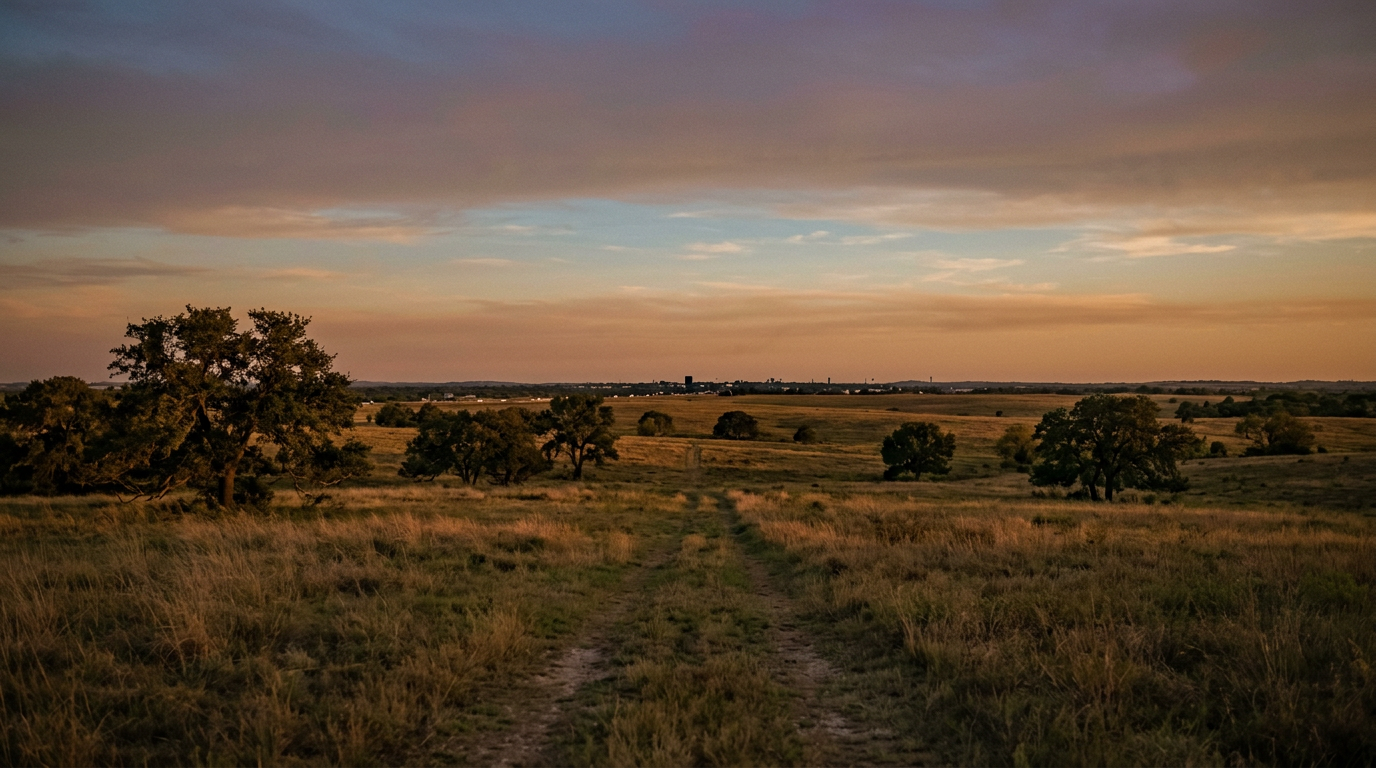
Recent discussions among Texas newcomers have highlighted a common phenomenon: the adjustment period required when transitioning from the mountainous West to the vast plains and urban centers of the South. A recent inquiry from a resident in Waco, who relocated from Colorado, has sparked a broader conversation about what truly defines the Texas appeal. History shows that Texas has always been a state of rapid change, evolving from an agrarian society to a global energy and technology hub. This transition often creates a juxtaposition between older, traditional Texas values and a new, fast-paced suburban reality that can be jarring for those used to different recreational landscapes. In the past, internal migration to Texas was driven largely by economic survival, but today's transplants are often seeking a specific blend of community, opportunity, and a brand of independence that is unique to the state's constitution and social fabric. The challenge for many newcomers is navigating the geographic scale of the state. Unlike states with centralized mountain ranges or coastal access, Texas offers a decentralized beauty that requires intentional exploration. From the Piney Woods of the east to the high deserts of the west, the state's identity is not a monolith but a collection of distinct regional cultures. For those residing in Central Texas corridors like the Waco area, the experience is defined by a blend of institutional history, such as Baylor University’s influence, and a rapidly modernizing downtown core. Understanding the appeal of Texas often means looking past the initial topographical shock and focusing on the interpersonal connections and economic stability that the state provides to millions of its inhabitants.
Texas relevance
This discussion is deeply relevant to the current demographic shift occurring across the Lone Star State, particularly in the Central Texas region encompassing Waco, Temple, and Killeen. As Texas continues to lead the nation in population growth, the internal migration patterns from states like Colorado and California are reshaping local economies and social expectations. For many Texans, the 'relevance' lies in how the state maintains its cultural heritage while accommodating thousands of new residents every month. Specifically in the Waco area, the influx of new people is testing infrastructure and local markets, making it a case study for the broader Texas experience of growth versus tradition.
The Geographic Learning Curve of the Central Corridor
One of the largest hurdles for new residents is the sheer distance between points of interest. Texas does not offer the immediate gratification of a mountain range visible from every backyard in the central part of the state. Instead, it offers hidden gems like the Brazos River and the Cameron Park trail system in Waco, which provide over 400 acres of wooded beauty. These areas require a locals' knowledge to navigate and appreciate, often acting as a sanctuary for those who feel claustrophobic in the urban sprawl.
Furthermore, the transition from Colorado to Texas involves a shift in how one interacts with the environment. In the former, the land is a destination for recreation; in the latter, the land is often the foundation for legacy and commerce. For those living in the Waco area, the landscape is defined by its utility and its history as a central trading post. This utilitarian beauty is a different aesthetic, often appreciated more as one learns the stories of the families and industries that built the local community from the ground up.
The Evolution of Waco as a Texas Hub
Waco has moved significantly beyond its historical stereotypes over the last decade, transitioning into a destination city rather than a mere waypoint between Dallas and Austin. The 'Magnolia Effect' brought a massive wave of tourism and infrastructure investment, but it also created a unique pressure on residents to reconcile a quiet college town with a bustling tourist center. For someone who has lived there for only a year, the pace of redevelopment can feel disruptive rather than inviting.
The city’s growth is emblematic of larger trends across Texas where mid-sized cities are being forced to scale rapidly. While Waco may lack the night-life density of Austin or the corporate scale of Dallas, it offers a middle ground that many lifelong Texans find appealing—a slower pace of life that still has access to modern amenities. For a newcomer, finding the 'why' of Texas often involves attending local events like the Silobration or exploring the historic districts that haven't yet been touched by modern commercialism.
Community Ties and the Social Fabric
A common thread among those who love Texas is the emphasis on social networks and community involvement. In many other states, social life is secondary to individual activity; in Texas, the BBQ, the church social, or the Friday night football game are the primary drivers of satisfaction. For a resident feeling isolated, the missing piece is frequently the lack of deep-rooted social connections that take years, not months, to cultivate in the Lone Star State.
The hospitality for which Texas is famous is often a 'participatory' sport. It requires the resident to engage with their neighbors and local organizations actively. In Central Texas, the community is often built around shared heritage and local pride. When newcomers engage with the history of the Texas Rangers Museum or the Dr Pepper Museum, or even the local farmers' markets, they begin to see the layers of identity that make Texans so fiercely protective of their home.
Economic Freedom as a Quality of Life Factor
While lifestyle amenities are important, the underlying reason many people find peace in Texas is the economic breathing room the state provides. Although property taxes can be high, the lack of a state income tax and a generally lower cost of living compared to coastal or mountain states allows for a different kind of freedom. This financial flexibility enables families to own land, start businesses, and invest in their private lives in ways that are becoming increasingly difficult in other parts of the country.
For a resident coming from Colorado, the change in financial landscape is a major part of the Texas 'deal.' The state is designed for the builder and the striver. This focus on individual economic empowerment creates a culture that values work and output, which can be a culture shock for those coming from areas where leisure and work-life balance are prioritized differently. The love for Texas often stems from the gratitude for the opportunity to build a stable and prosperous life.
Finding the Hidden Texas Beyond the Horizon
Texas is a collection of several different 'states' within one border. If the rolling hills of Waco aren't providing the necessary spark, a short drive can lead to the coastal charm of the Gulf, the European-influenced Hill Country around Fredericksburg, or the high-plains culture of the Panhandle. Newcomers often make the mistake of judging the entire state by their immediate five-mile radius, failing to realize that Texas demands road trips to be fully understood.
The seasonal changes in Texas also play a role in how the state is perceived. The brutal summers are often the most difficult period for new transplants, but the reward is found in the mild winters and the explosion of wildflowers in the spring. Learning to live with the Texas climate—finding the right swimming holes in the summer and the best spots for bluebonnet sightings in April—is a rite of passage that eventually turns a resident into a true Texan.
The Role of Institutional Pride
In cities like Waco, the presence of major institutions like Baylor University provides a cultural anchor that influences the entire region. The sense of belonging that comes from collegiate sports and academic excellence creates a localized pride that is infectious. For many, the 'love' for Texas is synonymous with the love for these institutions that have stood for over a century, providing stability and a sense of shared destiny.
This institutional pride extends to the state level, where the mythos of the Texas Revolution and the Republic of Texas still holds sway in the public consciousness. To appreciate Texas is to appreciate its unique history as a sovereign entity. When residents begin to identify with that rebellious and independent spirit, the 'missing' feeling often evaporates, replaced by a sense of being part of something larger and more enduring than a simple place of residence.
Analysis
The sentiment expressed by many new residents often hinges on a 'perception gap' regarding what a state should provide. While states like Colorado offer state-funded natural playgrounds, Texas is fundamentally a state built on private property, entrepreneurship, and localized community. The feeling of 'missing something' usually stems from applying a Western US outdoor-centric lens to a Southern-Midwestern logistical hub. To truly appreciate Texas, residents often find they must pivot from seeking scenic vistas to seeking 'pockets' of culture—whether that is the high-energy sports culture, the burgeoning culinary scenes in mid-sized cities, or the historical preservation found in small-town squares. The strength of Texas has never been its government-provided amenities, but rather the freedom it grants individuals to build their own version of prosperity.
Source attribution
This story was reported using a public release from the r/texas. Keep TX Red rewrote the coverage independently and links to the official statement for verification.
Frequently Asked Questions
- Why do people say Texas is a 'state of mind'?
- This phrase refers to the strong cultural identity and sense of independence that Texans share. It suggests that being a Texan is more about an attitude of self-reliance and community pride than just living within the state's borders.
- What are some outdoor activities near Waco for newcomers?
- Waco offers Cameron Park, which is one of the largest municipal parks in Texas with extensive mountain biking and hiking trails. Additionally, Lake Waco and the Brazos River provide ample opportunities for boating, fishing, and kayaking.
- How long does it typically take to adjust to living in Texas?
- Many residents find that it takes about two to three years to fully adjust. This timeframe allows for experiencing the full cycle of Texas seasons, building a social network, and exploring the different regions of the state.
Official Sources
Take the next step
Browse the Newsroom →Read more about Keep Texas Red → Our full guide to what Keep Texas Red means and why Texans support it.
Related Articles
Get Texas updates delivered weekly.
Independent Texas reporting on politics, policy, and daily life. One email a week. Unsubscribe anytime.
Keep TX Red Newsroom
The Keep Texas Red Editorial Staff produces nonpartisan explainers, policy breakdowns, and educational resources to help Texans understand how their government works. All content is reviewed for accuracy and updated regularly.
About Keep TX Red →