Visual Evolution of the Dallas Skyline: Capturing North Texas Urban Architecture
A local photographer captures the changing face of Dallas and looks toward Fort Worth's historic skyline, sparking a conversation on North Texas growth.
Editorial disclaimer: Opinions and analysis on Keep TX Red are editorial content — not statements of fact. See our editorial standards.
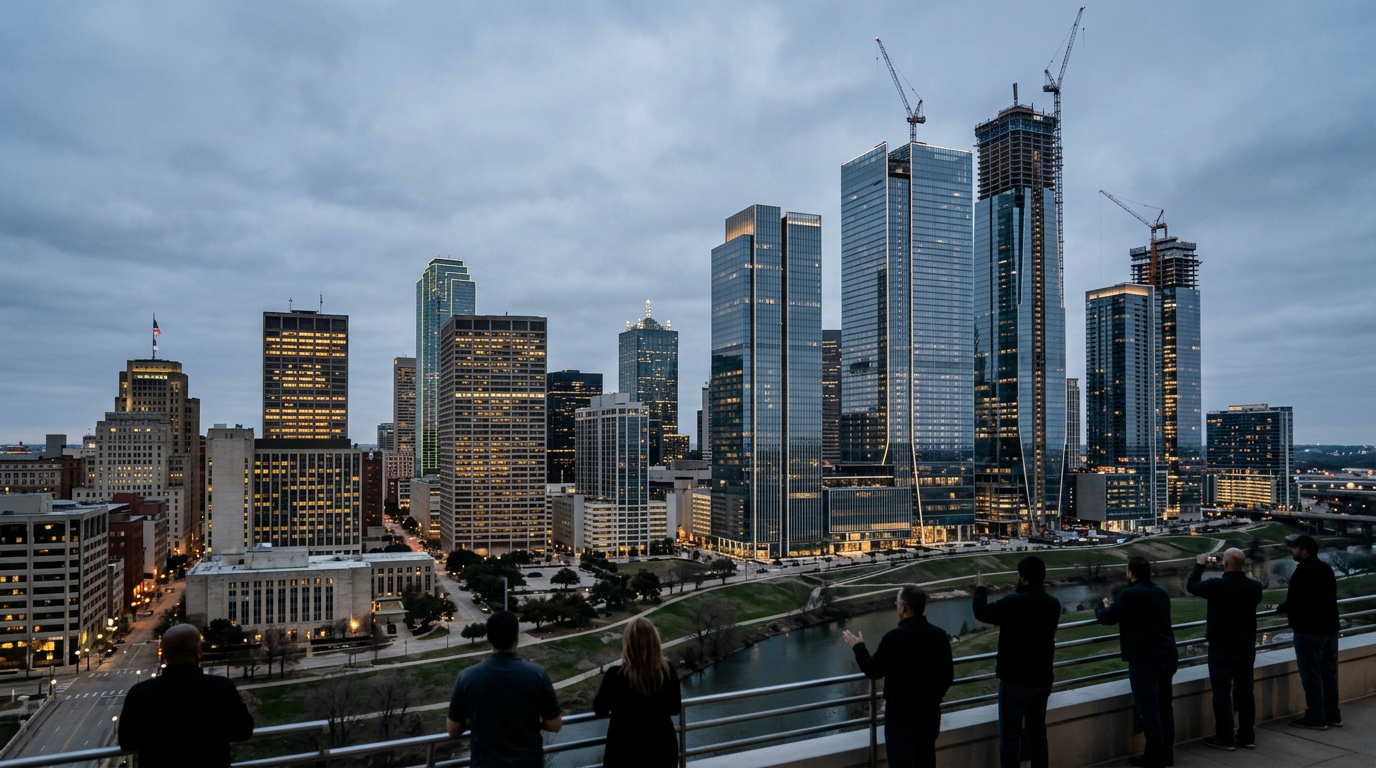
The visual identity of Dallas is undergoing a profound transformation as the city continues its decade-long expansion into a premier global hub. Recently, public collections of high-resolution architectural photography have highlighted the sheer scale of the city's vertical climb, utilizing wide-angle perspectives to emphasize the density of the Trinity River basin’s urban core. These images serve as more than just aesthetic artifacts; they are documentation of a city in flux. Dallas has long been defined by its daring architectural choices, from the neon-lit edges of the Bank of America Plaza to the futuristic silhouettes that define the modern streetscape. Historically, the Dallas skyline has been an indicator of the state's economic health, often serving as the primary visual for the 'Texas Miracle' economic expansion. Contextually, this interest in urban documentation mirrors movements seen in the late 1980s and early 2000s when Dallas underwent significant building booms. However, current trends in local photography are shifting focus toward a broader regional perspective. There is an increasing demand to bridge the cultural and visual gap between Dallas and its 'Twin City' to the west, Fort Worth. By applying the same wide-lens scrutiny to Cowtown’s historic and preserved architectural sites, documentarians are attempting to create a unified visual narrative for the entire Metroplex. This shift reflects a maturing of the regional identity where the distinct personalities of Dallas and Fort Worth are celebrated as complementary halves of a greater North Texas whole.
Texas relevance
Texas residents in the DFW Metroplex are directly impacted by the rapid densification of their urban centers. As Dallas and Fort Worth grow closer together, the preservation of architectural history becomes a vital concern for local planning boards and historical societies. In Dallas, the push to modernize often clashes with the desire to preserve mid-century landmarks. For Fort Worth, the challenge lies in maintaining its 'Cowboy and Culture' brand while integrating the massive glass-and-steel infrastructure required for its booming population. Understanding these visual changes helps North Texans appreciate the tax base growth and the cultural evolution of the region they call home.
The Strategic Use of the Wide-Angle Lens
In the realm of architectural photography, the choice of glass is rarely just about fitting everything into the frame. For the Dallas skyline, a wide-angle lens is essential to capturing the sheer breadth of a city that was built with the horizon in mind. Unlike the cramped canyons of Manhattan, Dallas architecture is spaced to breathe, allowing the sky to play a significant role in the city's visual profile. Wide lenses impose a sense of grandeur and 'immensity' that mirrors the psychological state of Northern Texas—a region that prides itself on limitless potential.
Technically, these perspectives allow for the inclusion of the Margaret Hunt Hill Bridge alongside the traditional skyscrapers of the central business district. This creates a cohesive narrative of a city that has successfully integrated modern engineering with historical business structures. By emphasizing the verticality of the skyscrapers against the wide Texas plains, photographers highlight the isolation and strength of the urban core. This style of documentation is becoming the standard for real estate developers and city planners who seek to market Dallas as a mature, world-class metropolis.
Fort Worth: The Next Frontier for Documentation
While Dallas often receives the lion's share of international attention for its glitzy skyline, Fort Worth offers a more nuanced and historically rich architectural landscape. The move by local photographers to explore 'Panther City' represents a broadening of the DFW cultural lens. Fort Worth features a significant amount of Art Deco and mission-style architecture that stands in stark contrast to the glass towers of Dallas. For many photographers, this represents a more human-scale approach to urban design, focusing on detail rather than sheer height.
Developing a visual connection to Fort Worth requires an understanding of its unique history as a cattle drive hub that transitioned into an oil and aviation powerhouse. The preservation of the Stockyards and the integration of the modern Sundance Square provide a diverse palette for those looking to capture Texas history. As more residents move between the two cities for work and leisure, the demand for high-quality visual representation of Fort Worth is expected to rise, further blurring the lines of the Metroplex’s distinct cultural zones.
The Intersection of Art and Urban Development
The act of photographing the city is an act of archiving progress. Every new crane that appears on the Dallas horizon signifies another chapter in the city's economic saga. For those who have lived in the area for years, these photographs serve as a 'before and after' ledger. The areas around Uptown and the Arts District, which were once dominated by surface parking lots, are now dense clusters of high-rise living and corporate headquarters. This shift is not just an aesthetic change; it represents a fundamental move toward walkable, high-density urbanism in Texas.
Moreover, the public engagement with these images on social media platforms demonstrates a deep-seated pride in the Texas landscape. When citizens share their own perspectives on the city, they contribute to a grassroots branding of the region. This 'people's history' of the skyline helps to humanize the massive steel structures that might otherwise feel cold or unapproachable. It fosters a sense of community ownership over the public spaces and the architectural landmarks that define the Texas experience.
Preserving Architectural History in a Growth Cycle
A recurring theme in the discussion of North Texas photography is the search for 'architecture with history.' In a state that moves as fast as Texas, the 'old' is often at risk of being replaced by the 'new.' Documenting historic sites in downtown Dallas and Fort Worth is a race against time and development pressure. Historic preservationists often rely on the visual records created by independent photographers to argue for the cultural value of buildings that are slated for demolition or major renovation.
The historical fabric of these cities is what gives them character. In Dallas, the West End and Deep Ellum provide a gritty, brick-laden contrast to the sleek skyscrapers nearby. In Fort Worth, the 19th-century storefronts are the lifeblood of the city's identity. By capturing these structures with the same reverence as the newer towers, photographers remind the public that a city's growth is only meaningful if it respects its roots. The tension between preservation and progress remains one of the most compelling stories in Texas real estate today.
Economic Implications of the DFW Visual Inventory
There is a tangible economic benefit to the high-quality documentation of our urban centers. High-resolution, professional-grade images are frequently used by the Dallas Regional Chamber and other economic development corporations to lure businesses from high-tax, low-growth states. When a CEO in California or New York sees the immense, clean, and modern skyline of Dallas, it sends a message of stability and prosperity. Visual storytelling is a key component of the 'Texas Brand' that continues to attract thousands of new residents every month.
This visual inventory also affects the local tourism industry. As photographers highlight hidden gems and unique vistas, they drive foot traffic to various districts. A single viral photo of the Omni Dallas Hotel or the Fort Worth Water Gardens can result in a measurable uptick in visitors. In this way, the hobbyist photographer acts as an unofficial ambassador for the city, showcasing the best of what Texas urban life has to offer to a global audience.
Analysis
While the focus remains on personal photography and artistic expression, there is a clear political and economic undercurrent to the way we view our Texas cities. The preference for 'immensity' in photography reflects the reality of the Texas growth model—bigger is better, taller is necessary, and expansion is inevitable. The desire to document Fort Worth as a 'new frontier' suggests that even lifelong Dallasites are beginning to recognize the economic gravity shifting toward Tarrant County. From an editorial standpoint, this fascination with our steel-and-stone landscape is a testament to the success of Texas’s pro-growth policies. We aren't just looking at buildings; we are looking at the physical manifestation of capital investment, job creation, and the soaring ambition of the Lone Star State.
Source attribution
This story was reported using a public release from the r/dallas. Keep TX Red rewrote the coverage independently and links to the official statement for verification.
Frequently Asked Questions
- Why is the Dallas skyline often photographed with a wide lens?
- A wide-angle lens allows photographers to capture the sprawling nature of the Dallas skyline, which is more spread out than traditional East Coast cities. It emphasizes the 'immensity' and grandeur of the skyscrapers against the Texas horizon, providing a sense of scale that reflects the city's growth.
- What attract photographers to Fort Worth's architecture?
- Fort Worth is often seen as a 'new frontier' for photographers who have exhausted Dallas locations. It offers a more historic, 'Western' feel with Art Deco influences and preserved 19th-century buildings, providing a distinct aesthetic contrast to the modern glass towers of Dallas.
- How does urban photography impact Texas economic development?
- High-quality images of Texas cities are essential tools for attracting new businesses and residents. They project an image of prosperity, cleanliness, and modernity, which helps reinforce the state's reputation as a top-tier destination for investment and relocation.
Official Sources
Take the next step
Browse the Newsroom →Read more about Keep Texas Red → Our full guide to what Keep Texas Red means and why Texans support it.
Related Articles
Get Texas updates delivered weekly.
Independent Texas reporting on politics, policy, and daily life. One email a week. Unsubscribe anytime.
Keep TX Red Newsroom
The Keep Texas Red Editorial Staff produces nonpartisan explainers, policy breakdowns, and educational resources to help Texans understand how their government works. All content is reviewed for accuracy and updated regularly.
About Keep TX Red →