Uncovering the Hidden HEB of Northwest Austin and the Legacy of the Far West Retail Corridor
A hidden HEB location in Northwest Austin behind a post office offers a massive inventory and a specialized kosher market for the local community.
Editorial disclaimer: Opinions and analysis on Keep TX Red are editorial content — not statements of fact. See our editorial standards.
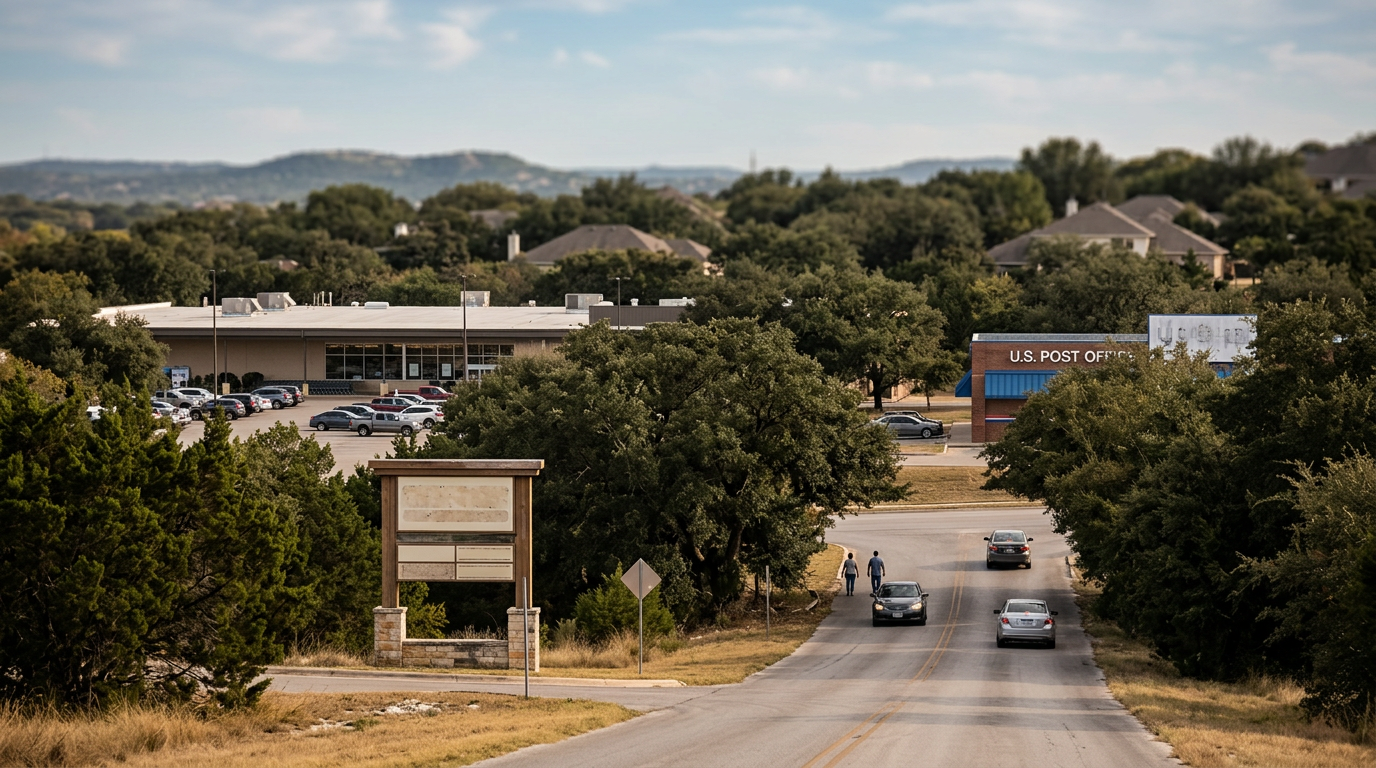
Deep within the established neighborhoods of Northwest Austin, a retail anomaly has captured the attention of local residents who have navigated the area for decades without realizing a massive supermarket was tucked away in their own backyard. Located behind a United States Post Office facility near Far West Boulevard, this specific HEB location is shielded from the primary thoroughfare by thick foliage and unconventional topography. For many years, the site was known primarily to immediate neighbors, accessible via a crude woodland path equipped with a makeshift rope handrail that leads directly from the residential streets into the parking lot of a full-scale grocery operation. Historically, Austin has grown through a series of pocket developments where commercial centers were built in the valleys behind major elevations to preserve the aesthetic of the Texas Hill Country, a trend that often results in 'hidden' infrastructure like this one. Despite the lack of prominent signage on the main road, the store remains a bustling hub of activity, functioning as a vital resource for the community while maintaining an almost cloistered atmosphere. Travelers along Far West Boulevard often pass the post office without realizing that one of the state's most unique grocery footprints sits just yards away, largely invisible to through traffic. This phenomenon speaks to the organic, sometimes fragmented way that Austin’s infrastructure developed during the late 20th-century boom, where proximity and layout often took precedence over visibility. The discovery of such an established site by long-term residents highlights the enduring mysteries of the city’s urban landscape, where even a major corporate entity can blend into the natural environment.
Texas relevance
This story is uniquely centered on the Austin retail landscape and the cultural dominance of HEB within the Lone Star State. In Texas, HEB is more than a grocery chain; it is a central pillar of communal life, and the specific location mentioned serves a diverse demographic in the Travis County area. The Far West area has a significant historical precedent for serving the local Jewish community, and this specific store facilitates that by maintaining one of the most comprehensive kosher selections in Central Texas. For Austin residents, findng 'secret' access points to major amenities is a point of local pride and a testament to the city's unique geography.
The Geography of an Unconventional Retail Hub
The Far West HEB is situated in a geographic depression that hides its massive footprint from the sightlines of the surrounding hills. To the casual driver heading toward Mopac or Mesa Drive, the landscape appears to be a standard mix of government buildings and mid-century residential architecture. However, the store occupies a lower elevation behind the local post office, creating a natural sound and sight barrier that keeps the commercial bustle contained. This architectural choice was common in 1980s and 90s Austin development, prioritizing the reduction of 'light pollution' and commercial spillover into the leafy residential zones nearby.
The wooded path mentioned by locals connects the store to the surrounding apartment complexes and single-family homes, bypassing the traditional car-centric infrastructure that dominates most of Texas. The presence of a rope handrail on the path underscores the grassroots nature of the neighborhood's relationship with the store. While the store is a multi-million dollar operation, its primary access for many remains an informal trail that feels more like a nature walk than a trip to a supermarket. This blending of the natural environment with modern commerce is a hallmark of the Northwest Austin lifestyle.
A Specialized Market for the Jewish Community
One of the standout features of this specific HEB location is its extensive kosher department, which serves as a primary resource for the sizable Jewish population in the Far West and Dell Jewish Community Campus area. Unlike standard grocery stores that may offer a single shelf of ethnic foods, this location provides a full-service experience including a kosher deli, bakery, and specialized butchery services. This specialization has turned the 'hidden' store into a destination for residents from across Travis and Williamson counties who require verified kosher products.
The commitment to this niche market demonstrates the tailored approach HEB takes toward neighborhood integration in Texas. By providing specific goods that reflect the cultural makeup of the ZIP code, the store has cultivated a level of loyalty that transcends its lack of roadside visibility. For many families, the 'Secret HEB' isn't just a place to buy bread and milk; it is a cultural touchstone that supports their religious and dietary traditions in a way that few other large-scale retailers in the region can match.
Historical Context of Austin's Northwest Growth
To understand how a giant grocery store could go unnoticed for decades by some residents, one must look at the timeline of Austin's growth. During the 1990s, when many long-term residents first arrived, the Far West corridor was the edge of the city’s suburban expansion. The area was characterized by dense limestone outcroppings and heavy cedar breaks. Developers often built around these features rather than clearing them entirely, leading to the serpentine roads and tucked-away plazas that define the area today.
As the city’s population exploded, the foliage matured, further obscuring buildings that were already set back from the road. The 'Secret HEB' grew in popularity through word-of-mouth rather than traditional advertising. In an era before GPS and ubiquitous digital maps, finding the entrance to the parking lot behind the post office was considered an initiation rite for new residents of the area. This historical isolation has allowed the store to maintain a distinct neighborhood feel despite the massive influx of people into Central Texas over the last ten years.
The Economic Impact of Word-of-Mouth Retail
Modern retail theory suggests that visibility is the most critical factor in grocery success, yet the Northwest Austin HEB defies this logic. By relying on a captive audience of nearby residents and a specialized clientele for its kosher goods, the store operates at high volume without needing to compete for eyes on the main road. This reduces the competitive pressure from other chains that might prefer more prominent, high-traffic corners, as the 'hidden' nature of the site acts as a barrier to entry for competitors who lack a similar built-in fan base.
Furthermore, the proximity to the post office creates a secondary stream of traffic. Patrons visiting the federal building often find the store by accident or convenience, leading to a synergistic relationship between government services and private commerce. This economic micro-climate in Northwest Austin illustrates how Texas business hubs can thrive in non-traditional layouts, provided they offer a high level of service and products that meet the specific needs of the local demographic.
Urban Exploration and Local Folklore
The discovery of hidden paths and 'secret' locations has become a popular pastime in Austin as the city densifies. Residents frequently share tips about back-alley shortcuts, hidden creek-side trails, and obscured businesses that offer a respite from the more commercialized parts of town. The 'rope path' to HEB has become a piece of local folklore, representing the adventurous spirit that remains in the city despite its transition into a global tech hub.
For a resident who has lived in the area since the mid-90s, discovering such a significant landmark after thirty years highlights the layers of history and geography present in the Texas Hill Country. It serves as a reminder that as much as we think we know our local environment, there are always new corners to explore. This sense of discovery is a key component of the Austin experience, where the intersection of nature and urban life continues to produce surprising results for those willing to look off the beaten path.
Infrastructure and Accessibility Challenges
While the hidden nature of the store is charming to many, it also presents unique challenges for city planners and the retailer. Managing logistics for massive delivery trucks in a site that is intentionally obscured by residential landscaping requires careful coordination. HEB has had to balance the need for efficient supply chain operations with the desire to remain a quiet neighbor to the surrounding apartment complexes. This balance is a constant negotiation in Texas cities where residential and commercial zones often overlap with very little buffer.
Accessibility also remains a point of interest for those using the woodland path. While the makeshift rope handrail represents community ingenuity, it also points to the lack of formal pedestrian infrastructure in older parts of the city. As Austin continues to implement its 'All Ages and Abilities' bicycle and pedestrian maps, informal trails like the one leading to the Far West HEB may eventually see formal upgrades to ensure that the 'secret' is both safe and accessible for all members of the community.
Analysis
The discovery of this 'secret' HEB serves as a metaphor for the rapid and dense expansion of the Texas capital. While the city modernizes with glass high-rises and tech campuses, the persistence of these tucked-away neighborhood hubs reminds us of a time when Austin was a collection of distinct, somewhat isolated villages. There is a clear tension between corporate branding strategies, which usually demand maximum visibility, and the neighborhood-centric zoning of Northwest Austin. The fact that this store flourishes without massive highway billboards suggests that HEB’s brand loyalty in Texas is so profound that customers will literally trek through the woods to reach their products. Additionally, the presence of a robust kosher section indicates how Texas retailers successfully pivot to meet specific cultural and religious needs of their immediate surroundings.
Source attribution
This story was reported using a public release from the r/austin. Keep TX Red rewrote the coverage independently and links to the official statement for verification.
Frequently Asked Questions
- Where exactly is this hidden HEB located?
- The store is located in Northwest Austin, specifically behind the United States Post Office on Far West Boulevard. It is accessible via many residential streets and the main parking entrance off the side roads.
- What makes this HEB different from others in Austin?
- Aside from its hidden location, it is famous for its massive kosher deli and grocery section, which is one of the most comprehensive in the entire state of Texas, serving the local Jewish community's specific dietary needs.
- Is the woodland path with the rope handrail an official entrance?
- No, the path is an informal neighborhood shortcut used by residents of nearby apartments. Most customers access the store via the standard parking lot entrances, though the trail remains a popular local 'secret'.
- How long has this HEB been in operation?
- While specific opening dates vary by development phase, the Far West HEB has been a staple of the Northwest Austin community since the late 20th century, growing alongside the neighborhood's expansion.
Official Sources
Take the next step
Browse the Newsroom →Read more about Keep Texas Red → Our full guide to what Keep Texas Red means and why Texans support it.
Related Articles
Get Texas updates delivered weekly.
Independent Texas reporting on politics, policy, and daily life. One email a week. Unsubscribe anytime.
Keep TX Red Newsroom
The Keep Texas Red Editorial Staff produces nonpartisan explainers, policy breakdowns, and educational resources to help Texans understand how their government works. All content is reviewed for accuracy and updated regularly.
About Keep TX Red →