Uncovering Antique Persian Rugs in Houston Outside Retail Outlets
Discover how Houston thrifters navigate estate sales, local markets, and hidden gems to find vintage Persian rugs without paying full retail prices.
Editorial disclaimer: Opinions and analysis on Keep TX Red are editorial content — not statements of fact. See our editorial standards.
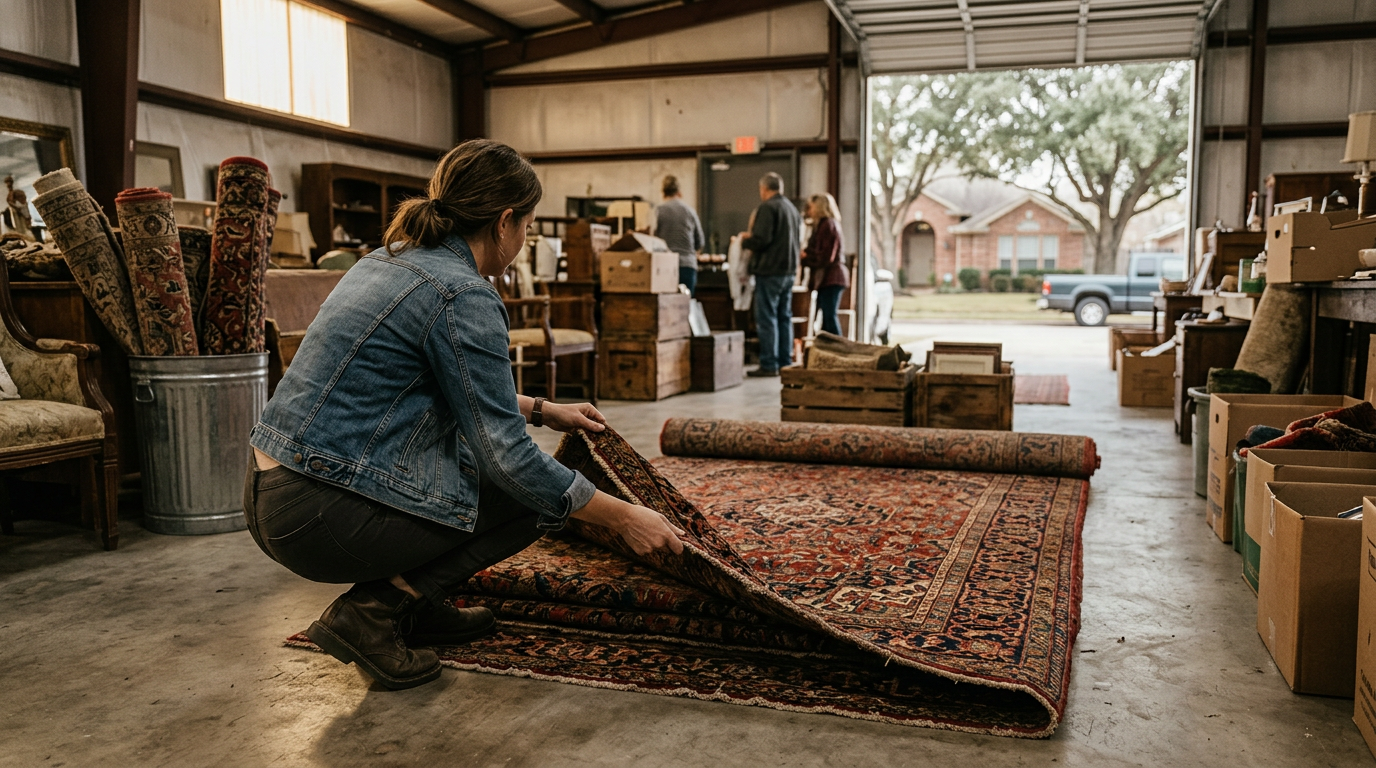
Houston's interior design enthusiasts and budget-conscious homeowners are increasingly looking past primary retail showrooms in search of authentic vintage Persian rugs. In a city known for its vast international community and historic wealthy enclaves, the secondhand market offers a potential goldmine for those seeking hand-knotted textiles without the high-end boutique price tags. While traditional rug stores in the Design District or along the Richmond Avenue corridor cater to luxury clientele, a growing community of local collectors relies on more unconventional hunting methods to find quality wool and silk floor coverings at a fraction of the cost. Historically, Houston's status as a major trade hub has led to a high density of imported goods, making the local resale market more fertile than that of many other metropolitan areas in the Southern United States. Finding these items involves more than just a casual trip to a big-box thrift store; it requires a strategic approach to the local secondary market. Traditional charitable outlets occasionally receive high-value donations, but the rise of online reselling and specialized estate management companies has changed the landscape. Successful hunters in the Houston area now leverage a combination of digital notifications, persistent physical store visits, and networking within the local antique community to find pieces that are both durable and aesthetically unique. The challenge remains distinguishing mass-produced machine-made imitations from the centuries-old tradition of artisanal weaving in a market that is often flooded with synthetic alternatives.
Texas relevance
The city of Houston serves as a unique microcosm of the global textile trade due to its diverse population and its history as a destination for international professionals who often bring high-quality home goods from abroad. Texas residents, particularly in the Harris County area, have access to a revolving door of estate sales fueled by the region's rapid turnover in the real estate market. This constant influx of high-end household goods into the local economy creates a specific niche for collectors. Unlike smaller Texas towns where supply might be limited to local regional styles, Houston’s market reflects its status as a global city, offering a variety of Middle Eastern and Central Asian artifacts that are rarely found in such concentration elsewhere in the state.
The Challenge of Traditional Thrift Stores
Major charitable organizations like Goodwill or the Salvation Army are the first stop for many novice thrifters in Houston. However, these locations have become increasingly difficult places to find high-value items like Persian rugs due to centralized sorting processes and the rise of internal e-commerce platforms. Many items that appear to be of high value are often filtered out before they reach the showroom floor, where they are instead auctioned online to a national audience.
Local shoppers have noted that smaller, independent thrift stores or 'boutique' resale shops associated with specific local charities—such as those found in the Montrose or Heights areas—tend to have a higher frequency of curated household items. These smaller venues often lack the logistical capacity to ship large rugs, meaning high-quality floor coverings are more likely to stay on the local floor. To find success, residents often build relationships with store managers to get informed when new furniture or textile donations are put out for sale.
Navigating the Houston Estate Sale Circuit
Estate sales are widely considered the most reliable method for acquiring vintage Persian rugs in Texas. In affluent Houston neighborhoods such as River Oaks, Memorial, and Tanglewood, long-time residents often have collections that include hand-knotted rugs purchased decades ago. When these homes transition to new owners, the contents are often sold off through liquidators who may prioritize moving volume over achieving peak retail pricing on every individual item.
Prospective buyers are encouraged to use aggregator websites that track sales across the Greater Houston area. Arriving early on the first day is essential for the best selection, though those seeking the absolute lowest price might find success on the final day when liquidators frequently offer 50% discounts to clear the remaining inventory. Experts suggest bringing a flashlight and a tape measure to inspect the weave and verify the rug's dimensions on-site, as sales are typically final in these environments.
Digital Marketplaces and Local Social Media
Facebook Marketplace and Craigslist remain staples for those hunting for deals within the Houston city limits. The advantage of these platforms is the direct-to-consumer nature of the transaction, which eliminates the middleman and allows for direct negotiation. However, this method requires a high degree of knowledge on the buyer's part, as there is no professional verification of the rug's age, origin, or material.
To find the best deals on these apps, savvy Houstonians often expand their search radius to include surrounding suburbs like Sugar Land, The Woodlands, and Katy. These areas frequently see homeowners downsizing or redecorating, leading to the sudden appearance of high-quality items at garage sale prices. Using broad search terms like 'woven rug' or 'wool rug' can often yield better results than specific keywords like 'Persian,' as the seller may not realize the specific value or origin of what they are listing.
The Rise of Specialized Antique Malls
Houston is home to several large-scale antique malls, such as those located in the Spring Branch area or along the Interstate 10 corridor. These venues offer a middle ground between the chaos of a thrift store and the steep pricing of a professional rug gallery. Individual booth owners often specialize in mid-century modern or antique home decor, frequently sourcing rugs from various regional auctions and passing on some of the savings to the customer.
While prices at antique malls are higher than at a neighborhood garage sale, they offer a climate-controlled environment where the condition of the textile can be more easily assessed. Many of these vendors are willing to haggle, especially if the rug has been sitting in the booth for an extended period. This makes it a viable option for those who want a curated experience without the 'new' markup found in luxury showrooms.
Identifying Quality in a Flooded Market
A major hurdle for Houston shoppers is the prevalence of machine-made 'tribute' rugs that mimic the look of traditional Persian designs. These are typically made from polypropylene or other synthetic fibers and lack the longevity of a hand-knotted wool piece. When scouting at local sales, buyers are advised to flip the rug over; a genuine hand-knotted rug will show the pattern clearly on the underside and will have slight irregularities in the knotting that denote human craftsmanship.
The fringe is another critical indicator used by local experts. On a true vintage Persian rug, the fringe is an extension of the rug’s warp threads, while on cheaper imitations, the fringe is usually sewn on as an afterthought. Understanding these subtle differences is crucial for Houston residents who want to ensure their 'thrifted' find is a legitimate heirloom rather than a modern mass-produced item.
Cleaning and Restoration Services in Texas
Acquiring a rug from a thrift store or estate sale often means the piece will require professional cleaning or minor repairs. Houston has a robust network of specialized cleaning services that deal specifically with antique textiles. Because the city’s humidity can be tough on natural fibers if they are not stored correctly, a professional deep clean is often the first step after a successful hunt to remove dust and prevent moth damage.
While the cost of professional cleaning must be factored into the overall budget, it is often a fraction of the cost of buying a rug new. Many local services offer pickup and delivery within the 610 Loop, making it convenient for urban residents to restore their vintage finds. This infrastructure of experts makes the pursuit of secondhand rugs in Houston more practical than in areas where specialized cleaners are unavailable.
Analysis
The pursuit of luxury goods through thrift channels in Houston is a reflection of broader economic trends where consumers prioritize authenticity and character over mass-market convenience. By bypassing retail showrooms, residents are not just saving money; they are participating in a circular economy that keeps heritage crafts in circulation. From an editorial standpoint, this shift highlights a growing 'deal-hunter' culture in Texas that values the thrill of the find as much as the object itself. It also points to a tension between traditional brick-and-mortar rug dealers, who provide certification and restoration services, and the unregulated but lucrative informal market found on social media and at neighborhood yard sales.
Source attribution
This story was reported using a public release from the r/houston. Keep TX Red rewrote the coverage independently and links to the official statement for verification.
Frequently Asked Questions
- Where are the best neighborhoods in Houston for rug hunting at estate sales?
- The best neighborhoods typically include those with older, established homes such as River Oaks, the Heights, West University, and Memorial. These areas have a higher concentration of long-term residents who may have imported rugs during the oil booms of previous decades.
- How can I tell if a rug is actually handmade while at a thrift store?
- The most effective way is to look at the back. A handmade rug will have a mirror image of the pattern on the back, and the knots will be slightly uneven. If the back is covered with a canvas or plastic-like material, it is likely machine-made.
- Are Houston antique malls a better deal than retail stores?
- Generally, yes. While antique mall vendors do mark up their items, they do not have the same overhead as high-end showrooms in the Design District. They also frequently source from auctions, meaning you can find unique pieces that aren't available in standard retail catalogs.
- Is it safe to buy vintage rugs from social media marketplaces?
- It is safe if you follow standard precautions: meet in public spaces if possible, and inspect the item thoroughly before paying. Always check for signs of pests like moths or water damage, which can be difficult to spot in online photos.
Official Sources
Take the next step
Browse the Newsroom →Read more about Keep Texas Red → Our full guide to what Keep Texas Red means and why Texans support it.
Related Articles


Get Texas updates delivered weekly.
Independent Texas reporting on politics, policy, and daily life. One email a week. Unsubscribe anytime.
Keep TX Red Newsroom
The Keep Texas Red Editorial Staff produces nonpartisan explainers, policy breakdowns, and educational resources to help Texans understand how their government works. All content is reviewed for accuracy and updated regularly.
About Keep TX Red →