San Antonio IMAX Technical Failure Delays Premier 70mm Screenings
A critical 70mm IMAX projector failure in San Antonio has moviegoers switching to digital formats as theater staff await replacement parts.
Editorial disclaimer: Opinions and analysis on Keep TX Red are editorial content — not statements of fact. See our editorial standards.
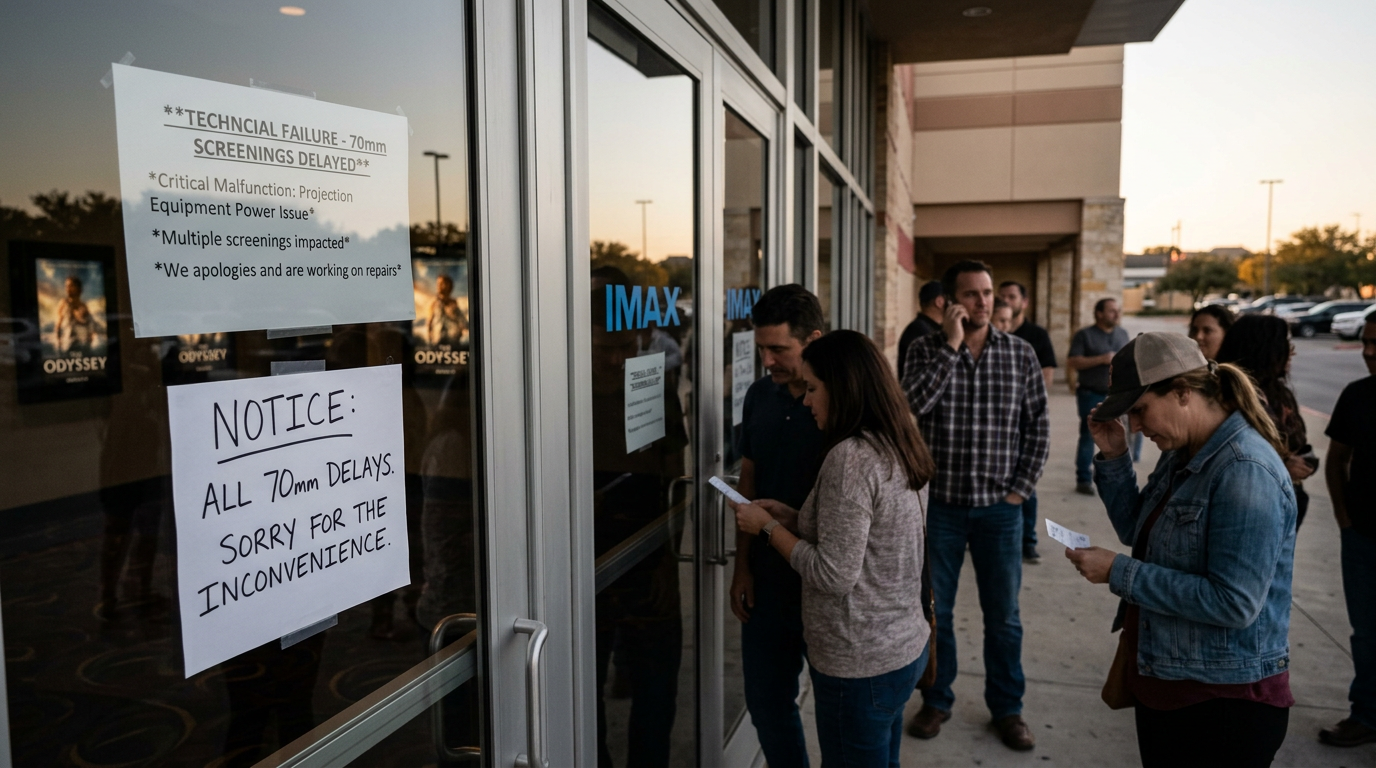
Cinema enthusiasts in San Antonio are facing significant delays in experiencing 'The Odyssey' in its intended high-fidelity format due to a major technical failure at one of the city’s premier IMAX venues. During the highly anticipated opening night, a critical component of the 70mm film projector reportedly malfunctioned, forcing the cancellation of initial screenings. This incident reflects a broader challenge within the niche world of analog filmmaking, where the reliance on vintage or specialized mechanical hardware can lead to sudden interruptions in programming. Since the failure, the venue has been operating with secondary digital projection systems while staff work to secure the necessary components to restore the larger-than-life analog experience. The transition from physical film to digital laser or xenon projection represents a notable shift in visual quality for cinephiles who purposefully seek out 70mm screenings for their superior resolution and unique color profiles. Historical context for such failures is not uncommon in the film industry, particularly during high-profile releases where 70mm projectors—many of which are decades old or require intense maintenance—are pushed to their mechanical limits. Cities like Austin and San Antonio have long histories of supporting large-format cinema, making local audiences especially sensitive to the difference between traditional digital projection and the rare 70mm format. Theater management has indicated that a replacement for the 'burnt' part is currently in transit and is expected to arrive within the week. Until the specialized part is installed and the system is rigorously tested, audiences are being diverted to alternative formats, ensuring that the show goes on even if the specific visual medium has changed.
Texas relevance
The situation in San Antonio highlights a unique intersection of Texas culture and cinematic technology. As a major hub for the arts in the Southwest, San Antonio hosts one of the few theaters in the region capable of projecting true 70mm film, a format that attracts visitors from surrounding Central Texas cities including New Braunfels, San Marcos, and even Austin when local screens are sold out. The specific venue involved serves as a central pillar of the downtown San Antonio entertainment district, making any service interruption a matter of public interest for both residents and the local tourism economy. Texans who travel hours for these specific screenings represent a dedicated consumer base that prides itself on accessing premium technical experiences not available in standard suburban multiplexes across the state.
Technical Failures and the Shift to Digital
The recent malfunction in San Antonio involved what theater staff described as a 'burnt' internal component within the massive 70mm projection assembly. This specific type of hardware is known for its incredible complexity, involving a system of platters, rollers, and high-intensity lamps that must operate in perfect synchronization to move heavy film reels at precise speeds. When one part of this mechanical chain fails, the entire system must be shut down to prevent permanent damage to the film print itself, which is often a one-of-a-kind asset provided by the studio.
To accommodate ticket holders, the theater pivoted to using Laser and Xenon digital projection. While these digital formats are high-definition and offer a high-quality viewing experience, they do not possess the same aesthetic characteristics as 70mm film. Xenon projection, in particular, uses a high-pressure gas lamp that, while bright, is considered by some purists to be the 'standard' tier of IMAX, lacking the 'infinite' contrast and color depth associated with the physical chemical process of film projection.
Communication with audiences has been a primary focus for the venue as they navigate these technical hurdles. Many patrons were notified via email that their scheduled high-format experience would be downgraded, reflecting a transparent approach to customer service. The internal transition from the high-end 70mm format to a digital fallback allows the theater to remain operational and honor ticket sales, even if the primary attraction—the film itself—is not being shown on its intended medium.
The Logistics of Specialized Cinema Repair
Repairing an IMAX 70mm projector is not as simple as visiting a local electronics store. These machines require specialized technicians and parts that are often sourced from central distribution hubs located outside of Texas. The timeline shared by San Antonio management indicates a multi-day wait for the arrival of the necessary component, followed by an intensive installation and testing phase. This waiting period highlights the scarcity of both the parts and the labor required to maintain traditional film infrastructure in the 21st century.
Once the part arrives, the theater's technical team must execute a 'test run' to ensure that the synchronization between the audio systems and the film movement is restored perfectly. Any misalignment could lead to further damage to the projector or the film reel. Management plans to verify the repair by mid-week, with a specific focus on late-afternoon testing on Wednesday. This cautious approach ensures that when the 70mm shows resume, they will be stable for the remainder of the film's theatrical run.
The potential for extra shows beginning August 1st provides a silver lining for those who missed out on the opening weekend. By extending the run of 70mm screenings, the theater can satisfy the pent-up demand from the community. This move also helps the theater offset the financial impact of the initial cancellations, ensuring that the investment in the 70mm print and equipment remains a viable draw for the San Antonio market.
Audience Reaction and Regional Impact
Despite the technical setbacks, the reception of the film itself, 'The Odyssey,' has been overwhelmingly positive among San Antonio viewers. Many who attended the digital 'downgraded' screenings reported that the narrative and cinematography remained compelling, though they expressed a desire to return for the 70mm experience once repairs are finalized. This loyalty speaks to the specific brand of cinema culture found in Texas, where audiences are often willing to pay a premium for technical excellence.
The impact on local tourism should not be underestimated. San Antonio’s IMAX venue is a significant draw for visitors staying in the Riverwalk area. When a marquee attraction like 70mm IMAX is unavailable, it affects the overall 'destination' appeal of the downtown core. However, the theater's proactive stance in offering updates and rescheduling options helps maintain consumer confidence. The local film community has remained vocal on social media platforms, sharing updates and tracking the status of the projector with meticulous detail.
Furthermore, this incident serves as a reminder of the value of local cinema management. By providing direct updates and personal interactions with patrons, the San Antonio facility has managed to mitigate some of the frustration typical of such service interruptions. The transparency regarding the 'burnt' part and the specific arrival date of the replacement has transformed a mechanical failure into a moment of community engagement for local movie-lovers.
The Enduring Appeal of Analog Film
In an era dominated by streaming and digital convenience, the pursuit of 70mm film in San Antonio is a testament to the enduring appeal of the analog medium. 70mm film offers approximately three times the surface area of standard 35mm film, resulting in an image that is significantly sharper and more immersive. For a city like San Antonio, maintaining this capability is a point of local pride, as it places the city among an elite group of global locations capable of hosting such presentations.
The physical nature of film projection—the flickering light, the mechanical hum of the projector, and the characteristic grain of the image—creates a texture that many believe cannot be replicated by digital sensors. This 'soul' of the medium is what drives ticket holders to wait for repairs rather than simply settling for a digital version elsewhere. The technical struggle currently unfolding in San Antonio is essentially a fight to keep this specific art form alive in the face of modern digital dominance.
As the industry moves forward, the expertise required to manage these projects becomes increasingly rare. The technicians in San Antonio working on this repair are part of a small fraternity of professionals dedicated to the mechanical side of the cinematic arts. Their success this week will determine whether 'The Odyssey' can fulfill its visual promise to the people of Texas, re-establishing San Antonio as a top-tier destination for high-format moviegoing.
Future Outlook for High-Format Screenings
Looking ahead, the resolution of this technical issue will likely lead to a surge in ticket sales for the rescheduled August dates. Theater operators are expected to monitor the equipment closely following the repair to prevent a recurrence of the 'burnt part' scenario. This incident may also lead to discussions regarding more frequent preventative maintenance cycles for the aging 70mm infrastructure to ensure that future blockbuster releases do not suffer similar opening-week setbacks.
The resilience of the San Antonio audience ensures that the demand for these types of spectacles remains high. If the theater successfully adds shows on August 1st, it will set a precedent for how venues can recover from technical failures by doubling down on their commitment to the premium format. For now, the city waits for the Wednesday update, hoping the projector's mechanical heartbeat returns to normal in time for the late summer crowd.
Analysis
The outage of 70mm projection in San Antonio underscores the fragility of the 'premium large format' (PLF) market. While digital projection has become the industry standard for its reliability and ease of use, there remains a passionate demand for analog film. This demand creates a logistical bottleneck; when a part breaks on a specialized IMAX projector, the supply chain for replacements is often much slower than for consumer-grade electronics. For San Antonio, the successful repair of this equipment is not just about one movie, but about maintaining the city’s reputation as a destination for high-end cinematic events. The willingness of theater management to potentially add shows starting in August suggests a strong commitment to recouping the lost technical prestige of the opening week.
Source attribution
This story was reported using a public release from the r/sanantonio. Keep TX Red rewrote the coverage independently and links to the official statement for verification.
Frequently Asked Questions
- Why is 70mm IMAX so much better than standard digital?
- 70mm IMAX provides a significantly higher resolution and a larger aspect ratio than standard digital projectors. It uses physical film that is 70mm wide, offering a level of detail and color depth that many consider superior to current digital cinema technology.
- When will the 70mm projector in San Antonio be fixed?
- According to the latest updates from management, the necessary part is expected by Tuesday. Repairs are projected to be completed by Wednesday evening, with a status update available to the public after 5:00 PM that day.
- What happens if I have a ticket for a 70mm show that was cancelled?
- Most theaters will offer a refund or an exchange for a digital screening. Additionally, because new 70mm showtimes are expected to be added in August, patrons may have the opportunity to re-book their original experience.
- Is the movie still playing at the theater?
- Yes, 'The Odyssey' continues to screen in alternative digital formats like Laser and Xenon. While these are not the 70mm film experience, they allow audiences to see the movie while the mechanical repairs are being conducted.
Official Sources
Take the next step
Browse the Newsroom →Read more about Keep Texas Red → Our full guide to what Keep Texas Red means and why Texans support it.
Related Articles



Get Texas updates delivered weekly.
Independent Texas reporting on politics, policy, and daily life. One email a week. Unsubscribe anytime.
Keep TX Red Newsroom
The Keep Texas Red Editorial Staff produces nonpartisan explainers, policy breakdowns, and educational resources to help Texans understand how their government works. All content is reviewed for accuracy and updated regularly.
About Keep TX Red →