Rise of Unsafe Lane Changes in Dallas Highlights Urgent Need for Defensive Driving Strategies
A dashcam video of a near-collision in Dallas serves as a stark reminder of the increasing dangers on North Texas roadways.
Editorial disclaimer: Opinions and analysis on Keep TX Red are editorial content — not statements of fact. See our editorial standards.
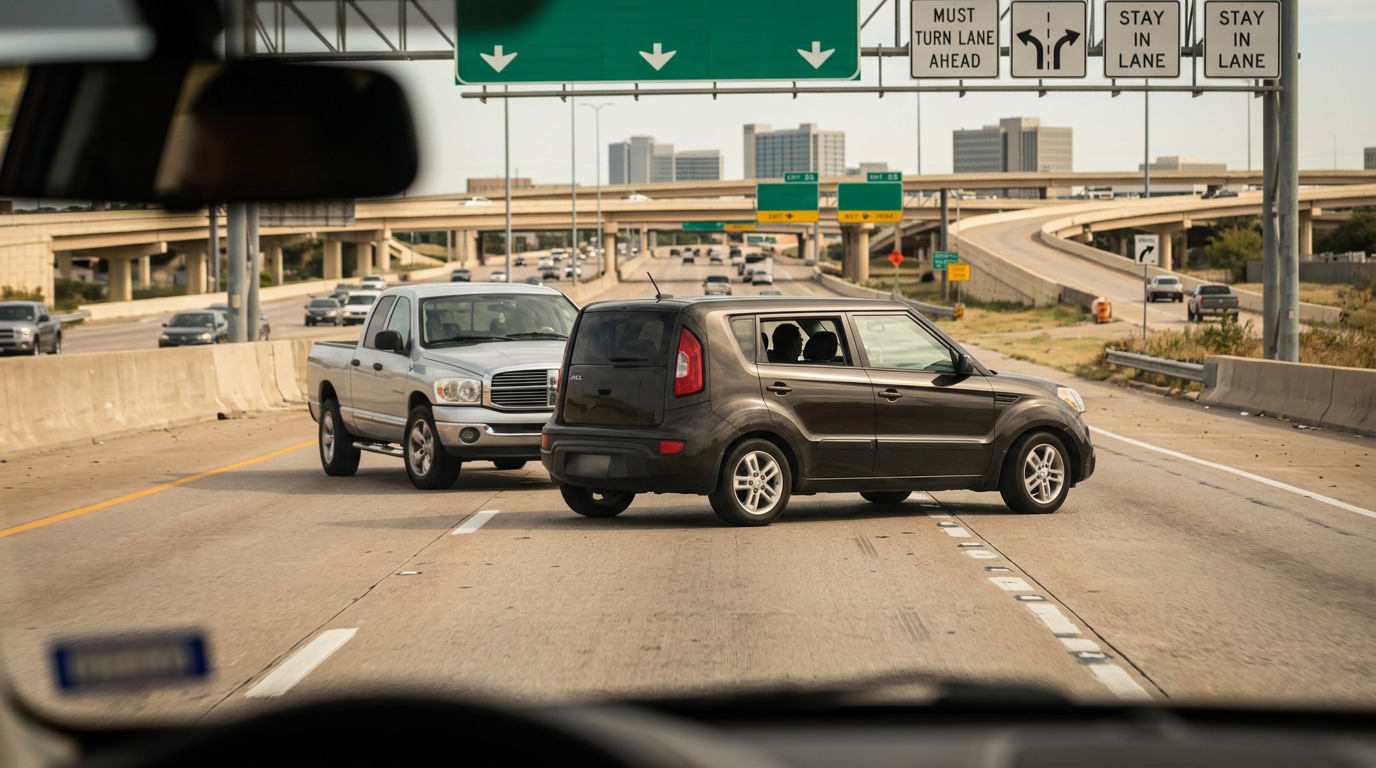
Recent dashcam footage shared by a Dallas commuter has ignited a fresh conversation regarding the eroding standard of road safety in the DFW metroplex. The incident involved a Kia Soul occupying a lane designated exclusively for straight travel. At the last possible moment, the driver attempted an illegal lateral maneuver, disregarding established traffic signage and endangering nearby motorists. This specific event, captured in high definition, demonstrates a growing trend where drivers prioritize personal convenience over the safety of the collective motoring public. Rather than proceeding to a safe location to perform a legal U-turn, the driver in question chose to force their way into turning traffic, nearly causing a high-speed broadside collision. This event is not an isolated occurrence but part of a broader spike in aggressive driving behaviors that have plagued North Texas urban centers since the post-pandemic return to offices. Historically, road safety in Texas has relied on the 'Move Over or Slow Down' laws and general adherence to lane markings, yet enforcement in densely populated areas like Dallas has struggled to keep pace with rapid population growth. Before the influx of new residents over the last decade, Dallas highways were known for their speed, but the current atmosphere is increasingly characterized by unpredictability and a lack of fundamental signaling. This lapse in basic driving etiquette has led to a surge in the popularity of dashcams among local residents who seek to protect themselves from liability in an environment where 'hit and runs' and insurance fraud are becoming more frequent. The visual evidence provided in this latest viral clip serves as a cautionary tale for those navigating the complex interchanges of the Dallas area.
Texas relevance
The city of Dallas consistently ranks among the most dangerous areas for drivers in the state of Texas, with traffic fatalities and major accidents often exceeding those of other major hubs like Houston or San Antonio proportionally. This specific incident underscores the unique challenges of the Dallas interior road network, where legacy infrastructure often meets modern, high-volume traffic demands. For Texas residents, particularly those in the DFW area, these risks translate directly into higher insurance premiums and a greater likelihood of involvement in a 'no-fault' accident. The incident highlights why the Texas Department of Transportation continues to push for regional safety campaigns such as 'Be Safe. Drive Smart.', emphasizing that local drivers must remain hyper-aware of their surroundings to survive the daily commute.
The Mechanics of the Near-Miss
The specific mechanics of the Dallas incident reveal a dangerous disregard for lane discipline. The offending vehicle was positioned in a lane clearly marked for through-traffic, yet the driver attempted to execute a full turn across the path of vehicles correctly positioned in the turning lane. This type of maneuver is particularly dangerous because it occurs in the 'blind spot' of drivers who are following the flow of traffic, leaving almost zero reaction time for the victim.
Traffic engineers design intersection markings to facilitate a predictable flow of vehicles. When a single driver deviates from these markings, it creates a 'ripple effect' of hard braking and sudden swerving in the lanes behind them. In this case, the use of a turn signal at the very last second did nothing to mitigate the danger, as the signal was used as a demand for entry rather than a request or a warning of intent.
The prevalence of such maneuvers in Dallas is often attributed to the city's complex 'mixing bowl' highway designs and surface street conversions. However, even the most confusing road layout does not excuse the choice to turn from a non-exclusive lane. Safe driving practices in Texas dictate that if a turn is missed, the driver must continue straight until a legal and safe opportunity to turn around presents itself, ensuring no other motorists are put at risk.
The Rise of Personal Surveillance on Texas Highways
As traffic incidents in Texas cities become more frequent, there has been a significant uptick in the installation of dashcams by private citizens. These devices serve as a digital witness, providing objective evidence in cases where one driver's word is pitted against another's. For many Dallas commuters, the price of a camera is considered a necessary 'insurance policy' against the rising tide of reckless driving behaviors that often go unpunished by local law enforcement.
Legal experts in Texas note that dashcam footage can be a decisive factor in insurance adjustments and civil litigation. Without the video evidence in this recent Dallas case, the victim would have had a difficult time proving that the Kia Soul driver was the primary aggressor in a side-swipe scenario. The footage clearly shows the lane markings and the illegal positioning of the other vehicle, leaving little room for dispute regarding liability.
Furthermore, the public sharing of these videos on platforms like Reddit and other social media sites serves a communal purpose. It allows residents to identify high-risk intersections and provides a platform for discussing the specific types of violations most common in their neighborhoods. This crowdsourced accountability is becoming a staple of life in modern Texas metropolitan areas, where the digital eye is often more reliable than the human one.
Infrastructure Challenges and Driver Frustration
Dallas infrastructure has long been a topic of debate among urban planners. Many of the city's current roads were designed for a population level that was surpassed decades ago. This discrepancy leads to extreme congestion, which in turn breeds frustration and 'road rage.' When drivers find themselves trapped in long queues, the temptation to engage in illegal maneuvers to save time becomes a significant hazard.
The 'straight-only' lane violation is a byproduct of this environment. Drivers who realize they are in the wrong lane often fear that following the law will result in a lengthy delay due to heavy congestion and poor light timing at the next intersection. Consequently, they take high-stakes risks, betting that other drivers will be able to stop in time to accommodate their illegal movements.
To combat this, the Texas Department of Transportation (TxDOT) has been exploring 'smart' traffic signals and clearer signage, but the human element remains the most unpredictable variable. Infrastructure can guide a driver, but it cannot force compliance. The Dallas incident proves that even with clear markings, the decision-making process of an individual driver is the ultimate factor in road safety.
Economic Impact of Reckless Driving
The economic consequences of traffic accidents in Texas are staggering. Beyond the immediate costs of vehicle repair and medical expenses, there are broader implications for the state economy. Traffic delays caused by preventable accidents result in thousands of lost man-hours and delays in the delivery of goods and services. In a hub like Dallas, where logistics and transportation are vital, a single reckless lane change can cause a bottleneck that lasts for hours.
Insurance rates in the DFW area are among the highest in the state, largely due to the frequency of collisions. When insurers calculate risk, they look at the data provided by incidents just like the one captured on the dashcam. Every time a driver decides to ignore traffic laws, they contribute to the rising premiums of their neighbors. This collective financial burden is a direct result of the lack of defensive driving practices on local roads.
Moreover, the strain on emergency services cannot be ignored. Every time the Dallas Police Department or local EMS has to respond to a collision caused by an illegal turn, resources are diverted away from other critical needs. Reducing the number of 'predictable' accidents through better enforcement and driver education would have a positive fiscal impact on the city's budget and the wallets of its residents.
Modern Defensive Driving Strategies
Given the current state of Dallas traffic, 'defensive driving' has evolved from a recommendation to a survival skill. Experts suggest that Texas drivers should never assume another motorist will follow the law. This 'zero-trust' model involves maintaining a wider following distance and constantly scanning the behavior of vehicles in adjacent lanes. In the featured dashcam incident, the victim's ability to avoid a collision was likely due to a split-second awareness of the Kia Soul's erratic positioning.
Another key component of defensive driving in Texas is the 'exit strategy.' Drivers should always be aware of their escape routes—areas of the road or shoulder where they can safely steer if another vehicle enters their lane unexpectedly. This is particularly difficult in the narrow lanes of downtown Dallas, making it even more important to avoid distractions like cell phones that slow down reaction times.
Education also plays a vital role. Many motorists are unaware of the specific rules regarding lane changes near intersections. In Texas, while not explicitly illegal in all scenarios to change lanes in an intersection, it is highly discouraged and can be cited as 'unsafe lane change' if it interferes with other traffic. Promoting a culture where making a safe U-turn is seen as the only acceptable option after a missed turn is essential for long-term safety.
The Role of Law Enforcement and Enforcement Gaps
Enforcement of traffic laws in major Texas cities has faced challenges in recent years. With police departments dealing with staffing shortages, minor traffic violations like illegal turns often fall to the bottom of the priority list. This has created a sense of impunity among some drivers, who feel they are unlikely to be pulled over for 'small' infractions. However, as the dashcam video shows, these small infractions are the primary cause of major accidents.
The use of technology in enforcement, such as red-light cameras, has been restricted in Texas due to privacy concerns and legislative actions. This leaves the burden of enforcement on physical patrols, which are stretched thin. Without a visible police presence on the roads, the deterrent for reckless driving is significantly diminished. This has led to calls for more targeted traffic enforcement details in high-accident zones across Dallas.
Ultimately, the responsibility lies with the individual driver, but a more robust enforcement framework could provide the necessary incentive for behavioral change. Until then, Dallas motorists are left to navigate a landscape where they must be their own best protectors, using tools like dashcams and defensive driving techniques to mitigate the risks of a system that is currently struggling to maintain order.
Analysis
From an editorial perspective, the trend of 'optional' traffic laws in Dallas signals a breakdown in both enforcement and driver education. When motorists feel that the consequences of an illegal turn are negligible compared to the inconvenience of a five-minute detour, the safety of every Texan on the road is compromised. The fact that citizens are now forced to rely on personal surveillance equipment like dashcams to prove their innocence in a collision points to a deeper issue regarding the reliability of witness testimony and police response times in high-traffic zones. Strengthening the penalties for reckless maneuvers in designated straight-only or turn-only lanes could be a necessary step for the Texas Legislature to consider in future sessions to restore order to urban transit.
Source attribution
This story was reported using a public release from the r/dallas. Keep TX Red rewrote the coverage independently and links to the official statement for verification.
Frequently Asked Questions
- Is it illegal to change lanes in an intersection in Texas?
- While the Texas Transportation Code does not have a specific statute that strictly forbids changing lanes within an intersection, it can be cited under the 'unsafe lane change' provision. Officers can ticket a driver if the maneuver is deemed hazardous to other motorists or if it involves crossing solid white lines that indicate a required lane path.
- Why are dashcams recommended for Dallas drivers?
- Dallas has high rates of hit-and-run incidents and complex traffic patterns that lead to frequent collisions. A dashcam provides a neutral record of events, which can be critical for insurance claims and proving that a collision was caused by another driver's illegal maneuver, such as turning from a straight-only lane.
- What should I do if a driver cuts me off in traffic?
- The safest reaction is to prioritize avoidance over 'winning' the lane. Slow down, create distance, and do not engage in retaliatory driving. If the incident was particularly dangerous and you have footage, you can report the license plate to local authorities, though immediate on-road confrontation should always be avoided.
Official Sources
Take the next step
Browse the Newsroom →Read more about Keep Texas Red → Our full guide to what Keep Texas Red means and why Texans support it.
Related Articles

Get Texas updates delivered weekly.
Independent Texas reporting on politics, policy, and daily life. One email a week. Unsubscribe anytime.
Keep TX Red Newsroom
The Keep Texas Red Editorial Staff produces nonpartisan explainers, policy breakdowns, and educational resources to help Texans understand how their government works. All content is reviewed for accuracy and updated regularly.
About Keep TX Red →