North Texas Salvation Army Reports Record Surge in Social Service Demand
Salvation Army of North Texas reports a significant rise in residents seeking food and housing assistance as local economic pressures mount.
Editorial disclaimer: Opinions and analysis on Keep TX Red are editorial content — not statements of fact. See our editorial standards.
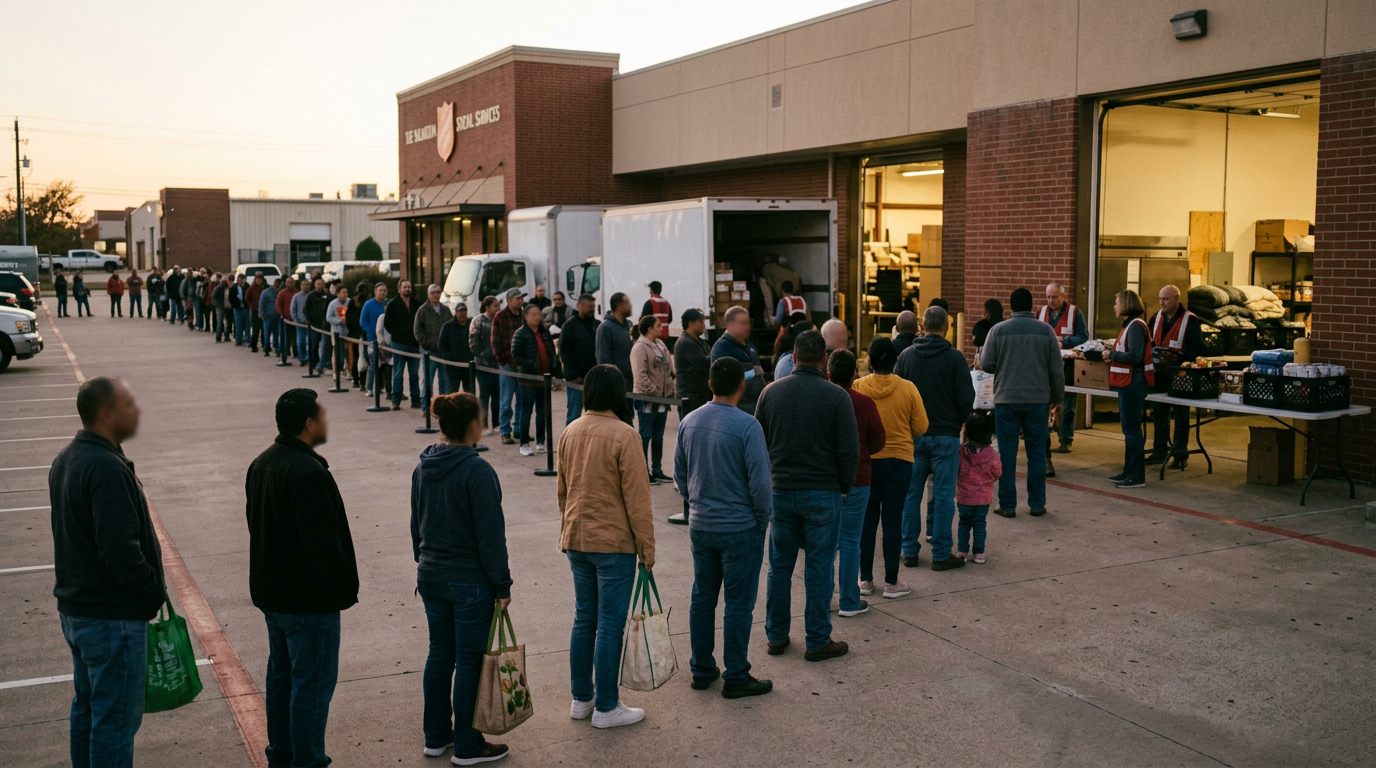
The Salvation Army of North Texas has officially reported a substantial increase in the demand for emergency services, specifically targeting nutrition and temporary housing assistance throughout the region. Historically, North Texas has relied on a network of faith-based and nonprofit organizations to bridge the gap between government assistance and private market costs. However, current trends indicate that these traditional safety nets are being stretched beyond their standard capacity. The organization notes that the influx of residents moving to the Dallas-Fort Worth metroplex, combined with shifting economic variables, has created a new baseline for service requirements that exceeds previous years. To address this rise, the organization is evaluates its logistical capabilities to ensure that no resident seeking help is turned away. The current surge is not limited to a single demographic but spans across working families, elderly residents on fixed incomes, and individuals experiencing sudden displacement. This pattern reflects a broader national trend where mid-to-large metropolitan areas are seeing the 'working poor' demographic expand as the cost of basic necessities outpaces wage growth in the service sector. The Salvation Army remains a primary coordinator for these services across several North Texas counties, making their internal data a critical bellwether for the region's overall social health.
Texas relevance
This development is directly relevant to residents of Fort Worth, Dallas, Arlington, and the surrounding Tarrant and Dallas counties. Texas has long prided itself on community-driven support systems rather than state-mandated welfare programs. As the Salvation Army of North Texas operates one of the largest private social service networks in the state, their ability to meet this demand affects public health and safety in some of Texas's most populous cities. The strain on these resources often precedes changes in local municipal policy regarding zoning for shelters and the allocation of county-level emergency funds. When private charities in Texas report capacity issues, it typically signals a forthcoming debate in the state legislature regarding how to manage urban growth versus affordability.
The Growing Need for Nutritional Security
One of the most immediate indicators of economic stress in the North Texas region is the rise in requests for hot meals and grocery staples. The Salvation Army has identified that its food pantry programs are being accessed by individuals who are often employed but cannot cover the full cost of groceries after paying for rising rents and utilities. This shift indicates that the 'hungry' population in North Texas is no longer just those without homes, but increasingly those who are housed but financially fragile.
In response to this, the organization has had to optimize its supply chain and seek new partnerships with local Texas grocers and farmers. The logistical challenge involves not just acquiring the food, but distributing it across a sprawling metroplex where public transportation is often limited. For many families in the outlying suburbs of Fort Worth, reaching a centralized distribution point is a hurdle that the Salvation Army is attempting to solve through mobile units and localized pop-up events.
The impact of nutritional insecurity reaches beyond the immediate feeling of hunger. In Texas, where childhood obesity and diabetes are significant public health concerns, the quality of food provided by these charities is a major focus. The Salvation Army is currently emphasizing the distribution of fresh produce and proteins over shelf-stable processed goods, though this higher-quality inventory is more expensive to maintain and requires specialized cold storage facility investments.
Housing and Shelter Capacity Constraints
Beyond food, the demand for emergency shelter has reached critical levels in Tarrant and Dallas counties. The Salvation Army operates several facilities designed to provide short-term housing, but these beds are increasingly occupied for longer durations because residents are finding it difficult to transition into permanent housing. The high cost of entry for apartments—including steep security deposits and rigorous credit checks—acts as a barrier for those trying to exit the shelter system.
This bottleneck effect means that when new people find themselves in crisis, the system is less able to accommodate them quickly. The organization is forced to prioritize the most vulnerable populations, such as women with children and the elderly. The expansion of these facilities is often met with complex local zoning regulations in North Texas cities, making it difficult for the nonprofit to simply build more capacity where it is needed most.
Furthermore, the cost of operating these shelters has risen due to increased utility rates and insurance premiums in the state of Texas. Maintaining safe, climate-controlled environments during the harsh Texas summers and unpredictable winters is a massive financial undertaking. The Salvation Army is currently looking for innovative ways to increase bed counts without significantly expanding their physical footprint, such as optimizing existing floor plans and increasing daytime case management staff.
Economic Drivers Behind the Surge
Several factors are contributing to this localized spike in service demand. While Texas generally boasts a lower unemployment rate than the national average, the DFW area has seen a rapid increase in the cost of services. Inflation in the energy and insurance sectors has hit North Texas households particularly hard. For a family living paycheck to paycheck, a single large utility bill or a significant increase in auto insurance can result in a total loss of financial stability.
Additionally, the migration of new residents to the region has tightened the housing market. As supply struggles to keep up with the influx of people from other states, the most affordable housing stock is the first to disappear. This leaves no options for low-wage workers who are essential to the region's service economy. The Salvation Army’s data suggests that many of those seeking help have recently arrived in Texas and were unprepared for the competitive nature of the local market.
The organization also points to the expiration of various pandemic-era relief programs that previously provided a buffer for at-risk households. Without those federal and state extensions, many families are finding themselves without a safety net for the first time. This transition period has placed the burden of support squarely on the shoulders of private organizations like the Salvation Army, which must now operate at 'emergency' levels during a period of supposed economic growth.
Community Response and Volunteer Support
To meet these challenges, the Salvation Army of North Texas is calling on the community for both financial donations and volunteer time. The reliance on the 'volunteer spirit' of Texans is a cornerstone of the organization's business model. In Fort Worth, local congregations and corporate groups provide a significant portion of the man-hours required to prepare and serve meals. However, even volunteerism has seen a shift, as individuals have less free time due to taking on second jobs or managing their own household pressures.
The organization is also leveraging technology to reach younger donors and volunteers in the area. By using digital platforms to coordinate 'micro-volunteering' opportunities, they hope to attract the next generation of North Texas philanthropists. These efforts are crucial because the cost of hiring professional social workers and facilities managers continues to rise, making unpaid community support more valuable than ever.
Local businesses in DFW are also stepping up to provide in-kind donations. From construction firms offering to repair aging facilities to logistics companies helping with food transport, the private sector is playing a pivotal role. The Salvation Army views these partnerships not just as charity, but as an investment in the stability of the local workforce. A stable community is a more productive community, which benefits the entire North Texas business ecosystem.
The Path Forward for North Texas Charities
Looking toward the future, the Salvation Army is focusing on long-term self-sufficiency programs rather than just emergency relief. This includes job training, financial literacy courses, and connections to mental health resources. By addressing the root causes of why someone might need a shelter bed or a meal, they hope to reduce the long-term dependency on their services. This 'hand-up, not a hand-out' philosophy aligns with the cultural values of many North Texas residents.
However, the immediate priority remains meeting the current surge. The organization is conducting a regional assessment to determine if relocations of resources from less-strained areas might be necessary. This fluidity is essential in a metroplex that covers so much geographic territory. A crisis in downtown Dallas might require a different tactical response than a spike in need in the suburbs of Tarrant County.
Ultimately, the Salvation Army of North Texas remains one of the most trusted names in local charity because of its transparency and commitment to the region. As they navigate this period of increased demand, the support of the local community will decide whether the safety net holds firm. The organization continues to advocate for policies that encourage private charitable giving and reduce the bureaucratic hurdles that prevent help from reaching those who need it most in the Lone Star State.
Analysis
Opinion: The increasing demand for the Salvation Army’s services in North Texas is a cautionary tale regarding the 'Texas Miracle.' While the state’s business-friendly environment has brought thousands of jobs and new residents to the DFW area, it has also driven up property values and the cost of living at a rate that is currently unsustainable for the lower-quartile workforce. The philanthropic sector is essentially acting as a pressure valve for the local economy. If these organizations cannot keep pace with the demand, local governments may feel pressured to intervene with taxpayer-funded solutions that often lack the efficiency of private charitable operations. Supporting these private-sector solutions is likely the most conservative and effective way to address the growing pains of a booming Texas economy.
Source attribution
This story was reported using a public release from the r/fortworth. Keep TX Red rewrote the coverage independently and links to the official statement for verification.
Frequently Asked Questions
- What areas does the Salvation Army of North Texas cover?
- The organization covers a large portion of the North Texas region, including major hubs like Dallas, Fort Worth, Arlington, and surrounding counties such as Tarrant, Dallas, Collin, and Denton.
- Why is the demand for services increasing if the Texas economy is doing well?
- While the economy is growing, the cost of housing, utilities, and groceries has risen significantly. Many individuals in the service industry or on fixed incomes are finding that their earnings no longer cover their basic needs, leading them to seek help for the first time.
- How can North Texas residents assist with this surge?
- Residents can help by donating money, which allows the organization to buy items in bulk, or by volunteering their time at local shelters and food pantries. In-kind donations of clothing and non-perishable food are also accepted at various drop-off points.
Official Sources
Take the next step
Browse the Newsroom →Read more about Keep Texas Red → Our full guide to what Keep Texas Red means and why Texans support it.
Related Articles

Get Texas updates delivered weekly.
Independent Texas reporting on politics, policy, and daily life. One email a week. Unsubscribe anytime.
Keep TX Red Newsroom
The Keep Texas Red Editorial Staff produces nonpartisan explainers, policy breakdowns, and educational resources to help Texans understand how their government works. All content is reviewed for accuracy and updated regularly.
About Keep TX Red →