Modern Dallas Social Trends: How Secular Groups Are Reshaping Local Community Life
Discover how residents in Dallas are navigating social circles and finding community within a traditionally faith-based regional culture.
Editorial disclaimer: Opinions and analysis on Keep TX Red are editorial content — not statements of fact. See our editorial standards.
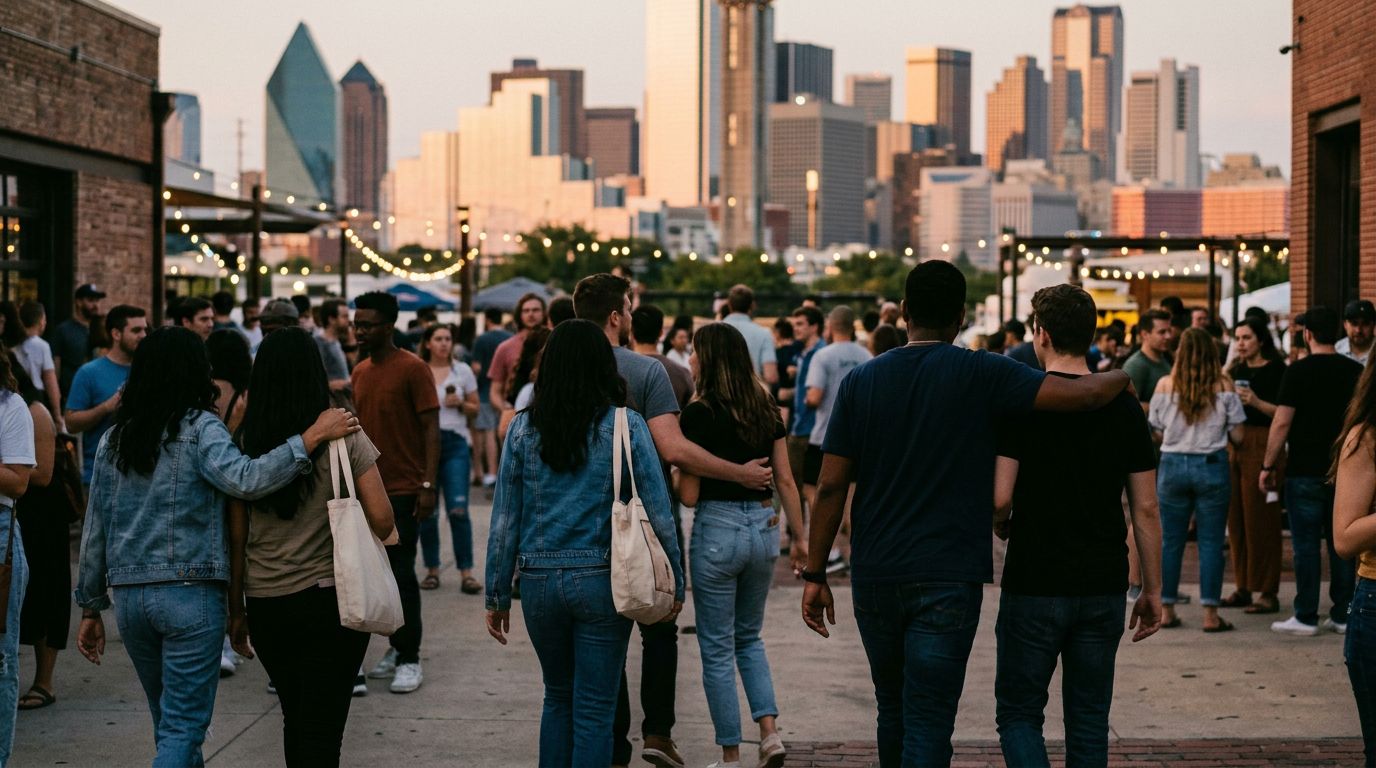
Historically, the city of Dallas has been viewed as a cornerstone of the American 'Bible Belt,' where social life and civic engagement often revolve around local congregations. However, as the North Texas population expands and diversifies, a new generation of residents is actively seeking avenues for connection that exist outside of traditional religious frameworks. This shift is particularly visible among young professionals in their late twenties who find themselves navigating a social landscape where ‘just pray about it’ remains a common conversational refrain, even in secular settings. The challenge for these residents lies in replicating the robust support systems and networking opportunities that churches historically provided to the community. In decades past, Texas social circles were largely defined by denominational affiliation, which provided an immediate sense of belonging for newcomers moving to cities like Dallas, Fort Worth, or Houston. As the state moves further into the 21st century, the digital age has both aided and complicated this search for fellowship. While traditional forums for shared interest, such as book clubs or specialty hobby groups, have waxed and waned in popularity, the fundamental human desire for in-person interaction remains a driving force in the local culture. Recent discourse among residents highlights a specific difficulty in locating active, consistent groups that prioritize secular values or shared philosophical outlooks without the formal structure of a church environment.
Texas relevance
This story is deeply rooted in the cultural evolution of Dallas and the broader North Texas region. As one of the fastest-growing metropolitan areas in the United States, Dallas serves as a bellwether for how Southern urban centers balance their traditional heritage with the needs of a modern, often non-denominational workforce. The struggle to find 'secular community' in DFW reflects a broader trend seen across the state, from the tech-heavy corridors of Austin to the diverse neighborhoods of San Antonio, where the historic influence of religion is meeting new ways of life. Understanding how local residents interact outside of Sunday morning services is essential to grasping the current social reality of North Texas.
The Evolution of Dallas Social Hubs
For much of the 20th century, the social life of a Dallas resident was almost inextricably linked to the local church. These institutions served as the primary venue for networking, finding childcare, establishing business relationships, and entering the dating market. This heritage has left a lasting footprint on the city's architecture and social etiquette, where the first question asked at a dinner party was often about one's home congregation.
Today, the landscape is shifting. As major corporations move their headquarters to North Texas, bringing employees from across the globe, the social expectations of the city are being rewritten. The modern Dallas resident is just as likely to seek community at a local bouldering gym, a boutique coffee shop, or a professional networking event as they are in a pew. However, these newer venues often lack the structured 'stickiness' that kept church families together for generations, leading to a sense of social fragmentation among those who do not attend traditional services.
The current tension in the Dallas social scene is not necessarily one of conflict, but of transition. People are looking for the same depth of connection that their parents found in Sunday school classes, but they are looking for it in spaces that align with their personal philosophies. This has led to a rise in niche social clubs, though many struggle to maintain the momentum needed to become long-term community staples.
Dating and Friendship in a Faith-Forward City
In the realm of dating, Dallas presents a unique set of hurdles for those who identify as agnostic or atheist. Dating applications often reveal a high density of users who list faith as a deal-breaker or a primary identity marker. For the secular dater in North Texas, this can create a feeling of being a 'statistical minority' despite the large and diverse population of the metroplex. The reliance on apps like Bumble or Meetup has provided some relief, yet many users report a lack of meaningful success in finding partners with similar worldviews.
Beyond romantic endeavors, the search for platonic friendship is equally affected by the regional culture. Many North Texans find that their workplace interactions eventually lead to invitations to church events, which can be awkward for those seeking to maintain a secular lifestyle. The desire for a social circle that understands life's hardships without resorting to religious clichés is a common point of discussion among young professionals in the area.
Finding 'your people' in a city as sprawling as Dallas requires more than just a digital profile; it requires physical spaces where shared values are the foundation. When these spaces—like secular book clubs—dissolve, it creates a vacuum that emphasizes the difficulty of maintaining non-religious social structures in a region famous for its megachurches.
The Rise and Fall of Secular Organizations
Dallas has seen various attempts to formalize secular community. In years past, organizations and meetups specifically for atheists, agnostics, and freethinkers flourished in the city. These groups offered everything from intellectual debates and book reviews to casual happy hours. However, keeping these organizations afloat presents a logistical challenge that religious institutions rarely face, primarily due to the lack of a centralized funding model or permanent physical meeting space.
Without the tithes and endowments that support Texas churches, secular groups rely entirely on the volunteer labor and financial contributions of their members. When key organizers move away or experience 'burnout,' these groups often vanish. This cycle of formation and dissolution makes it difficult for a 28-year-old newcomer to find an established group that feels permanent and reliable.
Furthermore, some secular-leaning groups, like Unitarian Universalist congregations, offer a middle ground by providing the structure of a church without the requisite dogma. While these appeal to some, others find the 'church-like' atmosphere still too close to the traditions they are trying to avoid. This creates a specific demand for purely secular social outlets that are currently hard to find in the North Texas region.
The Impact of Urbanization on Community
The urban sprawl of the Dallas-Fort Worth area adds another layer of complexity to the search for community. With residents scattered from McKinney to Waxahachie, the physical distance often prevents the spontaneous social interactions that are common in more densely packed cities. In Dallas, community isn't something you stumble into on the sidewalk; it is something you must intentionally seek out and travel to.
This geographical reality favors large institutions—like churches—that can support multiple campuses and large-scale events. Small, niche secular groups often struggle to draw participants who are willing to drive forty minutes across the Metroplex on a Tuesday evening. Consequently, the secular community becomes localized and fragmented, making it appear smaller than it actually is.
As Dallas continues to densify in areas like Uptown, Deep Ellum, and the Bishop Arts District, there is hope that more 'third places'—social spaces that are neither work nor home—will emerge. These walkable neighborhoods are the most likely candidates for fostering the kind of secular, interest-based communities that young residents are currently searching for.
Future Outlook for North Texas Social Life
Looking forward, the demographic trends in Texas suggest that the demand for non-religious social infrastructure will only continue to grow. As the state attracts more international and out-of-state residents, the 'default' social settings will likely become more varied. The challenge for the city of Dallas will be in cultivating a landscape where different types of communities can thrive alongside one another.
For the individual resident, the path forward often involves taking the initiative to revive dormant groups or start new ones. While the legacy of the Bible Belt remains strong, the identity of North Texas is increasingly defined by its diversity of thought and experience. The current struggle for connection is a symptom of a city in the middle of a major cultural growth spurt.
Ultimately, the story of finding community in Dallas is a story of persistence. Whether through hobby-based groups, professional organizations, or grassroots secular meetups, residents are proving that while the venue may change, the need for deep, authentic connection remains a fundamental part of the Texas experience.
Analysis
While Texas remains a hub for traditional religious institutions, the rising difficulty in finding secular spaces suggests a gap in the local market for social infrastructure. The ‘loneliness epidemic’ frequently discussed on a national level takes on a specific flavor in Dallas, where the assumption of faith is often the default social setting. For residents seeking community, the decline of structured groups like secular book clubs indicates that while the demand for connection exists, the leadership and physical spaces required to sustain them are currently under-resourced compared to their religious counterparts.
Source attribution
This story was reported using a public release from the r/dallas. Keep TX Red rewrote the coverage independently and links to the official statement for verification.
Frequently Asked Questions
- What are 'third places' and why do they matter in Dallas?
- Third places are social environments distinct from the two usual social environments of home ('first place') and the workplace ('second place'). Examples include cafes, parks, and libraries. In Dallas, churches have historically served as the primary third place, so secular residents often struggle to find equivalent spaces that offer the same sense of belonging.
- Are there secular alternatives to traditional churches in North Texas?
- Yes, options include Unitarian Universalist churches, which emphasize shared values over specific dogmas, as well as various hobby-based meetups, professional networks, and occasional secular or atheist/agnostic social groups, though the latter tend to be less permanent.
- Why is it harder to find secular groups than religious ones in Texas?
- Religious institutions benefit from centuries of established tradition, tax-exempt status, permanent property ownership, and a structured membership model. Secular groups often operate without these advantages, relying entirely on volunteers and temporary meeting spaces.
Official Sources
Take the next step
Browse the Newsroom →Read more about Keep Texas Red → Our full guide to what Keep Texas Red means and why Texans support it.
Related Articles

Get Texas updates delivered weekly.
Independent Texas reporting on politics, policy, and daily life. One email a week. Unsubscribe anytime.
Keep TX Red Newsroom
The Keep Texas Red Editorial Staff produces nonpartisan explainers, policy breakdowns, and educational resources to help Texans understand how their government works. All content is reviewed for accuracy and updated regularly.
About Keep TX Red →