Houston Drivers Face Growing Frustration Over Traffic Lane Violations in Montrose District
Residents in Houston's Montrose neighborhood report a surge in improper left turns and lane misuse, sparking concerns over road safety and congestion.
Editorial disclaimer: Opinions and analysis on Keep TX Red are editorial content — not statements of fact. See our editorial standards.
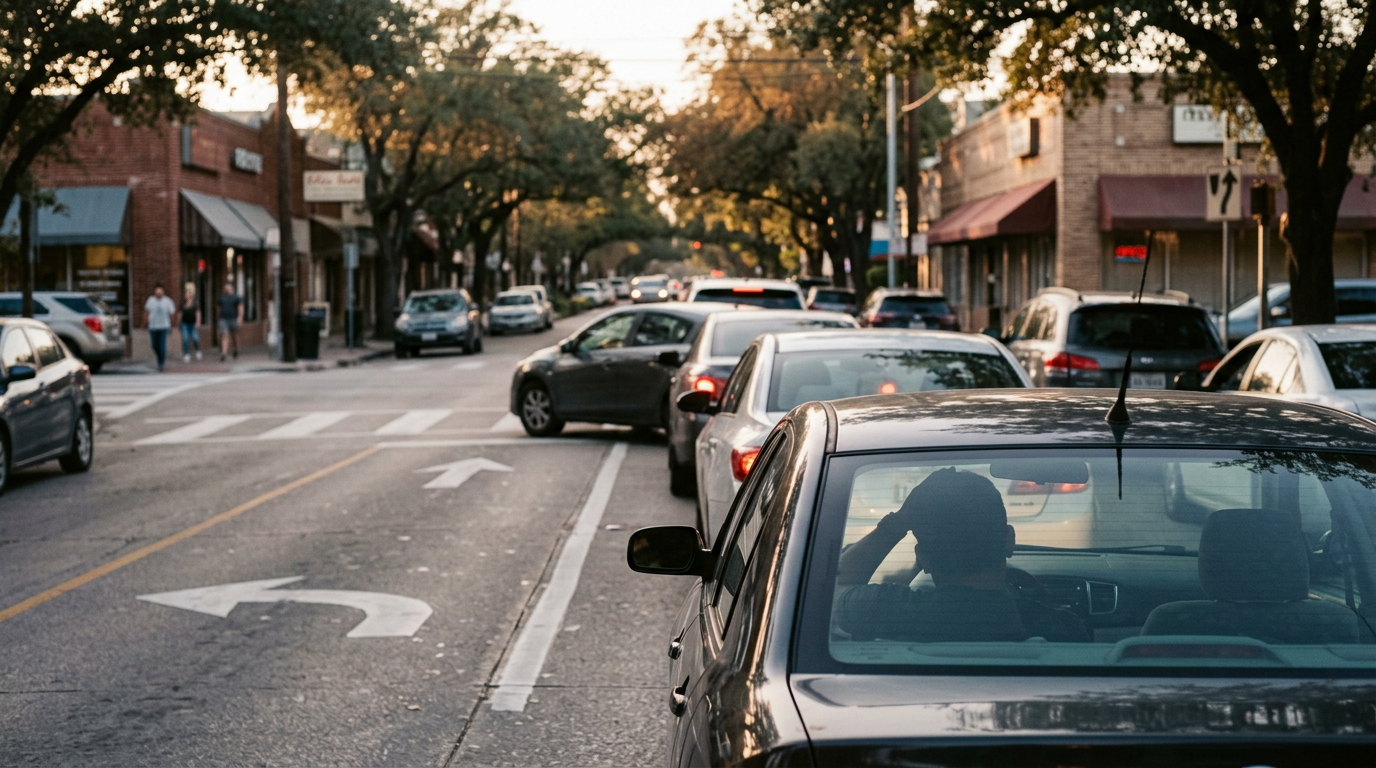
The streets of Houston's historic Montrose neighborhood have become a focal point for growing driver frustration as local residents report a significant spike in improper lane usage. Specifically, motorists are increasingly bypassing designated left-turn lanes at signalized intersections, choosing instead to execute turns from lanes reserved for through-traffic or right turns. This shift in behavior has created a ripple effect of congestion throughout the densely populated district, which is already known for its narrow corridors and high pedestrian volume. Historically, Montrose has transitioned from a bohemian residential enclave into a high-density mixed-use hub, and the existing infrastructure often struggles to keep pace with the resulting vehicle load. Beyond the issues at light-controlled intersections, there is an observing trend of drivers failing to utilize the center 'suicide' lanes. These two-way left-turn lanes are designed to clear through-traffic, yet many motorists appear either confused by their purpose or indifferent to the standardized rules of the road. This phenomenon is not merely an inconvenience; it represents a departure from established Texas transportation norms that prioritize predictable vehicle movement. As Houston continues to expand, the friction between legacy street designs and increasing driver density in neighborhoods like Montrose highlights a growing need for either better signage or more consistent administrative oversight regarding urban traffic flow.
Texas relevance
This issue is central to the daily lives of residents in Houston, Texas, particularly those navigating the Inner Loop. Montrose serves as a major artery for commuters traveling between the Museum District, Midtown, and the Upper Kirby area. In Texas, where car culture is dominant, the degradation of driving standards in major metropolitan centers like Houston can lead to increased insurance premiums and a higher frequency of localized accidents. The situation in Montrose mirrors similar infrastructure and behavioral challenges faced by other Texas cities experiencing rapid gentrification and density increases, such as Austin or Dallas.
The Evolution of Montrose Infrastructure
The Montrose area was originally developed in the early 20th century, long before the current volume of automotive traffic was ever anticipated. Its streets were designed for a different era of Houston lifestyle, characterized by lower density and more localized transit. As the city matured into a global energy and medical hub, Montrose transformed into one of the most desirable and high-traffic neighborhoods in the state. This evolution has forced heavy modern SUVs and trucks onto asphalt ribbons that were better suited for the mid-century sedans of the past.
Compounding the issue is the lack of uniformity in how lanes are marked across various intersections within the district. Some corners feature clear, light-directed turn lanes, while others rely on the traditional center turning lane. For a driver unfamiliar with the nuances of Westheimer Road or Montrose Boulevard, the visual cues can be contradictory. This infrastructure lag creates a environment where even well-meaning drivers may find themselves in the wrong lane, inadvertently causing the very bottlenecks that local residents are now documenting with increasing frequency.
Urban planners in Houston have long debated the feasibility of 'road diets'—the process of reducing lane counts to improve safety—but the sheer volume of cars in the fourth-largest city in America makes such changes difficult to implement. In Montrose, the tension is palpable between those who want faster commutes and those who want safer, more predictable neighborhood streets. The current trend of lane ignoring is arguably a symptom of a system that has reached its maximum physical capacity.
Misinterpretation of the Center Turning Lane
One of the most specific complaints centered in the Montrose area involves the misuse of the center turn lane. Under Texas law, these lanes are intended specifically for vehicles making left turns or for vehicles entering the roadway from an alley or driveway. They are not meant for travel or for bypassing traffic queues. However, residents are observing a dual-pronged problem: some drivers avoid these lanes entirely when they should be using them, while others use them as high-speed passing lanes.
When a driver stops in a through-lane to make a left turn instead of merging into the designated center lane, it effectively shuts down fifty percent of the road's capacity in that direction. This creates a dangerous scenario where following drivers must brake suddenly or swerve into the right lane to avoid a rear-end collision. In a high-traffic environment like Houston, these split-second decisions often lead to the 'phantom traffic jams' that can persist for hours after the initial infraction has occurred.
The confusion over these lanes suggests a need for a targeted public awareness campaign or updated striping. Fresh thermal plastic markings and clear 'Left Turn Only' signage could help mitigate some of the ignorance-based errors. However, there is also a growing sentiment among locals that some of this behavior is intentional, driven by a desire to avoid the wait times associated with properly queuing for a turn during peak Houston rush hours.
Impact on Emergency Services and Public Transit
The ripple effects of improper lane usage extend beyond the frustration of individual commuters. Houston's emergency responders, including the Houston Fire Department and local EMS units, frequently navigate the Montrose corridor to reach nearby medical centers. When lanes are blocked by vehicles attempting illegal or improper turns, it can shave precious seconds off of response times. A single car positioned incorrectly can prevent an entire line of traffic from pulling over to the right, as is required by state law when emergency lights are active.
Furthermore, the Metropolitan Transit Authority of Harris County (METRO) operates several high-frequency bus routes through this area. Buses require wide turning radii and clear paths to stay on schedule. When drivers use a straight-only lane to make a left turn, they often cut off larger transit vehicles, leading to harsh braking and potential passenger injuries. The efficiency of the city's public transit system is directly tied to the predictable behavior of personal vehicle operators.
Local businesses also feel the sting of these traffic woes. Patrons may avoid certain establishments if the 'hassle factor' of navigating Montrose's erratic traffic patterns becomes too great. Delivery vehicles, which are essential for the neighborhood’s numerous restaurants and boutiques, are often caught in the gridlock caused by these minor but frequent traffic violations. This creates an economic incentive for the city to find a more permanent solution to the neighborhood's circulation problems.
Regulatory and Enforcement Challenges
Enforcing lane discipline in a busy urban center like Houston presents significant logistical challenges for the Houston Police Department. Officers must balance the need for traffic citations with the demands of responding to more serious criminal activity. In a district like Montrose, where parking is scarce and shoulder space is non-existent, pulling a vehicle over for a minor lane violation can actually worsen traffic congestion in the short term, leading to a 'catch-22' for law enforcement.
Technological solutions, such as traffic cameras, are often controversial in Texas and subject to strict legislative oversight. Without the presence of an officer at the specific moment an improper turn is made, there is little accountability for the drivers involved. This has led to a perception of lawlessness among some motorists, who believe that the chances of being penalized for a 'quick' illegal turn are virtually zero. This atmosphere emboldens more drivers to adopt the same bad habits, creating a new, local norm that ignores the Texas Transportation Code.
Community advocates have suggested that increased police presence during peak hours could serve as a deterrent. Even the visual presence of a patrol car near major intersections like Westheimer and Montrose could encourage better compliance with lane markings. However, departmental budget constraints and staffing shortages often mean that traffic enforcement is prioritized for highways and high-speed corridors rather than neighborhood streets, leaving Montrose residents to fend for themselves against erratic drivers.
The Social Media Echo Chamber and Community Response
The rise in complaints on digital platforms like Reddit and Nextdoor indicates that residents are reaching a breaking point. These online forums have become a venue for sharing dashcam footage and identifying specific intersections where the behavior is most egregious. While social media cannot change the law, it does provide a metric for city officials to gauge public sentiment. The recent outcry regarding Montrose lane usage is a testament to the community's desire for a return to orderly conduct on the roads.
Some residents have suggested grassroots efforts, such as contacting the Mayor's Office or the City Council representative for District C, to demand better engineering solutions. In many cases, a simple change in the timing of a left-turn arrow or the addition of 'delineator' poles—which physically prevent drivers from switching lanes near an intersection—can resolve chronic issues. These small-scale interventions are often more effective than sporadic police enforcement because they provide a permanent physical barrier to bad behavior.
Ultimately, the discourse among Houstonians underscores a pride in their city that is marred by the daily grind of poor driving. The consensus seems to be that while Houston will always have traffic, the blatant disregard for basic lane rules is a relatively new and unwelcome addition to the Montrose experience. Addressing this will require a multifaceted approach involving the City of Houston Public Works, local law enforcement, and a renewed commitment to basic driver education within the community.
Analysis
The anecdotal evidence from Houston residents suggests a broader breakdown in the social contract of the road. When drivers unilaterally decide to ignore lane designations, it often indicates a lack of enforcement or a response to poorly timed signals that incentivize 'cutting' to avoid long queues. From a policy perspective, if the city of Houston does not address these localized traffic anomalies, the risk of road rage incidents and broad-side collisions will likely increase. This behavior may also be fueled by an influx of new residents who are unfamiliar with Texas-specific center-lane markers, indicating a possible gap in driver education during the relocation process.
Source attribution
This story was reported using a public release from the r/houston. Keep TX Red rewrote the coverage independently and links to the official statement for verification.
Frequently Asked Questions
- Is it legal to turn left from a straight-only lane in Texas?
- No. According to the Texas Transportation Code, drivers must follow all posted signage and pavement markings. Turning left from a lane not designated for that movement is a traffic violation and can result in a citation.
- How am I supposed to use a center turn lane in Houston?
- In Texas, the center lane (often marked with solid and dashed yellow lines) is reserved for vehicles slowing down to make a left turn or vehicles merging into traffic after a left turn. You should not travel in this lane for long distances or use it to pass other vehicles.
- Why is traffic specifically bad in the Montrose district?
- Montrose is a historic neighborhood with high density and narrow streets that were not designed for the volume of modern Houston traffic. Frequent construction and the mixture of residential and commercial spaces further complicate the flow of vehicles.
Official Sources
Take the next step
Browse the Newsroom →Read more about Keep Texas Red → Our full guide to what Keep Texas Red means and why Texans support it.
Related Articles

Get Texas updates delivered weekly.
Independent Texas reporting on politics, policy, and daily life. One email a week. Unsubscribe anytime.
Keep TX Red Newsroom
The Keep Texas Red Editorial Staff produces nonpartisan explainers, policy breakdowns, and educational resources to help Texans understand how their government works. All content is reviewed for accuracy and updated regularly.
About Keep TX Red →