Honoring Otto: The Legacy of a Beloved Fredericksburg Mascot in North Milam
Fredericksburg celebrates the life of Otto the Chicken with a permanent memorial, highlighting the unique charm of Texas Hill Country culture.
Editorial disclaimer: Opinions and analysis on Keep TX Red are editorial content — not statements of fact. See our editorial standards.
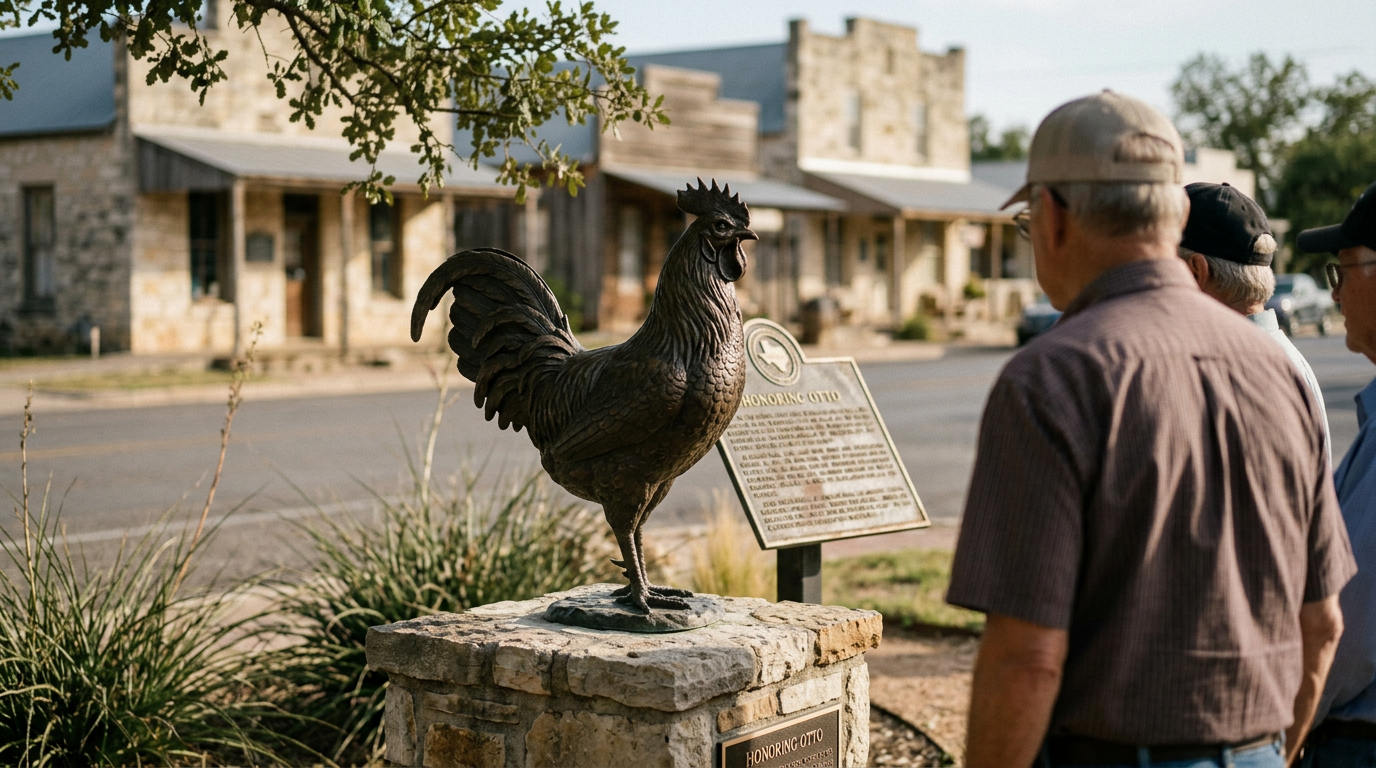
In the heart of Fredericksburg, Texas, a modest yet significant monument stands as a testament to the town's unique character and its appreciation for the unconventional. The memorial dedicated to a rooster named Otto, situated near North Milam Street, has become a focal point for both locals and travelers seeking to understand the quirky spirit of the Hill Country. While many towns dedicate statues to founding fathers or political figures, Fredericksburg chose to honor a bird that became a local fixture and a symbol of the community's daily life. This tradition of local animal memorials in Texas reflects a broader cultural trend where the identity of a town is often tied to its shared local experiences rather than just its official history. Historically, Fredericksburg has maintained strong ties to its German foundations while evolving into a premier destination for wine and boutique shopping. The commemoration of Otto sits at the intersection of these identities—a nod to the agricultural roots of Gillespie County and the modern, welcoming atmosphere that encourages visitors to slow down and notice the smaller details. Otto was not just a farm animal but a recognizable personality who resided near a local business, eventually earning a permanent bronze likeness and a plaque that describes his impact on those who passed by him daily. This small-scale preservation of memory serves as a reminder of how collective affection can transform a mundane presence into a regional landmark.
Texas relevance
This story is deeply rooted in Fredericksburg, a central pillar of the Texas Hill Country tourism economy and a vital part of Gillespie County. In Texas, small-town identity is often preserved through local lore and unique monuments that distinguish one municipality from another. The Otto statue represents the Texas value of community storytelling, ensuring that even a local rooster's presence is etched into the town's physical landscape. For Texans, these memorials characterize the 'Keep Texas Weird' or 'Keep Texas Local' sentiments that prioritize community bond over commercial uniformity. Furthermore, it highlights the importance of the Texas travel industry, where niche landmarks drive visitor engagement across rural corridors.
The Origin of a Local Legend
Otto was far more than an ordinary rooster roaming the streets of Fredericksburg; he was a resident figure who brought a sense of continuity to the North Milam area. Known for his specific territory near a local upholstery shop, Otto became a greeting party for store owners and shoppers alike. His presence was so consistent that he became integrated into the daily rhythms of the street, representing the slower, more communal pace of life that Texas Hill Country residents cherish.
Over time, the bird’s notoriety grew beyond just those who lived on his street. Visitors began to look for him, and he became a minor celebrity mentioned in travel logs and local conversations. When Otto eventually passed away, the loss was felt by the community, prompting a grassroots effort to ensure his presence remained in Fredericksburg forever. This led to the commissioning and installation of the statue and plaque that visitors discover today.
The decision to memorialize Otto reflects a broader Texas tradition of honoring the 'spirit of the place.' In a state known for its larger-than-life history, there is an equal and opposite respect for the small, the local, and the domestic. Otto represents the everyman—or every-bird—of the Texas small-town experience, proving that impact isn't solely measured by grand achievements but by the simple joy one brings to a neighborhood.
The Artistic Tribute and Public Reception
The memorial itself is a masterclass in understated tribute. The bronze statue captures Otto in a lifelike stance, positioned atop a stone pedestal that complements the natural limestone architecture prevalent in Fredericksburg. The accompanying plaque provides context for the bird's life, explaining his friendship with the community and expressing gratitude for the character he added to the town. This blend of art and storytelling turns a sidewalk corner into a miniature museum of local life.
Public reception of the statue has been overwhelmingly positive, with the site often serving as a 'hidden gem' for tourists. In the age of social media, Otto has found a second life online, as travelers share photos of the statue, further cementing Fredericksburg's reputation as a town with a heart and a sense of humor. The statue has become a favored spot for children and animal lovers, providing an interactive element to the downtown walking experience.
From an urban planning perspective, such installations contribute to the 'walkability' and discovery-based tourism that Fredericksburg promotes. Instead of just moving from one shop to the next, visitors are encouraged to engage with the environment. The Otto memorial serves as a physical prompt for conversation, asking passersby to consider the history of the ground they are walking on and the characters who once walked there before them.
Agricultural Roots in a Modern Texas Town
While Fredericksburg is now world-renowned for its wineries and upscale lodging, its foundations are strictly agricultural. The presence of a rooster memorial harks back to a time when Gillespie County was primarily a region of German farmers and ranchers. Otto’s memorial acts as a bridge between that agrarian past and the modern service-based economy that defines the city today. It serves as a subtle reminder that livestock and nature are still central to the Hill Country’s identity.
The juxtaposition of a farm animal statue in a sophisticated shopping district highlights the unique 'rural-urban' mix that Texas does so well. It allows the city to maintain its rustic credibility even as it grows in prestige. This cultural grounding is vital for Gillespie County, as it helps prevent the loss of local flavor that often accompanies high levels of tourism and commercial expansion.
Furthermore, Otto’s memorial highlights the Texas ethic of self-reliance and community funding. Tributes like these are rarely the result of high-level government mandates; instead, they are usually born from local donations and the initiative of small business owners. This reflects the 'can-do' attitude of Texas residents who take it upon themselves to improve their surroundings and honor their own heroes, regardless of how small those heroes might be.
The Role of Animal Memorials in Texas Lore
Texas has a long history of honoring animals that have made an impact on their communities. From Old Rip the horned toad in Eastland to various statues of loyal dogs and brave horses across the state, Otto joins an elite group of non-human Texans who have been immortalized in stone or bronze. These memorials serve as a form of folk history, capturing the emotional connections that define a specific era or location.
These statues also serve an educational purpose, prompting questions about the environment and the history of animal husbandry in the state. By focusing on a specific individual like Otto, the memorial makes history personal and relatable. It is not just about roosters in general; it is about *this* rooster, his personality, and his specific relationship with the people of Milam Street.
Capturing these stories is essential for the preservation of Texas heritage. As the state's population nears 30 million, the risk of losing these local narratives increases. The Otto statue stands as a small but firm bulwark against the forgetting of local history, ensuring that as Fredericksburg moves into the future, it carries a piece of its whimsical past with it.
Visitor Information and Finding Otto
For those looking to visit the memorial, Otto is located in the vicinity of 200 North Milam Street, just a short walk from the bustling Main Street district. The location is ideal for a quiet moment away from the crowded shopping areas, allowing visitors to appreciate the craftsmanship of the statue and the sincerity of the plaque. It is an easily accessible site for people of all ages and a great starting point for exploring the residential architecture of the area.
Visiting Otto is free to the public, embodying the open and welcoming nature of Fredericksburg. The site is often surrounded by well-maintained landscaping, reflecting the pride the city takes in its public spaces. For many, a trip to see Otto has become a secondary tradition, alongside visiting the Admiral Nimitz Gallery or the Enchanted Rock State Natural Area.
In a wider sense, the Otto memorial encourages a different type of tourism—one that values observation and discovery over mere consumption. It invites visitors to look for the stories hidden in plain sight. Whether you are a lifelong Texan or a first-time visitor to the Hill Country, taking a moment to acknowledge a beloved local rooster offers a unique perspective on what makes Texas communities truly special.
Analysis
Opinion: The preservation of Otto's memory in Fredericksburg is an excellent example of how Texas communities preserve their soul amidst rapid growth. As the Hill Country faces increasing development and an influx of new residents, these hyper-local tributes serve as cultural anchors. They remind both long-time residents and newcomers that the region's charm lies in its specific, unpolished stories rather than manufactured tourist experiences. By elevating a simple rooster to a status of public importance, Fredericksburg reinforces a sense of belonging and local pride that is essential to maintaining the distinct Texas spirit in an era of homogenization.
Source attribution
This story was reported using a public release from the r/texas. Keep TX Red rewrote the coverage independently and links to the official statement for verification.
Frequently Asked Questions
- Where is the Otto the Chicken statue located?
- The statue and commemorative plaque are located in Fredericksburg, Texas, specifically near the intersection of North Milam Street and West Austin Street, close to local businesses where Otto used to spend his time.
- Was Otto a real chicken?
- Yes, Otto was a real rooster who lived in the area for several years. He became well-known to the local residents and shop owners, who eventually decided to honor his presence with a permanent memorial after he passed away.
- What makes this memorial significant to Texas?
- It highlights the importance of local identity and the 'small-town feel' that many Texas communities strive to preserve. It is part of a larger tradition of animal memorials in Texas that celebrate the unique and often humorous history of the state's municipalities.
Official Sources
Take the next step
Browse the Newsroom →Read more about Keep Texas Red → Our full guide to what Keep Texas Red means and why Texans support it.
Related Articles

Get Texas updates delivered weekly.
Independent Texas reporting on politics, policy, and daily life. One email a week. Unsubscribe anytime.
Keep TX Red Newsroom
The Keep Texas Red Editorial Staff produces nonpartisan explainers, policy breakdowns, and educational resources to help Texans understand how their government works. All content is reviewed for accuracy and updated regularly.
About Keep TX Red →