Cyclist Fatality Highlights Road Safety Concerns After 26-Year-Old Dies in Car Collision
A young cyclist, identified as Rapp, 26, has passed away following a collision with a vehicle in a recent Texas road incident.
Editorial disclaimer: Opinions and analysis on Keep TX Red are editorial content — not statements of fact. See our editorial standards.
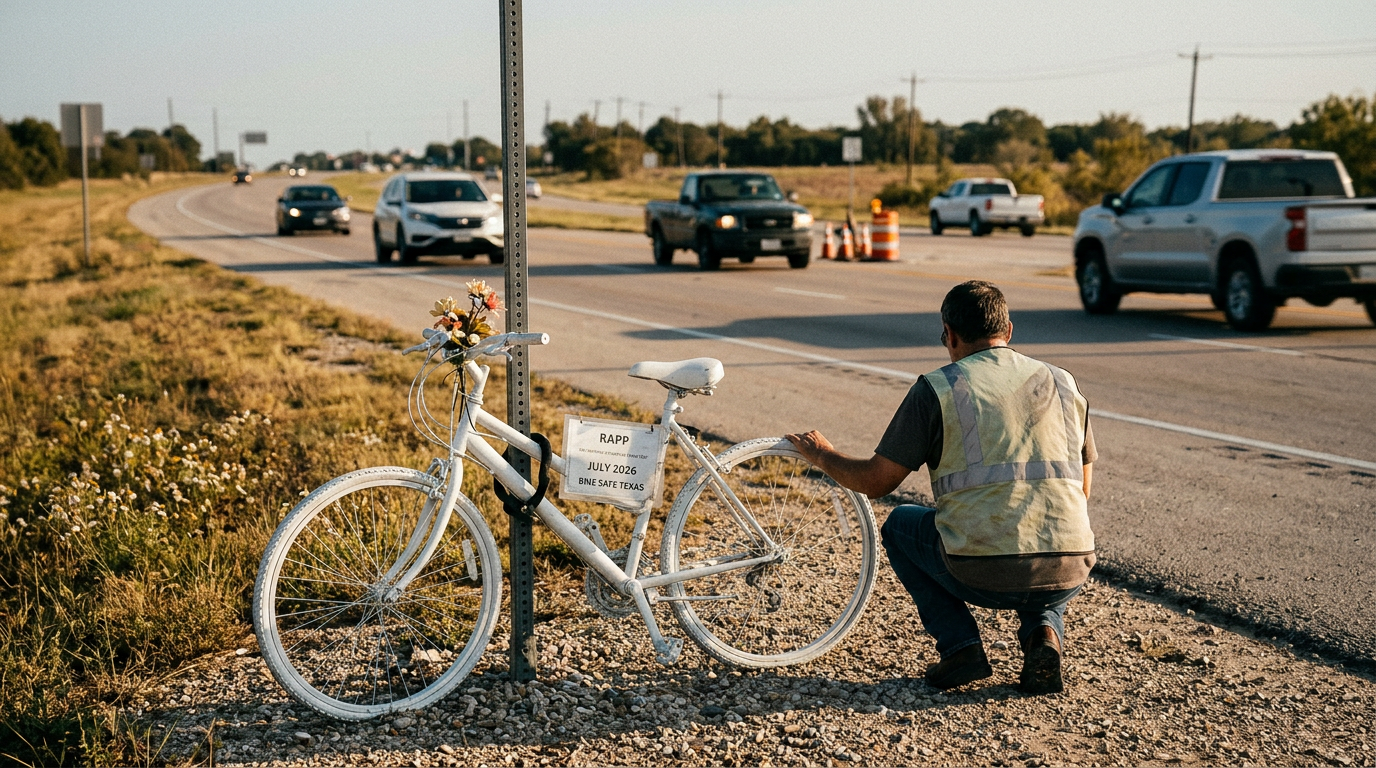
A 26-year-old cyclist identified as Rapp died on July 19, 2026, following a collision with a motor vehicle while traveling through a Texas community. The incident occurred during the daylight hours, prompting local residents and commuters to call for increased vigilance and transparency regarding the circumstances of the crash. Historical data in Texas often shows that incidents involving cyclists and motorists are a recurring issue on state roadways that lack dedicated cycling infrastructure. Prior legislative actions in Texas have focused on the 'Safe Passage' laws, which require motorists to maintain a specific distance from vulnerable road users, yet the enforcement and infrastructure gaps continue to pose risks for those not using vehicles. The immediate aftermath of this event has left the local community searching for answers while law enforcement begins the arduous task of reconstructing the scene of the accident. Historically, Texas has been a state where the expansion of the highway system was the gold standard of progress, often at the expense of non-motorized travel. In the decades following the establishment of the Interstate Highway System, many Texas cities were built around the assumption that every citizen would be behind the wheel of a car. This design philosophy created a legacy of high-speed corridors that now cut through residential and commercial districts where cycling is becoming more common. This specific tragedy involving a 26-year-old reflects a broader tension between the state's automotive roots and its burgeoning urban reality. The collision serves as a somber benchmark for the ongoing debate over how to modernize Texas transit without sacrificing the safety of our most vulnerable neighbors. As the investigation continues, the focus shifts toward not only the individual responsibility of the driver but also the structural failures that may have contributed to Rapp's passing.
Texas relevance
This tragedy underscores a critical public safety issue across the Lone Star State as urban and rural areas continue to struggle with mixed-use transport safety. Texas specifically has seen a rise in pedestrian and cyclist fatalities over the last decade, leading many municipalities to reconsider their 'Vision Zero' initiatives. For Texas residents, this loss serves as a reminder of the inherent dangers on high-speed thoroughfares where bicycle lanes are either non-existent or poorly protected from heavy traffic flow. Whether in Houston, Austin, or smaller suburban enclaves, the lack of continuous, barriers-protected bike lanes means that local riders are frequently forced to share lanes with heavy machinery traveling at high rates of speed. This incident adds to the mounting pressure on the Texas Department of Transportation (TxDOT) to integrate multi-modal safety improvements into future road expansions.
The Circumstances of the Incident
The fatal encounter took place while Rapp was operating a bicycle on a public roadway. Initial reports indicate that the impact from the motor vehicle was severe enough to result in immediate life-threatening injuries that the young cyclist could not survive. Responding medical personnel attempted to stabilize the individual at the scene, but the trauma sustained during the impact proved too great.
Investigators have focused on the trajectory of both the vehicle and the bicycle to determine where the point of contact occurred. Such investigations typically examine whether environmental factors, such as sun glare or road obstructions, played a role in the driver's failure to avoid the individual on the bike. The forensic reconstruction will likely take weeks as authorities analyze tire marks, vehicle damage, and any available nearby surveillance footage.
Community Impact and Response
The death of a young person in the prime of their life has sent ripples through the local community, sparking a dialogue about the safety of those who choose to cycle for recreation or commuting. Neighbors and acquaintances have expressed profound shock at the sudden loss of Rapp, describing the 26-year-old as a visible member of the local cycling culture. Public memorials have begun to appear near the site of the crash as residents mourn the loss of a neighbor.
In the aftermath of the crash, local advocates have pointed toward the specific location of the incident as a known area of concern. Many argue that the current layout of local roads does not adequately separate high-speed motor traffic from the slower, more vulnerable movements of cyclists and pedestrians. This vocal outcry is pushing local officials to move faster on previously stalled safety projects that were intended to mitigate these exact types of collisions.
Historical Context of Texas Roadway Safety
Texas has historically been a state dominated by car culture, with infrastructure projects largely focused on expanding highways and arterial roads for automotive traffic. This legacy has often left cyclists with limited options, forcing them onto shoulders or into active lanes of traffic where speeds frequently exceed 45 miles per hour. The cultural shift toward cycling as a legitimate form of commuting has outpaced the physical evolution of the pavement.
Statistically, the state has struggled to reduce the rate of cyclist fatalities even as overall vehicle safety technology has improved. The physical vulnerability of a cyclist means that even low-speed collisions can have catastrophic results, as evidenced by this most recent tragedy involving the 26-year-old Rapp. State data indicates that while car-on-car fatalities have seen fluctuations, incidents involving pedestrians and bicycles remain on a concerning upward trend across major metropolitan clusters.
Infrastructure Challenges in Rapidly Growing Areas
As Texas experiences unprecedented population growth, the demand for varied modes of transport has increased. However, the funding for protected bike lanes and safer crosswalks often lags years behind the actual growth of the population using them. Many suburban regions that once had low traffic volume are now bustling thoroughfares, yet the road designs remain stuck in a previous era of low density.
City planners across the state are finding that retrofitting existing roads with safety features for cyclists is a complex and expensive process. Without dedicated funding or a shift in policy from state-level transportation authorities, many areas remain dangerous zones for anyone not inside a metal frame. The push for 'Complete Streets' is often met with resistance from those who fear that bike lanes will increase traffic congestion, creating a political stalemate that can have deadly consequences.
Legislative Landscape for Vulnerable Road Users
The Texas Legislature has previously debated several bills aimed at protecting 'vulnerable road users,' a category that includes cyclists, pedestrians, and emergency responders. These laws are intended to provide legal recourse and establish clear rules for how drivers should interact with others on the road. The goal is to move beyond simple traffic citations toward a system that holds drivers accountable for reckless behavior around non-motorists.
Despite some progress, enforcement remains a hurdle for many law enforcement agencies. Proving a violation of safe-passing distance often requires forensic evidence or video footage, which may not always be available in the wake of a collision like the one that took Rapp's life. Advocates continue to lobby for more stringent penalties for distracted driving, which is often a contributing factor in collisions between cars and bicycles.
Stakeholders and the Path Forward
The stakeholders in this situation extend far beyond the family of the deceased. Local business owners, bicycle shops, and city council members are all now involved in a conversation about the future of the local corridor. There is a growing consensus that the status quo is no longer acceptable. Business owners in particular are beginning to realize that safer streets entice more foot and bike traffic, which can actually benefit the local economy rather than hinder it.
In the coming months, public hearings are expected to address the safety ratings of the roadway where Rapp was killed. These meetings will be a critical juncture for residents to voice their concerns and demand tangible changes, such as reduced speed limits or the installation of physical barriers. The outcome of these discussions will determine whether Rapp’s death becomes a catalyst for change or remains a tragic statistic in a long list of annual roadway fatalities.
Legal Implications and Investigations
While no charges have been filed at this stage, the legal implications of the crash remain a focal point for investigators. In Texas, the determination of fault in a bicycle-vehicle accident involves looking at various factors, including right-of-way laws and the level of care exercised by the driver. If it is found that the motorist was negligent or violating traffic laws, criminal charges could follow.
Furthermore, this case may draw attention to insurance and liability issues that frequently plague victims and their families in the aftermath of such incidents. Often, justice for cyclists in Texas is hampered by an legal system that is biased toward motorized transport. The resolution of this case will be watched closely by the local cycling community as a measure of how the justice system values the lives of those not using cars.
Analysis
The death of a 26-year-old on our roadways should serve as a wake-up call for state and local transportation departments. While official investigations are standard procedure, the immediate impact on the community emphasizes a need for infrastructure that prioritizes life over speed. If Texas continues to rely on legacy road designs without accounting for the surge in alternative transportation, these types of avoidable tragedies may unfortunately become a persistent headline rather than an isolated incident. There is a clear disconnect between the rhetoric of 'safety first' and the reality of budget allocations that favor massive freeway interchanges over simple, life-saving street calming measures. Until the state commits to fundamentally changing how it perceives space for cyclists, 26-year-olds like Rapp will continue to face disproportionate risks just for choosing to ride a bike.
Source attribution
This story was reported using a public release from the r/texas. Keep TX Red rewrote the coverage independently and links to the official statement for verification.
Frequently Asked Questions
- What happened to the cyclist in this incident?
- Rapp, a 26-year-old cyclist, was struck by a car while riding on a Texas road. The injuries sustained in the collision were fatal and resulted in his death on the scene or shortly thereafter. The incident occurred on July 19, 2026, and has shocked the local cycling community.
- Where did the accident occur?
- The accident occurred on a public roadway in Texas during daylight hours. While the specific intersection or street name is often withheld by news outlets until the official accident report is released by the police department, it took place in an area where local riders have frequently expressed safety concerns.
- What are the current laws for passing cyclists in Texas?
- While laws vary by city, many Texas municipalities follow guidelines requiring motorists to give at least three feet of space (for passenger cars) or six feet (for commercial trucks) when passing a cyclist. Failure to do so can result in citations or criminal charges if an accident occurs, though statewide enforcement remains a point of contention for safety advocates.
- Are there plans to improve road safety in this area?
- Following the tragedy, local advocates and community members are expected to petition city councils for the implementation of 'Complete Streets' policies. These include the installation of protected bike lanes, better signage, and traffic calming measures intended to prevent future fatalities involving vulnerable road users.
Official Sources
Take the next step
Browse the Newsroom →Read more about Keep Texas Red → Our full guide to what Keep Texas Red means and why Texans support it.
Related Articles
Get Texas updates delivered weekly.
Independent Texas reporting on politics, policy, and daily life. One email a week. Unsubscribe anytime.
Keep TX Red Newsroom
The Keep Texas Red Editorial Staff produces nonpartisan explainers, policy breakdowns, and educational resources to help Texans understand how their government works. All content is reviewed for accuracy and updated regularly.
About Keep TX Red →