Austin’s Digital Town Square: How Local Social Media Forums Shape Central Texas Life
Exploring the role of weekly community forums in Austin's digital landscape and how localized social media impacts civic engagement in the Lone Star State.
Editorial disclaimer: Opinions and analysis on Keep TX Red are editorial content — not statements of fact. See our editorial standards.
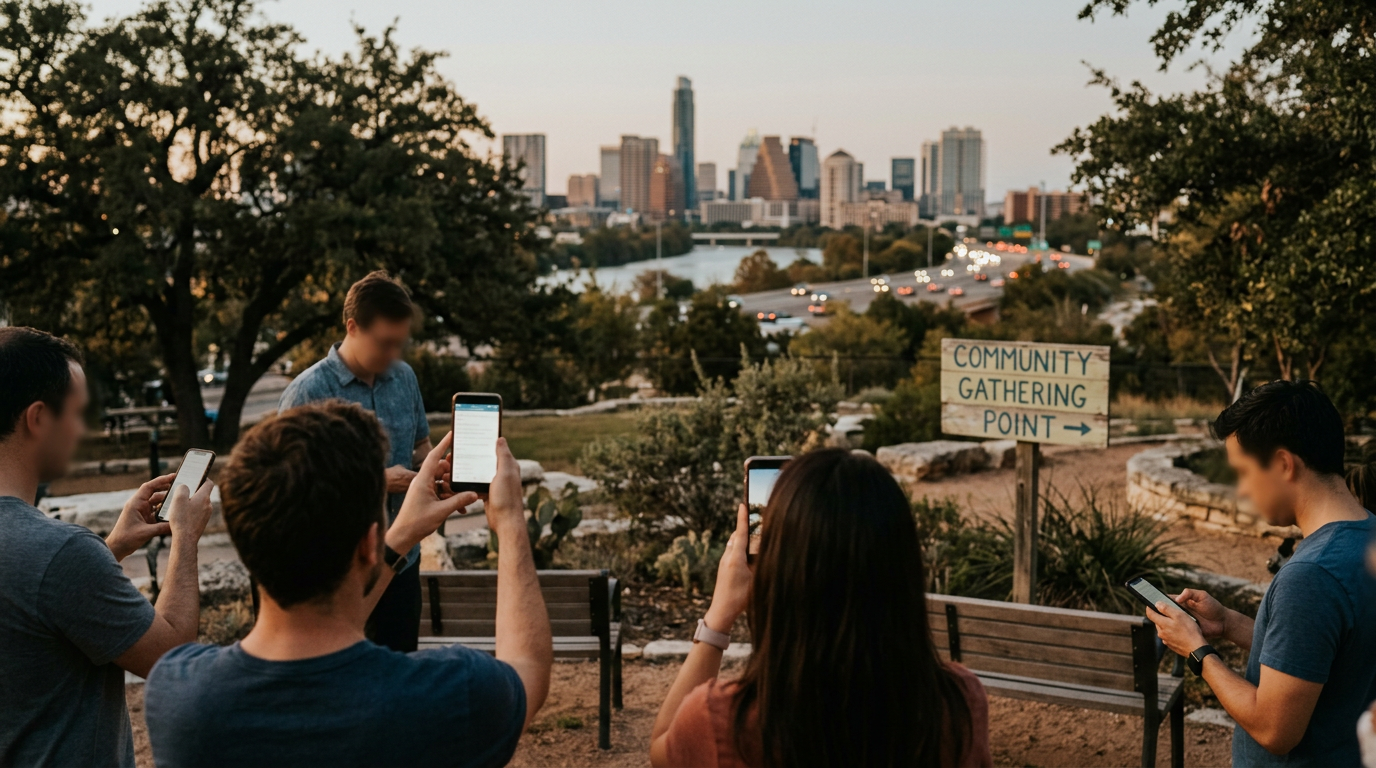
In the modern era of the Lone Star State, the traditional town square has migrated from physical courthouses to digital platforms. In Austin, one of the most significant manifestations of this shift occurs through recurring community forums designed to address the granular, everyday questions that define life in a rapidly growing metropolitan area. On July 19, 2026, the local digital community convened for its customary 'Stupid Question Sunday,' a tradition that provides a low-barrier entry point for residents to seek information about their city without the fear of social repercussion or gatekeeping. This mechanism serves as a pressure valve for a community experiencing unprecedented growth and provides a snapshot of the current anxieties and curiosities of the Austin populace. Historically, these informal information exchanges have filled the gap left by traditional local media and government helplines. As Austin’s population swelled over the last two decades, the sheer volume of navigation challenges—ranging from traffic patterns to local utility quirks—became too dense for standard FAQ pages. The evolution of these weekly digital meetups mirrors the broader Texas trend of citizen-led information networks, where the decentralized wisdom of the crowd replaces centralized authority. By allowing for 'trivial' inquiries, these forums actually strengthen the social fabric of the city, ensuring that even the most mundane logistical hurdles do not prevent new or long-term residents from fully participating in the local culture.
Texas relevance
Austin, Texas, serves as the primary stage for this digital phenomenon. As the state capital and a major hub for the global technology industry, the way Austin residents communicate often sets the precedent for other Texas metros like Dallas, Houston, and San Antonio. The specific relevance of these communal information exchanges lies in their ability to foster a sense of belonging in a city that many fear is losing its local soul to rapid commercialization. By maintaining spaces for localized discourse, Austinites are preserving the 'keep it weird' ethos through direct peer-to-peer assistance, ensuring that the specific nuances of living in Travis County are passed down through a digital oral tradition.
The Evolution of Community Support in Central Texas
The concept of the neighborhood helping hand has a long pedigree in Texas history. From the early days of pioneer cooperatives to the community bulletins found in small-town general stores, the impulse to share local knowledge has always been a survival mechanism. In Austin, this has translated into a robust online presence where thousands of residents interact daily. The weekly forum serves as a structured outlet for this impulse, preventing the main discourse of the city’s digital spaces from being overwhelmed by repetitive inquiries.
Over the past five years, the nature of these questions has shifted. While older archives might show a focus on local events and nightlife, recent trends indicate a community deeply concerned with the logistics of a changing landscape. Questions regarding the expansion of I-35, the reliability of the ERCOT power grid during summer peaks, and the shifting boundaries of local school districts have become common. This suggests that the 'stupid question' format is actually a stealthy tool for serious civic inquiry and a way for residents to keep a pulse on the city's development.
The digital infrastructure supporting these conversations is uniquely Texan in its blend of technical savvy and casual, often blunt, communication styles. Because Austin attracts a high number of tech workers, the platforms they use are often managed with a degree of structural precision, yet the content remains rooted in the gritty reality of living in a high-traffic, high-cost environment. This duality is a hallmark of the modern Austin identity, where high-speed internet meets the traditional Southern desire for community connection.
Navigating the Growing Pains of a Tech Hub
As Austin continues its trajectory as 'Silicon Hills,' the influx of new residents creates a constant demand for basic local knowledge. For someone moving from a different state or even another part of Texas, the specifics of Austin’s environmental laws, watering restrictions, and unique neighborhood associations can be daunting. The weekly forum acts as a concierge service, provided for free by established residents who view their participation as a form of community service.
This level of peer-to-peer support is critical because it bypasses the bureaucratic delays often associated with official municipal channels. While the City of Austin maintains various 311 services, the response time of a neighbor on a digital forum is usually measured in minutes rather than days. This efficiency is a vital component of the city’s ability to integrate newcomers without the total collapse of local norms and expectations.
Furthermore, these interactions help to define the boundaries of the local culture. By answering questions about where to find the best barbecue outside of the tourist traps or how to navigate the Zilker Park traffic during a festival, residents are effectively teaching the ‘Austin Way.’ It is a decentralized form of cultural preservation that ensures the nuances of the city are not lost in the sheer volume of its growth.
Digital Privacy and the Future of Local Forums
With the rise of data collection and the commercialization of social spaces, the future of free-standing community forums remains a topic of debate in Texas legislative circles. There is a growing movement to ensure that local digital town squares remain accessible and protected from excessive moderation or corporate interference. For Austinites, these platforms are essential tools for free speech and the exchange of ideas that fall outside the mainstream political or commercial narratives.
The anonymity offered by these forums is a key feature, allowing residents to ask about sensitive local issues—such as tenant rights, interactions with local law enforcement, or mental health resources—without the stigma that might be attached to their public identities. This promotes a more honest and transparent conversation about the state of the city, providing a raw look at the challenges facing the average Texan in the state's capital.
Looking forward, the role of these forums will likely expand as the Austin metro area continues to merge with surrounding communities like Round Rock, Pflugerville, and Cedar Park. The need for a regional information hub that transcends specific neighborhood boundaries will become even more vital, potentially leading to a more unified Central Texas digital identity that can advocate for regional interests at the state level.
Impact on Local Business and the Economy
The economic impact of community forums is often overlooked. When a resident asks for a recommendation for a local plumber, a specific brand of Texas-grown produce, or an independent bookstore, they are directly influencing the local economy. In Austin, where 'Shop Local' is more than just a slogan, these digital discussions serve as a powerful grassroots marketing engine for small businesses that cannot afford major advertising campaigns.
Conversely, these forums also act as a real-time review system for local services. A pattern of complaints about a specific contractor or a praise-heavy thread about a new restaurant can shift the financial fortunes of local entities almost overnight. This puts more power in the hands of the Austin consumer and encourages a higher standard of service and accountability among local businesses seeking to maintain a positive reputation in the community's digital eyes.
This transparency is particularly important in the Austin real estate market. Potential renters and buyers often turn to these forums to get the 'real story' about a neighborhood’s safety, noise levels, or the quality of its infrastructure. By bypassing the polished marketing materials of developers, residents are able to make more informed decisions about where to invest their money and their lives within the city.
The Social Psychology of the 'Stupid Question'
Psychologically, the branding of a forum as a place for 'stupid' questions is a brilliant move in community management. It removes the ego from the interaction, making it safe for anyone to participate regardless of their background or expertise. In a city like Austin, which prides itself on intelligence and innovation, admitting ignorance can be difficult. Labels like 'Stupid Question Sunday' provide the necessary cover for learning to take place without judgment.
This communal humility fosters a stronger bond between participants. It creates a space where the long-time 'Old Austin' resident and the 'New Austin' tech transplant can find common ground over something as simple as how to properly dispose of a broken appliance or where to find the best bluebonnet patches for a family photo. These small interactions are the building blocks of a cohesive community.
Ultimately, the success of these recurring events demonstrates that despite the digital divide and the often-combative nature of the internet, humans still have a fundamental desire to help one another. In the heart of Texas, this desire is being channeled into a digital infrastructure that ensures no question is too small to be answered and no resident is too new to be helped.
Analysis
From a broader perspective, these weekly digital gatherings are more than just a place to ask about lost car keys or the best taco truck; they represent a significant shift in Texas civic engagement. In an era where trust in institutional institutions can be volatile, Texans are increasingly looking toward their neighbors for reliable information. This grassroots approach to community management is inherently aligned with the Texas spirit of self-reliance and mutual aid. While the forum is titled as a place for 'stupid' questions, the data gathered there often precedes official city realizations regarding infrastructure failures, public transit needs, or shifts in consumer behavior.
Source attribution
This story was reported using a public release from the r/austin. Keep TX Red rewrote the coverage independently and links to the official statement for verification.
Frequently Asked Questions
- What is the primary purpose of the Austin weekly forum?
- The forum is designed to provide a specific space for minor, trivial, or localized questions that do not require an independent post. It centralizes seasonal or recurring inquiries, making it easier for residents to find quick answers about living in the Austin area.
- Is the information shared on these forums reliable?
- While the information comes from fellow residents rather than official experts, the 'wisdom of the crowd' often provides accurate, real-time insights. However, for legal or safety matters, residents are always encouraged to verify information with official Texas state or Austin municipal sources.
- How do these digital meetups benefit new Texas residents?
- They offer an informal orientation to the city, helping newcomers understand everything from local traffic laws and weather preparation to cultural etiquette and 'hidden gem' locations that aren't found in tourist guides.
Official Sources
Take the next step
Browse the Newsroom →Read more about Keep Texas Red → Our full guide to what Keep Texas Red means and why Texans support it.
Related Articles

Get Texas updates delivered weekly.
Independent Texas reporting on politics, policy, and daily life. One email a week. Unsubscribe anytime.
Keep TX Red Newsroom
The Keep Texas Red Editorial Staff produces nonpartisan explainers, policy breakdowns, and educational resources to help Texans understand how their government works. All content is reviewed for accuracy and updated regularly.
About Keep TX Red →