West Side Landmark: Menchaca Spice Company Honors Local Culture with Colossal Custom Mural
A newly unveiled garage door mural at San Antonio's Menchaca Spice Company blends pop culture and local pride through high-impact street art.
Editorial disclaimer: Opinions and analysis on Keep TX Red are editorial content — not statements of fact. See our editorial standards.
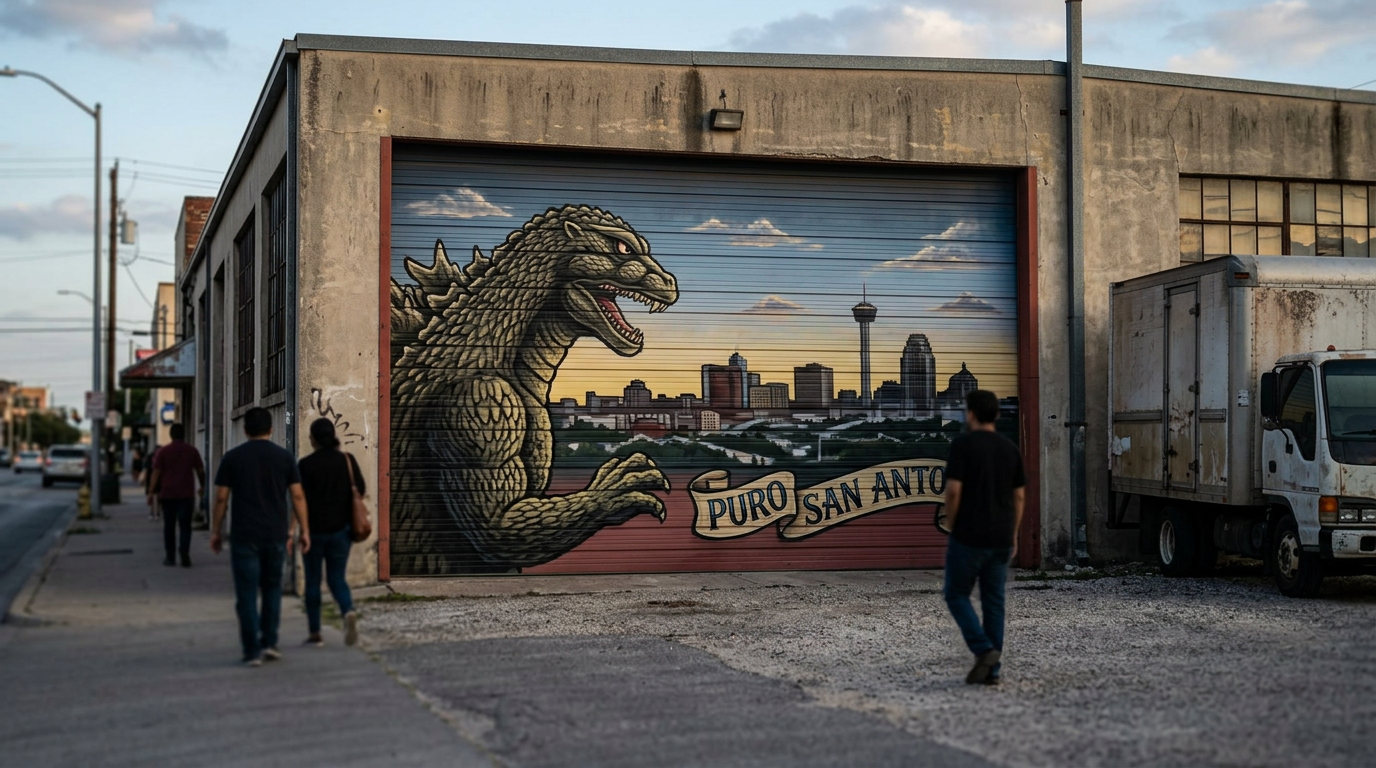
In an unexpected intersection of cinematic lore and spicy regional commerce, the Menchaca Spice Company has transformed its industrial facade into a massive artistic centerpiece. Located just off Castroville Road on San Antonio’s historic West Side, the spice manufacturer recently debuted a custom-painted garage door mural featuring a face-off between the legendary monster Godzilla and the city’s iconic skyline. This transformation serves as a prominent example of 'Puro San Antonio' culture—a term residents use to describe the unique, authentic, and often humorous blend of local heritage and modern creativity. Historically, the West Side of San Antonio has been a sanctuary for muralism, dating back to the Chicano Power movement of the 1960s and 70s, where public art was used as a tool for community storytelling and political expression. By commissioning or allowing such a vibrant display on a commercial spice factory, the owners are continuing a long-standing tradition of using the city’s architectural 'blank canvases' to engage with the public. The mural captures a towering, stylized version of the famous kaiju overlooking local landmarks, signaling a shift in how industrial businesses in the region approach community branding and aesthetic contribution to the neighborhood.
Texas relevance
This development is directly relevant to San Antonio and the broader Texas trend of utilizing commercial real estate for cultural preservation and tourism. As San Antonio continues to grow, there is a mounting conversation regarding the preservation of the West Side's distinct character. Landmarks like the Menchaca Spice Company, located in the heart of a predominantly Hispanic residential and industrial corridor, play a vital role in maintaining the 'soul' of the city. While Austin often garners attention for its 'Keep Austin Weird' murals, San Antonio’s street art scene remains deeply rooted in local industry and familial history. This specific mural reinforces the San Antonio identity by merging high-energy pop culture with the daily operations of a spice factory that serves countless Texas kitchens and restaurants. It highlights a recurring Texas theme where small businesses act as more than just economic drivers; they serve as cultural anchors that reflect the humor, resilience, and artistic flair of their specific zip codes.
The Evolution of West Side Muralism
The West Side of San Antonio is home to one of the most concentrated collections of mural art in the United States. Originating in the late 20th century, these murals often focused on religious icons, historical struggles, and family legacies. The Menchaca Spice Company's decision to utilize its garage door for a Godzilla-themed piece represents a modernization of this tradition. It shows that the local artistic language is expanding to include playful, speculative fiction while still maintaining its San Antonio roots.
Art critics and local historians often point to these installations as a form of 'living history.' Unlike static museum pieces, these murals are subject to the elements and the daily bustle of industrial zones. The Castroville Road area is a high-traffic corridor for transport trucks and local commuters, making the Menchaca mural a high-visibility landmark that can brighten an otherwise gray industrial landscape. This blend of commerce and creativity is a hallmark of the city's approach to urban revitalization without erasing the existing blue-collar infrastructure.
Industrial Branding in the Modern Era
For decades, industrial zones were characterized by windowless warehouses and plain metal siding. However, businesses in Texas are increasingly realizing the value of their exterior surfaces. The Menchaca Spice Company mural demonstrates how a specialized manufacturer—responsible for the blends that give many South Texas dishes their distinct flair—can use its physical location to build a narrative. This is not just a building where spices are mixed; it is now a destination for street art enthusiasts.
This trend is mirrored in other Texas hubs like the Deep Ellum district in Dallas or the Houston mural projects. By investing in professional-grade custom painting, businesses reduce the costs associated with repeated repainting due to vandalism and instead create a sense of neighborhood stewardship. The Godzilla mural is particularly effective because it uses a globally recognized character to draw the eye, subsequently leading the viewer to notice the business itself and the Castroville Road community it serves.
The Menchaca Spice Legacy
The Menchaca Spice Company is more than just a background for art; it is a staple of the San Antonio culinary scene. Spices like chili powder, cumin, and paprika are the lifeblood of San Antonio’s food identity, from home-cooked briskets to professional Tex-Mex establishments. The company’s presence on the West Side is a testament to the longevity of family-oriented businesses in the region that have weathered economic shifts for years.
By hosting such a vibrant mural, the company aligns itself with the younger generation of San Antonians who value the 'Puro' aesthetic. This term, which roughly translates to 'purely' or 'authentically' San Antonio, reflects a pride in local quirks and a refusal to conform to generic national standards. The mural is a visual embodiment of that spirit, combining a sense of humor with the serious business of Texas spice manufacturing.
Impact on Local Tourism and Photography
In recent years, San Antonio has seen a surge in 'mural tours' that guide visitors away from the Riverwalk and the Alamo and into the neighborhoods where the city’s heart really beats. The addition of the Godzilla mural on Castroville Road adds a new stop for these enthusiasts. It provides a unique backdrop that contrasts the ferocity of a movie monster with the domestic familiarity of a Texas spice wholesaler, making it a prime location for photography.
Local business leaders suggest that such landmarks contribute to 'incremental tourism.' A visitor might drive out to see the mural, then stop at a nearby taqueria for lunch, providing an economic boost to a part of the city that doesn't always benefit from downtown's hospitality budget. Small aesthetic improvements like these ripple out to influence the economic health of the surrounding residential blocks by signaling that the area is active, cared for, and culturally significant.
Cultural Synthesis: Godzilla Meets the Alamo City
The choice of Godzilla as the subject matter is an intriguing one for a Texas-based company. It speaks to a broader cultural fascination with 'Kaiju' cinema that transcends borders. However, by positioning the creature against a San Antonio backdrop, the artist creates a sense of localized heroism or chaos that resonates with the city's own larger-than-life personality. It’s a playful nod to the idea that if a giant monster were to attack, the West Side would be a primary scene of the action.
This synthesis of Japanese pop culture and Texas industrialism is what defines the modern urban experience in the Lone Star State. It reflects a diverse population that consumes global media but remains intensely loyal to their specific neighborhood. The mural has already garnered attention on social media platforms, where residents have shared it as a badge of local pride, further cementing Menchaca Spice Company’s role as a creative contributor to the city's visual lexicon.
Future of Artistic Collaboration in San Antonio
The success and popularity of the Menchaca mural may encourage other property owners along Castroville Road and West Commerce Street to open their walls to local artists. San Antonio has various programs designed to facilitate these partnerships, recognizing that public art can reduce crime and improve property values. As the city prepares for future growth, the balance between new development and the preservation of ‘puro’ landmarks will be critical.
The Menchaca mural serves as a blueprint for how this can be done effectively. It doesn’t require a massive government grant or a city-wide initiative; it starts with a local business owner deciding to do something bold with their property. As long as businesses like Menchaca Spice Company continue to embrace the creative spirit of the West Side, San Antonio's reputation as a top-tier destination for authentic American street art will only continue to grow.
Analysis
While some might view a garage door mural as a minor aesthetic choice, in the context of San Antonio's competitive urban landscape, it represents a savvy marketing and community-building strategy. In an era where 'Instagrammable' locations drive foot traffic and social media visibility, an industrial spice company can gain regional fame through artistic investment. This move likely serves a dual purpose: it deters unauthorized graffiti by replacing a blank wall with high-quality art, and it fosters brand loyalty among locals who appreciate the nod to 'Puro' culture. Politically and socially, muralism in San Antonio has regained steam as a defense against gentrification, serving as a visual marker that 'this space belongs to the community.' By incorporating a global icon like Godzilla into a very localized setting, the business successfully bridges the gap between massive entertainment appeal and local grit.
Source attribution
This story was reported using a public release from the r/sanantonio. Keep TX Red rewrote the coverage independently and links to the official statement for verification.
Frequently Asked Questions
- Where is the Menchaca Spice Company mural located?
- The mural is located on a garage door at the Menchaca Spice Company facility, situated just off Castroville Road in the West Side neighborhood of San Antonio, Texas.
- What does the term 'Puro San Antonio' mean in relation to this art?
- 'Puro San Antonio' is a local expression used to describe things that are authentically and uniquely representative of the city's lifestyle, humor, and heritage. This mural fits the description by mixing local industrial grit with creative, whimsical subject matter.
- Does Menchaca Spice Company sell products to the public?
- Yes, Menchaca Spice Company is a long-standing wholesaler and retailer known for providing authentic Mexican-style spices and blends that are staples in South Texas kitchens and restaurants.
- How does street art affect San Antonio businesses?
- For many San Antonio businesses, high-quality murals serve as a deterrent to illegal graffiti, enhance the building's aesthetic appeal, and can increase brand recognition through social media sharing and local foot traffic.
Official Sources
Take the next step
Browse the Newsroom →Read more about Keep Texas Red → Our full guide to what Keep Texas Red means and why Texans support it.
Related Articles
Get Texas updates delivered weekly.
Independent Texas reporting on politics, policy, and daily life. One email a week. Unsubscribe anytime.
Keep TX Red Newsroom
The Keep Texas Red Editorial Staff produces nonpartisan explainers, policy breakdowns, and educational resources to help Texans understand how their government works. All content is reviewed for accuracy and updated regularly.
About Keep TX Red →