Uncovering the Influence of San Antonio’s Vaqueros and Ranches in the American Revolutionary War
A new San Antonio exhibit explores how Texas rancheros provided critical cattle drives and food supplies to aid the American colonies against Britain.
Editorial disclaimer: Opinions and analysis on Keep TX Red are editorial content — not statements of fact. See our editorial standards.
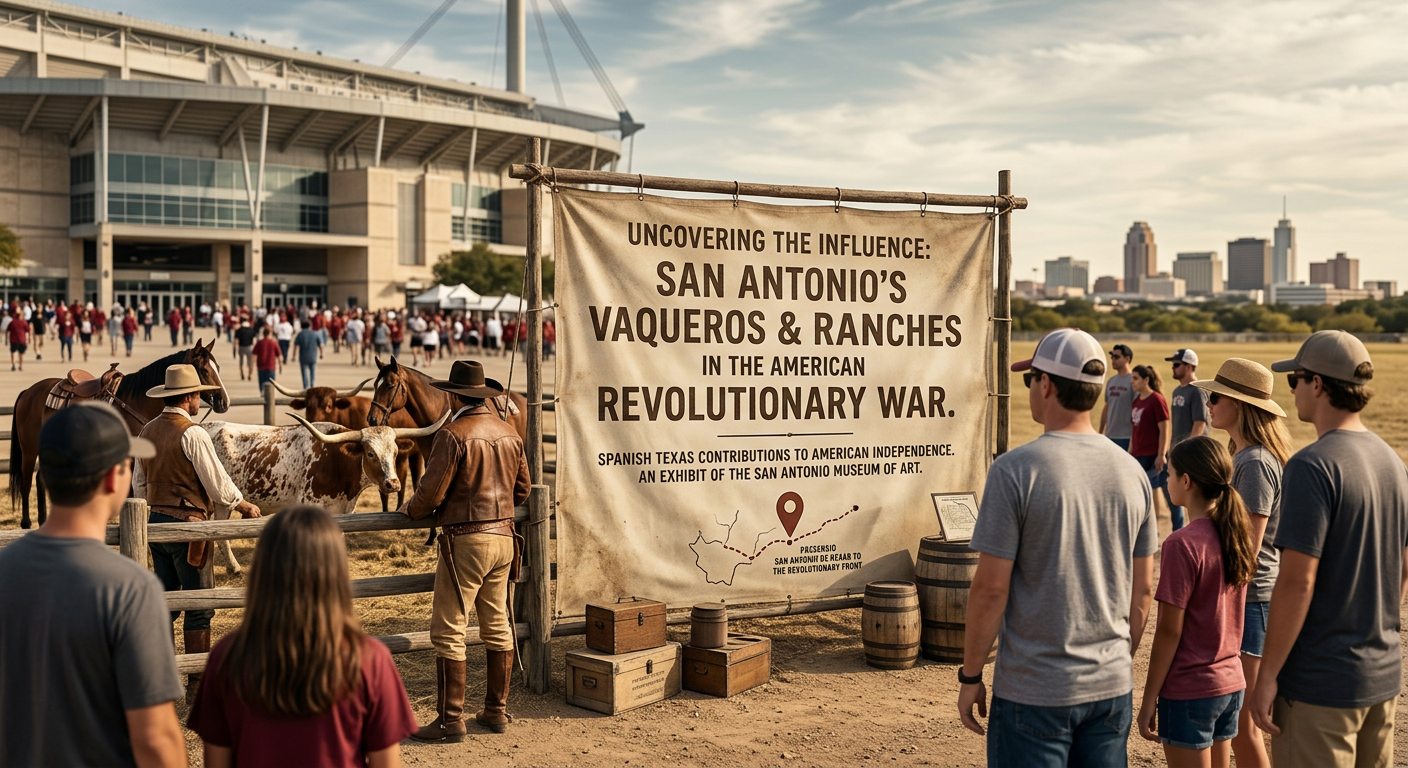
Throughout the halls of modern San Antonio, a historical narrative is being revitalized to include the essential contributions of Texas rancheros during the American Revolution. While traditional textbooks often focus on the thirteen original colonies, a new exhibit at the San Antonio Museum of Art highlights the pivotal role that Spanish Texas played in securing American independence. During the late 1700s, hundreds of vaqueros and local ranchers mobilized to provide the necessary resources that sustained the Continental Army and its allies. This movement of labor and livestock from the South Texas plains to the battlefronts represents one of the earliest instances of Texas contributing to the broader American geopolitical landscape. The context of this historical recovery dates back to the strategic alliance between Spain and the fledgling United States. Recognizing a common adversary in Great Britain, Spanish governors in what was then the province of Texas organized massive logistics operations. Unlike the industrialized warfare of later centuries, the 18th-century conflict relied heavily on animal proteins and hides for mobility and sustenance. By re-examining these cattle drives, historians are bridging a gap between the folklore of the Wild West and the formal military history of the United States. This exhibit serves as a reminder that the seeds of American liberty were watered partly through the efforts of those tending herds on the San Antonio riverbanks long before Texas officially joined the Union.
Texas relevance
This story is deeply rooted in the identity of San Antonio and the broader South Texas region, as it reclaims a missing chapter of the state's heritage. Historically, Texas is often framed as a latecomer to the American story, yet these findings prove that the region was a critical supporter of the nation's founding principles as early as the 1770s. For modern Texans, particularly those in the ranching community, this history elevates the local cattle industry from a mere economic driver to a foundational pillar of American freedom. The exhibit highlights how families in Bexar County can trace their lineage to those who provided the 'beef for the revolution,' creating a direct line of continuity between the Spanish colonial era and the modern Lone Star State.
The Strategic Cattle Drives of the 1770s
In 1779, General Bernardo de Gálvez, the Spanish Governor of Louisiana, sent a formal request to the Governor of Texas seeking livestock to feed his troops. These soldiers were engaged in key sieges against the British along the Gulf Coast and the Mississippi River. The response from San Antonio was swift and substantial, marking the beginning of the first great cattle drives in American history.
Local rancheros gathered thousands of head of cattle from the missions and private ranches surrounding San Antonio de Béxar. Braving the elements, predatory threats, and rugged terrain, vaqueros herded roughly 10,000 animals toward the eastern fronts. This logistics chain was vital because it bypassed the British naval blockades that had stymied the Continental Army’s traditional supply lines.
Without this high-protein food source, the campaigns in the South and along the Gulf may have falled. The cattle provided not just food but also tallow and hides, which were converted into shoes, belts, and equipment for the soldiers. This effort demonstrated that even in its earliest days, Texas was a powerhouse of supply and an indispensable ally to those fighting for autonomy from royal rule.
Spanish Texas as a Revolutionary Ally
While Spain's involvement in the American Revolution was motivated by its own imperial interests against the British, the practical effects on the ground were immensely beneficial to the American cause. The Spanish province of Texas served as a buffer zone and a resource bank that allowed for a multi-front war. This forced the British to divert troops away from the primary northern theaters to protect their southern interests.
The rancheros of San Antonio were the backbone of this support. These individuals were often members of the original Canary Islander families or descendants of the first Spanish settlers who had established the mission system. By agreeing to drive their herds through hundreds of miles of wilderness, they took significant personal and financial risks to support a cause that would eventually redefine the continent.
This era of history showcases a unique period where the interests of various cultures—Spanish, Indigenous, and Anglo-American—briefly aligned. The successful delivery of Texas beef ensured that the Spanish could maintain their siege of Pensacola and Mobile, effectively stripping the English of their southern ports and helping to isolate Cornwallis at Yorktown.
The Logistics of the Frontier
Understanding the scale of these ranchero operations requires a look at the geography of 18th-century Texas. There were no paved roads or established supply depots; instead, the vaqueros relied on their intimate knowledge of the land. They navigated their way through seasonal flooding and thick brush, maintaining the health of the herd over months of travel.
The sheer willpower required to move thousands of wild Longhorns—the predecessors of the breeds we know today—cannot be overstated. The tools used by these early Texans, from the lariat to the Western saddle, were already being perfected during this era. These technological and cultural developments would eventually become the hallmarks of the American cowboy identity.
By focusing on these logistics, the San Antonio exhibit helps visitors understand that the Revolution was won as much through supply chains as it was through musketry. The ability to move mass quantities of food across vast distances was a technological feat of the time, and the rancheros of San Antonio were the only ones equipped to handle such a monumental task in the southern theater.
Cultural Legacy of the San Antonio Rancheros
The impact of the rancheros extends far beyond the end of the Revolutionary War. After the conflict, the cattle industry they pioneered became the economic engine of Texas for the next century. The techniques for managing large herds on open ranges, developed during the period of Spanish rule, provided the blueprint for the post-Civil War cattle booms that defined the state’s character.
The exhibit in San Antonio makes a point to highlight specific family names and ranching icons from the 1700s. By humanizing the history, researchers are allowing local residents to see their own ancestors as meaningful participants in the birth of the United States. This shifts the perception of early San Antonio from a remote outpost to a central hub of geopolitical activity.
Furthermore, this legacy is preserved in the very landscape of Bexar County today. Many of the original ranch boundaries and land grants shaped the development of San Antonio's sprawl. Recognizing these early contributions reinforces the idea that Texas has always been a land of pioneers who look toward the horizon and work to secure a better future for their communities and their country.
Modern Implications for Texas History
The rediscovery of the 'Texas connection' to the American Revolution comes at a time when there is a renewed interest in local and state history. As Texas continues to grow, there is a push to ensure that the foundational narratives of the state are accurate and comprehensive. This exhibit serves as a cornerstone for that educational movement, providing a rigorous look at primary documents and archaeological evidence.
Educational leaders in San Antonio and across the state are looking at ways to integrate these stories into the Texas Essential Knowledge and Skills (TEKS) standards. Ensuring that the next generation of Texans knows that their state played a role in 1776 is vital for fostering a sense of civic pride and national unity.
Ultimately, the story of the rancheros is a story of contribution and partnership. It shows that the American project has always been larger than just the original colonies. The exhibit invites all Texans to consider how the spirit of the ranchero—one of independence, resilience, and service—is still alive in the state today, carrying forward the same values that helped win a revolution over two centuries ago.
Analysis
Opinion: The shift toward recognizing Texas's role in the American Revolution is an important step in reclaiming the full scope of American history. For too long, the narrative of the 'Founding' has been confined to the East Coast, ignoring the strategic depth provided by the Spanish frontier. By documenting the rancheros' contributions, we see a more inclusive version of the Revolutionary spirit—one that wasn't just about tea taxes in Boston, but about the hard-working vaqueros whose labor fed the armies that defeated the British. This isn't just about political history; it is a celebration of the Texas work ethic and our state's long-standing tradition of supporting the cause of liberty, even from the furthest reaches of the frontier.
Source attribution
This story was reported using a public release from the Texas History Stories (Google News). Keep TX Red rewrote the coverage independently and links to the official statement for verification.
Frequently Asked Questions
- How did Texas participate in the American Revolution if it wasn't a state yet?
- During the Revolution, Texas was a province of New Spain. Because Spain entered the war as an ally of France and the American colonies, the resources in Texas—specifically cattle and labor—were mobilized to support the military campaigns of General Bernardo de Gálvez against the British in the South.
- What is the significance of General Bernardo de Gálvez?
- Gálvez was the Governor of Louisiana who led Spanish forces against the British. He is a key figure because his victories in the Gulf Coast region prevented the British from encircling the American colonies. He requested the cattle from San Antonio to feed his army, creating the first link between Texas ranching and American military success.
- Where can I see the exhibit about the rancheros?
- The exhibit is currently hosted in San Antonio, specifically focusing on the local history of Bexar County and the surrounding missions. It features artifacts, historical documents, and educational displays that trace the route of the original cattle drives from Texas to the revolutionary front lines.
Official Sources
Take the next step
Browse the Newsroom →Read more about Keep Texas Red → Our full guide to what Keep Texas Red means and why Texans support it.
Related Articles

Get Texas updates delivered weekly.
Independent Texas reporting on politics, policy, and daily life. One email a week. Unsubscribe anytime.
Keep TX Red Newsroom
The Keep Texas Red Editorial Staff produces nonpartisan explainers, policy breakdowns, and educational resources to help Texans understand how their government works. All content is reviewed for accuracy and updated regularly.
About Keep TX Red →