Texas Taquerias Maintain High Demand Amidst Cyclosporiasis Concerns and Produce Scrutiny
Texas taco establishments show resilience as health officials monitor cyclosporiasis risks associated with fresh produce like cilantro and onions.
Editorial disclaimer: Opinions and analysis on Keep TX Red are editorial content — not statements of fact. See our editorial standards.
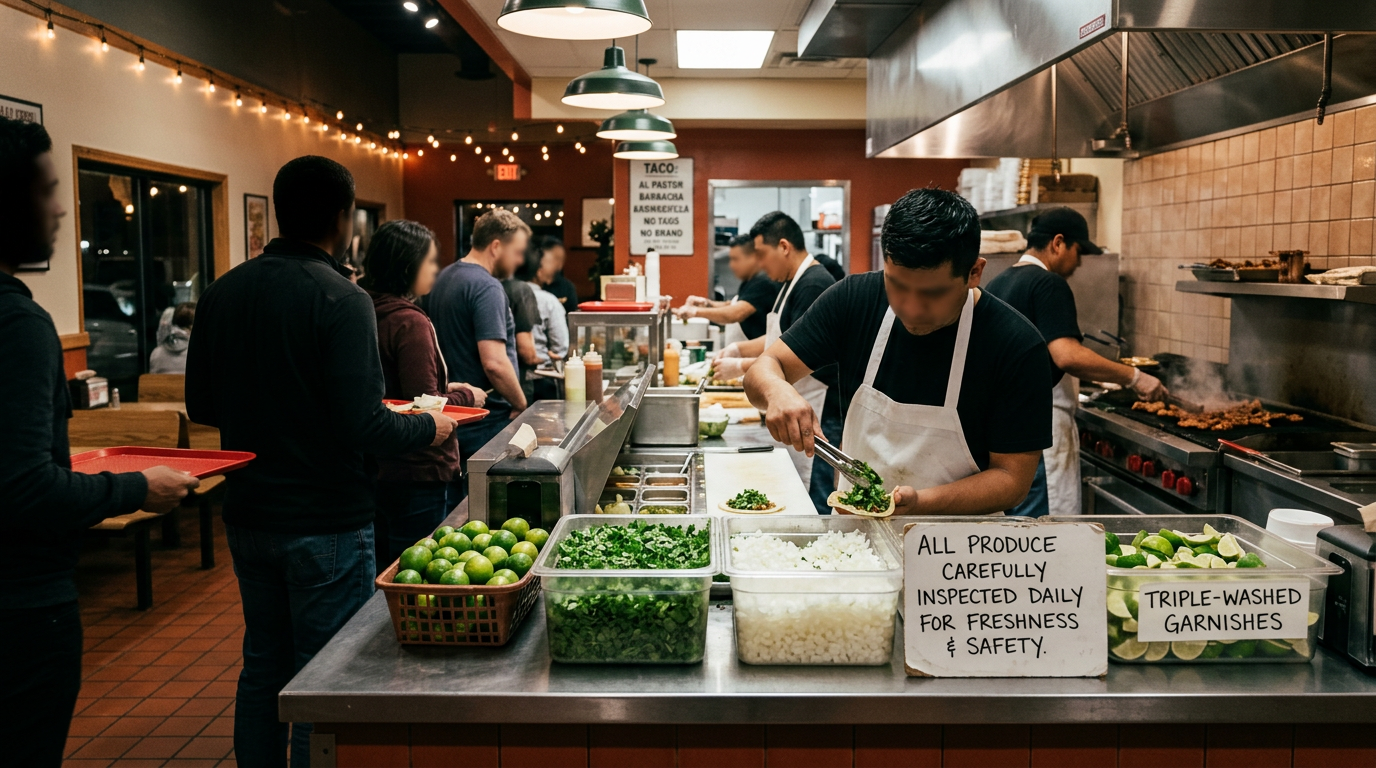
The culinary landscape of Texas is currently facing a unique challenge as public health concerns regarding cyclosporiasis influence how diners approach fresh garnishes. Cyclosporiasis is a gastrointestinal illness caused by a microscopic parasite often linked to fresh produce that has been contaminated during the growing, harvesting, or packaging process. Historically, Texas has seen seasonal spikes in these cases, often peaking during the summer months when importation and consumption of raw vegetables are at their highest. Unlike bacteria that can be killed with heat, this parasite is typically associated with items served raw, such as the cilantro, onions, and tomatoes that define the Texas taco experience. Despite the recurring nature of these health advisories, the bond between Texans and their local taquerias remains remarkably steadfast. Recent data suggests that while health officials issue warnings to be cautious of uncooked produce, the actual impact on foot traffic at local eateries has been negligible. Taqueria owners across the state report that customers are generally aware of the risks but are unwilling to sacrifice the traditional flavor profiles of their favorite dishes. This trend highlights a significant cultural phenomenon where the communal and culinary value of the Texas taco outweighs the perceived statistical risk of a foodborne parasite. The resilience of these small businesses is a testament to the deep-seated nature of taco culture in the Lone Star State, where fresh ingredients are considered non-negotiable despite the occasional seasonal health alert.
Texas relevance
Texas serves as a primary hub for international produce trade, making it a critical frontline for monitoring foodborne illnesses like cyclosporiasis. The state's proximity to major agricultural exporters means that Texas health departments are often the first to detect patterns in parasite transmission. Furthermore, the economic impact is localized; with thousands of family-owned taquerias operating in cities like San Antonio, Houston, and Dallas, any shift in consumer confidence regarding fresh cilantro or onions could have multi-million dollar repercussions for the state's small business economy. Understanding the intersection of public health and local dining habits is essential for maintaining both the safety and the economic vitality of the Texas food sector.
Understanding the Cyclospora Parasite
Cyclospora cayetanensis is a one-celled parasite that is too small to be seen without a microscope. It causes an intestinal infection known as cyclosporiasis, which is characterized by symptoms such as watery diarrhea, loss of appetite, weight loss, cramping, and nausea. Unlike many other foodborne pathogens, Cyclospora is not spread directly from one person to another. Instead, the parasite needs time in the environment—usually days to weeks—after being passed in a bowel movement to become infectious for another person.
In the context of the Texas food supply, the parasite is most frequently found on fresh produce that is consumed raw. Because the parasite is sticky, it can be difficult to remove simply by rinsing with water. This makes it particularly problematic for items like cilantro, where the intricate leaves provide numerous hiding spots for microscopic organisms. Health officials often recommend that consumers and restaurants alike pay extra attention to sourcing and ensure that produce is thoroughly scrubbed and stored at proper temperatures to prevent further complications.
Resilience of the Texas Taqueria Industry
Despite the headlines warning of potential contamination, the Texas taco industry has shown incredible durability. Interviews with shop owners indicate that the 'business as usual' mentality prevails among the regulars who frequent these establishments. While some larger corporate chains might see a dip in sales due to centralized supply chain fears, the independent taqueria often benefits from a perception of freshness and hyper-local sourcing. Many customers view these shops as pillars of the community, trusting them more than they trust pre-packaged salads found in grocery stores.
Furthermore, the taco is more than just a meal in Texas; it is a social ritual. The atmosphere of a crowded taco stand or a bustling sit-down restaurant is part of the draw. This social gravity seems to pull customers back even when the news is full of reports regarding stomach ailments. Owners have noticed that very few people actually request their tacos 'sin cilantro' or 'sin cebolla' because of the news, suggesting that the desire for a complete flavor profile remains the primary driver of consumer behavior.
The Role of Fresh Garnishes in Authentic Tacos
To understand why Texans are willing to brave these risks, one must look at the anatomy of the Texas taco. The combination of slow-cooked meats, rendered fats, and corn tortillas requires the acidic and sharp contrast provided by raw white onion and fresh cilantro. Without these elements, the dish loses its characteristic balance. Salsa, which often contains raw peppers and tomatoes, adds the necessary heat and moisture that completes the experience. To remove these items is to effectively change the dish into something entirely different.
This culinary necessity creates a dilemma for the health-conscious diner. While cooking vegetables to a high temperature effectively kills most parasites, the texture and flavor of a cooked radish or a sautéed cilantro leaf do not provide the same satisfaction as their raw counterparts. Consequently, the Texas palate has collectively decided that the risk of cyclosporiasis is a manageable one. This choice is reinforced by the fact that for many healthy adults, the infection is treatable with antibiotics, reducing the fear of long-term health consequences.
Supply Chain Monitoring and Safety Protocols
State health agencies in Texas work in conjunction with the FDA to track the origin of outbreaks. When a cluster of cases is identified, investigators look back at the supply chain to find a common distributor or farm. Over the years, this has led to improved standards in agricultural runoff management and worker hygiene in regions that export heavily to Texas. However, the complexity of the global food system means that tracing a single bunch of cilantro back to a specific field can be a logistical nightmare.
For the restaurant owner, safety protocols involve more than just washing. It includes selecting reputable vendors and maintaining a clean preparation environment. Some high-end taquerias have even moved toward sourcing from hydroponic farms or local organic growers within Texas to minimize the number of hands their produce touches. While this increases the cost of the taco, it provides a layer of security that many high-end diners are willing to pay for, creating a two-tiered market of safety and tradition.
Economic Implications for Small Businesses
Small businesses are the backbone of the Texas economy, and taquerias represent a significant portion of the small-scale retail and hospitality sector. A widespread fear of produce could theoretically devastate these businesses, which operate on thin margins. Fortunately, the current trend suggests that the 'scare' factor has not translated into a financial downturn. Instead, it has prompted a conversation about the importance of supporting local businesses that prioritize quality and cleanliness.
If a significant downturn were to occur, it would ripple through the economy, affecting everyone from the dishwashers to the specialized importers who bring in Mexican spices. The fact that Texans continue to eat out demonstrates a robust economic confidence. It also suggests that public health messaging is being received with a grain of salt—or perhaps a squeeze of lime—as residents weigh the advice of experts against their daily habits and preferences.
Comparative Analysis of Foodborne Illnesses
When compared to other foodborne threats like E. coli or Salmonella, Cyclospora is often viewed by the public as less severe, although it can be quite debilitating for those with weakened immune systems. The frequency of these summer outbreaks has led to a certain level of 'outbreak fatigue' among the Texas population. People become accustomed to hearing that certain vegetables might carry risks and eventually stop changing their behavior in response to every headline.
This fatigue is a challenge for public health officials who need the public to remain vigilant. If people stop paying attention to warnings, they might miss a notice about a truly life-threatening contamination event. The balance between providing necessary health information and causing unnecessary panic is delicate, especially in a state where the food culture is so deeply tied to the very ingredients being called into question.
Analysis
OPINION: The continued success of Texas taquerias during health scares reveals a fascinating level of consumer trust in local vendors over broad industrial supply chains. While federal and state agencies provide necessary oversight, the average Texan seems to believe that their neighborhood 'taquero' is sourcing and cleaning produce with enough care to mitigate risks. This loyalty suggests that for many, the risk of a temporary illness is a fair trade-off for the cultural authenticity of a fully dressed street taco. It also places a heavy burden of responsibility on small business owners to maintain rigorous washing protocols, as a single high-profile outbreak at a specific location could be far more damaging than a general statewide health advisory.
Source attribution
This story was reported using a public release from the Texas Monthly. Keep TX Red rewrote the coverage independently and links to the official statement for verification.
Frequently Asked Questions
- What exactly is cyclosporiasis and how do you get it?
- Cyclosporiasis is an intestinal illness caused by the parasite Cyclospora cayetanensis. You can contract it by consuming food or water contaminated with the parasite. In Texas, it is most commonly associated with fresh produce that is eaten raw, as the parasite is not easily washed off and is not killed without cooking.
- Why are taquerias specifically mentioned in these health alerts?
- Taquerias are highlighted because their primary dishes rely heavily on raw garnishes like cilantro and onions, which are high-risk items for this particular parasite. Because these ingredients are rarely cooked, they serve as a common vehicle for the parasite if the supply chain has been contaminated.
- Should I stop eating tacos until the outbreak is over?
- Health officials generally advise caution rather than a total boycott. Consumers are encouraged to wash produce thoroughly, though they note that washing isn't always 100% effective. Most healthy individuals recover from the infection naturally or with the help of specific antibiotics prescribed by a doctor.
Official Sources
Take the next step
Browse the Newsroom →Read more about Keep Texas Red → Our full guide to what Keep Texas Red means and why Texans support it.
Related Articles



Get Texas updates delivered weekly.
Independent Texas reporting on politics, policy, and daily life. One email a week. Unsubscribe anytime.
Keep TX Red Newsroom
The Keep Texas Red Editorial Staff produces nonpartisan explainers, policy breakdowns, and educational resources to help Texans understand how their government works. All content is reviewed for accuracy and updated regularly.
About Keep TX Red →