Taco Bell Cyclospora Outbreak: FDA Investigates Contaminated Shredded Lettuce Across Texas Locations
FDA links shredded lettuce at Texas Taco Bell locations to a Cyclospora outbreak. Learn the symptoms and how to stay safe during the investigation.
Editorial disclaimer: Opinions and analysis on Keep TX Red are editorial content — not statements of fact. See our editorial standards.
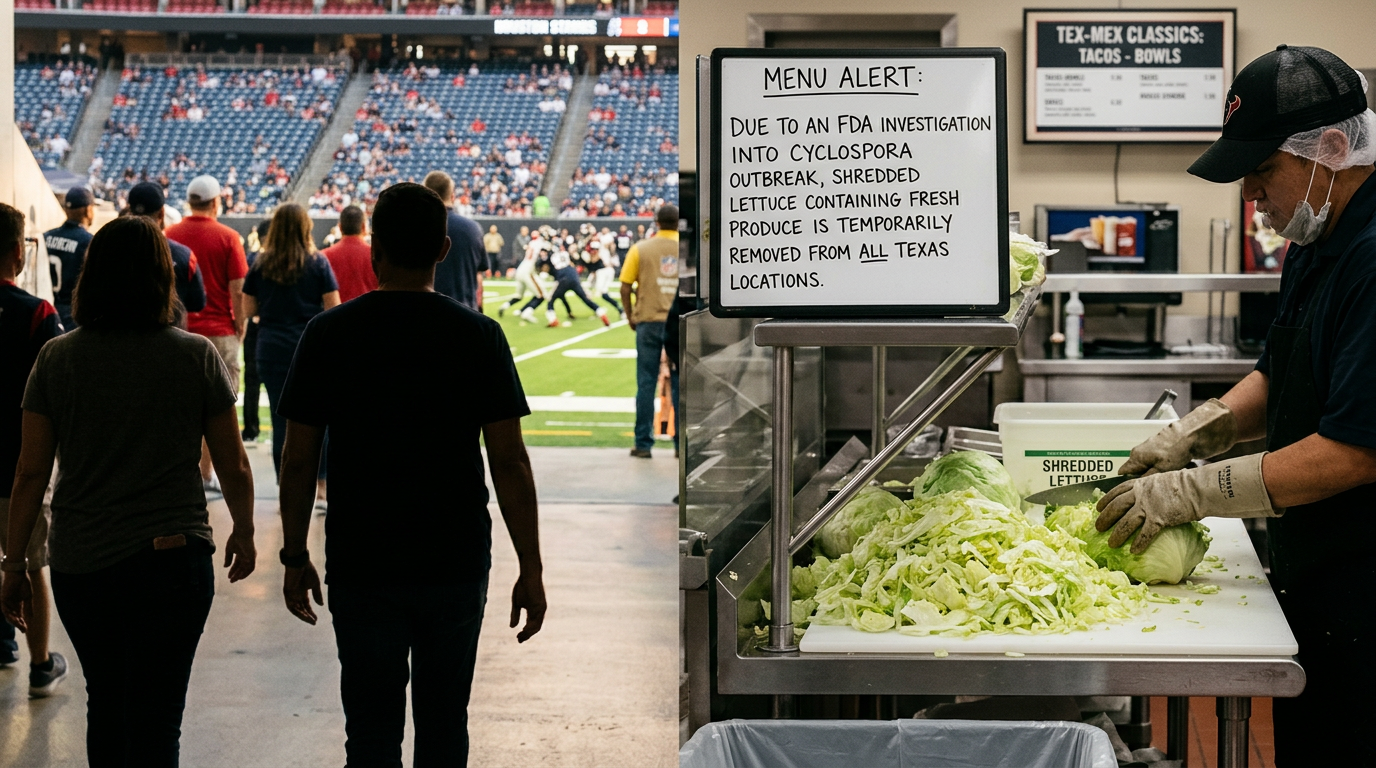
Health authorities have issued a significant warning regarding a multi-state parasitic outbreak linked to fresh produce served at a popular fast-food chain. Federal investigators with the Food and Drug Administration (FDA), alongside the Centers for Disease Control and Prevention (CDC), have identified shredded lettuce served at select Taco Bell restaurants as the primary vehicle for a Cyclospora outbreak. This development comes after several weeks of reported illnesses where patients across various states, including Texas, exhibited severe gastrointestinal distress. Historically, Texas has frequently been at the forefront of Cyclospora management, often seeing surges during summer months when imported produce is at its peak distribution. In previous years, similar outbreaks have been linked to basil, cilantro, and salad mixes, leading to enhanced state-level surveillance protocols. The current investigation remains fluid as officials work to trace the specific farm or packing facility responsible for the contaminated lettuce. While Taco Bell has reportedly cooperated with federal agencies and moved to secure a different supply chain for affected regions, the lag time between consumption and symptom onset means more cases may still be reported. The FDA is currently emphasizing that the risk pertains to specific batches of shredded lettuce and not necessarily the entire menu, yet the widespread nature of the chain’s footprint makes this a major concern for public health infrastructure across the southern United States. Families who have dined at these establishments in the past month are encouraged to remain vigilant for symptoms that often mirror more common stomach viruses but require specific medical treatment.
Texas relevance
Texas serves as a critical hub for the restaurant industry, and Taco Bell maintains hundreds of locations from the Rio Grande Valley to the Panhandle. This outbreak is particularly relevant to Texans because the state's Department of State Health Services (DSHS) has historically reported some of the highest Cyclospora case counts in the nation due to its climate and proximity to international trade routes. Local health departments in major metros like Houston, Dallas, and San Antonio are currently on high alert, coordinating with federal partners to ensure that any local clusters are identified quickly. Because Texans consume a high volume of fresh produce year-round, the integrity of the leafy green supply chain is a matter of statewide economic and physical security. Residents should be aware that the incubation period for this parasite can be up to two weeks, meaning a meal eaten during a summer road trip through the Lone Star State could result in an illness that doesn't manifest until much later.
Understanding the Cyclospora Parasite
Cyclospora cayetanensis is a microscopic parasite that causes an intestinal infection known as cyclosporiasis. Unlike bacterial infections that might resolve in a few days, this parasite is known for its persistence. One of the most challenging aspects of this specific outbreak is the way the parasite is transmitted. It is typically spread when people ingest food or water contaminated with feces, often occurring at the farm level through irrigation water or poor field sanitation practices.
For Texans, it is important to note that this parasite is not spread directly from person to person. You cannot catch it simply by being near someone who is sick. Instead, the contamination happens at the source. This makes the FDA's investigation into the shredded lettuce supply chain critical, as identifying the exact point of contamination is the only way to prevent future waves of the illness in other restaurant chains or grocery stores.
Identifying the Symptoms of Infection
The symptoms of cyclosporiasis can be particularly grueling and may last from a few days to a month or longer if left untreated. The most common sign is watery diarrhea, which is often frequent and explosive. Other significant symptoms include loss of appetite, substantial weight loss, stomach cramps or pain, bloating, increased gas, nausea, and fatigue. Some patients also report low-grade fevers and flu-like aches, which can lead to misdiagnosis during the early stages of the illness.
Medical professionals in Texas are being advised to specifically test for Cyclospora when patients present with these symptoms, as standard stool tests often miss the parasite. Because the symptoms can appear to go away and then return, many people mistakenly believe they have a recurring stomach bug. This 'relapsing' nature of the infection is a hallmark of the parasite and can lead to severe dehydration if the patient does not seek medical intervention.
The Supply Chain Investigation
The FDA is diligently working to identify the specific suppliers that provided shredded lettuce to the affected Taco Bell locations. This process involves 'traceback' investigations, where agents look at shipping manifests and invoices to find the common denominator among different restaurants reporting illnesses. Shredded lettuce is particularly difficult to trace because it is often processed in large facilities where produce from multiple farms is mixed together before being packaged.
In many cases, the lettuce used in Texas restaurants during the summer months is imported from international growers. This adds a layer of complexity to the investigation, as federal inspectors must coordinate with foreign health officials. Taco Bell has stated they have removed the suspect lettuce from their service line in the impacted regions, replacing it with fresh stock from different sources to ensure customer safety during the ongoing probe.
Impact on Texas Public Health Systems
The Texas Department of State Health Services (DSHS) plays a vital role in managing these outbreaks. When a Texan tests positive for Cyclospora, local health officials conduct interviews to determine what they ate in the weeks prior to falling ill. This 'shoe-leather epidemiology' is what eventually led investigators to the shredded lettuce at Taco Bell. The sheer size of Texas means that these state-wide efforts require significant coordination between rural counties and urban centers.
Texas has seen an upward trend in Cyclospora cases over the last decade. This has led to a more permanent infrastructure for foodborne illness tracking within the state. By maintaining a localized focus, Texas can often identify trends faster than national agencies. This current outbreak will likely serve as a case study for future improvements in how the state monitors fast-food supply chains that cross international borders.
Steps for Affected Consumers
If you believe you have consumed contaminated lettuce at a Taco Bell in Texas and are experiencing symptoms, the first priority is seeking medical care. Provide your doctor with a detailed history of when and where you ate, specifically mentioning the current FDA investigation into Cyclospora. Treatment usually involves a specific antibiotic combination, as typical anti-diarrheal medications are often ineffective against this particular parasite.
Furthermore, consumers should keep receipts or digital transaction records from their restaurant visits. This documentation is not only helpful for personal records but can also assist health investigators in pinpointing the exact dates of contamination. Practice good hygiene and ensure all fresh produce at home is washed thoroughly, although it is important to note that Cyclospora can be very difficult to wash off completely if it is embedded in the leaves of the lettuce.
The Role of Corporate Responsibility
Large-scale food providers like Taco Bell hold a significant responsibility to their customers. When an outbreak occurs, corporate transparency is essential. The company is currently working with the FDA to ensure that all potentially contaminated products have been purged from their inventory. This includes not just the lettuce used on tacos but also in salads, burritos, and any other menu items that feature fresh shredded greens.
In the wake of this news, many industry analysts expect a push for better labeling and tracking technology in the produce industry. Technologies such as blockchain are being explored to allow for near-instantaneous tracing of leafy greens back to the specific row of the farm where they were harvested. For Texas consumers, these advancements could mean shorter durations for food recalls and a significantly lower risk of widespread illness in the future.
Analysis
While the FDA's quick identification of the source is a positive step for consumer safety, this incident highlights ongoing vulnerabilities in the 'farm-to-table' tracking systems for leafy greens. For a massive corporate entity like Taco Bell, a localized failure in a supplier's sanitation protocol can have massive reputational and legal consequences. From an editorial perspective, this serves as a reminder of the importance of rigorous state-level inspections and the need for Texas to maintain its robust independent health monitoring systems. Relying solely on federal oversight can sometimes result in delays that put Texas families at risk. The 'Keep TX Red' perspective emphasizes personal responsibility and the right to information; consumers deserve transparency regarding where their food is sourced, especially when international supply chains are involved. Moving forward, expect to see Texas legislators potentially revisit food safety standards to protect the state’s massive consumer base from recurring seasonal parasitic threats.
Source attribution
This story was reported using a public release from the Texas Food Stories (Google News). Keep TX Red rewrote the coverage independently and links to the official statement for verification.
Frequently Asked Questions
- What should I do if I ate at Taco Bell recently?
- If you are not experiencing symptoms, there is no need for medical action. However, if you develop watery diarrhea, fatigue, or stomach cramps within 2 to 14 days of eating there, you should contact a healthcare provider and mention the Cyclospora outbreak.
- Can I get Cyclospora from other people?
- No, Cyclospora is generally not transmitted directly from person to person. It is acquired by consuming food or water that has been contaminated with the parasite, typically at the agricultural or processing stage.
- Is the lettuce at all Taco Bells contaminated?
- The FDA investigation suggests the issue is linked to certain batches of shredded lettuce at select locations. The chain has already taken steps to replace the suspect product, but the investigation is ongoing to determine the full scope of the affected restaurants.
- Why is this outbreak particularly relevant to Texas?
- Texas frequently reports high numbers of Cyclospora cases during the summer. Our state's food supply chain is vast and involves significant amounts of imported produce, making us more susceptible to these types of parasitic incidents.
Official Sources
Take the next step
Browse the Newsroom →Read more about Keep Texas Red → Our full guide to what Keep Texas Red means and why Texans support it.
Related Articles



Get Texas updates delivered weekly.
Independent Texas reporting on politics, policy, and daily life. One email a week. Unsubscribe anytime.
Keep TX Red Newsroom
The Keep Texas Red Editorial Staff produces nonpartisan explainers, policy breakdowns, and educational resources to help Texans understand how their government works. All content is reviewed for accuracy and updated regularly.
About Keep TX Red →