Saving the Salt Marshes: The Multi-Year Campaign to Protect Galveston's West End Coastal Heritage
A dedicated coalition of conservationists is working to preserve the wild marshlands of Galveston’s West End against rising development pressures.
Editorial disclaimer: Opinions and analysis on Keep TX Red are editorial content — not statements of fact. See our editorial standards.
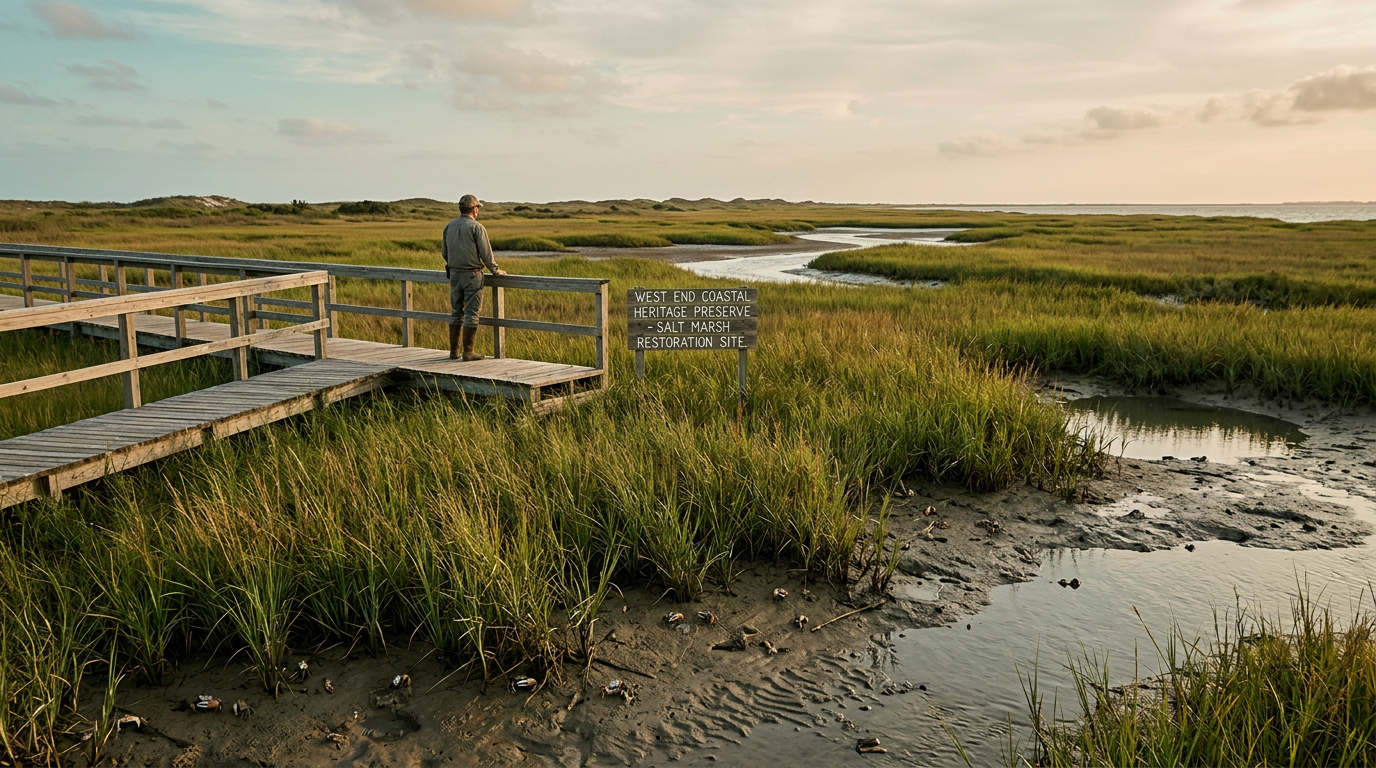
The struggle to keep Galveston Island 'wild' represents a generational effort to balance the booming demands of Texas coastal development with the biological necessity of functional ecosystems. Historically, Galveston has served as the primary gateway for Texas maritime commerce and tourism, but the rapid expansion of residential and commercial structures on the West End has significantly altered the island's natural flood defenses. Recent conservation efforts have centered on the Coastal Heritage Preserve, a massive stretch of marsh and prairie that stands as a remnant of the island’s original topography. This area provides a stark contrast to the dense vacation rentals and seawalls that dominate much of the municipality. Protecting this land involves a complex network of non-profits, state agencies, and private donors who view the restoration of native habitats as vital to the long-term survival of the island itself. By securing these land corridors, conservationists aim to ensure that the ecological heritage of the Upper Texas Coast remains intact for future generations of residents and visitors alike.
Texas relevance
As the most visited coastal destination in Texas, Galveston's environmental health directly impacts the state's multi-billion dollar tourism economy and the safety of residents along the Gulf Coast. The preservation of the West End is particularly critical for Houston-area residents who rely on the island's wetlands to serve as natural buffers during the increasingly frequent hurricane and storm surge events. Texas has a long history of private land stewardship, but the unique challenges of the Gulf Coast—where land is literally shifting due to erosion and subsidence—require a specific focus on coastal prairies. This preservation effort serves as a template for other Texas coastal communities, from Corpus Christi to Port Arthur, that are currently grappling with the tension between urban sprawl and the maintenance of essential natural barriers.
The Biological Significance of the West End
The West End of Galveston Island is characterized by a mosaic of salt marshes, freshwater ponds, and coastal automotive-resistant prairies. Unlike the built-up eastern regions of the island, these areas provide critical stopover points for millions of migratory birds traveling the Central Flyway. Without these specific habitats, many species would lack the necessary resources to survive their trans-continental journeys, which in turn would impact the broader ecological health of the entire state.
Moreover, these wetlands act as a natural water filtration system for Galveston Bay. As runoff moves toward the ocean, the vegetation and soil of the preserve trap pollutants and sediment, ensuring that the water remains clear enough to support the local seafood industry. The health of Texas shrimp, oysters, and blue crabs is directly tied to the integrity of these coastal nurseries, making conservation a matter of economic security for local fishermen and restaurants.
The diversity of the site also includes inland reaches that support native grasses once found across the entire Gulf Coast. These grasses are particularly resilient to the high-salinity environment, providing a stabilizing force for the sandy soil. Without this root structure, the island becomes much more susceptible to the erosive forces of the Gulf of Mexico, which can reclaim hundreds of feet of shoreline in a single major weather event.
Challenges of Coastal Development Pressures
Galveston faces an incredibly high demand for vacation housing, with many developers looking toward the undeveloped West End as the last frontier for beachfront expansion. The economic allure of high-value real estate creates a situation where conservationists must move quickly to secure parcels before they are subdivided into residential lots. This pressure has led to a dramatic increase in land prices, making the job of land trusts significantly more difficult and expensive.
In addition to the immediate threat of construction, the infrastructure required to support new developments—such as roads, drainage systems, and utility lines—often fragments existing habitats. Even small-scale development can disrupt the flow of water across the island, leading to unintended flooding in older neighborhoods. This creates a ripple effect where the loss of one five-acre plot of marsh can lead to increased vulnerability for hundreds of surrounding homes.
The constant tension between the tax revenue generated by new developments and the long-term protection of the environment is a primary debate for Galveston city officials. While short-term gains are visible in property tax assessments, the long-term costs of shoreline restoration and disaster recovery often outweigh those benefits. This has prompted a more serious discussion about the value of 'green infrastructure' as a cost-saving measure for the city's budget.
The Role of the Artist Boat and Local Coalitions
A central figure in the push to save the West End has been the Artist Boat, a non-profit organization dedicated to coastal conservation through both education and land acquisition. By utilizing a unique blend of scientific outreach and artistic engagement, the group has successfully raised public awareness about the fragility of the coastal ecosystem. Their flagship project, the Coastal Heritage Preserve, currently encompasses hundreds of acres of protected land that will never be developed.
The organization’s strategy involves purchasing land at market value to ensure it remains a sanctuary forever. This requires a diverse funding stream, including federal grants from the North American Wetlands Conservation Act, state funds from Texas Parks and Wildlife, and significant contributions from private individuals. This collaborative funding model is essential in a state where public funding for land acquisition is often limited and highly competitive.
Beyond just buying land, the coalition focuses on restoration. Volunteers and staff work to remove invasive species and replant native flora that has been lost to previous cattle grazing or construction. These efforts are not merely aesthetic; they are designed to return the land to its peak functional state, maximizing its ability to absorb storm surges and provide habitat for declining species like the Mottled Duck.
History of Land Use on Galveston Island
Historically, the western portions of Galveston were used primarily for ranching and agriculture, keeping the land relatively open compared to the bustling downtown area. For decades, the remoteness of the West End acted as a natural barrier to development. However, the completion of the San Luis Pass Bridge and the expansion of Highway 45 made the area more accessible to weekend travelers from Houston and beyond, sparking the modern development boom.
Before the modern conservation movement took hold, much of the island's interior was viewed as 'wasteland'—swamps and marshes that were only valuable if they could be drained and filled. This mindset led to the destruction of significant portions of the island’s natural drainage capacity. It wasn't until the catastrophic impacts of storms like Hurricane Ike in 2008 that many residents and policymakers began to realize the protective value of these 'wastelands.'
The shift in perception has been gradual but profound. Today, there is a burgeoning historical and environmental literacy among locals who recognize that the island’s future is tied to its past. By looking back at how the island functioned before major human intervention, planners are finding better ways to integrate human activity with the natural processes that have shaped the barrier island for millennia.
The Future of Texas Coastal Conservation
Looking forward, the success of the Coastal Heritage Preserve provides a blueprint for other endangered areas along the Texas coast. As sea levels continue to fluctuate and the coastline retreats, the 'migration' of marshes becomes a critical issue. Conservationists are now looking to protect upland areas so that as the water rises, the marshes have a place to move, rather than being squeezed against sea walls and disappearing altogether.
This forward-thinking strategy requires long-term planning that spans decades rather than election cycles. It also necessitates a strong partnership with the Texas General Land Office (GLO), which manages the state’s submerged lands. Coordination between state-managed waters and privately-managed preserves is the only way to ensure a seamless ecosystem that can withstand the physical stresses of the coming century.
The ultimate goal is to create a contiguous corridor of protected land that stretches across the island. Such a corridor would provide a permanent break in development, ensuring that a portion of Galveston remains wild and accessible for public education and low-impact recreation. This balance of use and protection is the hallmark of the modern Texas conservationist, who seeks to enjoy the land today while guarding it for the Texans of tomorrow.
Analysis
The movement to protect Galveston's wild spaces is less about stopping growth and more about ensuring that the growth which does occur is sustainable. From a policy perspective, the state of Texas has often leaned toward private property rights, but in cases like the Coastal Heritage Preserve, we see a growing realization that some land is more valuable to the public in its undeveloped state. This project represents a shift toward market-based conservation, where land trusts use real estate mechanisms to compete with developers, effectively 'buying' the environment's future. It is a pragmatic approach that fits the Texas model of conservation through ownership rather than just through restrictive zoning or government mandates.
Source attribution
This story was reported using a public release from the Texas Monthly. Keep TX Red rewrote the coverage independently and links to the official statement for verification.
Frequently Asked Questions
- What is the Coastal Heritage Preserve?
- The Coastal Heritage Preserve is a large-scale conservation area on the West End of Galveston Island managed by the Artist Boat non-profit. It consists of marshes, prairies, and wetlands that are permanently protected from commercial or residential development to maintain the island's natural ecosystem.
- Why is the West End of Galveston important for conservation?
- The West End contains some of the last remaining untouched coastal prairies and salt marshes on the island. These areas act as a natural defense against storm surges, filter pollutants from the water entering Galveston Bay, and provide a necessary habitat for millions of migratory birds.
- How is the land for these preserves acquired?
- Land is typically acquired through a combination of federal and state grants, such as those from the Texas Parks and Wildlife Department, and private donations. The organizations involved purchase the land at market value from willing sellers to ensure it is legally protected through land trusts.
- Can the public visit these wild areas of Galveston?
- Yes, many of the conserved areas offer public access for educational tours, kayaking, and birdwatching. Groups like the Artist Boat provide guided eco-tours designed to teach visitors about the ecological importance of the Texas Gulf Coast while providing recreational opportunities.
Official Sources
Take the next step
Browse the Newsroom →Read more about Keep Texas Red → Our full guide to what Keep Texas Red means and why Texans support it.
Related Articles
Get Texas updates delivered weekly.
Independent Texas reporting on politics, policy, and daily life. One email a week. Unsubscribe anytime.
Keep TX Red Newsroom
The Keep Texas Red Editorial Staff produces nonpartisan explainers, policy breakdowns, and educational resources to help Texans understand how their government works. All content is reviewed for accuracy and updated regularly.
About Keep TX Red →