Renowned Filmmaker Wes Anderson Returns to Houston for Historic Theater Preservation Initiative
Wes Anderson returns to his Houston roots to support local independent cinema and preserve the historic Garden Oaks theater location.
Editorial disclaimer: Opinions and analysis on Keep TX Red are editorial content — not statements of fact. See our editorial standards.
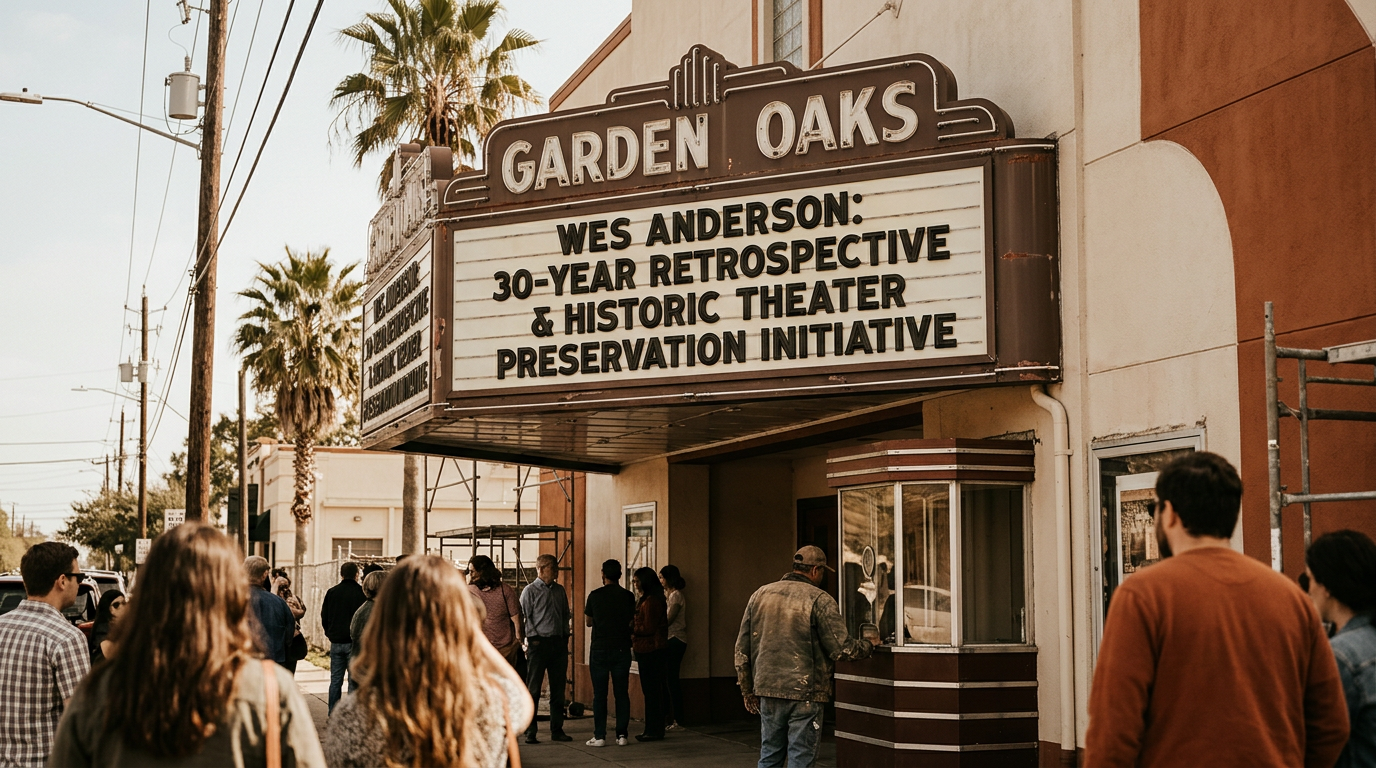
Acclaimed director Wes Anderson is set to return to his home city of Houston, Texas, for a milestone event celebrating both his decades-long career and the preservation of local cinematic history. The event, structured as a thirty-year retrospective of Anderson's contributions to the film industry, aims to secure the future of independent theater spaces within the city's changing urban landscape. Anderson, who rose to international fame with a signature aesthetic defined by symmetry and meticulous color palettes, has long been a proponent of physical film infrastructure. The upcoming homecoming serves as a primary fundraiser for the Garden Oaks theater project, a site intended to serve as a hub for both classic screenings and new independent works. Historically, Houston has served as more than just a birthplace for Anderson; it provided the literal backdrop for his early masterpieces like 'Rushmore,' which was filmed at his own alma mater, St. John’s School. This deep connection to the local environment has influenced his cinematic perspective, blending Texas-sized ambition with a unique, stylized narrative voice. The fundraiser highlights a growing trend in the state where high-profile artists return to their roots to protect the cultural cornerstones that spurred their early creativity.
Texas relevance
Texas is currently experiencing a rapid shift in its urban development, often at the expense of historic landmarks that defined the mid-century aesthetic of cities like Houston. This event underscores the importance of the Texas film industry and the preservation of local landmarks like the Garden Oaks theater, which represents the architectural and cultural history of Harris County. For Texans, Anderson is not just a global director but a home-grown success story who frequently utilizes Texas locations to ground his whimsical narratives. By returning to Houston to lend his celebrity to this cause, Anderson highlights the critical need for private or artist-led intervention in preserving the state's cultural identity amidst a period of unprecedented real estate growth. The success of this initiative could serve as a model for other Texas cities, such as Austin or San Antonio, where iconic theaters face similar pressures from modern development and changing consumer habits in the digital age.
The Evolution of Anderson’s Houston Connection
Wes Anderson's relationship with Houston is foundational to his entire body of work. Born and raised in the city, Anderson attended St. John's School, a location that would later serve as the primary setting for his 1998 breakout film. This deep-seated familiarity with Houston's private and public spaces allowed him to capture a specific version of the city that felt both timeless and specific to the Texas landscape. The upcoming homecoming event is not just a career milestone but a full-circle moment where the physical geography of the city is once again the focus of his attention.
Unlike many directors who leave their hometowns and never look back, Anderson has consistently maintained ties to his Texas roots. His early collaborations with the Wilson brothers, who are also deeply embedded in the Texas creative scene, highlight a regional synergy that launched a new wave of American indie cinema in the 1990s. The Houston homecoming is designed to honor this legacy while ensuring that the city remains a viable place for future filmmakers to screen their work and find inspiration in a communal, theatrical setting.
Preserving the Garden Oaks Cinematic Legacy
The primary beneficiary of Anderson’s return, the Garden Oaks theater project, represents a vital piece of Houston’s mid-20th-century architecture. As older buildings in the city are frequently demolished to make way for townhomes and modern commercial complexes, the push to save this theater is a stand against the erasure of local history. The theater is envisioned as an arthouse cinema, a genre of venue that has become increasingly rare in the sprawling metropolis of Houston compared to its abundance in the 1970s and 80s.
Supporting a theater like Garden Oaks is about more than just nostalgia; it is about providing a space for a specific type of cinematic experience that digital screens cannot replicate. Anderson has often spoken about the importance of the theatrical environment—the shared silence, the specific lighting, and the physical presence of film. By focusing his fundraising efforts here, he is making a statement about the necessity of preserving the 'temples of cinema' in the fourth-largest city in the United States, which often struggles with its own historical footprint.
Economic Impact of Film Tourism in Texas
High-profile events like this homecoming also bring significant attention to the economic potential of the film industry in Texas. While most major productions are currently lured to states with high tax incentives, the presence of legendary directors like Anderson reminds policymakers and local leaders that Texas is a fertile ground for creative talent. Events that draw visitors and donors to historic districts like Garden Oaks provide a secondary economic boost to surrounding local businesses, including restaurants and retail shops.
Furthermore, the preservation of historic theaters often leads to higher property values and increased interest in neighborhood revitalization. When an iconic figure like Wes Anderson endorses a local project, it elevates the status of the entire district. This can shift the narrative of a neighborhood from one of decline to one of cultural prestige, attracting further investment and ensuring that the area remains a vibrant part of the Houston economy for decades to come.
Impact on the Next Generation of Texas Filmmakers
One of the stated goals of the thirty-year celebration and the theater restoration is to provide a springboard for young Texas artists. Anderson’s path from a Houston student to an Academy Award-winning director is a powerful narrative for aspiring creators throughout the state. By establishing a permanent home for independent film in Houston, this project ensures that young people have access to the same kinds of formative cinematic experiences that Anderson himself had while growing up in the city.
The venue is expected to host workshops, local premieres, and classic film series that will serve as an educational resource. In a state that has produced talents as diverse as Richard Linklater and Robert Rodriguez, maintaining infrastructure for the arts is a critical component of sustaining the 'Texas Renaissance' in film. The Garden Oaks project will likely become a cornerstone for this educational outreach, providing a tangible link between the successes of the past and the possibilities for the future.
A Growing Trend of Artistic Philanthropy
Anderson’s involvement in the Houston theater scene mirrors similar actions taken by other high-profile Texans. Whether it is George Strait supporting rural communities or Matthew McConaughey advocating for state-level initiatives, there is a distinct tradition of Texas celebrities using their platforms for the betterment of their home state. This specific initiative is unique in its focus on the urban architectural fabric of Houston and the specific needs of the local film community.
This trend suggests a shift toward private-sector leadership in the arts. As public funding for cultural projects becomes more competitive, the role of the individual donor and the community-led fundraiser becomes paramount. Anderson’s fundraiser is a masterclass in how to leverage a professional anniversary—the thirty-year mark—to create long-term social and cultural value that will outlast the event itself. It sets a bar for how corporate and individual branding can be utilized to protect the soul of a city.
The Future of Independent Cinema in the Digital Era
The ultimate challenge for the Garden Oaks theater will be maintaining its relevance in an era defined by streaming and home theaters. However, proponents argue that the very saturation of digital content makes physical spaces more valuable. The 'eventization' of movie-going—where a trip to the theater is a unique social experience rather than just consuming a product—is the key to survival. Wes Anderson’s films, with their heavy emphasis on physical props and tactile environments, are the perfect match for this philosophy.
Looking forward, the success of the Houston project will depend on sustained community engagement. The homecoming event provides the initial capital and publicity, but the long-term goal is to build a membership base that views the theater as a vital neighborhood asset. If successful, the Garden Oaks theater will join the ranks of other legendary Texas independent venues, proving that there is still a robust appetite for shared cinematic experiences in the heart of Texas's largest city.
Analysis
While Wes Anderson is often associated with the high-brow international film circuit, his return to Houston signals a practical concern for the 'middle-class' of movie theaters. The rise of streaming services has disproportionately harmed small, independent theaters that lack the scale of major national chains. By framing this event as a celebration of thirty years in film, Anderson is leveraging his brand to bridge the gap between global artistic success and grassroots infrastructure needs. This is a move that resonates with the broader Texas value of self-reliance and community-funded preservation. It suggests that the future of Texas's cultural landmarks may not lie in government subsidies, but in the hands of the successful individuals who once walked those halls. This creates a powerful precedent for the 'giving back' culture among the Texas creative diaspora.
Source attribution
This story was reported using a public release from the Texas Standard. Keep TX Red rewrote the coverage independently and links to the official statement for verification.
Frequently Asked Questions
- Why is Wes Anderson returning to Houston for this specific project?
- Wes Anderson is a Houston native, and his early career was deeply shaped by the city's environment. He is returning to use his 30th-anniversary milestone as a platform to save the Garden Oaks theater, ensuring that the city's cinematic history is preserved for future generations.
- What is the significance of the Garden Oaks theater?
- The Garden Oaks theater is a historic venue in Houston that represents the city's mid-century architectural style. It is being reimagined as an arthouse cinema to provide a venue for independent and classic films that are often overlooked by larger multiplexes.
- How has Houston influenced Wes Anderson's movies?
- Houston served as the backdrop for Anderson's early work, most notably 'Rushmore,' which was filmed at St. John's School. The city's specific aesthetics and local culture have been foundational to the development of his unique visual style.
- What is the broader goal of this homecoming event?
- Beyond celebrating Anderson's career, the event seeks to raise critical funds for theater infrastructure and to promote the value of independent cinema in an era where streaming has dominated the market.
- When is the event taking place?
- The event is scheduled for July 17, 2026, marking three decades since the start of Anderson's career in the film industry.
Official Sources
Take the next step
Browse the Newsroom →Read more about Keep Texas Red → Our full guide to what Keep Texas Red means and why Texans support it.
Related Articles

Get Texas updates delivered weekly.
Independent Texas reporting on politics, policy, and daily life. One email a week. Unsubscribe anytime.
Keep TX Red Newsroom
The Keep Texas Red Editorial Staff produces nonpartisan explainers, policy breakdowns, and educational resources to help Texans understand how their government works. All content is reviewed for accuracy and updated regularly.
About Keep TX Red →