Legacy of Ramiro Cavazos: Remembering the Rio Grande Valley Musician Who Scaled Norteño to Global Heights
Ramiro Cavazos, the legendary co-founder of Los Donneños, passed away at 99, leaving a massive impact on the cultural history of the Texas borderlands.
Editorial disclaimer: Opinions and analysis on Keep TX Red are editorial content — not statements of fact. See our editorial standards.
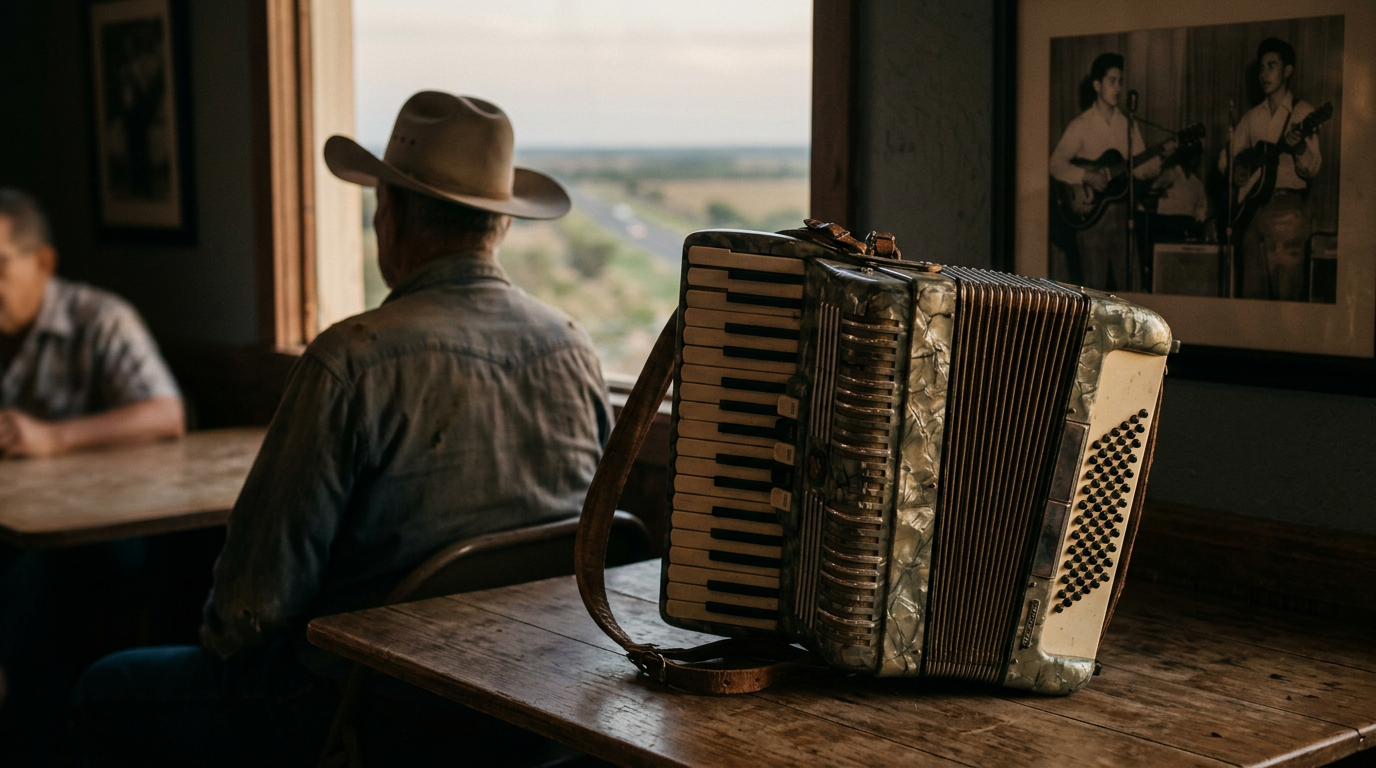
The musical landscape of the Texas-Mexico border underwent a profound shift this month following the passing of Ramiro Cavazos at the age of 99. As the co-founder of the influential group Los Donneños, Cavazos was widely regarded as the final living bridge to the formative years of norteño music. His career spanned nearly eight decades, beginning in an era where regional music was largely confined to local cantinas and family gatherings before he helped transform it into a commercially viable and internationally recognized genre. Contextually, Cavazos emerged during a period of significant cultural synthesis in South Texas, where European accordion influences blended with Mexican vocal traditions to forge a distinct identity for the Rio Grande Valley. Historically, the evolution of this sound mirrored the growth of the Hispanic middle class in Texas, providing a soundtrack to the 20th-century immigrant experience and the establishment of vibrant, bilingual communities along the Rio Grande. Cavazos was not merely a performer; he was a pioneer of the recording industry in South Texas. At a time when major national labels overlooked regional talent, he took matters into his own hands by establishing his own recording studio and a music store in Mcallen. This entrepreneurial spirit ensured that the specific sounds of the border were preserved and distributed, rather than being lost to time. His work with Los Donneños, particularly alongside his musical partner Mario Montes, set the standard for the vocal harmonies and accordion-bajo sexto arrangements that define the genre today. Throughout his long life, he remained a fixture in the community, often seen at his shop ‘Discos Cavazos,’ where he mentored younger generations and served as a living archive of Texas musical heritage. His death marks the conclusion of a foundational chapter in the American Southwest's cultural narrative.
Texas relevance
The life and work of Ramiro Cavazos are fundamentally tied to the identity of the Rio Grande Valley and the broader state of Texas. For residents of South Texas, Cavazos was more than a musician; he was a cultural institution based in McAllen and Donna. His contributions helped establish the Valley as a premier hub for the recording arts, proving that world-class music could be produced and marketed from within the border region rather than relying on hubs like Los Angeles or Nashville. This local autonomy laid the groundwork for the modern Texas music industry, particularly for artists who perform in Spanish or cater to the tejano and conjunto markets. Furthermore, his inclusion in the Texas Conjunto Music Hall of Fame and the recognition he received from the National Endowment for the Arts highlight the state’s commitment to preserving its diverse artistic history. Every time a norteño track is played on a Texas radio station today, it carries the DNA of the distribution networks and stylistic standards Cavazos helped build over his century of life.
The Early Years in the Corridor
Ramiro Cavazos was born in 1927 in Nuevo León, Mexico, but his artistic soul was forged in the unique binational corridor of South Texas. During his youth, the music of the border was in a state of flux. The accordion, introduced by German and Czech settlers in the 19th century, was being adopted by Mexican-American musicians to create a new, high-energy sound. Cavazos picked up the bajo sexto, a twelve-string guitar that provides the rhythmic and harmonic backbone for the accordion’s melodic flourishes.
Moving to the United States in the mid-1940s, Cavazos settled in Donna, Texas—the town that would eventually provide the name for his most famous group. The environment of post-war Texas was one of rapid change. As rural populations moved toward urban centers like McAllen and San Antonio, the music moved with them. Cavazos was at the forefront of this transition, ensuring that the rural roots of the music were not abandoned but rather polished for a modern, radio-listening audience.
The Rise of Los Donneños
In 1947, the formation of Los Donneños changed the trajectory of regional Mexican music forever. Pairing with accordionist Mario Montes, Cavazos helped pioneer the 'dueto' style, characterized by close vocal harmonies that mirrored the instrumental interplay of the accordion and bajo sexto. This vocal style became a signature of the group and influenced countless followers. Their chemistry was undeniable, and they quickly became the most sought-after act in the borderlands.
The group’s success was not limited to Texas. They became stars of the silver screen in Mexico, appearing in films that showcased their music to a massive audience. These appearances helped solidify the Rio Grande Valley's reputation as a cultural powerhouse. Despite their fame across Mexico, the group remained headquartered in Texas, reinforcing the idea that the heart of norteño music beat strongest on the northern side of the river.
Entrepreneurship and Discos Cavazos
Cavazos understood early on that for music to survive, it needed a marketplace. In the 1950s, he opened Discos Cavazos in McAllen, a shop that served as a headquarters for his own label and a community gathering spot. By controlling his own production and retail, he bypassed the gatekeepers of the traditional music industry. This allowed him to record local artists who might otherwise never have had the chance to reach an audience.
His shop became a landmark on 23rd Street in McAllen, surviving decades of economic shifts. For over 60 years, Cavazos could be found behind the counter, sharing stories and selling records. This brick-and-mortar presence was essential for the distribution of norteño and conjunto music throughout the 20th century, serving as a vital node in a network of shops that stretched from the Valley to the Panhandle and into the Midwest.
Preserving the South Texas Sound
Technological shifts, from vinyl to cassette to digital, never deterred Cavazos. He was committed to the preservation of the 'classic' sound—unadorned, soulful, and deeply rooted in the storytelling traditions of the border. His repertoire included corridos, boleros, and rancheras, each performed with a technical precision that earned him the respect of ethnomusicologists and casual listeners alike.
He often collaborated with other legends of the genre, ensuring that the collaborative spirit of the Texas music scene remained vibrant. By maintaining a high standard for live performance and recording quality, he helped legitimize norteño music in the eyes of the broader American public. His efforts were eventually recognized at the national level, cementing his status as a folk hero within the tapestry of American roots music.
A Century of Cultural Diplomacy
As Cavazos approached his 100th year, he became a symbol of resilience and cultural continuity. He lived through the eras of segregation, the civil rights movement, and the modern digital revolution, all while maintaining his focus on the music of his people. He acted as an informal diplomat, using his art to bridge the gap between different generations of Texans and between the two nations that border the Rio Grande.
His longevity allowed him to see his influence come full circle. Modern Texas artists, ranging from mainstream country stars to indie-rock bands, have cited the rhythmic structures and emotional honesty of norteño—and Cavazos specifically—as an inspiration. His life was a testament to the fact that when art is deeply rooted in a specific place and community, it has the potential to become universal.
Impact on the Next Generation
The mentoring role Cavazos played cannot be overstated. He was known for encouraging young bajo sexto players, often giving them tips on technique or the business side of the industry. He believed that the music was a living entity that required fresh blood to survive, and he never hoarded his knowledge. This generosity ensured that the traditions of Los Donneños would persist long after the original members had left the stage.
In his final years, Cavazos received numerous accolades, including the Bess Lomax Hawes National Heritage Fellowship, the highest honor the U.S. government bestows upon folk and traditional artists. These awards were not just for his music, but for his role as a keeper of the flame. He was a guardian of a specific Texas-Mexican identity that refuses to be erased or homogenized.
Analysis
From a cultural preservation perspective, the passing of Ramiro Cavazos serves as a critical reminder of the fragility of oral and regional traditions. While his recordings remain, the loss of his firsthand memory of the pre-WWII music scene in Texas is irreplaceable. His life story emphasizes a specific Texas value: the power of small-business entrepreneurship in the face of corporate indifference. By creating his own infrastructure to record and sell music, Cavazos did more for the economic and cultural development of the Rio Grande Valley than many traditional policy initiatives could have achieved. He exemplified the ‘Texas spirit’ of self-reliance, taking a localized art form and scaling it through hard work and a commitment to his community's specific tastes.
Source attribution
This story was reported using a public release from the Texas Standard. Keep TX Red rewrote the coverage independently and links to the official statement for verification.
Frequently Asked Questions
- Who was Ramiro Cavazos?
- Ramiro Cavazos was a legendary Texas musician and businessman best known as the co-founder of Los Donneños. He played the bajo sexto and was a pivotal figure in popularizing norteño and conjunto music across the Texas-Mexico border and beyond.
- What is the significance of the group Los Donneños?
- Formed in 1947, Los Donneños were pioneers of the vocal harmony style in norteño music. They were influential in bringing the sounds of the Rio Grande Valley to a wider audience through recordings, radio, and appearances in Mexican cinema.
- Where was Ramiro Cavazos based?
- While born in Mexico, Cavazos spent the vast majority of his life and career in the Rio Grande Valley of Texas, specifically in Donna and McAllen. His music store, Discos Cavazos, was a staple of the McAllen community for decades.
- What contributions did he make to the Texas music industry?
- Beyond performing, Cavazos founded his own recording label and retail outlet. This was crucial for the South Texas music scene as it allowed regional artists to record and sell their music independently of major national labels, fostering a self-sustaining local industry.
- Has his work been officially recognized?
- Yes, Cavazos received several high honors, including induction into the Texas Conjunto Music Hall of Fame and receiving a National Heritage Fellowship from the National Endowment for the Arts.
Official Sources
Take the next step
Browse the Newsroom →Read more about Keep Texas Red → Our full guide to what Keep Texas Red means and why Texans support it.
Related Articles

Get Texas updates delivered weekly.
Independent Texas reporting on politics, policy, and daily life. One email a week. Unsubscribe anytime.
Keep TX Red Newsroom
The Keep Texas Red Editorial Staff produces nonpartisan explainers, policy breakdowns, and educational resources to help Texans understand how their government works. All content is reviewed for accuracy and updated regularly.
About Keep TX Red →