Kerrville Community Grieves After Massive Flooding Claims Life of Local Resident
A Texas Hill Country resident tragically died after severe floodwaters swept away his Kerrville home, sparking new alarms regarding regional flash floods.
Editorial disclaimer: Opinions and analysis on Keep TX Red are editorial content — not statements of fact. See our editorial standards.
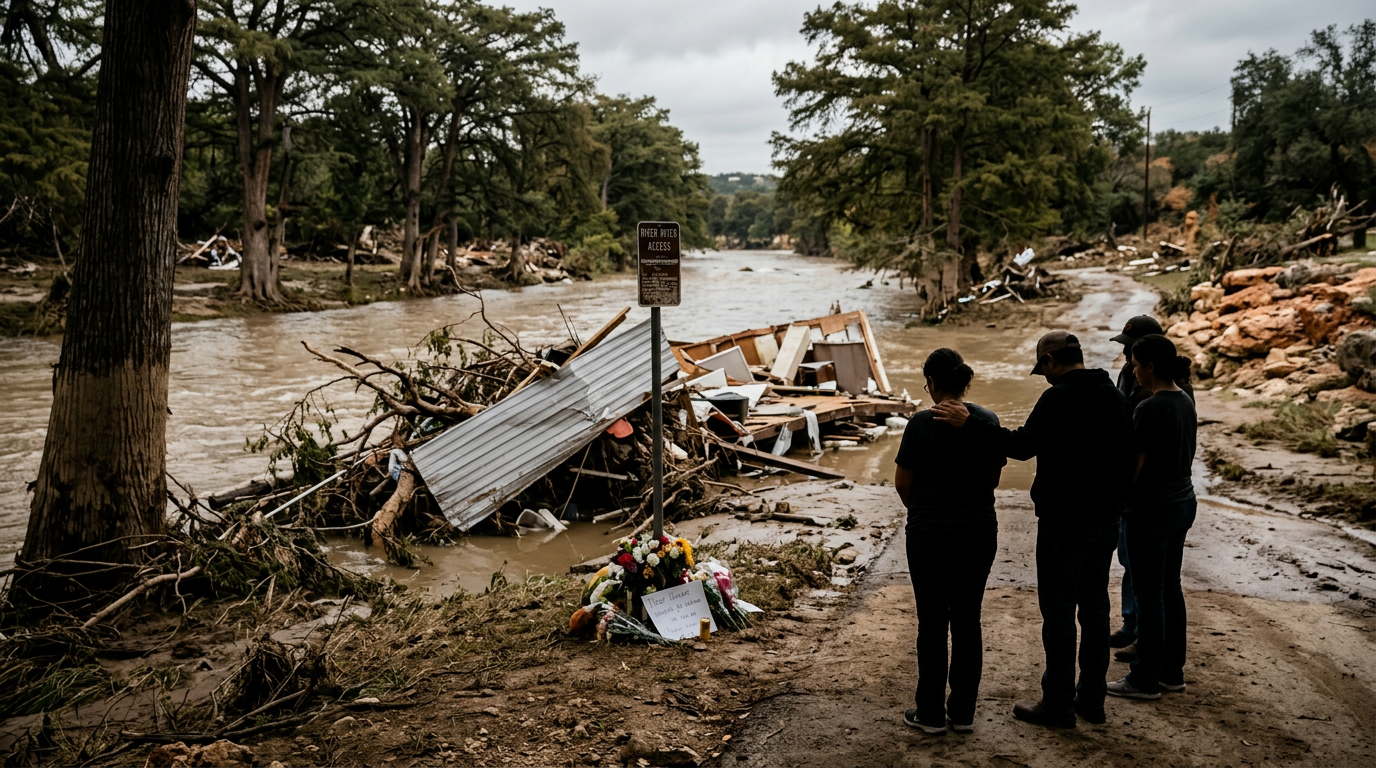
The Kerrville community is mourning the loss of a 65-year-old resident whose home was destroyed and swept away by rapid floodwaters during a period of intense atmospheric instability in the Texas Hill Country. The victim was inside his mobile home when the structure was dislodged from its foundation by a surging wall of water. Despite the rapid response of local emergency personnel and neighbors, the force of the current proved insurmountable. Historically, the Texas Hill Country is known as 'Flash Flood Alley' due to its unique topography and thin soil layers that cause immediate runoff during heavy rainfall events. This incident serves as a grim reminder of how quickly conditions can deteriorate in the region, where dry creek beds can transform into deadly torrents within minutes. Local officials have confirmed that the remnants of the residence were located downstream, though the initial impact occurred with such speed that the occupant had little time to seek higher ground. This tragedy has reignited discussions regarding residential safety in low-lying areas near the Guadalupe River and its various tributaries that define the local landscape. Family members and lifelong friends have described the individual as a cornerstone of the neighborhood, emphasizing the profound personal impact of this loss on the tight-knit Kerrville population. As recovery efforts continue and investigators finalize their reports, the event stands as a stark warning about the unpredictable nature of Texas weather patterns during the summer months when tropical moisture often interacts with regional cold fronts to produce catastrophic rain totals over short durations.
Texas relevance
This tragedy directly impacts the Kerrville and Kerr County region, highlighting the persistent dangers of the Central Texas Flash Flood Alley. Texas residents in the Hill Country face unique hydrological risks because the limestone bedrock prevents water absorption, leading to rapid rises in river levels. This specific event underscores the vulnerability of manufactured housing units located in floodplain zones across the state. Furthermore, the incident has mobilized local Texas relief organizations and neighbors, who are currently coordinating support for the family while officials reassess flood zone mapping in West-Central Texas. State-level meteorologists continue to monitor these developments to prevent further loss of life during subsequent storms.
The Anatomy of a Hill Country Flood
The geography of the Texas Hill Country, characterized by steep terrain and rocky surfaces, creates a natural funneling effect during heavy rain. When a localized cell stalls over a specific watershed, the volume of water can overwhelm local drainage systems and small creeks almost instantly. In this particular instance, the Kerrville area experienced a sudden surge that exceeded typical seasonal expectations, catching many residents off guard.
Unlike coastal flooding which often provides days of warning as a storm approaches, Hill Country flash floods are known for their terrifying speed. Water levels can rise several feet in a matter of seconds, turning peaceful streams into debris-laden rivers capable of moving heavy vehicles and entire buildings. This physical reality makes the region one of the most dangerous areas for flash flooding in the United States, requiring constant vigilance from local emergency management teams.
The Victim and the Community Impact
The 65-year-old man involved in the incident was well-known in his local circle, described by survivors as a person who was always willing to lend a helping hand to his neighbors. His death has left a significant void in the Kerrville area, a community where multi-generational families often live in close proximity and rely on one another during times of crisis. The suddenness of his passing has shocked those who saw him just hours before the storm intensified.
Friends and family members have spent the days following the disaster sharing stories of his life, noting his resilience and his deep connection to the Texas landscape. Community leaders have pointed out that losing a 'legend' of the neighborhood affects the morale of the entire township, especially when the death occurs in such a violent and unexpected manner. Local grieving centers and churches have opened their doors to support those affected by the loss.
Emergency Response and Search Efforts
First responders in Kerr County were dispatched as soon as the initial calls regarding the swept-away structure were received. The search and recovery operation involved multiple agencies, including local fire departments and water rescue teams who braved treacherous conditions to navigate the swollen waterways. The debris field created by the moving mobile home spanned a significant distance, complicating the efforts to locate the victim and secure the site.
The coordination between Kerrville police and county officials was critical in managing the scene, although the peak flow of the flood prevented an immediate rescue while the water was at its highest. Specialized equipment was eventually brought in to sift through the wreckage. Authorities have noted that the speed of the water would have likely trapped anyone inside the structure, making traditional rescue techniques extremely difficult to execute safely.
Housing Vulnerability in Impact Zones
This incident highlights a major concern for rural Texas: the vulnerability of mobile and manufactured homes to high-velocity water movement. Because these structures are often not anchored to deep concrete foundations, they are susceptible to being buoyed and carried away during significant flood events. For many residents in the Hill Country, these homes represent the primary source of affordable housing, creating a conflict between economic necessity and environmental risk.
Legislative discussions often touch upon the need for stricter anchoring requirements for manufactured homes in designated floodplains. However, older units frequently predate current safety codes, leaving long-term residents at higher risk. The destruction of this home in Kerrville is expected to prompt renewed calls from local safety advocates for better education on evacuation protocols specifically tailored for those living in mobile home parks and similar residential settings.
Regional Preparedness and Future Mitigation
In the wake of this tragedy, local officials are re-examining the effectiveness of current warning systems. While flash flood warnings were in effect, the speed with which the water rose suggests that some areas may need more localized sensor data to provide earlier alerts. Kerr County has historically invested in low-water crossing sensors, but the impact on residential structures away from crossings is an evolving challenge for city planners.
Future mitigation strategies may include updated topological mapping to better predict which homes are at 'first-strike' risk during a Guadalupe River surge. State agencies like the Texas Water Development Board often collaborate with local entities to fund these studies, but implementation can take years. For now, the focus remains on immediate recovery and helping the Kerrville community heal from a loss that many feel was preventable with better technological infrastructure.
The Role of Topography in Safety
Kerrville sits in a beautiful but precarious location where the topography dictates the flow of water with unforgiving precision. The limestone canyons and valleys that draw tourists to the area also serve as conduits for massive amounts of rainwater. When a storm system lingers, the ground reaches saturation almost immediately, and every subsequent drop of rain becomes surface runoff directed toward the lowest points—often where housing developments are located.
Understanding this 'basin effect' is crucial for Texas residents. Safety experts emphasize that even if a property has not flooded in decades, shifts in upstream development or unprecedented rainfall totals can change the risk profile overnight. The Kerrville event has become a cautionary tale for residents across the state about the importance of having a pre-determined evacuation plan that can be executed in under five minutes, as that is often the only window of opportunity available.
Analysis
While official reports focus on the mechanics of the flooding, the human element of this story reveals the recurring vulnerability of coastal and inland Texas communities to extreme weather. The loss of a resident who was deeply embedded in the social fabric of Kerrville indicates that disaster preparedness must go beyond simple sirens; it requires a structural review of housing placement in historical flood zones. From a policy perspective, this reflects the ongoing debate in the Texas Legislature regarding infrastructure funding for flood mitigation and the balance between private property rights and safety mandates in flood-prone valleys.
Source attribution
This story was reported using a public release from the Texas Standard. Keep TX Red rewrote the coverage independently and links to the official statement for verification.
Frequently Asked Questions
- Where did the flooding incident take place?
- The incident occurred in Kerrville, Texas, which is located in the Hill Country and is situated along the Guadalupe River basin.
- Why was the victim's home so easily swept away?
- The structure was a mobile home, which often lacks the deep, heavy foundations of traditional houses, making it susceptible to being lifted and moved by powerful currents once the water reaches a certain height.
- What makes the Texas Hill Country particularly dangerous for floods?
- The region is known as 'Flash Flood Alley' because its rocky limestone terrain prevents water from soaking into the ground, causing it to run off quickly into creeks and rivers, which can rise several feet in minutes.
- What should residents do when a flash flood warning is issued?
- Experts advise immediately moving to higher ground, avoiding low-water crossings, and never attempting to ride out a flood inside a structure that is located within a known flood zone or near a rising body of water.
Official Sources
Take the next step
Browse the Newsroom →Read more about Keep Texas Red → Our full guide to what Keep Texas Red means and why Texans support it.
Related Articles

Get Texas updates delivered weekly.
Independent Texas reporting on politics, policy, and daily life. One email a week. Unsubscribe anytime.
Keep TX Red Newsroom
The Keep Texas Red Editorial Staff produces nonpartisan explainers, policy breakdowns, and educational resources to help Texans understand how their government works. All content is reviewed for accuracy and updated regularly.
About Keep TX Red →