H-E-B Deploys Disaster Response Units to Aid Texas Flood Recovery Efforts
H-E-B activates mobile kitchens and distributes 500,000 cases of water and relief funds to support South and Southeast Texas after historic floods.
Editorial disclaimer: Opinions and analysis on Keep TX Red are editorial content — not statements of fact. See our editorial standards.
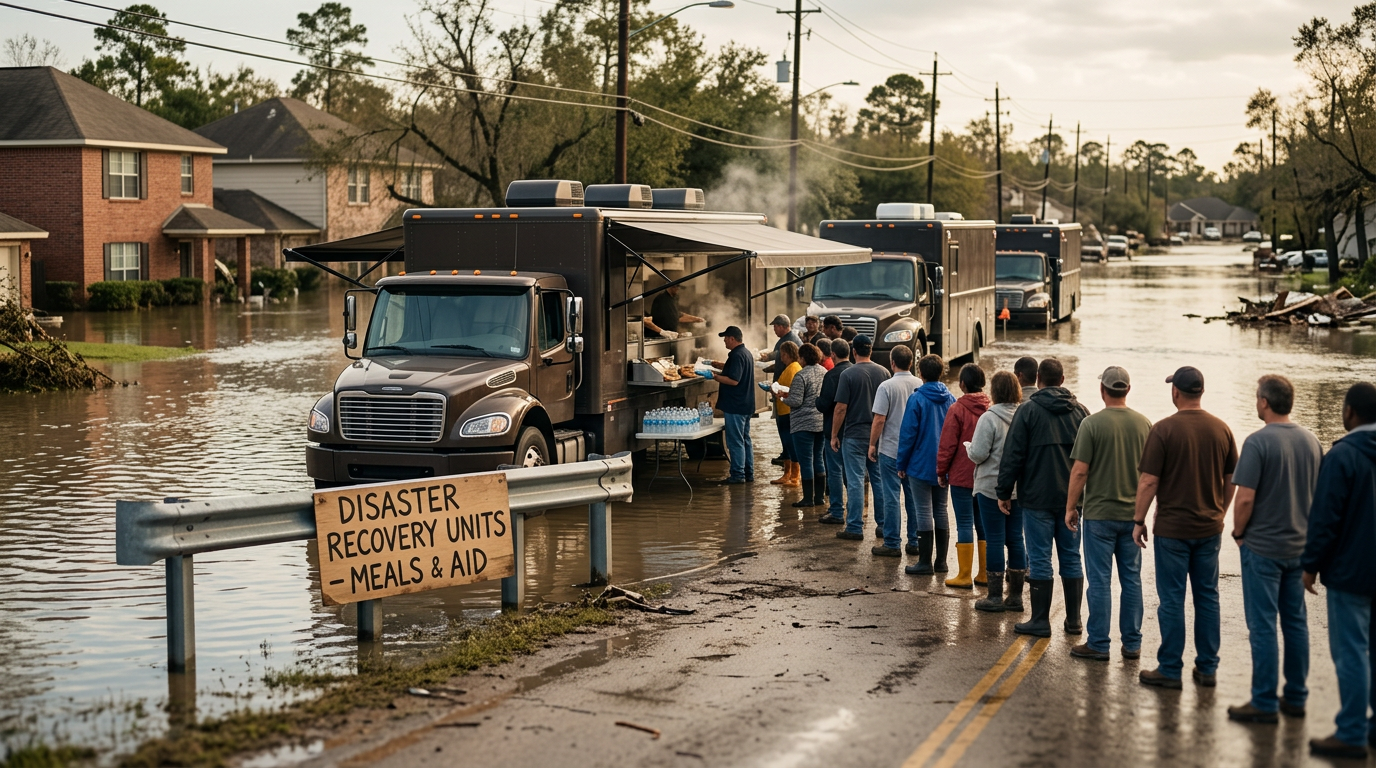
H-E-B has officially activated its emergency disaster response protocols to assist residents across South and Southeast Texas following a series of devastating floods in July 2026. The San Antonio-based grocer deployed its fleet of Disaster Response Units (DRUs) and mobile kitchens to the hardest-hit areas to provide hot meals, clean water, and pharmacy services to displaced families and first responders. This mobilization comes as local authorities struggle to manage the aftermath of high-water levels that have damaged infrastructure and residential neighborhoods. By moving resources directly into the impact zones, the company aims to fill the immediate gap in essential services before long-term state and federal aid can fully stabilize the region. Historically, H-E-B has operated as a secondary emergency management arm for the state, often arriving in disaster zones ahead of federal agencies. Their ability to pivot from a retail giant to a logistics-driven relief organization is a defining characteristic of the company’s presence in the Lone Star State.
Texas relevance
As a cornerstone of the Texas retail landscape, H-E-B’s response directly impacts thousands of citizens across the Gulf Coast and Houston-adjacent counties. Texas has a long history of utilizing private-public partnerships during hurricane and flood seasons, dating back to the response efforts seen during Hurricane Harvey. The current flooding event has placed a significant strain on municipal resources, making the intervention of a statewide logistics giant like H-E-B critical for the recovery of local economies and the safety of Texas families. The grocer’s deep roots in San Antonio and its massive distribution network across the Lone Star State allow for a faster response than many out-of-state entities. For Texans, the grocery brand is more than a store; it is a primary infrastructure partner that maintains the state's food security during climate-driven crises. This specific intervention highlights the unique Texas model where private industry takes a leading role in civic stability.
Mobile Kitchens and Immediate Sustenance
The centerpiece of the current relief effort is the deployment of the H-E-B Mobile Kitchens. These massive, self-contained units are capable of producing thousands of meals per hour, ensuring that victims who have lost access to electricity or gas can receive hot, nutritious food. The company has positioned these units in central community hubs where locals can gather safely to receive aid. This allows the community to congregate in a safe space while receiving the caloric intake necessary to begin the grueling work of debris removal and home assessment.
In addition to hot meals, the grocer is focusing heavily on hydration. Recognizing that local water systems are often compromised during major flooding events, the company has dispatched over 500,000 cases of bottled water to the impacted regions. Logistics teams worked overnight to reroute delivery trucks from standard retail paths directly to emergency shelters and distribution points. This rapid shift in supply chain focus ensures that clean drinking water remains available even in areas where municipal treatment plants have been overwhelmed by rising floodwaters.
Financial Commitments and Non-Profit Partnerships
Beyond physical supplies, H-E-B has committed $1 million in immediate relief funds to support the ongoing work of specialized non-profit organizations. This funding is being funneled through partners like Feeding Texas and the American Red Cross, who have the boots-on-the-ground infrastructure to provide long-term sheltering and food bank replenishment. By empowering these third-party organizations, H-E-B ensures that the relief efforts extend beyond the immediate reach of their physical store locations.
The financial aid is designed to be flexible, allowing local organizations to purchase whatever supplies are most needed in their specific jurisdictions. Whether it is cleaning supplies for home remediation or baby formula for displaced families, these grants empower local leaders to make decisions based on the unique needs of their specific neighborhoods in Southeast Texas. This decentralized approach to funding allows for a more nuanced and effective recovery process that addresses the specific challenges of diverse Texas counties.
Pharmacy and Medical Resource Continuity
A critical but often overlooked aspect of disaster recovery is the maintenance of prescription medications. The Disaster Response Units include mobile pharmacy trailers that allow residents to refill life-saving prescriptions even if their local brick-and-mortar store remains closed due to flood damage. This service is vital for seniors and those with chronic health conditions who cannot afford a gap in their treatment schedules during the chaos of an evacuation.
These mobile units are staffed by H-E-B pharmacists who have volunteered to travel to the flood zones. By providing a point of contact for medical needs, the company helps reduce the burden on local emergency rooms, which are already preoccupied with physical injuries and water-rescue operations related to the storm. This proactive healthcare intervention is a key component of the company's broader commitment to the health and wellness of the Texas communities it serves.
Historical Context of H-E-B Disaster Response
H-E-B’s role in Texas emergency management is not a new development. The company has refined its disaster response protocols over several decades, most notably during the catastrophic events of Hurricane Harvey in 2017. During that time, the company became a national symbol of corporate efficiency when it managed to keep stores open and supply lines moving while other major retailers were forced to shut down. This history of reliability has created a high level of trust between the brand and the Texas public.
The company maintains a dedicated Emergency Preparedness team that operates year-round, not just during storm season. This team works closely with the Texas Division of Emergency Management (TDEM) to coordinate logistics and avoid duplication of efforts. This level of institutional integration ensures that when a crisis like the July 2026 floods occurs, the transition from daily operations to disaster support is nearly seamless. This institutional memory is a significant asset to the state's total disaster resilience strategy.
Logistics and the Texas Supply Chain
The scale of this operation is made possible by H-E-B's sophisticated supply chain management. By utilizing its massive distribution centers in San Antonio and Houston, the company can move tons of supplies in a matter of hours. This logistical superiority is a result of years of investment in infrastructure and technology designed to withstand the severe weather patterns common to the Texas coast and central plains.
While many retail chains struggle to keep shelves stocked during a crisis, H-E-B’s strategy involves pre-positioning assets before the rain even begins. This proactive approach ensures that even as some roads become impassable, there are already sufficient supplies within the region to sustain the population. This foresight is critical in Texas, where the vast geography and flash-flood risks can quickly isolate smaller towns from the primary interstate supply routes.
Stakeholder Impact and Volunteerism
The recovery effort is powered not just by money and trucks, but by thousands of H-E-B partners (employees) who volunteer to serve on the front lines. Many of these employees live in the affected areas themselves, making their contribution a neighbor-to-neighbor effort. The company provides specific incentives and support for these workers, recognizing the emotional and physical toll of working in a disaster zone while their own homes might be at risk.
Local government officials have frequently praised this private-sector involvement, noting that the speed of a corporation often exceeds the speed of a government bureaucracy. For mayors and county judges in Southeast Texas, the arrival of the H-E-B fleet represents the first step toward reclaiming their communities from the water. This volunteer spirit reinforces the company’s internal culture, which prioritizes Texas-centric service above all other corporate goals.
What Changes Next: The Road to Reconstruction
As the floodwaters begin to recede, the focus of the H-E-B response will shift from immediate life-safety and sustenance to long-term reconstruction. This phase involves restocking local stores to full capacity and ensuring that the community has access to building materials and cleaning supplies. H-E-B often coordinates with local vendors to ensure that the economic recovery of the town stays on track, prioritizing local sourcing where possible to stimulate the regional economy.
In the coming weeks, the company will likely evaluate the performance of its Disaster Response Units to prepare for the remainder of the 2026 storm season. Every deployment provides new data on how to better serve Texas families during their darkest hours. Residents can expect the mobile units to remain on the ground until local utilities are restored and traditional grocery services can safely resume, ensuring a bridge to normalcy for all affected citizens.
Long-Term Community Rebuilding Goals
Recovery from major flooding does not end when the water recedes. H-E-B executives have indicated that their presence in these communities will continue through the cleanup phase. The company often participates in local community fairs and rebuilding projects once the immediate threat to life and limb has passed, helping to restore a sense of normalcy and psychological comfort to the affected areas.
This commitment to the state’s resilience is a hallmark of the company's corporate identity. For many Texans, the arrival of the red H-E-B disaster trucks is a signal that help has arrived and that the long process of rebuilding can finally begin. As the company continues to monitor weather updates, they stand ready to move their assets to any other region facing rising river levels or tropical threats, maintaining a constant state of readiness.
Source attribution
This story was reported using a public release from the H-E-B (Google News). Keep TX Red rewrote the coverage independently and links to the official statement for verification.
Frequently Asked Questions
- Where can residents find the mobile kitchen units?
- The mobile kitchens are typically stationed at H-E-B store locations in affected areas or at designated community relief centers. Residents should check local news or official H-E-B social media channels for specific addresses as the units move based on current need.
- What services are provided by the H-E-B Disaster Response Units?
- The DRUs provide hot meals, bottled water, pharmacy services, and sometimes basic supplies like trash bags and cleaning kits. They serve as a temporary resource for those who cannot access their local grocery stores due to flooding.
- How is the $1 million in relief funding being used?
- The funds are distributed to non-profit partners like the American Red Cross and Feeding Texas. These organizations use the money to provide emergency shelter, restock local food banks, and assist in cleaning up flood-damaged homes across several Texas counties.
Official Sources
Take the next step
Browse the Newsroom →Read more about Keep Texas Red → Our full guide to what Keep Texas Red means and why Texans support it.
Related Articles


Get Texas updates delivered weekly.
Independent Texas reporting on politics, policy, and daily life. One email a week. Unsubscribe anytime.
Keep TX Red Newsroom
The Keep Texas Red Editorial Staff produces nonpartisan explainers, policy breakdowns, and educational resources to help Texans understand how their government works. All content is reviewed for accuracy and updated regularly.
About Keep TX Red →