Governor Greg Abbott Requests Federal Disaster Status Following Devastating Hill Country Flooding
Governor Abbott seeks a presidential disaster declaration and launches a relief fund to aid Texas Hill Country communities devastated by recent floods.
Editorial disclaimer: Opinions and analysis on Keep TX Red are editorial content — not statements of fact. See our editorial standards.
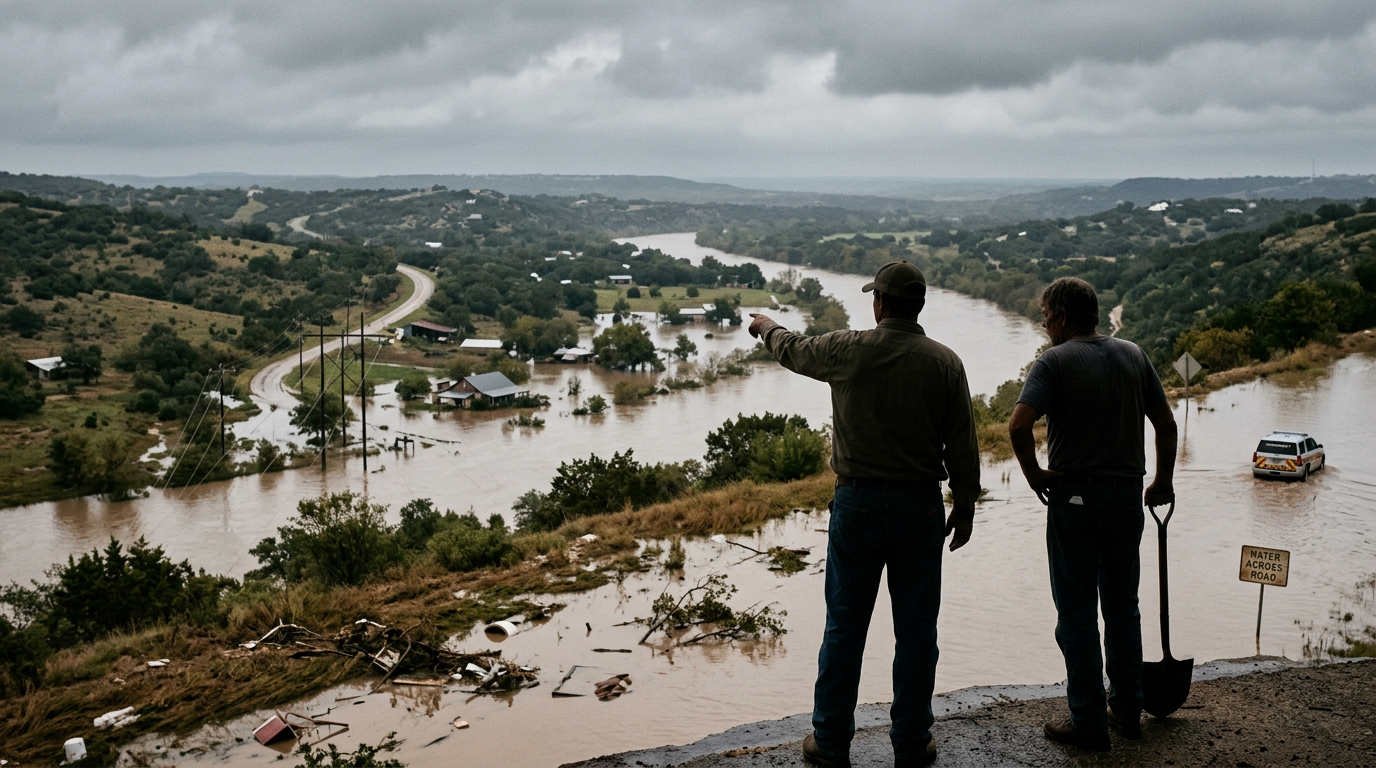
Governor Greg Abbott has taken formal steps to secure federal intervention following a series of catastrophic flooding events that have ravaged the Texas Hill Country. The Governor's office confirmed that a request for a Major Disaster Declaration has been sent to the White House, aiming to unlock critical Federal Emergency Management Agency (FEMA) resources for impacted residents and local governments. Historically, the Hill Country has been susceptible to 'Flash Flood Alley' conditions, where steep terrain and limestone beds lead to rapid runoff. This latest request follows a preliminary assessment by the Texas Division of Emergency Management (TDEM), which documented significant damage to infrastructure, private homes, and small businesses throughout the region. In tandem with the federal request, a dedicated Texas Hill Country Flood Relief Fund has been established to provide immediate financial bridges to those who cannot wait for the bureaucratic processing of federal aid. The state's strategy focuses on a multi-tiered approach, combining immediate local charity with long-term federal grants to ensure that the unique geographic challenges of Central Texas do not hinder the recovery of its rural populations.
Texas relevance
The flooding in the Texas Hill Country represents a significant threat to one of the most vital regions of the Lone Star State. This area, known for its tourism, agriculture, and rapidly growing residential communities, serves as a cornerstone of the Central Texas economy. For Texans, the pursuit of a presidential disaster declaration is critical because it determines whether local taxpayers will shoulder the full cost of infrastructure repair or if federal cost-sharing will alleviate the burden. Furthermore, the activation of the relief fund demonstrates a uniquely Texan approach to disaster management, emphasizing community-led financial support while simultaneously pursuing formal governmental channels. The outcome of this request will set a precedent for how the state handles increasingly volatile weather patterns in the Edward’s Plateau region, impacting insurance rates, property values, and safety protocols for millions of residents between Austin and San Antonio.
The Strategic Importance of the Presidential Declaration
A presidential disaster declaration is more than just a formal recognition of a crisis; it is the key that unlocks Individual Assistance (IA) and Public Assistance (PA) programs. For the Texas Hill Country, Individual Assistance would provide direct grants to homeowners for temporary housing, home repairs, and the replacement of essential household items not covered by insurance. This is particularly vital in rural areas where older homes may not meet current flood-plain specifications and are therefore difficult to insure adequately.
Public Assistance, on the other hand, targets the broken bones of the community: the roads, bridges, and water treatment facilities. In the Hill Country, where low-water crossings are the primary means of transit for many residents, a single flood event can isolate entire pockets of the population for weeks. Federal funding would cover at least 75 percent of the eligible costs for repairing these essential transit corridors, ensuring that local county budgets are not bankrupt by a single season of heavy rainfall.
Impact on Local Infrastructure and Connectivity
The recent surge of water has caused significant damage to the secondary road systems that connect Hill Country towns like Wimberley, Kerrville, and Fredericksburg. These routes are essential not just for residents, but for the robust tourism industry that fuels the local economy. When roads are washed out, the ripple effect reaches every bed-and-breakfast, vineyard, and boutique in the region. The state's assessment highlights that several key bridges require complete structural overhauls, as the force of the water exceeded historical safety margins.
Beyond transportation, the flooding has compromised local utilities. Small-scale water systems and electrical cooperatives in the rural stretches of the Hill Country are often vulnerable to soil erosion and debris strikes. Governor Abbott’s push for federal aid includes provisions for 'hazard mitigation,' which allows for rebuilding infrastructure in a way that makes it more resilient to future floods. This proactive approach is intended to break the cycle of 'repair and repeat' that has plagued the region for decades.
The Role of the Texas Hill Country Flood Relief Fund
Recognizing that federal bureaucracy moves at a snail’s pace, the launch of the Texas Hill Country Flood Relief Fund serves as a critical stop-gap measure. This fund is designed to accept private donations from individuals and corporations, directing that capital toward the most urgent needs identified by local emergency managers. It operates with a level of flexibility that government agencies cannot match, providing small grants for immediate needs like clean water, temporary power, and mud-out supplies for flooded residences.
The fund also serves as a rallying point for the 'neighbors helping neighbors' ethos that defines the Texas interior. By centralizing donations, the state can ensure that resources are distributed equitably across several counties rather than being concentrated in the most media-visible areas. This prevents smaller, more isolated communities from being overlooked by larger relief organizations that tend to focus on high-density population centers.
Environmental Challenges of the Edwards Plateau
The Hill Country's unique geology is a primary factor in the severity of these flooding events. The region sits atop the Edwards Plateau, characterized by thin soil and non-porous limestone. Unlike the deep clays of North Texas or the sands of the coast, the Hill Country cannot absorb heavy rainfall. Instead, the water rushes into steep canyons and riverbeds, causing river levels to rise by twenty or thirty feet in a matter of hours. This 'aquatic wall' effect is what makes Hill Country floods so lethal and destructive.
Environmental experts within the state government are monitoring the long-term impact on the Edwards Aquifer. While floods provide necessary recharge to the underground water system, the runoff also carries pollutants, debris, and sediment that can compromise water quality. Part of the recovery effort involves testing private wells and public water sources to ensure that the floodwaters haven't introduced dangerous contaminants into the drinking supply for the millions of Texans who rely on the aquifer.
Coordinating State and Federal Agencies
The Texas Division of Emergency Management (TDEM) is currently lead on the ground, coordinating with the Texas Military Department and the Texas Department of Public Safety. These state agencies have been working since the onset of the storms to perform high-water rescues and clear primary arteries. However, the transition to the 'recovery phase' requires a handoff to FEMA. This process involves meticulous documentation of every dollar spent and every piece of property lost—a task that requires thousands of man-hours.
The Governor’s request is supported by data collected from Joint Preliminary Damage Assessments. In these assessments, state and federal officials walk through impacted neighborhoods together to verify that the damage meets the high threshold required for a presidential declaration. By presenting a unified front, Texas officials hope to expedite the approval process, though they have warned residents that the timeline for actual checks reaching mailboxes can still take several months.
Economic Recovery for Hill Country Small Businesses
Small businesses are the lifeblood of the Hill Country, and many remain shuttered due to water damage. The Governor’s office has emphasized that the recovery plan must include support for these entrepreneurs. Beyond direct grants, a disaster declaration would allow the Small Business Administration (SBA) to offer low-interest disaster loans. These loans are often the only way for a local shop owner to repair a flooded storefront or replace lost inventory without taking on predatory private debt.
There is also a significant concern regarding the agricultural sector. Ranchers in the region have reported lost livestock and destroyed fencing, which are not always covered by standard commercial insurance. The relief fund and federal aid packages will need to address these specific agricultural losses to ensure that the rural economy does not suffer a permanent contraction. Maintaining the viability of these family-owned operations is a top priority for state legislators representing the district.
Analysis
The decision by Governor Abbott to seek a presidential declaration is a calculated move that highlights the limitations of state resources when faced with widespread environmental destruction. While Texas maintains a robust rainy-day fund, the scale of Hill Country flooding often exceeds the discretionary spending limits of the Governor’s emergency budget. By involving the federal government, Abbott is forcing a spotlight on the infrastructure needs of rural Texas, which often feels overshadowed by the massive metropolitan projects in Houston or Dallas. This move also serves as a political litmus test for federal-state cooperation; since disaster relief is technically non-partisan, the speed at which the White House responds will be interpreted by many as a sign of the current administration's commitment to Texas citizens regardless of political alignment. However, the reliance on FEMA also exposes a vulnerability: federal aid is notoriously slow. The creation of the Hill Country Flood Relief Fund is an admission that the state must have an agile, private-sector-funded alternative to prevent families from falling into financial ruin while waiting for federal inspectors to complete their rounds.
Source attribution
This story was reported using a public release from the Governor Abbott — Video Moments (Google News). Keep TX Red rewrote the coverage independently and links to the official statement for verification.
Frequently Asked Questions
- What does a presidential disaster declaration actually do for a Texas resident?
- A presidential disaster declaration allows individuals to apply for FEMA grants that cover expenses not met by insurance. This can include money for basic home repairs, temporary lodging, and the replacement of essential personal property. It also allows local governments to receive federal reimbursement for the costs of debris removal and infrastructure repair.
- How can residents apply for the Hill Country Flood Relief Fund?
- Residents should stay tuned to official announcements from the Governor's office and the Texas Division of Emergency Management (TDEM). Typically, these funds are distributed through partner non-profits and local community foundations that specialize in disaster case management. Documentation of damage and proof of residency are generally required.
- Why is the Hill Country more prone to flooding than other parts of Texas?
- The region is often called 'Flash Flood Alley' because of its steep terrain and thin, rocky soil. When heavy rain falls, the ground cannot absorb it, forcing the water to move rapidly into rivers and creeks. This creates fast-moving surges that can rise much more quickly than in the flatter parts of the state.
Official Sources
Take the next step
Browse the Newsroom →Read more about Keep Texas Red → Our full guide to what Keep Texas Red means and why Texans support it.
Related Articles
Get Texas updates delivered weekly.
Independent Texas reporting on politics, policy, and daily life. One email a week. Unsubscribe anytime.
Keep TX Red Newsroom
The Keep Texas Red Editorial Staff produces nonpartisan explainers, policy breakdowns, and educational resources to help Texans understand how their government works. All content is reviewed for accuracy and updated regularly.
About Keep TX Red →