Governor Greg Abbott Confirms Two Casualties Following Severe Flash Flooding Across Texas Regions
Governor Abbott reports two fatalities following historic rainfall and flash flooding across Texas, urging residents to stay alert as waters recede.
Editorial disclaimer: Opinions and analysis on Keep TX Red are editorial content — not statements of fact. See our editorial standards.
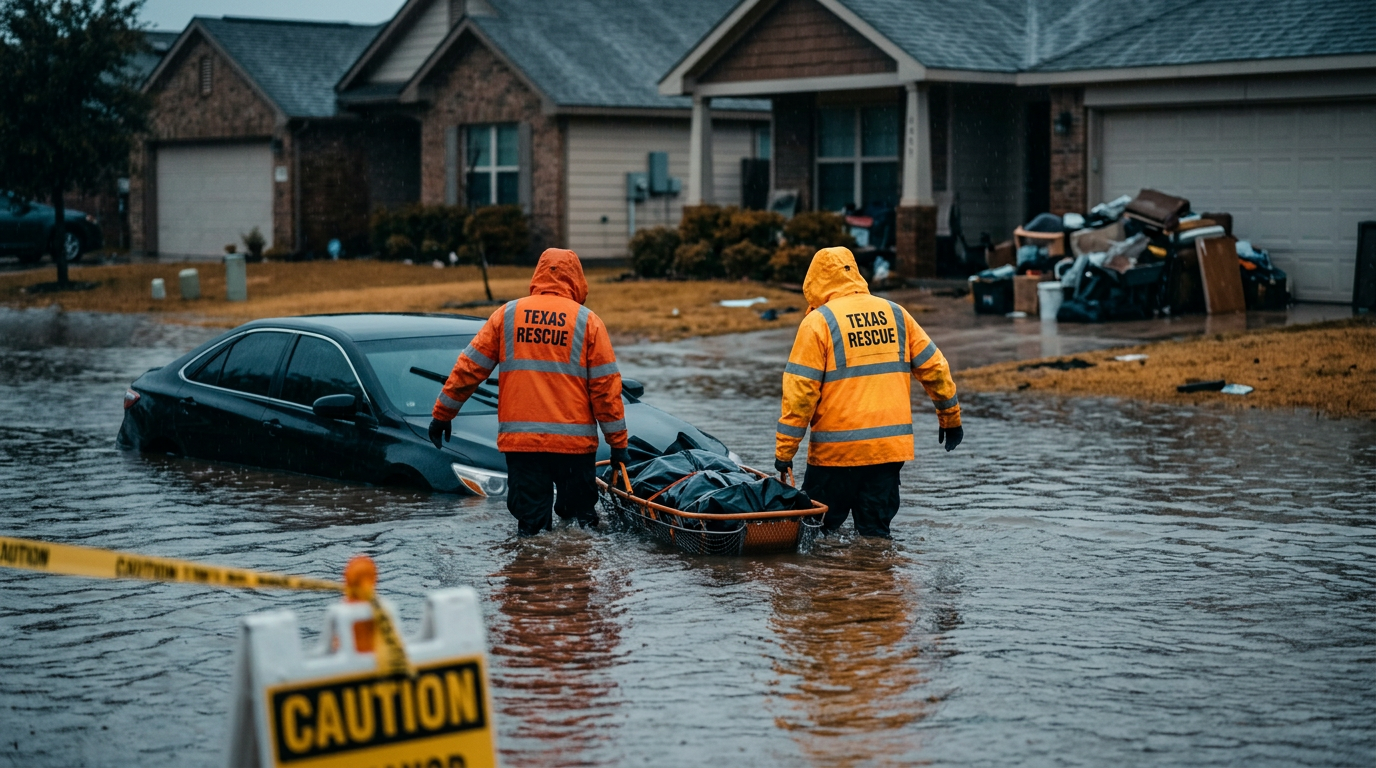
Governor Greg Abbott has officially confirmed the deaths of two individuals resulting from extreme weather conditions and subsequent flash flooding that swept through parts of the state. The fatalities occurred during a period of sustained, heavy rainfall that overwhelmed local drainage systems and transformed suburban streets into hazardous waterways. This tragic announcement comes as Texas emergency management teams work around the clock to assess damage and provide aid to isolated communities. Historically, Texas is prone to sudden and violent flooding events, often referred to as 'Flash Flood Alley' due to the state's unique topography and soil composition which prevents rapid absorption of rainwater. State officials emphasize that while some water levels are beginning to stabilize, the danger remains high in low-lying areas and near riverbanks. The Governor’s office, in coordination with the Texas Division of Emergency Management, has been monitoring rainfall totals that exceeded six inches in a matter of hours in specific corridors. These weather patterns are consistent with prior cycles where warm Gulf air meets stationary front systems, resulting in stationary thunderstorms that drop immense volumes of water in compressed timeframes. This current crisis serves as a grim reminder of the power of natural elements and the necessity for state-led infrastructure resilience projects to mitigate future loss of life.
Texas relevance
Texas residents in the Hill Country and coastal plains are particularly vulnerable to these specific weather patterns. This event highlights the ongoing necessity for the Texas Water Development Board and local drainage districts to accelerate flood mitigation projects funded by recent legislative sessions. For citizens in cities like Austin, San Antonio, and Houston, these tragedies underscore the 'Turn Around, Don't Drown' message that remains the cornerstone of state public safety campaigns. The state's economic stability is also tied to its ability to recover quickly from domestic disasters, making the Governor's direct involvement and confirmation of these events a critical component of the state's disaster response protocol.
The Geographic Scope of the Storm System
The recent storm system did not target just one city but rather carved a path through several high-population corridors in the Lone Star State. Meteorologists noted that the system stalled over central regions before drifting toward the eastern plains, causing the ground to become completely saturated. This saturation meant that any additional rainfall immediately became runoff, rapidly filling creeks that are usually dry or at very low levels.
Infrastructure in these affected areas was tested to its absolute limit. In some rural counties, bridge crossings were submerged under several feet of water, cutting off access for emergency vehicles and local residents alike. The Governor noted that the scale of the flooding required the activation of high-water rescue vehicles from the Texas National Guard to assist local fire departments that were overwhelmed by the number of distress calls received during the peak of the downpour.
The state’s geography plays a major role in how these tragedies unfold. With the Balcones Escarpment acting as a natural ramp for moisture, Central Texas continues to be one of the most flood-prone regions in North America. State officials are looking at how the runoff from these higher elevations impacted the downstream communities, where the two confirmed fatalities were located, highlighting the need for a basin-wide approach to water management.
Emergency Response and Search Operations
Search and rescue operations were initiated immediately following reports of missing persons in the flood zones. Texas Task Force 1, along with local first responders, deployed boats and helicopters to scour the most heavily impacted neighborhoods. The confirmation of the two deaths came after specialized teams were able to reach areas that were previously inaccessible due to the velocity of the floodwaters, which can easily sweep a heavy vehicle off a paved roadway.
The Governor praised the bravery of the first responders who worked through the night under treacherous conditions. He pointed out that while the state provides the heavy equipment and logistical support, the boots-on-the-ground efforts by local sheriffs and EMS personnel are what prevent the death toll from rising further. These teams are trained specifically for swift-water rescues, a discipline that has become increasingly vital for Texas first responders over the last decade.
Communication during the crisis was facilitated through the State Operations Center in Austin. This hub allows for the real-time sharing of data between the National Weather Service and local municipalities. By keeping these lines of communication open, the state was able to issue mandatory evacuation orders in specific zones, likely saving hundreds of lives even as the community mourns the two confirmed losses. The state is now transitioning from active rescue to recovery and debris removal.
The Human Impact and Public Safety Warnings
Behind the statistics and the official press releases are families dealing with immense grief. The Governor’s confirmation was not just a tally of data but a call for the state to support those who have lost loved ones. He urged every Texan to keep the affected families in their prayers while remaining vigilant about their own surroundings, as stagnant water can hide hidden dangers like downed power lines, displaced wildlife, and contaminated sewage.
Public safety warnings remain in effect across several counties. Officials are warning motorists not to bypass barricades, as most flood-related fatalities in Texas occur when drivers underestimate the depth of water on the road. It only takes six inches of moving water to knock an adult off their feet and twelve inches to carry away a small car. The Governor stressed that no destination is worth the risk of traversing a flooded low-water crossing during these volatile weather patterns.
In addition to the immediate physical dangers, the state is also warning about the long-term health risks associated with the aftermath of the flood. Standing water becomes a breeding ground for insects and can carry bacteria and chemicals from flooded industrial sites or agricultural runoff. Local health departments are expected to issue guidance on well-water testing and mold remediation for homeowners as they return to their properties to assess the damage in the coming days.
Long-Term Flood Mitigation and Infrastructure
Texas has invested billions in flood infrastructure through the Flood Infrastructure Fund (FIF), yet as this event shows, there is still significant work to be done. The Governor discussed the ongoing need for larger detention ponds, improved channelization, and better early-warning sensor networks. These systems are designed to slow the flow of water and give residents more time to seek higher ground before the crest of a flood reaches their neighborhood.
Legislative leaders are expected to use reports from this specific storm to help prioritize future projects in the next session. By analyzing where the most catastrophic damage occurred, engineers can better design culverts and drainage systems that are capable of handling the 'new normal' of high-intensity rainfall events. This data-driven approach is intended to maximize the impact of every taxpayer dollar spent on disaster prevention and community resilience.
The state is also looking at how private development affects flood patterns. In many fast-growing parts of Texas, the replacement of natural grasslands with concrete and asphalt has significantly increased the volume and speed of runoff. State and local officials are increasingly discussing stricter requirements for developers to ensure that new construction does not exacerbate flooding for existing downstream residents, a policy debate that is sure to intensify following this latest tragedy.
State and Federal Coordination for Recovery
Now that the immediate threat has passed, the focus shifts to federal assistance. Governor Abbott is working with the Texas Division of Emergency Management to document the damage to determine if the state meets the threshold for a federal disaster declaration. Such a declaration would open up individual and public assistance from FEMA, providing low-interest loans and grants to help homeowners and local governments rebuild their infrastructure and homes.
Coordination between the state and federal government is a complex process that involves detailed damage assessments. Teams will be on the ground in the coming weeks to verify the number of destroyed structures and the cost of repairing public utilities. The Governor highlighted that the state is prepared to provide its own resources while waiting for federal approval, ensuring that there is no gap in the support provided to vulnerable Texans.
Community organizations and non-profits are also playing a major role in the recovery. Groups like the Texas Baptist Men and the Red Cross are collaborating with state authorities to provide food, shelter, and cleanup kits. The Governor encouraged Texans who wish to help their neighbors to donate to these established organizations, which have the logistical capacity to deploy resources where they are most needed without hindering the work of official state emergency crews.
Analysis
While the loss of life is always the most somber outcome of such events, the political and administrative response in Texas continues to evolve toward a more proactive stance. By addressing the fatalities personally, Governor Abbott is signaling that the state government is taking full accountability for the coordination of disaster relief. Critics and supporters alike often watch these moments to see how state-funded emergency funds are being deployed. There is an increasing push within the Texas Legislature to move beyond reactive disaster grants and toward predictive infrastructure that can handle the sheer volume of water seen in 2026. The recurring nature of these floods suggests that 'one-hundred-year events' are occurring with more frequency, necessitating a rethink of urban planning and emergency evacuations in rapidly growing Texas metros.
Source attribution
This story was reported using a public release from the Governor Abbott — Video Moments (Google News). Keep TX Red rewrote the coverage independently and links to the official statement for verification.
Frequently Asked Questions
- Where did the flooding occur?
- The flooding impacted several regions across Texas, primarily focusing on the Central and Eastern corridors where stalled storm systems dropped several inches of rain in a very short period. Areas near the Balcones Escarpment and downstream coastal plains saw the most significant rise in water levels.
- What should I do if my home is flooded?
- First, ensure your immediate safety by moving to higher ground. Once the water recedes, do not enter your home until it has been cleared by professionals for electrical or structural hazards. Document all damage with photos for insurance purposes and wait for guidance from your local emergency management office regarding disaster assistance applications.
- Why is 'Flash Flood Alley' so dangerous?
- The region known as Flash Flood Alley in Texas has thin soil and steep terrain, which causes rainwater to run off rapidly into creeks and rivers rather than soaking into the ground. This results in water levels rising with extreme speed, often giving residents very little time to react.
Official Sources
Take the next step
Browse the Newsroom →Read more about Keep Texas Red → Our full guide to what Keep Texas Red means and why Texans support it.
Related Articles
Get Texas updates delivered weekly.
Independent Texas reporting on politics, policy, and daily life. One email a week. Unsubscribe anytime.
Keep TX Red Newsroom
The Keep Texas Red Editorial Staff produces nonpartisan explainers, policy breakdowns, and educational resources to help Texans understand how their government works. All content is reviewed for accuracy and updated regularly.
About Keep TX Red →