Governor Abbott Deploys State Resources Following Severe Flash Flooding in Uvalde
Governor Greg Abbott has mobilized state emergency assets after Uvalde, Texas, suffered significant damage from recent torrential rain and flood events.
Editorial disclaimer: Opinions and analysis on Keep TX Red are editorial content — not statements of fact. See our editorial standards.
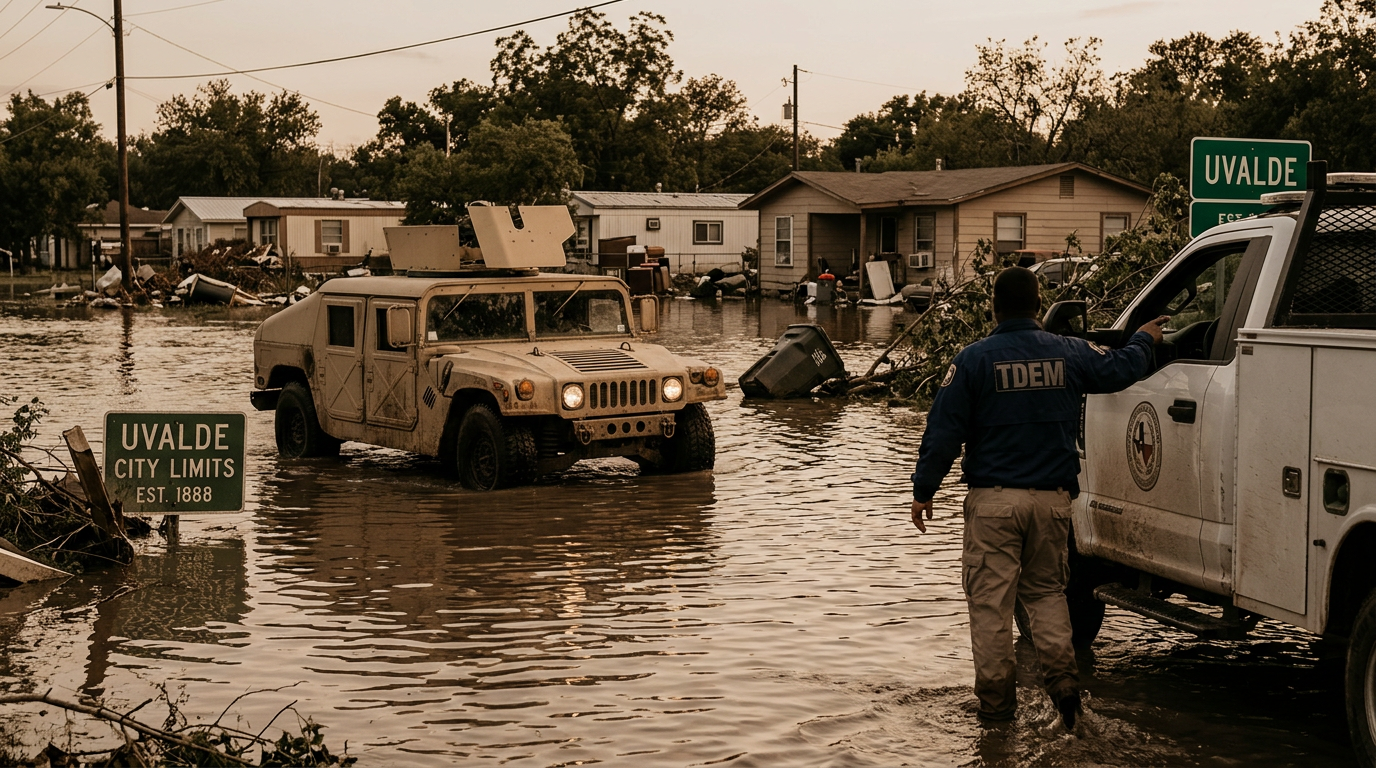
Governor Greg Abbott has publicly acknowledged the severe damage sustained by the Uvalde community following a series of intense weather systems that dropped significant rainfall across the region. Characterizing the impact as especially difficult for a city already burdened by recent hardships, the Governor noted that the local infrastructure and residential areas were hit exceptionally hard by rising waters. The flooding event prompted immediate responses from state emergency management teams as the water levels rose beyond the capacity of traditional drainage systems. This incident follows a pattern of increasingly unpredictable weather patterns across South Texas that challenge local municipal preparedness and state-level response times. To understand the depth of this crisis, one must look at the unique geography of Uvalde and the surrounding areas, which are prone to flash flooding due to the topography of the Texas Hill Country and the Brush Country transition zone. In the past, Texas has utilized the Texas Division of Emergency Management (TDEM) to coordinate across county lines when storms overwhelm local resources. This current mobilization follows a established state precedent where the Governor issues disaster declarations to unlock funding and technical support for rapid restoration of essential services. The state's focus remains on restoring power, ensuring water safety, and evaluating the long-term structural integrity of roads and bridges damaged by the surge.
Texas relevance
The flooding in Uvalde serves as a critical test for Texas state infrastructure and the efficacy of the Governor’s emergency response protocols in rural communities. For Texans, this event highlights the ongoing vulnerability of South Texas towns to extreme weather, emphasizing the need for robust state funding for flood mitigation and drainage improvements. Historically, Texas has prioritized large-scale water projects in metropolitan areas like Houston and Dallas, but the Uvalde disaster refocuses attention on the specific needs of smaller, inland communities. This event also underscores the political importance of swift executive action in Texas, as the state leadership seeks to demonstrate competency and compassion in the face of natural disasters that disrupt the lives of thousands of residents.
The Impact on Uvalde’s Infrastructure
The recent heavy rainfall in Uvalde led to a rapid rise in water levels that caught many residents and local officials off guard. Streets were transformed into rivers within hours, sweeping away debris and compromising the integrity of several local thoroughfares. The city’s drainage capacity, designed for typical South Texas precipitation, was unable to handle the sheer volume of water delivered by the stagnant storm system.
Governor Abbott noted that the damage to the local infrastructure was extensive, requiring a coordinated assessment by the Texas Department of Transportation. Engineers are currently inspecting bridges and low-water crossings to ensure they are safe for public use. The disruption has not only impacted residential areas but has also stalled local commerce, as many businesses were forced to close their doors while water surged through the downtown corridors.
The state’s response involves more than just immediate cleanup; it requires a detailed accounting of the damage to apply for federal assistance if thresholds are met. Local leaders in Uvalde are working closely with state officials to document every destroyed culvert and washed-out road. This documentation is vital for ensuring that the city receives the necessary fiscal support to rebuild stronger than before.
State Resources and Emergency Mobilization
In response to the crisis, the Texas Division of Emergency Management (TDEM) has been directed to deploy personnel and equipment to the Uvalde area. This deployment includes high-water rescue vehicles, search and rescue teams, and technical experts who can assist with utility restoration. The Governor has emphasized that the state’s resources are fully at the disposal of local authorities to ensure no family is left stranded.
A critical component of the state’s mobilization is the activation of the State Operations Center. This hub coordinates communication between various agencies, including the Texas Parks and Wildlife Department and the Texas Military Department. The goal is to provide a seamless transition from the emergency rescue phase to the long-term recovery phase, minimizing the lag time that often plagues disaster responses.
Furthermore, the Governor has signaled that the state will provide support for those who have been displaced from their homes. Shelters have been established through partnerships with the American Red Cross and local faith-based organizations. State health officials are also monitoring the situation to prevent the spread of waterborne illnesses and to ensure that the public has access to clean drinking water while municipal systems are under repair.
A Community Under Pressure
Uvalde has faced a series of significant challenges over the past few years, making this natural disaster particularly poignant. The sense of community spirit remains high, but the cumulative stress of various crises is palpable. Residents have begun the arduous task of mudting out homes and salvaging what remains of their personal belongings, demonstrating a characteristic Texas resilience.
Local nonprofit organizations and volunteer groups have mobilized alongside state agencies to provide food, water, and cleaning supplies to the hardest-hit neighborhoods. The Governor’s office has praised these local efforts, noting that the strength of any disaster response depends heavily on the participation of the local citizenry. The collaboration between the state and the local community is seen as the cornerstone of the recovery plan.
Psychological support services have also been made available for residents who are struggling with total loss. The emotional toll of seeing one’s home and community submerged is significant, and state agencies are providing counseling resources to help families navigate the trauma. The focus remains on holistic recovery, ensuring that both the physical and emotional needs of Uvalde residents are met during this trying time.
Evaluating Long-Term Flood Mitigation
The repetitive nature of such flooding events in the Texas Hill Country and South Texas has sparked a renewed dialogue regarding long-term mitigation strategies. State lawmakers are being urged to look at expanded funding for the Texas Water Development Board’s flood planning initiatives. The goal is to create a more resilient landscape that can better absorb and redirect excess water during extreme rain events.
Possible solutions include the construction of regional detention ponds, the improvement of channelization in local creeks, and stricter zoning laws regarding development in floodplains. However, these projects require substantial investment and years to complete. The Uvalde flooding serves as a stark reminder that the cost of inaction often exceeds the cost of preventive infrastructure.
Governor Abbott has indicated that future legislative sessions may need to address these gaps in rural infrastructure. By leveraging state surpluses and federal grants, Texas aims to fortify its smaller towns against the elements. The emphasis is on building 'smarter' infrastructure that accounts for the reality of sudden, high-intensity storms that have become more common in the southern part of the state.
Regional Implications for South Texas
Uvalde’s struggle is reflective of a broader trend affecting much of South Texas. As the region experiences fluctuations between extreme drought and sudden flash flooding, agricultural and municipal sectors are forced to constantly adapt. This weather volatility disrupts planting cycles, damages livestock fencing, and puts a strain on the state’s agricultural economy, which is a significant contributor to the Texas GDP.
Other nearby counties are closely watching the situation in Uvalde as they assess their own vulnerabilities. The shared watersheds in this part of the state mean that what happens in one county often flows into the next. Regional cooperation is becoming increasingly necessary to manage the flow of water across the landscape, leading to more joint-county flood control districts and shared emergency protocols.
The economic impact of the flooding extends beyond Uvalde, affecting supply chains and transportation routes that move goods from the border into the interior of the state. When major roads in Uvalde are submerged, it creates a ripple effect throughout the regional transportation network. Maintaining these routes is a priority for the state to ensure that the Texas economy continues to function smoothly even during environmental crises.
The Role of Technology in Disaster Response
During this flooding event, the state of Texas has utilized advanced technology to monitor rising water levels and prioritize rescue missions. Drone surveillance and satellite imaging have allowed the Texas Division of Emergency Management to identify inaccessible areas and deploy assets more effectively. This data-driven approach marks a significant evolution in how the state handles natural disasters.
Real-time alerts sent to residents' mobile devices also played a crucial role in minimizing casualties. By providing timely warnings, the state was able to encourage evacuations before roads became impassable. The integration of technology in the emergency response framework has been a major focus of Governor Abbott’s administration, aiming to reduce the human cost of these events.
In the future, the state plans to further enhance its predictive modeling capabilities. By using AI to analyze rainfall patterns and terrain data, emergency managers hope to anticipate flooding before it starts. This proactive stance is part of a broader mandate to modernize the Texas emergency response apparatus, ensuring that the state remains a national leader in disaster preparedness.
Analysis
Opinion: The Governor's quick acknowledgment of Uvalde’s struggles reflects a necessary political and humanitarian focus on a community that has become a symbol of resilience in Texas. By framing the flooding as a 'hard hit' for his administration to address, Abbott is signaling a commitment to prioritize rural recovery efforts which are often slower than urban counterparts. While the immediate focus is on cleanup and safety, the long-term challenge for the Texas Legislature will be addressing the recurring nature of these flash floods. Without significant shifts in how the state manages watershed overflow in rural counties, we can expect these 'hard hits' to become a more frequent and costly drain on the state's rainy-day funds.
Source attribution
This story was reported using a public release from the Governor Abbott — Video Moments (Google News). Keep TX Red rewrote the coverage independently and links to the official statement for verification.
Frequently Asked Questions
- What state agencies are currently involved in the Uvalde flood response?
- The primary agency in charge is the Texas Division of Emergency Management (TDEM). They are supported by the Texas Department of Transportation (TxDOT) for road assessments, the Texas Parks and Wildlife Department for water rescues, and the Texas Military Department for logistical support. These agencies work in tandem with the Governor’s office to distribute resources where they are most needed.
- How can residents apply for assistance following the flooding?
- Residents are encouraged to report damage through the iPhon/Android 'iSTAT' tool provided by TDEM. This helps the state determine the extent of the damage for potential disaster declarations. For immediate needs like food and shelter, residents should contact local emergency services or the designated relief centers established at community halls and churches in Uvalde.
- Is there a specific disaster declaration in place for Uvalde County?
- Governor Abbott typically issues disaster declarations on a rolling basis as damage assessments come in. These declarations provide the legal basis for deploying state resources and may eventually lead to a federal disaster declaration, which would unlock FEMA funding for individual and public assistance. Residents should monitor official state channels for the latest executive orders.
Official Sources
Take the next step
Browse the Newsroom →Read more about Keep Texas Red → Our full guide to what Keep Texas Red means and why Texans support it.
Related Articles
Get Texas updates delivered weekly.
Independent Texas reporting on politics, policy, and daily life. One email a week. Unsubscribe anytime.
Keep TX Red Newsroom
The Keep Texas Red Editorial Staff produces nonpartisan explainers, policy breakdowns, and educational resources to help Texans understand how their government works. All content is reviewed for accuracy and updated regularly.
About Keep TX Red →