Escalating Inflation Challenges Texas Summer Food Programs and Vulnerable Households
Rising food and fuel costs are straining North Texas nonprofit programs as they attempt to feed students during the summer break.
Editorial disclaimer: Opinions and analysis on Keep TX Red are editorial content — not statements of fact. See our editorial standards.
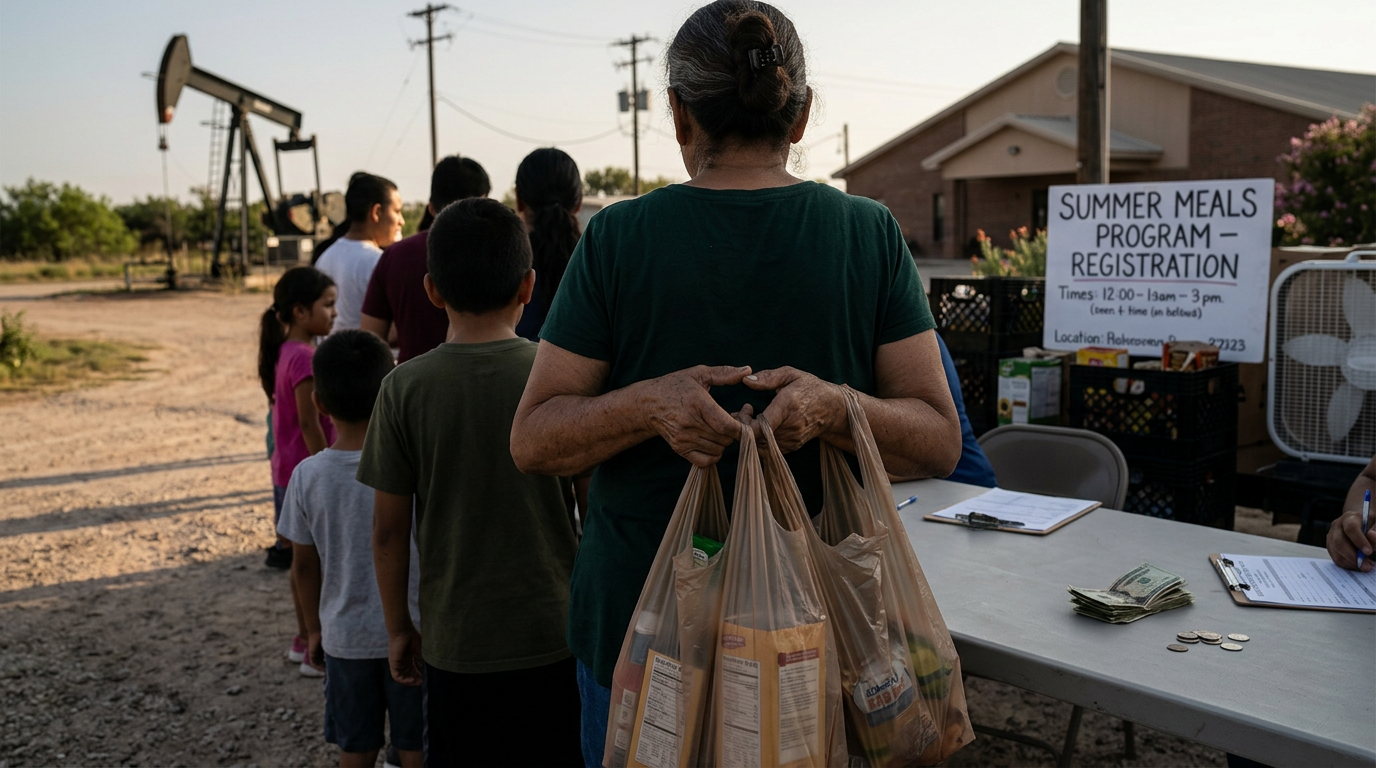
Historically, the cessation of the academic year marks the beginning of a precarious period for Texas families who depend on school-based nutrition programs. For decades, the National School Lunch Program has served as a primary bulwark against childhood hunger, but the transition to summer months often leaves a gap that must be filled by local charities and state-sponsored meal sites. This year, however, the challenge is compounded by a persistent inflationary environment that has driven the consumer price index for groceries to heights not seen in the previous decade. As families struggle with the rising cost of living, the nonprofits designed to assist them are themselves facing the squeeze of higher procurement and logistics costs. Traditionally, these programs benefit from stable supply chains, yet the current economic climate in 2026 has introduced new variables of volatility that threaten the reach of these essential social safety nets. The reliance on centralized food banks has increased significantly as smaller community pantries find their shelves emptying faster than they can be replenished. This shift highlights a systemic vulnerability in how the state addresses seasonal hunger during periods of fiscal uncertainty. Local organizations are now reporting that the volume of requests for assistance has bypassed peaks seen in several previous years, indicating a deepening crisis for the working class.
Texas relevance
The economic pulse of the Lone Star State is directly tied to the stability of its workforce and the health of its youth. In regions such as North Texas and the Rio Grande Valley, the disparity between rapid urban growth and localized poverty creates a complex landscape for food distribution. Texas currently ranks among the top states for food insecurity, particularly in rural counties where transportation costs for food delivery are exacerbated by surging gas prices. For Texas taxpayers and community leaders, the efficacy of summer meal programs is not merely a social issue but an economic one, as childhood malnutrition is linked to long-term educational and healthcare costs that the state must eventually absorb. The localized impact in North Texas is especially pronounced, where nonprofit networks are having to re-evaluate their budgets in real-time to account for the skyrocketing cost of proteins and dairy products which are staples of the youth nutrition programs.
The Disruption of Summer Nutrition Networks
In the typical Texas school calendar, millions of students are eligible for free or reduced-price meals, which provide two-thirds of their daily caloric intake. When campuses close in late May or early June, the responsibility for these meals shifts to the families or to the Summer Food Service Program. This transition has always been difficult, but the 2026 season has introduced unprecedented hurdles. Many families who previously hovered just above the poverty line are now seeking assistance because their disposable income has been entirely consumed by rising rents and utility bills.
To combat this, Texas food banks have established hundreds of mobile distribution sites and partnership locations. However, the operational cost of these sites has risen by nearly twenty percent. Every mile driven by a delivery truck and every hour of refrigeration for perishable goods costs more than it did two years ago. This means that even if donation levels remain steady in dollar amounts, the actual volume of food that money can purchase has decreased, leading to smaller portions or fewer available meal sites in remote areas.
Economic Pressures on the Non-Profit Sector
Texas food banks operate with high efficiency, often turning a single dollar into multiple meals through bulk purchasing and industry partnerships. But even these sophisticated procurement strategies are being tested. Commodity prices for wheat, meat, and vegetables have seen sharp spikes due to a combination of labor shortages, weather-related crop yields, and increased transportation fees. This forces food bank directors to make tough choices about which items to stock, often prioritizing shelf-stable goods over the fresh produce necessary for a balanced diet.
Volunteering, the lifeblood of these programs, is also seeing a shift. While the spirit of giving remains strong in Texas, many residents are picking up second jobs or working extra hours to cope with inflation, leaving them with less time to dedicate to packing boxes or staffing distribution lines. This labor gap requires nonprofits to sometimes hire temporary help, further straining budgets that are already stretched thin by the high cost of staples like milk and eggs.
Impact on North Texas Urban Centers
The DFW metroplex serves as a microcosm of the statewide struggle. In cities like Dallas and Fort Worth, the cost of living has outpaced wage growth for many service-sector workers. Families who once donated to food drives are now finding themselves in the distribution queues. Food bank data suggests that a significant percentage of current clients are 'first-time' seekers of assistance, a trend that began to accelerate in early 2024 and has not yet plateaued.
Local school districts have attempted to fill the void by keeping some cafeterias open during the summer, but logistical barriers remain. Many parents lack reliable transportation to get their children to these sites during work hours. As a result, the 'last mile' of food delivery—getting the meal from the warehouse to the child's hand—has become the most expensive and difficult part of the operation in the North Texas region.
Policy and Supply Chain Resilience
Addressing the hunger gap in Texas requires a look at the state's internal supply chains. Texas is an agricultural powerhouse, yet much of the food grown within the state is exported or processed elsewhere before returning to local shelves. There is a growing conversation among policy experts about creating more localized 'farm-to-food-bank' pipelines. By shortening the distance food travels, the state could potentially lower the fuel costs that are currently hampering distribution efforts during this inflationary window.
State legislative sessions have previously touched on food insecurity, but the focus has often been on bureaucratic efficiency rather than direct economic relief for the distribution networks themselves. As the 2026 summer season highlights the fragility of the current system, there may be renewed interest in state-funded grants that specifically target the fuel and refrigeration overhead of major Texas food banks to ensure they can maintain their service levels regardless of the price of diesel.
The Role of Corporate and Private Giving
In the absence of stable prices, the role of the Texas business community has become more critical. Many large corporations headquartered in Texas provide significant philanthropic support to hunger relief efforts. However, inflation affects corporate bottom lines as well, leading to a tightening of charitable budgets. Despite this, some of the state’s largest retailers have stepped up by providing 'at-cost' inventory to hunger relief organizations, recognizing that a hungry community is an unstable market.
Individual Texans continue to show resilience, with small-scale neighborhood 'blessing boxes' and church-based pantries filling the gaps left by larger organizations. These hyper-local efforts are often the first line of defense for families who are too embarrassed to visit a large-scale food bank or who live in areas not serviced by public transit. The synergy between these small-scale efforts and the larger regional food banks remains the backbone of the Texas response to the summer hunger surge.
Future Outlook for Texas Families
Looking ahead to the remainder of 2026 and into 2027, the economic forecast remains mixed. While some economists predict a cooling of inflation, the 'sticky' nature of grocery prices means that the cost of feeding a family is unlikely to return to 2020 levels anytime soon. This suggests that the increased demand on summer food programs may become a permanent fixture of the Texas social landscape rather than a temporary spike.
For the programs to survive, they will need to adopt new technologies in inventory management and perhaps seek more permanent state-level backing. The health of Texas's future workforce depends on children receiving adequate nutrition today. As the state continues to lead the nation in population growth, the infrastructure of its food security must grow at a commensurate rate to ensure that no child in the Lone Star State is left behind by the tides of economic change.
Analysis
Opinion: The struggle of Texas food programs is a symptom of a broader failure to address the core drivers of inflation at the federal level. While the state’s economy remains robust in terms of energy production and corporate relocation, the 'kitchen table' issues—specifically grocery and fuel costs—are eroding the gains made by many Texas families. High inflation acts as a regressive tax, disproportionately impacting those whose incomes have not kept pace with the cost of living. Furthermore, the increased pressure on private charities suggests that reliance on government-subsidized programs alone is insufficient when supply chains are disrupted. Local communities are stepping up, but the sustainability of this model is under threat if the purchasing power of the dollar continues to decline. Lawmakers may need to consider more aggressive state-level initiatives to bolster food supply chain resilience within Texas borders to insulate residents from national economic fluctuations.
Source attribution
This story was reported using a public release from the Texas Standard. Keep TX Red rewrote the coverage independently and links to the official statement for verification.
Frequently Asked Questions
- Why does food insecurity increase during the summer months?
- During the school year, many low-income students receive breakfast and lunch daily through federal programs. When schools close for summer break, families must provide these additional ten meals per week themselves, which can be an impossible financial burden when household budgets are already tight due to inflation.
- How is inflation specifically affecting Texas food banks?
- Food banks are facing a 'triple threat' of higher food prices, increased transportation/delivery costs due to fuel prices, and a decrease in the purchasing power of cash donations. This means they are paying more to provide less food than in previous years.
- What can local communities do to help?
- Local communities can support food banks through monetary donations, which allow organizations to buy in bulk, or by volunteering their time. Additionally, spreading awareness of local meal site locations helps ensure that families in need know where to find assistance near their homes.
Official Sources
Take the next step
Browse the Newsroom →Read more about Keep Texas Red → Our full guide to what Keep Texas Red means and why Texans support it.
Related Articles


Get Texas updates delivered weekly.
Independent Texas reporting on politics, policy, and daily life. One email a week. Unsubscribe anytime.
Keep TX Red Newsroom
The Keep Texas Red Editorial Staff produces nonpartisan explainers, policy breakdowns, and educational resources to help Texans understand how their government works. All content is reviewed for accuracy and updated regularly.
About Keep TX Red →