Digital Strategy and Cultural Preservation: The Rise of Interactive Texas Media
Exploring how Texas media outlets use interactive games and digital puzzles to preserve local culture and drive modern audience engagement.
Editorial disclaimer: Opinions and analysis on Keep TX Red are editorial content — not statements of fact. See our editorial standards.
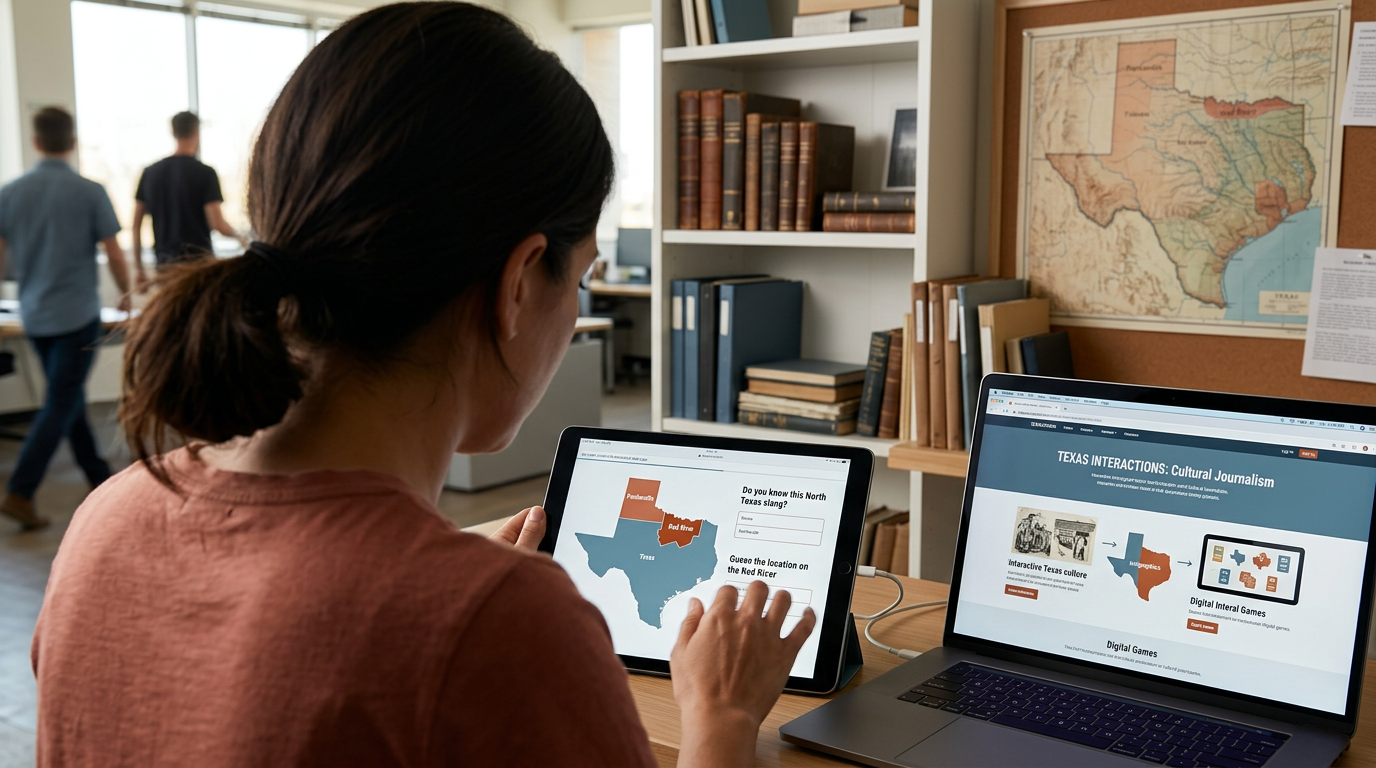
The landscape of Texas journalism is undergoing a significant transformation as traditional print pillars shift toward interactive digital experiences. Central to this evolution is the implementation of regionalized gaming content designed to test the linguistic and cultural knowledge of residents. Historically, Texas publications relied solely on long-form reporting and photography to capture the essence of the state. However, the modern era demands a multi-sensory approach where readers become active participants in the narrative process through daily puzzles and challenges. This shift reflects a broader trend in the American South, where legacy media organizations are fighting for attention in an increasingly crowded digital marketplace. By integrating localized themes into standard game formats, these outlets are able to reinforce a sense of community identity while simultaneously increasing the time users spend on their platforms. The strategy serves as both a tool for audience retention and a creative method for celebrating the unique vocabulary that defines life between the Red River and the Rio Grande.
Texas relevance
For residents across the diverse regions of Texas, from the high plains of the Panhandle to the coastal reaches of the Gulf, these digital initiatives provide a rare common ground. In a state as vast as Texas, local news and cultural markers often vary wildly by geography. Digital puzzles help bridge these gaps by focusing on shared Texan iconography and vernacular. Furthermore, as the Texas economy continues to attract tech-centered businesses, the demand for sophisticated, mobile-friendly digital content from local sources has reached an all-time high.
The Evolution of Regional Media Engagement
In the mid-20th century, Texas media was defined by powerful local newspapers and the rise of statewide magazines that sought to capture the booming energy and agricultural sectors. The focus was primarily on one-way communication, where editors curated stories and readers consumed them over morning coffee. This model began to fracture with the rise of the internet, forcing a total reconsideration of how a brand maintains loyalty.
Today, the engagement model in Texas has moved toward a two-way dialogue. Interactive features allow for a level of personalization that traditional columns never could. By challenging the reader’s memory of local geography or historical figures through puzzle mechanics, media outlets transform a passive audience into a dedicated community of enthusiasts who return daily to test their skills.
Successful digital puzzles in the Lone Star State often lean heavily on a shared sense of place. Whether it is referencing a specific small-town landmark or a colloquialism used exclusively in West Texas, these elements act as 'Easter eggs' for lifelong residents. This hyper-local strategy is proving to be a more effective deterrent against audience churn than broad, nationalized content.
Bridging Geography with Digital Challenges
Texas covers more than 268,000 square miles, making it one of the most geographically diverse areas in the Western Hemisphere. This diversity often leads to fragmented media consumption patterns where a resident in El Paso may have very little in common with a resident in Beaumont. Digital puzzles serve as one of the few unifying digital fabrics that can span these distances.
By utilizing a common digital interface, media companies can deliver a singular experience to millions of Texans simultaneously. This creates a virtual environment where the shared identity of being a Texan is more important than specific municipal boundaries. The gamification of the newsroom is not just about clicks; it is about reinforcing a state-wide brand that can survive the transition away from physical newsstands.
As mobile devices become the primary source of information for the majority of the population, the accessibility of these games is paramount. Ensuring that a puzzle functions as smoothly on a smartphone in a rural ranching community as it does on a fiber-optic connection in downtown Austin is the new technical frontier for Texas publishers.
The Psychology of the Daily Puzzle Habit
There is a distinct psychological component to the daily puzzle ritual that aligns perfectly with the Texan spirit of self-reliance and mental toughness. Many residents view these morning challenges as a form of cognitive exercise, a way to sharpen the mind before the workday begins. This habit-forming behavior is the 'holy grail' for digital advertisers and subscription models alike.
Psychologists suggest that the sense of completion found in solving a difficult word puzzle provides a dopamine response that keeps users coming back. For Texas outlets, this means that their brand is associated with a positive, rewarding daily experience. Over time, this builds a level of trust and affinity that makes readers more likely to engage with more serious journalistic content on the same platform.
The competitive nature of Texans also plays a role. Many of these digital platforms include social sharing features, allowing friends and family members from different parts of the state to compare scores. This social layer turns a solitary activity into a communal event, further embedding the media outlet into the social fabric of the state.
Preserving the Vocabulary of the Lone Star State
Language is the primary carrier of culture, and Texas possesses one of the most distinct linguistic profiles in the United States. From the influence of Spanish in the south to the German and Czech heritage of the Hill Country, the way Texans speak is a mosaic of history. Interactive games often use these unique words as the backbone of their challenges.
As globalized media tends to flatten regional accents and vocabularies, these localized puzzles act as a defensive barrier. They remind users of specific terms that might be fading from common usage in urban centers. By making these words the 'key' to winning a game, publishers ensure that the next generation of Texans remains familiar with their linguistic heritage.
This effort goes beyond just entertainment; it is an informal educational tool. For the thousands of new residents moving to Texas every month from out of state, these games serve as an introductory course in Texan culture. It helps them assimilate into the local environment by teaching them the nuances of the language used by their new neighbors.
Technical Infrastructure and User Experience
The backend development of interactive puzzles requires a sophisticated understanding of user experience (UX) design. Texas-based developers are increasingly tasked with creating interfaces that are intuitive yet challenging. This balance is critical because a game that is too difficult will alienate casual users, while one that is too easy will fail to provide the necessary sense of accomplishment.
Security and data privacy also play a major role in the development of these platforms. As users create profiles to track their progress, Texas media companies must adhere to strict standards to protect user information. This has led to an increase in investment in cybersecurity within the state’s media sector, mirroring the growth seen in the broader Texas tech corridor.
Looking forward, we can expect to see more integration of augmented reality (AR) and artificial intelligence (AI) in these interactive tools. Imagine a word puzzle that changes based on your physical location within Texas or an AI coach that provides hints based on your previous gameplay patterns. The technological horizon for Texas media is expanding rapidly.
Economic Impact of the Digital Pivot
The financial health of regional journalism is directly tied to its ability to monetize digital traffic. Interactive features like 'Word Wrangler' provide a high-value environment for advertisers. Because users are deeply focused while solving puzzles, the advertisements placed on these pages often receive higher engagement rates than those on standard news articles.
Furthermore, these games act as a funnel for premium subscription services. A user who visits a site every day for a puzzle is much more likely to convert into a paying subscriber to gain access to archives or ad-free experiences. This revenue stream is vital for funding the investigative journalism that keeps Texas government officials and corporations accountable.
The success of these digital initiatives has also created specialized job opportunities within the state. From game designers and creative writers to data analysts who study player behavior, the media economy in Texas is diversifying. This shift helps the state remain a leader in the national media landscape, proving that localized content can thrive in a globalized digital economy.
Analysis
The decision by major Texas media entities to prioritize interactive puzzles like the 'Word Wrangler' is a calculated move to secure a future beyond the printed page. By gamifying the Texan experience, these organizations are effectively archiving regional dialects and historical references in a format that appeals to younger, tech-savvy generations. While some might view these games as mere entertainment, they function as a soft power tool for cultural preservation. They ensure that even as the state's demographics shift and urban centers expand, the core linguistic nuances of Texas remain a vibrant part of the daily digital routine.
Source attribution
This story was reported using a public release from the Texas Monthly. Keep TX Red rewrote the coverage independently and links to the official statement for verification.
Frequently Asked Questions
- Why are Texas publications focusing on games like Word Wrangler?
- Publications are using these games to build a daily habit among readers, which increases brand loyalty and provides a stable platform for digital advertising and subscription growth.
- How do these interactive features help preserve Texas culture?
- By incorporating regional slang, historical references, and local geography into the gameplay, these tools ensure that the unique identity of Texas remains at the forefront of the digital experience.
- Are these games accessible to everyone in the state?
- Yes, most of these features are designed to be mobile-friendly, allowing Texans in both urban centers and rural areas to participate as long as they have an internet connection.
- What is the future of interactive media in Texas?
- The future likely includes more personalized experiences, potentially using AI to tailor difficulty levels and AR to integrate the physical Texas landscape into digital challenges.
Official Sources
Take the next step
Browse the Newsroom →Read more about Keep Texas Red → Our full guide to what Keep Texas Red means and why Texans support it.
Related Articles



Get Texas updates delivered weekly.
Independent Texas reporting on politics, policy, and daily life. One email a week. Unsubscribe anytime.
Keep TX Red Newsroom
The Keep Texas Red Editorial Staff produces nonpartisan explainers, policy breakdowns, and educational resources to help Texans understand how their government works. All content is reviewed for accuracy and updated regularly.
About Keep TX Red →