Danger on the Water: Kayakers Filmed on Surging Texas River During Severe Flash Flood
Video captures recreational kayakers on high-velocity Texas floodwaters, highlighting extreme safety risks during summer storm surges.
Editorial disclaimer: Opinions and analysis on Keep TX Red are editorial content — not statements of fact. See our editorial standards.
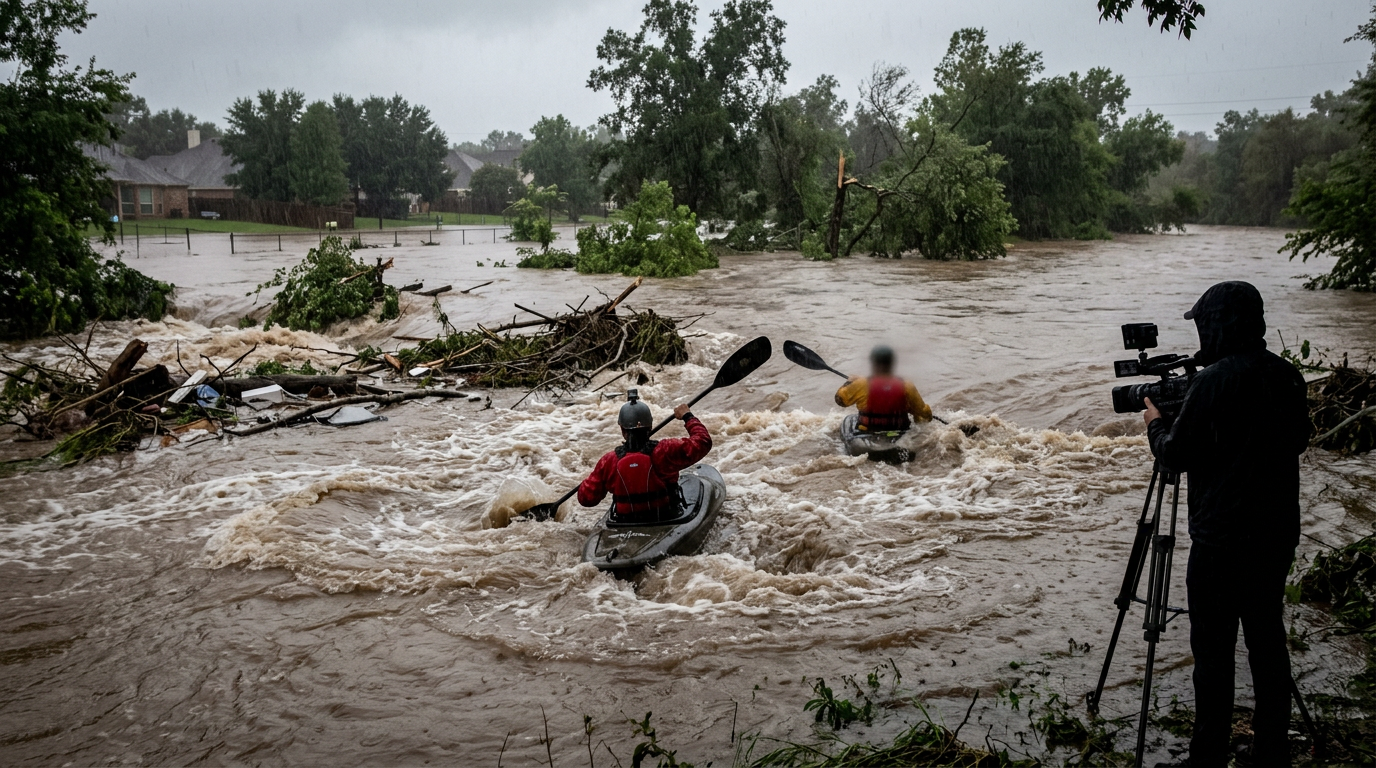
Recent footage captured on July 17, 2026, showcases individuals kayaking on a rapidly rising Texas river in the midst of a flash flood event. The video, which surfaced during a period of heavy precipitation, features small watercraft navigating turbulent, debris-laden waters that have exceeded their normal banks. These conditions typically follow intense rainfall, where dry creek beds or standard river channels can transform into high-velocity hazards within minutes. This incident serves as a stark reminder of the unpredictable nature of Texas waterways during the peak of the storm season. In these environments, the sheer volume of water moving downstream can shift the landscape, moving large boulders and heavy timber as if they were nothing more than driftwood. Historically, Texas rivers have been the pride of the state's recreational tourism, but they possess a volatile secondary nature that appears during the summer monsoon-like cycles.
Texas relevance
Flash flooding is a perennial hazard in Texas, which sits within a region often referred to as 'Flash Flood Alley' due to its unique topography and weather patterns. Sudden surges in local rivers pose a direct threat to residents and first responders across the state. In metropolitan areas and rural Hill Country settings alike, the rapid rise of water levels requires immediate public awareness to prevent tragedies on popular recreational waterways. The state has invested heavily in flood mitigation and early warning systems, yet the human element remains the most unpredictable variable in emergency management. When citizens ignore these warnings, it stresses the local infrastructure and the network of Texas Search and Rescue teams that stay on high alert during these cycles.
The Mechanics of Flash Flood Surges
Flash floods in Texas are characterized by their speed and the volume of water they displace in a short timeframe. When heavy rain falls over a specific watershed, the ground may become saturated quickly, leading to massive runoff that feeds directly into river systems. This results in a 'wall of water' effect where the river level can rise several feet in just a few minutes. The physics behind this movement involves a significant amount of kinetic energy that is often invisible to the naked eye until the water hits an obstruction.
The water in these scenarios is not just high; it is extremely powerful. The kinetic energy of a surging river can move large rocks, uproot trees, and carry heavy urban debris. For kayakers, the primary danger is not just the speed of the current, but the presence of 'strainers'—submerged objects like fallen limbs that can pin a boat or a person against the force of the water, making escape nearly impossible without external assistance. A strainer allows water to pass through but keeps solid objects trapped, effectively acting like a lethal sieve.
Public Safety Risks and First Responder Impacts
When individuals choose to enter floodwaters for recreation, they often do so without acknowledging the secondary impact on the community. Significant resources are diverted from other emergencies when river-water rescue teams are dispatched. These teams utilize specialized equipment, including high-water vehicles and helicopters, which are expensive to operate and carry their own sets of risks in stormy conditions. The deployment of a Zodiac boat or a swift-water specialist is a last-resort measure intended for victims of circumstance, not thrill-seekers.
In Texas, local jurisdictions often issue stern warnings or formal closures of parks and river access points during severe weather. Disregarding these warnings can lead to legal consequences, but more importantly, it creates a scenario where emergency personnel must weigh the life of a stranded individual against the safety of their own crew members in turbulent environments. Every minute spent on a preventable recreational rescue is a minute that personnel are unavailable for house fires, heart attacks, or unavoidable weather-related accidents elsewhere in the county.
Historical Context of River Volatility
Texas has a long history of devastating river floods, including major events along the Guadalupe, Brazos, and Colorado rivers. Historically, these rivers have transitioned from nearly dry beds to raging torrents in the span of a single afternoon. The geography of the state, particularly the limestone karst of the Hill Country, prevents water from soaking into the ground, funneling it instead into river channels with lethal efficiency. This narrow funneling effect is what makes the Central Texas region one of the most flood-prone areas in North America.
Past incidents have shown that even experienced river guides can be overwhelmed by the sheer force of a flash flood. The debris carry is often the most overlooked factor; a kayaker may be able to handle the waves, but they cannot easily dodge a submerged log or a man-made object moving at twenty miles per hour within the current. In historical floods, such as those seen in Wimberley or Austin, the sheer velocity of the water was enough to sweep away concrete bridges, illustrating the futility of a plastic kayak against such force.
Navigating State Safety Regulations
Texas law and local ordinances provide a framework for water safety, yet enforcement becomes difficult during active storm events. While the state encourages the use of its natural resources, the Texas Parks and Wildlife Department consistently emphasizes that 'flooded is not fly.' This mantra is intended to discourage the exact type of activity seen in the recent video footage. Regulations often stipulate that life jackets are mandatory, but during a flood, even the best flotation device may not prevent a person from being pulled under by a powerful hydraulic recirculating current.
Local officials emphasize that if a river is out of its banks or brown with silt and debris, it is unsafe for any form of recreation. The visibility in floodwater is essentially zero, meaning any underwater hazards are completely hidden from the view of a kayaker or swimmer until contact is made. Once a river reaches a certain cubic-feet-per-second (CFS) threshold, most rental agencies and park authorities will suspend all river traffic as a matter of standard protocol to protect the public and minimize the need for state intervention.
The Importance of Monitoring Weather Alerts
The visual evidence of kayakers on a surging river highlights a potential gap in the public's response to meteorological warnings. A flash flood warning is an urgent notice that flooding is imminent or occurring. For those near riverbanks, these alerts are a signal to move to higher ground immediately, rather than an invitation to view the water up close. The psychological distance between 'watching the weather' and 'experiencing the weather' often evaporates too late for those caught in the middle of a channel.
Modern technology provides real-time river gauge data across Texas, allowing the public to see exactly how fast water levels are rising. Ignoring these data points in favor of short-term thrills can lead to long-term consequences for the individuals involved and the communities that must respond to their potential distress. Residents are encouraged to use apps and official NOAA weather radios to stay informed about upstream rainfall, as flooding can occur even if it is not raining in the immediate vicinity of the river user.
Stakeholder Perspectives and Community Impact
Local business owners who rely on river tourism often express frustration with reckless behavior. When high-profile rescues or deaths occur, it often leads to stricter regulations or temporary bans that hurt the livelihood of legitimate tubing and kayaking outfitters. These stakeholders emphasize that river culture is built on a foundation of respect for the water, which includes knowing when to stay on the shore. The socioeconomic ripples of a single tragic river incident can affect an entire county's tourism reputation for years.
Furthermore, environmental stakeholders point out that floodwaters are often contaminated with runoff from streets, sewers, and agricultural sites. Paddling in floodwater isn't just a physical risk; it exposes the individual to biological and chemical hazards that aren't present during normal river flow. The long-term health implications of contact with these waters are often ignored by those looking for a quick thrill, despite the high levels of bacteria found in urban runoff during Texas thunderstorms.
Future Outlook: What Changes Next?
As Texas continues to experience rapid urbanization, the risk of flash flooding increases due to more paved surfaces and less natural drainage. This means that river surges will likely become more frequent and more intense. Emergency management agencies are currently reviewing their response protocols to include more aggressive educational campaigns aimed at recreationalists. We may see an increase in 'closed-river' ordinances that carry stiffer penalties for those who bypass barricades during high-water events.
Technological advancements in drone surveillance may also allow authorities to monitor river conditions and identify stranded individuals more quickly. However, the first line of defense remains individual responsibility. By respecting the power of the Texas landscape and the warnings of the National Weather Service, residents can ensure that our waterways remain a source of enjoyment rather than a site of tragedy. The goal for future seasons is a culture of safety where the community understands that a surging river is a force to be respected, not a playground.
Analysis
This event underscores a recurring conflict between recreational interest and public safety mandates in Texas. While the state's rivers are significant economic and social assets, the decision to engage in water sports during a flash flood warning places an undue burden on local emergency departments. Should these individuals have required rescue, the operation would have put multiple first responders at risk in conditions where high-velocity water makes boat deployment and swimmer recovery extremely difficult. Furthermore, the glorification of such activities through social media can lead to dangerous 'copycat' behavior, where less experienced individuals attempt to recreate these stunts without understanding the hydraulic forces at play.
Source attribution
This story was reported using a public release from the Texas Storm Video (Google News). Keep TX Red rewrote the coverage independently and links to the official statement for verification.
Frequently Asked Questions
- Is it legal to kayak in a flooded river in Texas?
- While river access is generally public, many local authorities close parks and river entry points during flood stages. Disregarding these closures or needing rescue can result in fines or being held liable for the costs of the rescue operation depending on local ordinances. In some cases, reckless endangerment charges can be pursued if the behavior threatens others.
- What makes flash flood water more dangerous than normal river currents?
- Flash flood water is typically filled with debris like trees, trash, and rocks. It also has much higher turbidity, making it impossible to see underwater obstacles. The speed and volume of the water can easily trap a paddler against a bridge piling or submerged tree, creating a 'pinning' situation that is difficult to escape.
- How can I check if a Texas river is safe for kayaking?
- Residents should check the USGS river gauges and the National Weather Service's hydrographs. If a river is at or near 'Action Stage' or 'Flood Stage,' all recreational activities should be suspended until the water recedes and the channel is cleared of new debris. Additionally, checking with local river outfitters can provide ground-level safety updates.
- What should I do if I see someone in a flooded river?
- Do not enter the water to help them. Call 911 immediately and provide a precise location. Try to maintain visual contact from a safe distance on high ground. Throwing a flotation device from the shore is acceptable, but you should never put yourself in a position where you could be pulled into the current as well.
Official Sources
Take the next step
Browse the Newsroom →Read more about Keep Texas Red → Our full guide to what Keep Texas Red means and why Texans support it.
Related Articles

Get Texas updates delivered weekly.
Independent Texas reporting on politics, policy, and daily life. One email a week. Unsubscribe anytime.
Keep TX Red Newsroom
The Keep Texas Red Editorial Staff produces nonpartisan explainers, policy breakdowns, and educational resources to help Texans understand how their government works. All content is reviewed for accuracy and updated regularly.
About Keep TX Red →