Unpacking the Centuries-Long Evolution of Faith and Power in the Lone Star State
A new historical analysis explores the profound influence of diverse religious traditions on Texas' identity from colonial eras to the modern megachurch.
Editorial disclaimer: Opinions and analysis on Keep TX Red are editorial content — not statements of fact. See our editorial standards.
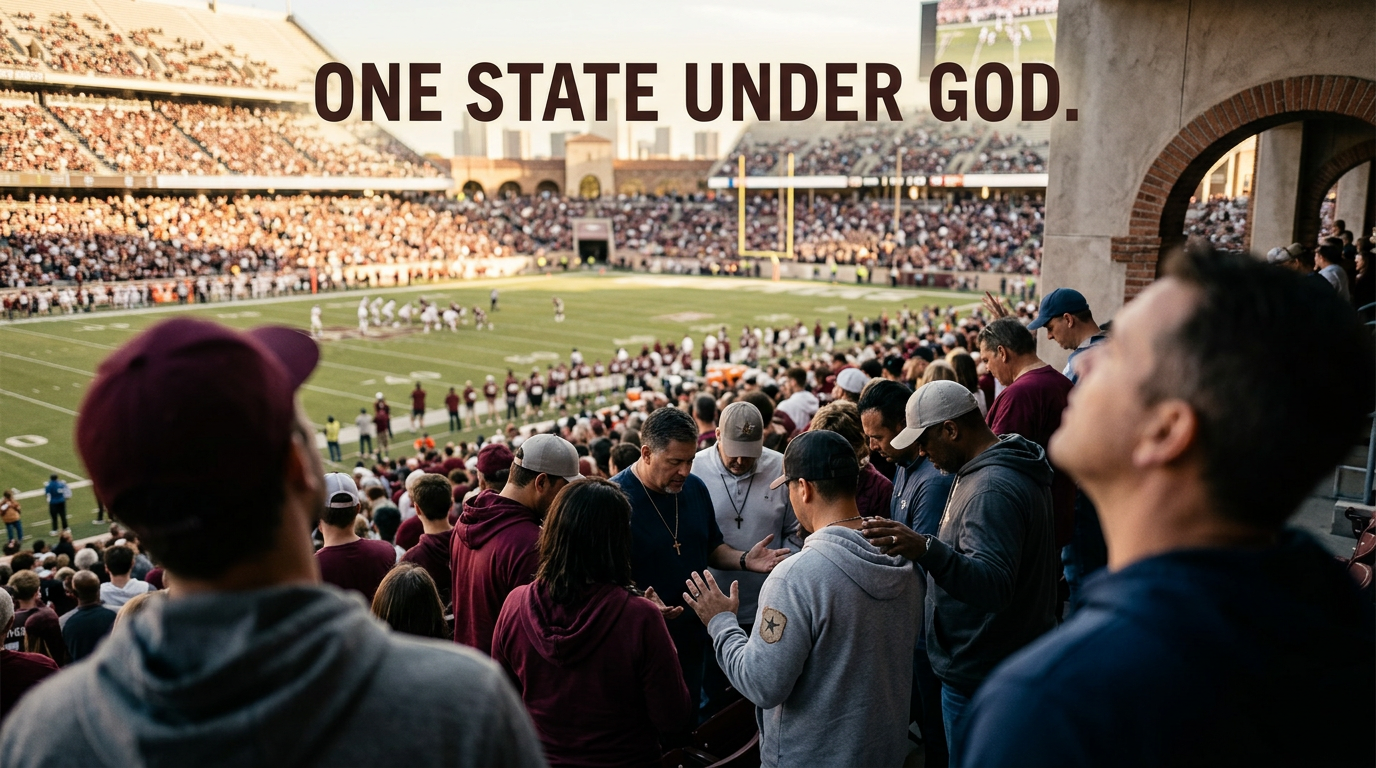
The historical identity of Texas has long been intertwined with religious conviction, but the evolution of that faith is far more complex than simple caricatures suggest. A new scholarly exploration titled 'One State Under God' provides a granular examination of how spiritual movements have shaped the social and political architecture of the region over several centuries. This narrative begins well before the arrival of European explorers, noting that the land was already home to sophisticated Indigenous belief systems and cosmologies that dictated the internal politics of tribes such as the Caddo and the Comanche. These early spiritual frameworks laid a foundation for the competitive and often clash-heavy religious landscape that would define the territory as it transitioned through various flags and sovereignty changes during the 18th and 19th centuries. The work moves chronologically to address the arrival of Franciscan friars and the establishment of the Spanish mission system, which served as both a spiritual outreach and a colonial tool of control. This era marked the first significant attempt to align governance with a specific religious orthodoxy in Texas. However, the subsequent influx of Anglo-American settlers brought with them a distinct brand of Protestantism that prioritized decentralized authority and revivalist fervor. This clash between established Catholic order and the fiery, frontier-style Baptist and Methodist traditions created a unique friction that fueled the Texas Revolution and the subsequent formation of the Republic. The narrative suggests that understanding modern Texas policy requires an appreciation of these deep-seated theological tensions that have persisted through the Civil War, the Gilded Age, and the modern era.
Texas relevance
For residents of modern Texas, the impact of this history is visible in everything from legislative debates in Austin to the social services provided by faith-based organizations in Dallas and Houston. Texas remains one of the most religiously active states in the Union, and its voting patterns are frequently dictated by the demographic shifts within these religious communities. Historically, Texas served as a buffer zone where different American and European traditions competed for influence, eventually leading to the 'Bible Belt' identity that characterizes much of the state today. By examining these historical roots, Texans can better understand the current fractures and alliances within the state's political parties, particularly regarding the role of the house of worship as a community center and political organizing hub.
The Pre-Colonial Landscape and Indigenous Faith
Before the first Spanish mission was ever constructed on the banks of the San Antonio River, the land that would become Texas was already a deeply spiritual place. Indigenous groups such as the Karankawa, Jumano, and Apaches held complex worldviews that integrated the natural environment with the divine. These were not merely personal beliefs but were the very fabric of tribal law and hierarchy.
The interactions between these tribal spiritualities and the incoming European settlers were marked by both synthesis and conflict. As the Spanish attempted to impose a mission-based lifestyle, many Indigenous groups adapted by incorporating Christian symbols into their existing traditions, creating a syncretic culture that still influences some regional traditions today. This early period established the precedent that in Texas, spiritual dominance is often tied to territorial control.
The Mission System and Spanish Colonial Control
The Spanish era in Texas was defined by the 'reduction' of native populations into organized mission communities. The goal was twofold: the conversion of souls to Catholicism and the transformation of nomadic groups into settled, tax-paying subjects of the Spanish Crown. This period saw the construction of iconic structures like the Alamo, which were as much military outposts as they were places of worship.
However, the rigidity of the mission system eventually struggled against the vastness of the Texas frontier and the resistance of groups like the Comanche. By the time Mexico gained independence from Spain, the religious landscape was prime for change. The central government in Mexico City maintained Catholicism as the official state religion, a policy that would become a primary point of contention for the growing number of Anglo-American immigrants coming from the United States.
Protestantism and the Fight for Independence
When Stephen F. Austin and other empressarios brought families into Texas, they were technically required to be of the Catholic faith. In practice, many of these settlers were 'Sunday Catholics' who practiced their own Baptist, Methodist, or Presbyterian faiths in private. This religious friction was a significant, if sometimes overlooked, undercurrent of the Texas Revolution. The desire for religious freedom and the rejection of a state-mandated church became rallying points for the revolution's supporters.
After the establishment of the Republic of Texas, the floodgates opened for Protestant missionaries. This era saw the rise of the 'circuit riders'—traveling preachers who moved across the sparsely populated wilderness to hold camp meetings and revivals. These events were the primary social gatherings of the time, cementing the church as the central institution of Texas community life, autonomous from the state but deeply influential within it.
The Post-Civil War Revivalist Boom
Following the devastation of the Civil War, Texas saw a massive surge in evangelical fervor. Religious leaders in the state began to equate Texas identity with a specific brand of moral uprightness and rugged individualism. This was the era when the Southern Baptist Convention grew to become a dominant force in the state, influencing everything from local blue laws to the establishment of major universities and hospitals.
The revivalism of the late 19th century also saw the rise of the Holiness movement and the early stirrings of Pentecostalism in cities like Houston. These movements prioritized personal spiritual experience over formal liturgy, a trend that resonated deeply with the egalitarian spirit of the growing Texas population. This period set the stage for the massive church networks that would eventually dominate the 20th-century landscape.
Urbanization and the Rise of the Megachurch
As Texas shifted from an agrarian economy to an industrial and urban power in the mid-20th century, its religious institutions underwent a parallel transformation. The rural 'little white church' began to give way to the sprawling suburban campus. Leaders like Billy Graham and later, Joel Osteen’s father, John Osteen, helped pioneer a new model of ministry that utilized modern technology to reach thousands of congregants simultaneously.
These megachurches became more than just places of worship; they functioned as self-contained ecosystems with fitness centers, schools, and business networking hubs. This shift reflected the increasing wealth of the state and the desire for faith to be integrated into all aspects of modern life. The sheer scale of these organizations granted their leaders significant political capital, which they began to use more overtly during the Reagan era and beyond.
The Evolution of Faith in the 21st Century
Today, Texas is seeing a new chapter in its religious history as the population becomes increasingly diverse. The growth of the Latino community has led to a major resurgence in the Catholic Church, while also fueling a rise in Latino evangelical movements. Meanwhile, the state’s major metropolitan areas are seeing an increase in non-Christian faiths, including Islam and Hinduism, as global industries draw talent from around the world.
Despite these changes, the fundamental question of how faith should interact with the public square remains as contested as ever. The debates over public school curricula, reproductive health, and social welfare programs continue to be framed in deeply theological terms. As researchers look ahead, the history of Texas suggests that while the names of the denominations may change, the influence of spiritual conviction on the state's trajectory is likely to remain a permanent fixture.
Analysis
While some may view the intersection of faith and statehood as a modern phenomenon, the historical record suggests that in Texas, the two have never truly been separated. The 'One State Under God' analysis highlights a recurring theme: religious groups in Texas do not merely exist within the culture; they actively seek to build and define it. From the temperance movements of the 1900s to the modern debates over school choice and border policy, faith-based logic remains a primary driver of the Texas legislative agenda. This suggests that the future of Texas politics will not be determined by secularization, but rather by which religious factions best adapt to the state's changing demographics, particularly the growth of the Latino Catholic population and the evolving nature of suburban evangelicalism.
Source attribution
This story was reported using a public release from the Texas Standard. Keep TX Red rewrote the coverage independently and links to the official statement for verification.
Frequently Asked Questions
- Was the Texas Revolution fought over religion?
- While land and trade were central, the requirement to be Catholic under Mexican law was a major grievance for many Anglo settlers. The desire for a decentralized, Protestant-style approach to faith and community played a significant role in the cultural divide that led to the war.
- What is the most dominant religious group in Texas today?
- Historically and statistically, Southern Baptists and Roman Catholics have the largest footprints in the state. However, 'non-denominational' megachurches have become the fastest-growing segment of the Texas religious landscape in recent decades.
- How did the missions influence modern Texas culture?
- The Spanish missions established the earliest permanent settlements and irrigation systems in the state. Culturally, they laid the foundation for the visual architecture of the Southwest and protected the early Catholic traditions that remain vibrant in South and Central Texas.
Official Sources
Take the next step
Browse the Newsroom →Read more about Keep Texas Red → Our full guide to what Keep Texas Red means and why Texans support it.
Related Articles
Get Texas updates delivered weekly.
Independent Texas reporting on politics, policy, and daily life. One email a week. Unsubscribe anytime.
Keep TX Red Newsroom
The Keep Texas Red Editorial Staff produces nonpartisan explainers, policy breakdowns, and educational resources to help Texans understand how their government works. All content is reviewed for accuracy and updated regularly.
About Keep TX Red →